I am at home in British Columbia where everything is a-bloom.

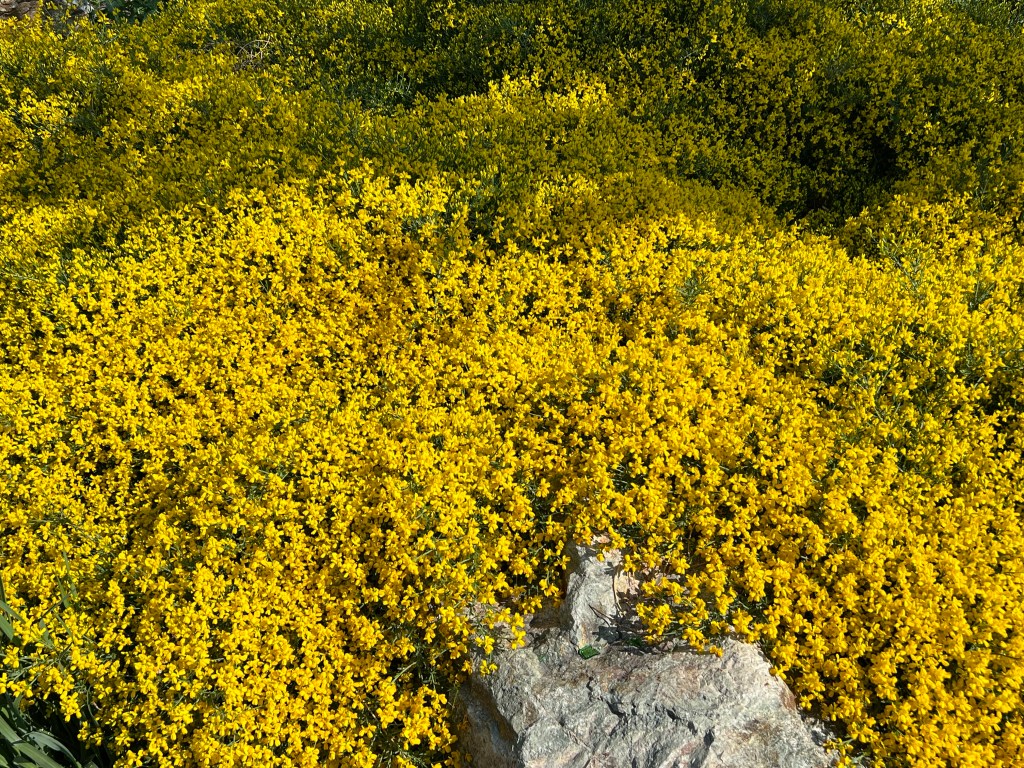
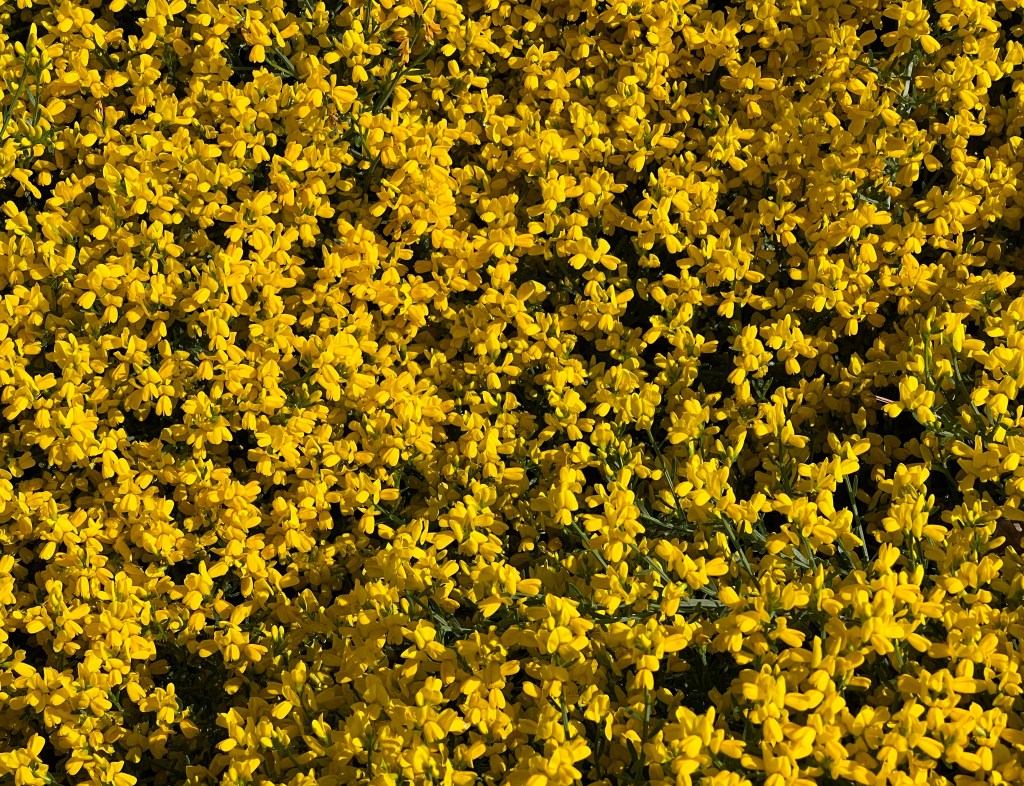

Isn’t spring great? Happy Saturday.
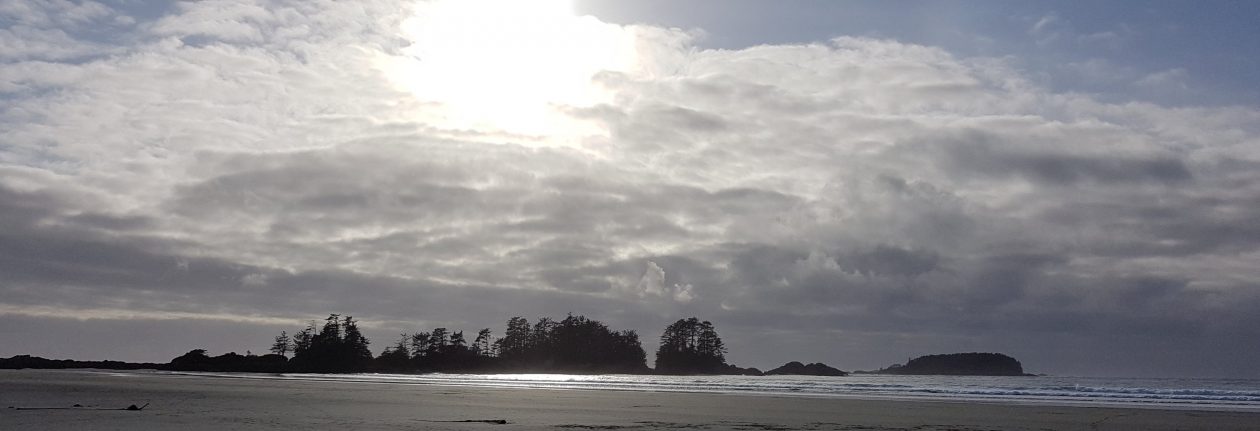
I am at home in British Columbia where everything is a-bloom.
Isn’t spring great? Happy Saturday.
This member of the corvid (crows, ravens, magpies) family is a colourfully noisy addition to a back yard, especially if you have some sunflower seeds available.

Although they have very loud voices, they aren’t aggressive birds and they get along well with others. I enjoy watching them fly; their wings are almost like a blue and white kaleidoscope.
And, of course, the Toronto Blue Jays baseball team is named after them. Go Jays!
There’s nothing like a crystal clear day in the mountains.
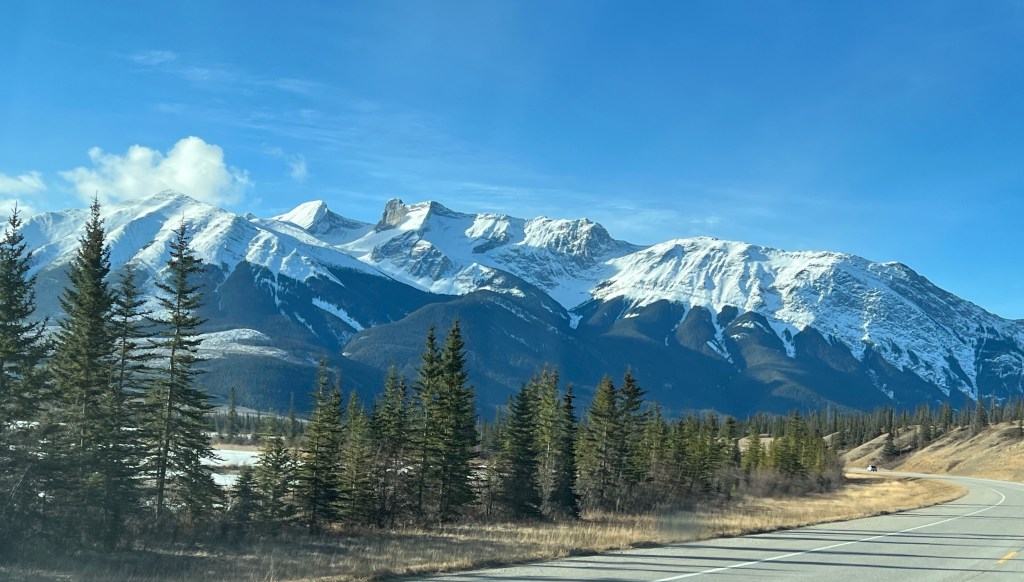
It reminds us of how fortunate we are to inhabit this beautiful, precious planet.
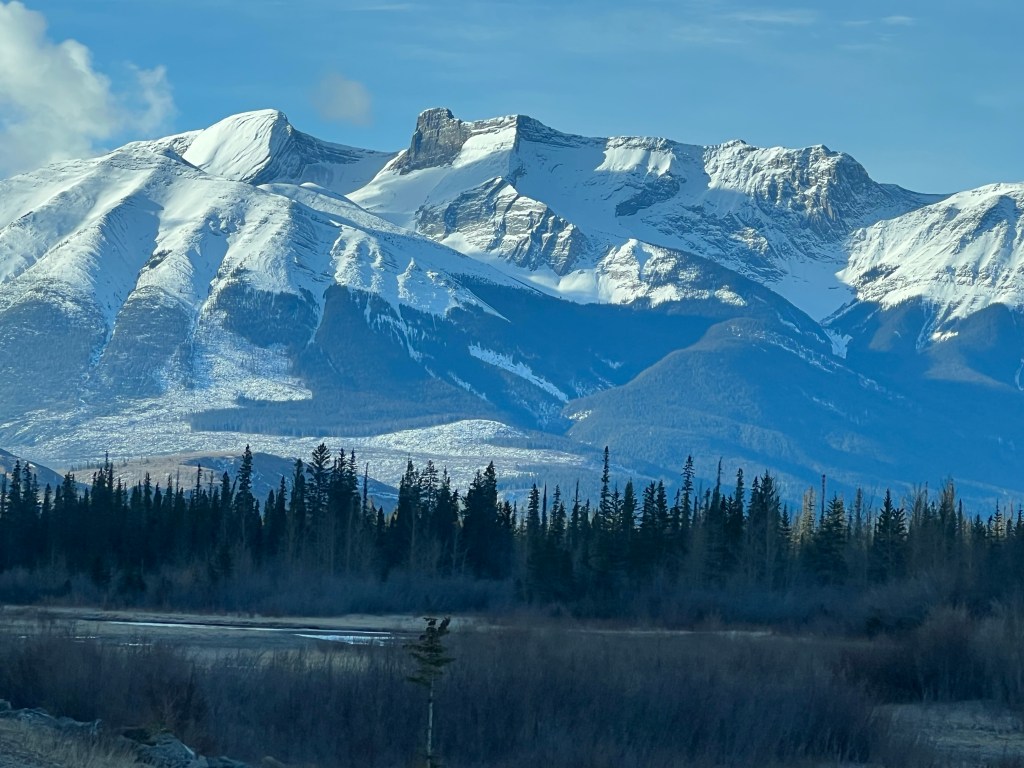
Happy Wednesday.
Victoria has a gorgeous collection of cherry blossom trees, but so does Vancouver.

Back in March, some streets looked like this. So pretty, and so iconically spring.
Happy Friday.
The Okanagan sunflower is prolific in the Thompson-Okanagan and in the spring can cover entire mountainsides with its pretty blooms.

In spite of the name, it’s a member of the aster family and looks like a yellow daisy. It also doesn’t grow singly as sunflowers do but in clumps or clusters and it prefers very dry conditions. They are so bright and cheery and symbolic of warmth and good weather!
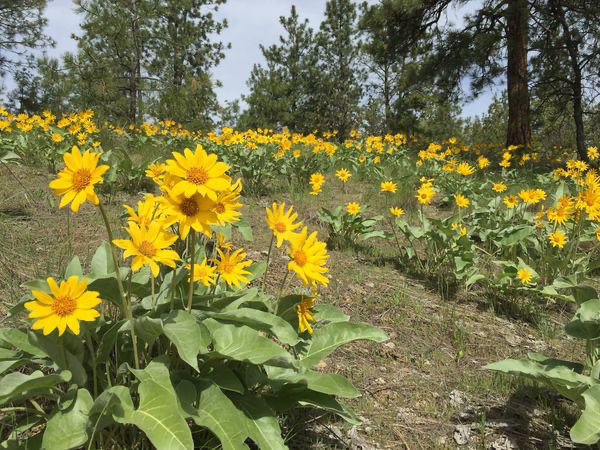
Also known as the arrowleaf balsamroot, it is completely edible. Many animals and birds rely on it and indigenous peoples ate the leaves either cooked or raw and used the taproots to make flour. It has the additional advantage of containing many immune-boosting properties, so the Okanagan sunflower is not just a pretty face!
Happy Friday.
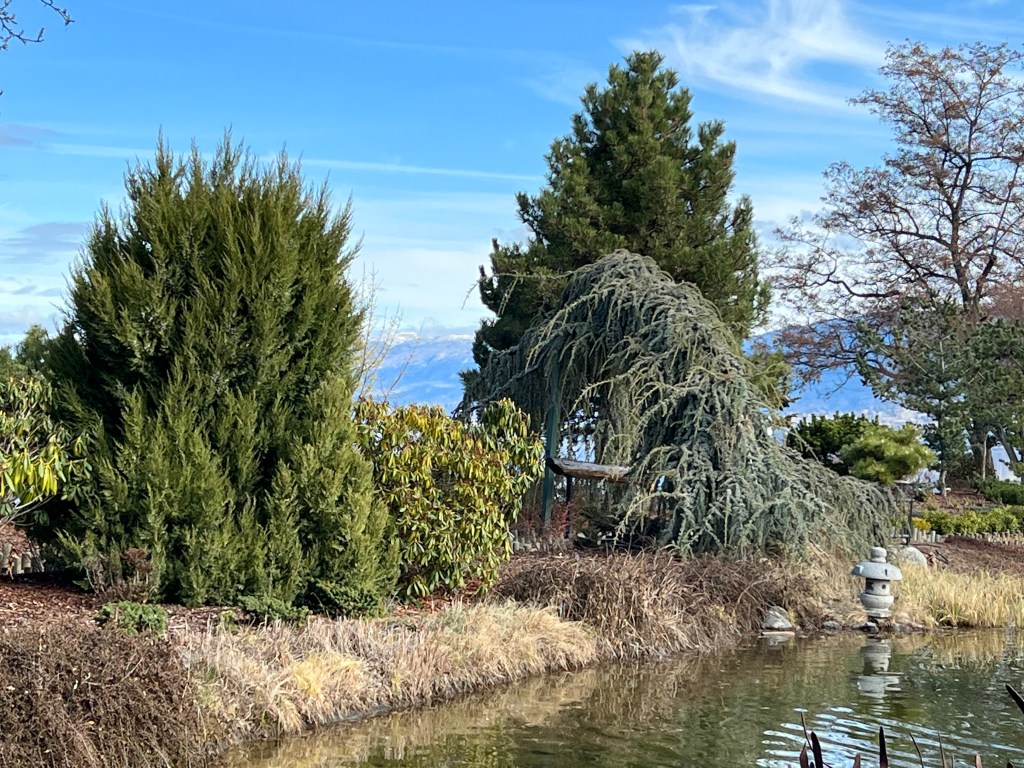
Beech trees hang on to their leaves throughout the winter.

I tried to find out why beeches quite firmly keep their dry, winter leaves until the new ones push through, but there were no definitive answers.
This one had dropped all of its nuts and deer and other animals were getting some early spring nutrition, but nature’s reasons for hanging on to the leaves remains a mystery.
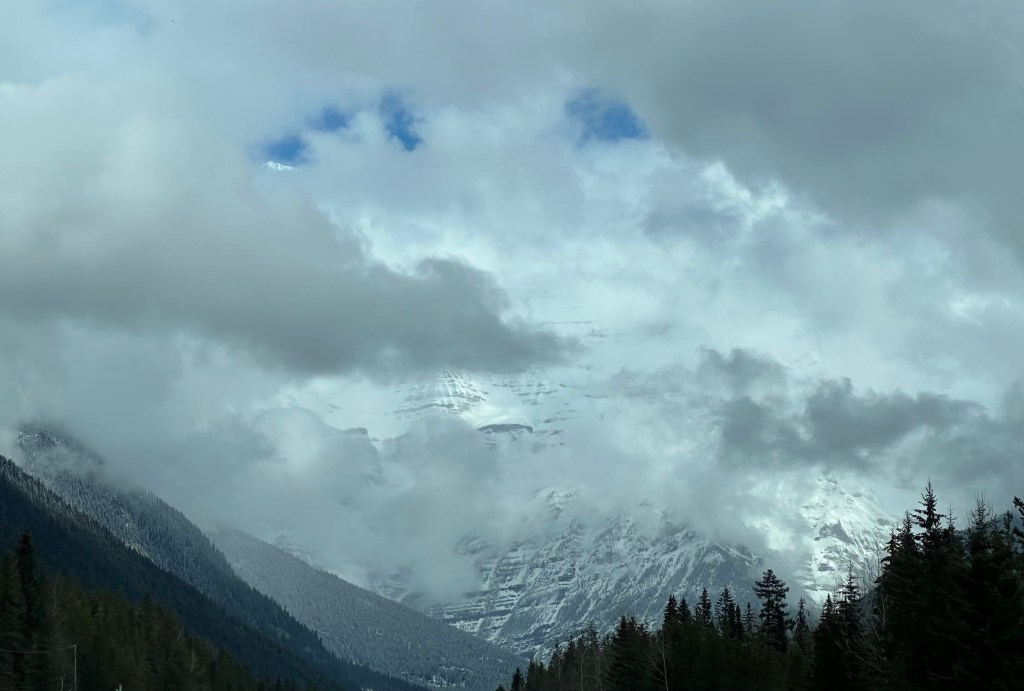
As we drove through the Rocky Mountains, I saw this beautiful view of a cloud-shrouded Mount Robson. Very appropriate since its other name is Cloud Cap.
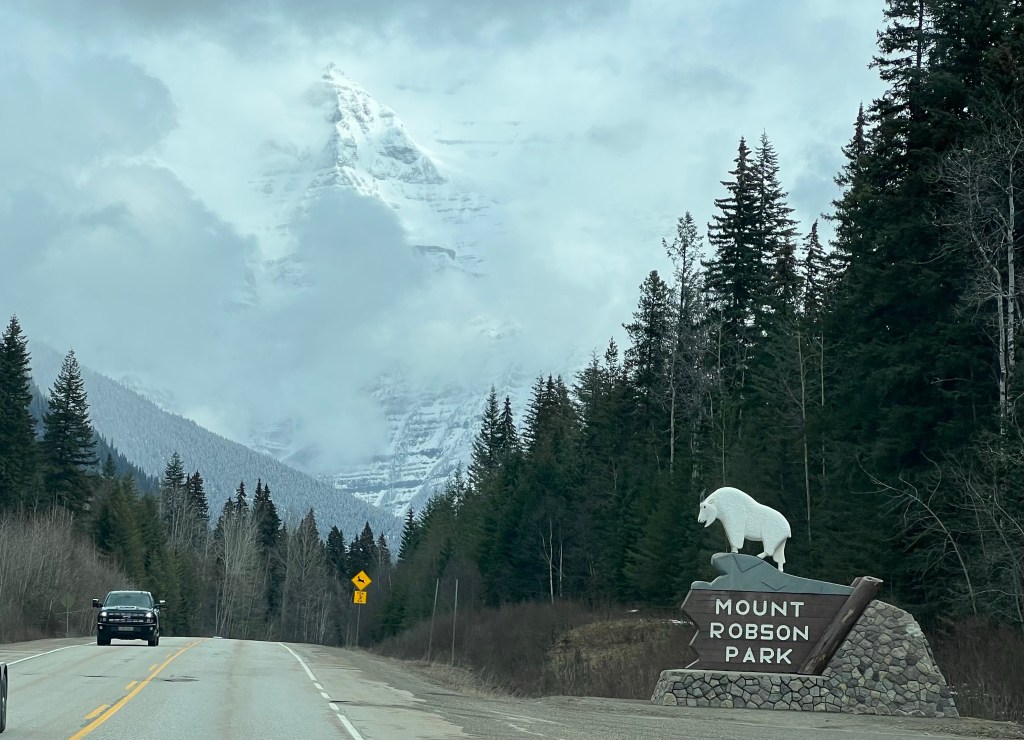
The weather was quite variable and after the glimpse above, the cloud closed in again, emphasising that Cloud Cap Mountain is indeed cloudy.
Happy Tuesday.
We recently drove through the Rocky Mountains again on our way northward, and stopped at Valemount, British Columbia, to stretch our legs and spend the night.
The weather was variable with mixed sun and cloud and a few rain showers, but the temperature was well above zero. Fairly typical April weather, really.

Valemount is in the traditional territory of the Kootenai, Shuswap and Rocky Mountain Cree and is located between the Rocky, Monashee and Cariboo Mountains. It’s the nearest community to the west of Jasper National Park and is one of 14 designated resort municipalities in British Columbia (Wikipedia). We often stop there to rest or for the night as there are a couple of good hotels with decent restaurants and there’s also a good local brewery.

There are many outdoor activities in the Valemount area because of its location: skiing, both downhill and cross-country, snowboarding and snowmobiling; and in the summer, hiking and walking. And then there’s the scenery. Surrounded by gorgeous mountains, the views are stunning, no matter the season.

Although we are glad that our regular drives through this area will be coming to end in October, we have really enjoyed Valemount and the many beauties of the area.
A mill pond-calmness on Okanagan Lake produced this beautifully reflective and meditative surface.

Spring can gift us with such tranquility and serenity in a single view.
Happy weekend.
 In the Net! - Pictures and Stories of Life