Tag Archives: food

Anthony Bourdain Day

If you or someone you know is in crisis, please contact 988 or access the following information: https://www.canada.ca/en/public-health/services/mental-health-services/mental-health-get-help.html

I was (and still am) a big fan of Anthony Bourdain. I remember finding his first show, “A Cook’s Tour” on a minor travel channel and soon found myself completely hooked. I read all of his books and watched all of his shows as they came along.

Photo courtesy of Alex Welch, New York Times

I was raised in French-speaking Canada, learned to cook in the French country way, and I always felt, even from a very young age, that one of the best ways to understand a culture is to try its food. So when Anthony Bourdain came along, with his French name and food/travel attitude that aligned with mine, I thought yes, finally! Here’s someone who’s doing a thoughtful travelogue-and-food-as-cultural-identity show.

Icelandic salmon

My desire for travel was inspired by my childhood trips to my mother’s homeland, the UK. On one of these visits, she took me on a side-trip to Paris, and that’s where for me, food and travel merged and grew. Since then, and although I’ve now slowed down, I’ve travelled enormously and have always, first and foremost, accessed a region’s culture through its food.

The best seafood chowder ever; from a visit to Reykjavik.

Food is who we are. We depend on it not only for the practical purposes of sustenance, but also for comfort, warmth, remembrance, history and connection. Food brings us together, both in celebration and mourning, in romance and heartbreak, and very often, just as a pleasure in and of itself.

Many years ago, in a very small neighbourhood restaurant in an off-the-tourist path, outside-of-tourist season part of Venice (this was when actual Venetians still existed, before that marvellous city was more or less turned into a theme park), I was introduced to a wonderful rendition of linguine alle Vongole (linguine with clams). I wound up spending much of the afternoon chatting with the owner, he in his broken English and I in my very poor Italian, drinking local wine and learning more about Italian food – and Italians – than a dozen cook books could ever provide.

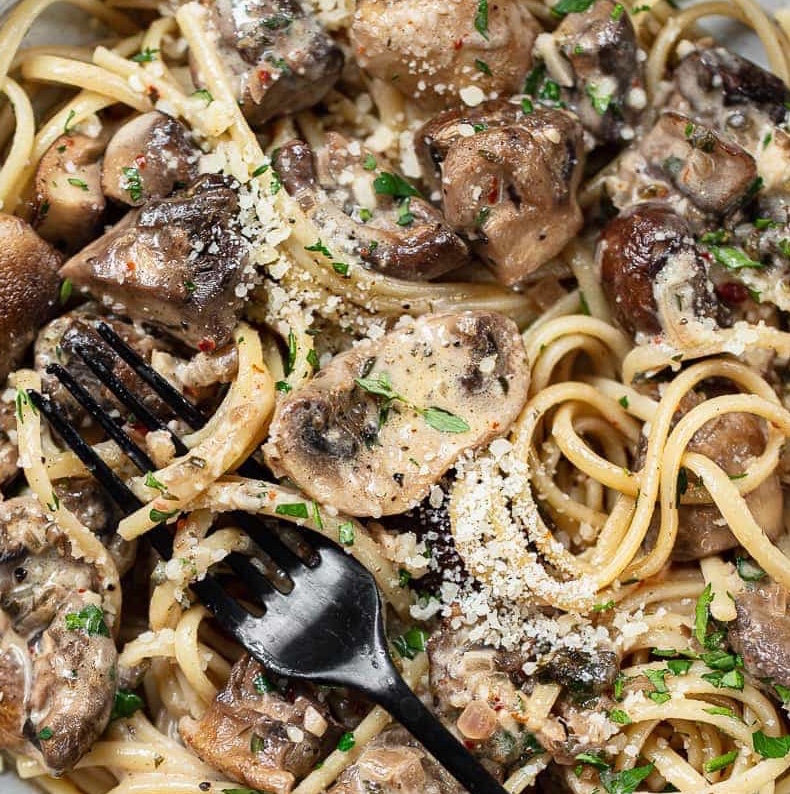
Mushroom pasta, one of my favourites.

And this is one of the best things that Anthony Bourdain shared with us: the idea that food is travel, and travel is food. It’s about connecting with the people who make the food, about why it’s an important part of their culture and by extension, why it is that we want those particular foods to become a part of ours. It’s mind opening.

A traditional favourite in my family: winter tourtière (meat pie).

It’s very sad that despite Bourdain’s reverence for travel, for food, for life, his was cut short by one of the very things he frequently discussed in his programs: the human condition. Our condition can be a complex, circuitous mystery, quite often particularly to ourselves. He was so ably conversant with it and at times showed such insight, but as it is for many of us, he clearly had a hard time dealing with his own condition.

A wonderful seafood pasta.

Regardless of the manner of his passing, he gifted us with an enormous body of work. Often irreverent and acerbic, sometimes scandalous but always passionate and honest, Anthony Bourdain communicated his observations and philosophy through the wonderful medium of food, a medium we can all understand, and I will always appreciate him for that.

After his passing, friends of his, Eric Ripert and José Andrés, started an unofficial Anthony Bourdain Day on June 25, his birthday (yes, I’m a day late). So if you’re inclined to honour him, his favourite drink was a negroni, and one of his favourite foods was pasta, and you can eat and drink in his memory.

To Reduce or not to Reduce

I think most people know about one of the cornerstones of environmentalism: reduce, reuse and recycle. And, yes, following through on that is a good thing. But one type of reducing that I had not, from an environmental standpoint, seriously considered until recently is meat consumption.

Studies show that the one single thing that all of us could do to help our planet is to reduce how much animal protein we eat. Apparently, this would go a very long way to offsetting all the other ongoing emissions from all other sources, including from vehicles. Here are some links with further information:

https://greenamerica.org/eat-less-meat-cool-planet

https://www.mayoclinic.org/healthy-lifestyle/nutrition-and-healthy-eating/in-depth/meatless-meals/art-20048193

https://www.nationalobserver.com/2022/08/23/news/eating-less-meat-could-help-canada-achieve-climate-goals

Not only would our planet be a lot happier, but we would be much healthier. An overconsumption of animal products is linked to all of the following: heart disease, stroke, obesity, high blood pressure, high cholesterol, type 2 diabetes, and many types of cancers. Of course, all of these health issues are linked to other health issues, and as we get older, these linkages lead to a cascade effect that results in additional, multiple, serious problems.

Five years ago, I was diagnosed with kidney disease. At the time it was not serious but needed to be addressed and had likely been caused by my ongoing issue with high blood pressure. The high blood pressure/kidney disease two-step is something that runs on my dad’s side of the family and given my busy, high stress job, I knew at the time of diagnosis that I should have been more careful about what I was eating and the amount of exercise I was (not) getting.

I found myself in a bit of a trap: I was exercising well and eating more carefully only when on holidays and was cavalierly throwing caution to the winds when working, and especially when under the frequent deadlines and embroiled in the daily and numerous stressors that were a part of my job.

The story I told myself was that I frequently didn’t have time to eat anything other than convenience foods. I did take some action. I avoided foods that aggravated my kidneys (there’s a “don’t list”). I took my bp medication. I walked to and from work every day.

But slowly, slowly, I was gaining weight. My kidney function was also very slowly dropping while at the same time my bp was slowly going up. It was all very glacial. Almost unnoticeable. Until it began to tip.

I was suddenly diagnosed with pre-diabetes and in weighing myself, realised that I needed to lose 10 kg. My kidney numbers were dropping (not good) and my bp numbers were climbing (also not good). I was a heart attack (or stroke) waiting to happen.

There was no way I was going to take more pills, so I decided that I had to change how I was eating and what I was doing. I made the decision to retire. I saw a dietitian, gradually cut out meat, read labels, made more careful nutritional choices and increased my exercise. M was doing most of the cooking from scratch and developed meals that work well.

It has paid off. I exercise more. I refer to myself as a vegetarian although apparently I’m a “flexitarian” because I occasionally eat meat, poultry or fish. I’m 10 kg lighter and looking at losing more. I got rid of the prescription for the diabetes drug metformin because my sugar numbers have returned to normal. My kidneys and bp are much happier and are doing better: kidney numbers are up, bp numbers are down.

I have long enjoyed vegetarian meals and even though they are now the cornerstone of my diet, I still sometimes want to have a little chicken, fish or steak. M and I recently had a steak dinner and I enjoyed every bite. So when I talk about meat reduction, that’s exactly what I mean. I don’t think we need to cut out meat entirely, but our planet, and frankly, our long term health, can’t sustain this level of animal product consumption.

In the course of learning to reverse my declining health, I read a lot about the rise in factory farming practices because of the human demand for more animal protein and additionally, about how reducing our reliance on it will go a long way to not only improving our health levels but also the health levels of our planet. A good documentary about this named “You Are What You Eat” can be found on Netflix. Here’s a clip: https://m.youtube.com/watch?v=oygkWmXyOaM

There are huge numbers of factory farms (both on land and sea) producing massive amounts of pollution, but even if we eat only one or two vegetarian meals a week, or maybe have one “vegetarian day” a week, we will have an enormously positive impact on ourselves and our planet.

Food for thought.

Departures …

… from the usual February weather are a necessary little thing right now since many of us seem to be experiencing overcast and winter blahs.

Back in early June we stopped at a favourite winery.

We enjoyed a lovely view …

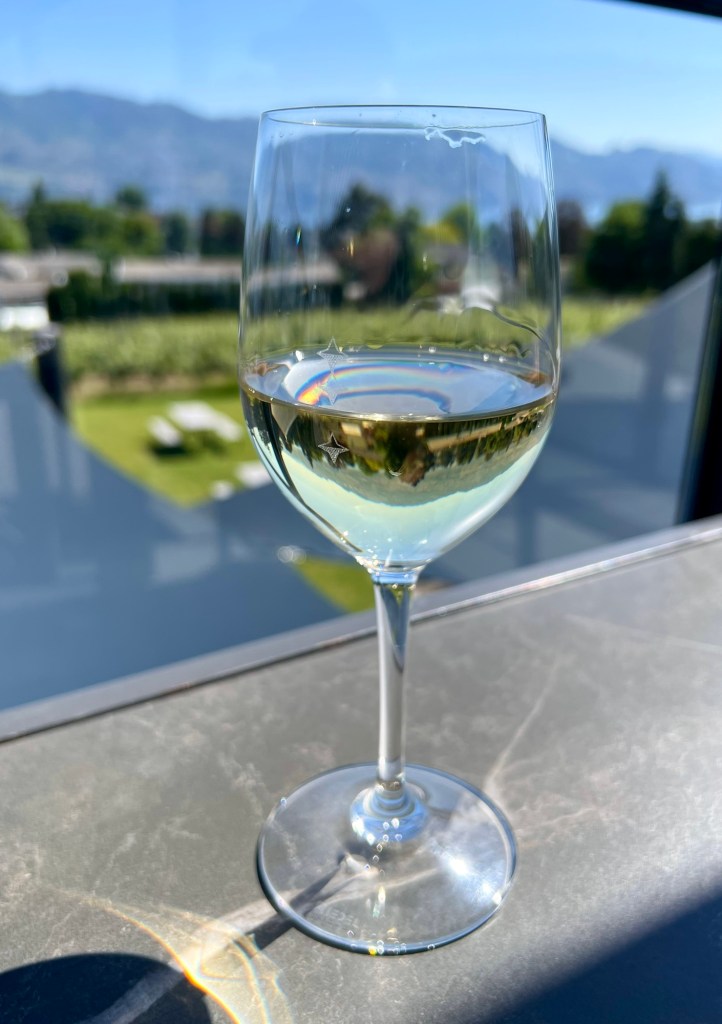
… a lovely glass of wine …

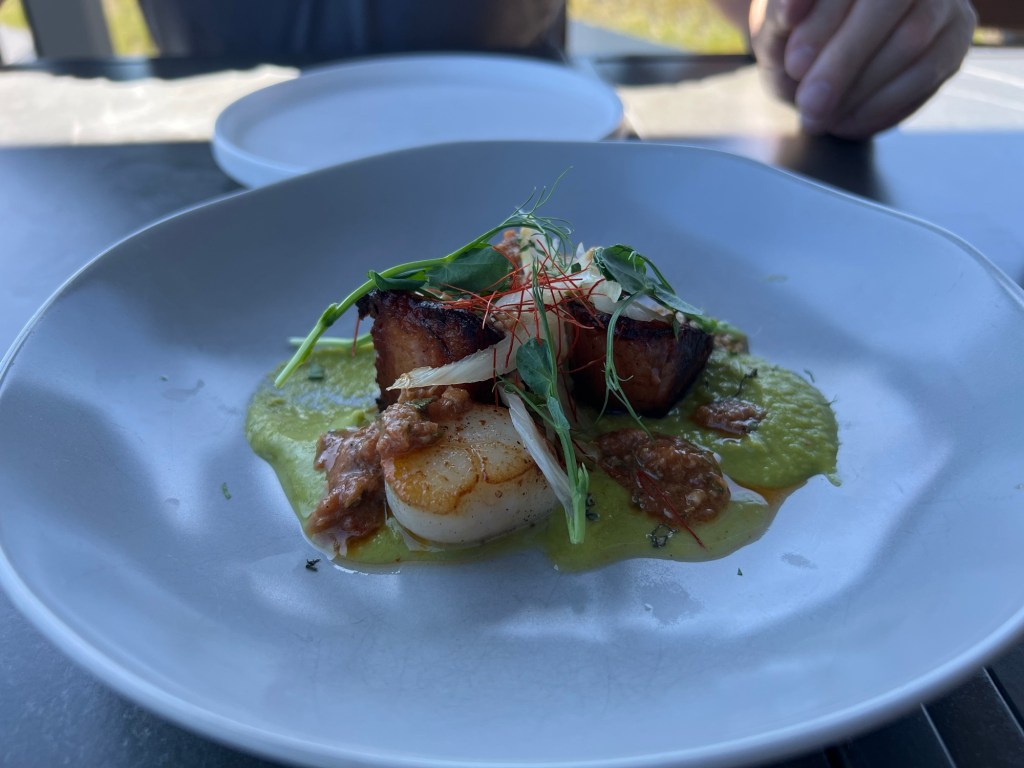
… and a lovely lunch.

Summer memories are great right now.

Happy Thursday.

A Good Bottle

A recent communique from the Canadian Centre on Substance Abuse and Addiction states that “no amount of alcohol” consumption is healthy and rather is linked to cancer. However, having taken the time to find and read their report, I have to say that their research is limited and the results conflicting, so my opinion is that this warning is a bit over the top.

An Okanagan vineyard.

There is no doubt that alcohol can and does cause many, many problems, but I find this announcement, based as it is on small sample sizes, is sort of temperance-sounding and reminds me of the announcements years ago about barbecued food (among lots of other things) causing cancer.

Almost anything, if taken too far, can be a health risk. I like a good glass of wine, pairing it with meals and adding it to my cooking. Rightly or wrongly, my very French father (my parents had wine with dinner almost every evening) insisted that we children have a tiny glass (shot glass size) of wine with dinner; I was raised with wine (especially red) as a natural and delicious accompaniment to food.

As a result, I was never much interested in the teenage drunks that many of my friends indulged in; I found that whole idea silly and boring. So I think my father had the right idea. Alcohol wasn’t a mystery and it never became a problem.

A good bottle of Okanagan red.

I’m not going to change my consumption. I live in wine country and love finding great bottles for our cellar. Planning good food and picking the right complimentary wine to go with it is fun and adds to my enjoyment of the meal.

What do you think?

When the Weather Outside Is Frightful …

… there’s lots of stuff inside that’s delightful!

Hot chocolate, maybe with some liqueur?
Warm croissants?
Some Okanagan Sangiovese, rich and luscious?

Whatever makes you feel cosy and comforted, now is the time to indulge! Here’s Michael Bublé singing that famous song: https://youtu.be/Mk6ZzzWWJ1A

Happy Tuesday.

Saturday Market

Penticton has a thriving farmers’ market that operates in the downtown every Saturday from mid-April until the end of October.

One of the flower stalls.

M and I try do our weekly fruit and vegetable shopping there.

The market has an average of 8000 shoppers every Saturday.

We go early to avoid the crowds and we bring along our list and the shopping bags. Since all the produce is seasonal, we have to be ready to make adjustments.

Part of today’s haul!

Today we found beefsteak tomatoes, white peaches (on the lower left in the photo – the best peaches ever!), patty pan squash (in the bags), and honeycrisp apples. We also found mushrooms, basil, yellow beans, plums, and of course, sunflowers!

Autumn is the season of deliciousness!

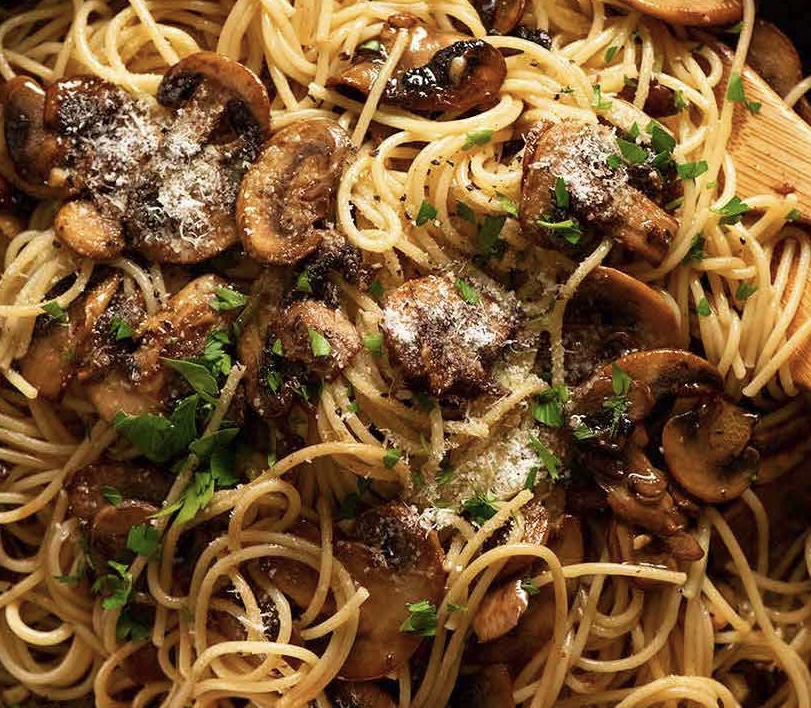
Mushroom Pasta Recipe

This recipe is in metric, but I’ve done some imperial conversions that I hope work out. It’s really easy and you can play around with the amounts (more mushrooms!) to your taste. If you would like, you can also add chicken. I don’t always have mascarpone on hand so it’s sometimes left out, and if you’re watching calories, that will help, but the result will be less creamy. I compensate by adding a bit more of the pasta cooking water to make a light sauce. Also, if you’re watching your salt intake, you will need to leave it out of the pasta cooking water.

Ingredients:

– 450 grams (2 cups) pasta, whatever kind you like. I like spaghettini best.

– 30 ml (2 tbsp) olive oil

-2 chopped shallots

– 1 clove minced garlic

-450 g (2 cups) sliced fresh mushrooms, any kind you like or a mixture. In a pinch I’ve used dried ones, but you will need to increase slightly the amount of stock and wine.

-120 ml (half a cup) white wine (the same kind you’re going to have with the pasta)

-120 ml (half a cup) vegetable stock (you can also use chicken stock)

-200 ml (1 cup) mascarpone

-Parmesan

-parsley

– a few red pepper flakes if you would like a little heat

Directions:

In a large pot, bring salted water to a boil and add the pasta; cook for about 10 mins. Meanwhile, in a large sauté pan, heat the oil and the shallots and garlic. Cook for a couple of minutes. Add the mushrooms and sprinkle with salt and pepper. Use a pan large enough to avoid crowding the mushrooms (this step is really important so that they don’t become soggy). Add the red pepper flakes (optional). Cook for about 6-7 mins. Turn the heat up and add the wine; cook until it has completely evaporated and the pan is de-glazed. Then add the stock until it reduces to a sauce-like consistency.

Remove the pan from the heat. Add the mascarpone cheese. Stir until it becomes creamy. Drain the pasta, reserving about 200 ml (1 cup) of the pasta water, and transfer to a serving bowl. Add the mushroom mixture and the parmesan. Season with salt and pepper to taste if desired. Toss well to coat the pasta, adding the reserved pasta water, if needed, to loosen the pasta. Garnish with the chopped parsley and lots of parmesan. Serve immediately and enjoy with a glass of wine.

Kayak2016 and Vanessence, I hope this recipe turns out well for you. Cheers!

Italian, Please

Although my cultural background is very strongly French-Canadian, I love to cook and eat Italian. A big favourite is mushroom pasta.

I find it incredibly comforting and delicious, and together with a glass of wine, one of my most treasured meals.

At some point in the future, (no more Covid!) I hope to spend some time in an Italian cooking school really digging in, in more ways than one!

Happy Monday.

Blueberries

I love blueberries, or as they are also known in French, bleuets. The early French and English explorers invented these words for their languages as they had never before encountered the intensely blue berries. Of course, they were already an ancient staple in the diets of many indigenous peoples.

Blueberries are native to North America and they prefer the cooler climes. Most bleuets purchased in the stores are cultivated, but wild ones are frequently available as well.

They are yummy just on their own or in a pie, pudding or cake. The best part? These sweet little flavour bombs are packed with nutrients which research suggests may protect against heart disease, cancer, cognitive decline, and diabetes.

Pretty great that this terrific treat is also good for you!