We’ve been experiencing some late August heat with temperatures in the 35ish range (96ish F). Usually we are more around 30ish (86ish F) at this time in August but if there’s one thing that most of us are noticing it’s that the weather patterns are wonky almost everywhere, it seems. Droughts in places that are usually wetter and rain in places that are usually drier!
Unlike my younger self, I just don’t handle heat very well any more. It’s not that my interior temperature regulator has retired, it’s more like it’s gone into a coma. I definitely get hot easily. I can also get cold easily. Ugh.
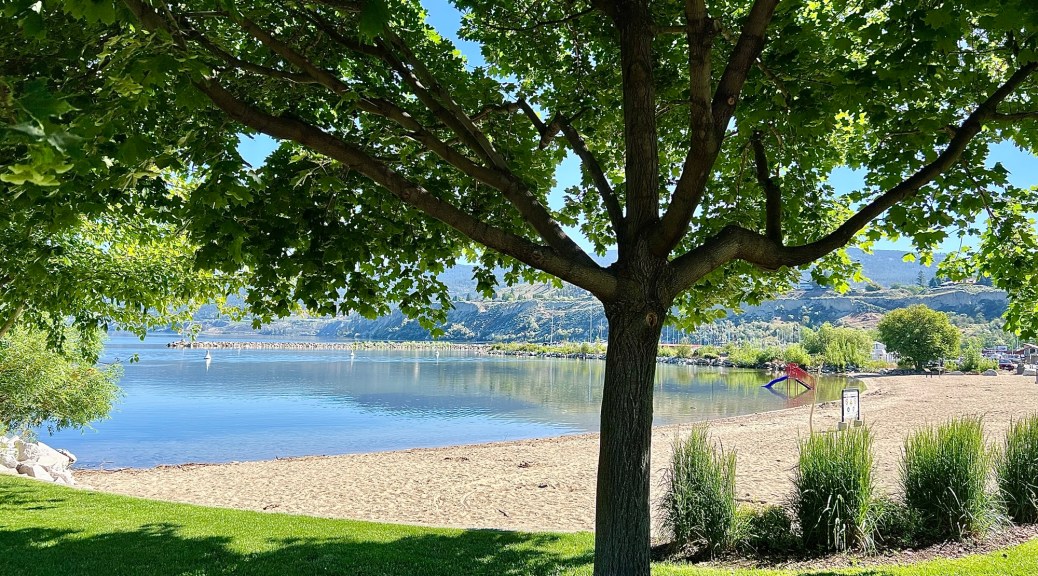
But I really don’t like to be hampered by this malfunction and so I gravitate to the shade, preferably near one of the two lakes that are nearby. The lake breezes are usually nice and the temperature probably a degree or two cooler. You can also swim in there too and that always helps, even though the lakes have warmed considerably!
In any case, these are some cooling water views that I’ve enjoyed over the last week or so. I hope you enjoy them too, especially if you need to cool off.
On July 21, 2024, four wildfires started within the boundaries of Jasper National Park. At the time, the park had been experiencing serious drought conditions that were accompanied by hot, dry winds. Three of the fires were caused by dry lightening strikes and the fourth through human ignition: sparks from work on a car engine started a grass fire that quickly escalated.
Acres of burnt forest stretch into this mountain and the horizon.
The next day, July 22, all four fires merged into the largest one ever recorded in the park for the previous 100 years; it eventually developed a self-perpetuating weather system containing fire tornadoes and continuous high winds.
The frame of a burnt sign.
By July 25, 25,000 people had been evacuated from Jasper townsite and the park itself. By July 26, Parks Canada announced that 358 of the 1,113 structures within Jasper townsite were damaged or destroyed but that all critical infrastructure such as the hospital, schools, and the wastewater treatment plant were saved.
Kilometres of dead trees.
It took until August 17 for the fire to be classified as “held” and on September 7, it was declared as “contained.” One fatality occurred; a firefighter died when a burning tree fell on him.
Grass is returning.
It’s completely normal for forests to periodically experience burns. Decades-long collections of dry forest floor detritus together with occasional hot summers have always caused them.
It’s also normal for our planet to experience periodic warming and cooling trends. However, the normal heating trend that we’re currently experiencing has been exacerbated by human activity which has lead to higher temperatures and drier conditions than we should have; this in turn brings about more and larger fires. These fires lead to more planetary heat, and the cycle continues to grow.
All that remains of a completely burned tree.
Nature is amazingly resilient, however. It has been less than a year and already the grasses and bushes are returning; the ungulates love eating the new growth and they have the added advantage of being able to better see the predators! The trails – even through burned areas – are re-opening and visitors are returning, too.
Maligne Lake escaped the fire.
Much of this gorgeous gem of a park escaped the fire …
… and after a morning of clear-sky hiking through stunning scenery we sat next to this lovely river to eat lunch. This particular restaurant had a great view!
A beautiful river.
Jasper’s fire is a reminder that nature does things in ways that she selects as healthy responses to certain conditions; sometimes, those responses are swift, brutal and merciless. But human interference in that process will eventually lead to consequences, consequences that are worse than what we’re now seeing with the cataclysmic sweep of fires now burning through three of our western provinces.
Pristine glacial-green waters.
Let’s hope that we learn nature’s lessons before she decides that we’re the problem and we’re selected for discontinuation.
Radelnder uHu has posted an amazing set of photographs of a thunderstorm cell passing overhead and also discusses his concerns about the serious weather changes he has noted. The title translates to “Severe Weather Season.” Please click on the link above for the rest of the post.
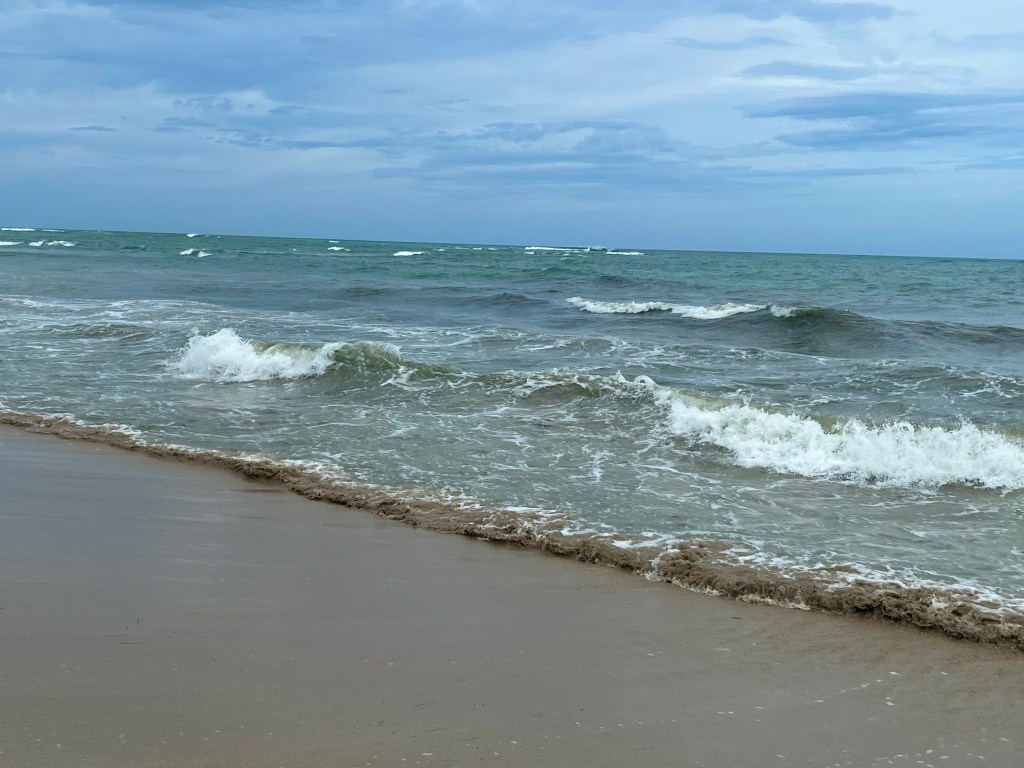
Until yesterday we have had lovely weather here in the Caribbean …
… but a tropical storm passing to the east of us has caused some surf, overcast and rain showers. The beaches were flying red flags, a warning not to swim since the waves were powerful enough to easily knock people over. I believe this storm is headed to Nova Scotia where it will drop a lot of rain.
The ocean so often looks tame and inviting, but it is a supremely powerful force on our planet that should be respected. I am strongly reminded that if we don’t respect our climate, our climate won’t respect us.
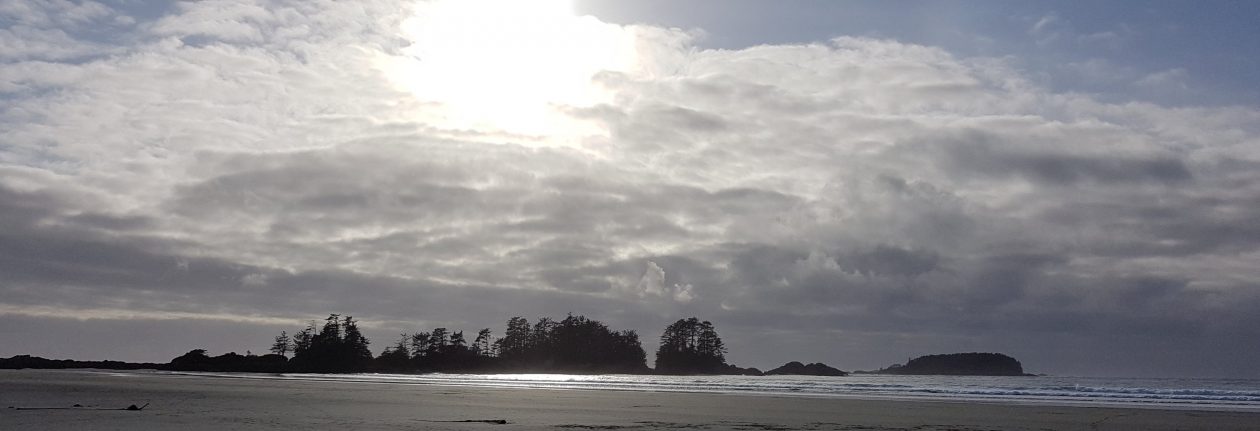
I enjoyed watching these cloud layers unfold themselves.
Capricious and swirling, they were never the same from one moment to the next, a sometimes very human characteristic.
Given the frequency with which we describe weather as moody, angry or brilliant, we should perhaps change how our weather forecasts are expressed: “wear your coat, it’s angry today” or “bring along the sunscreen; it’s brilliant today.”
Might be a problem for Environment Canada, though.
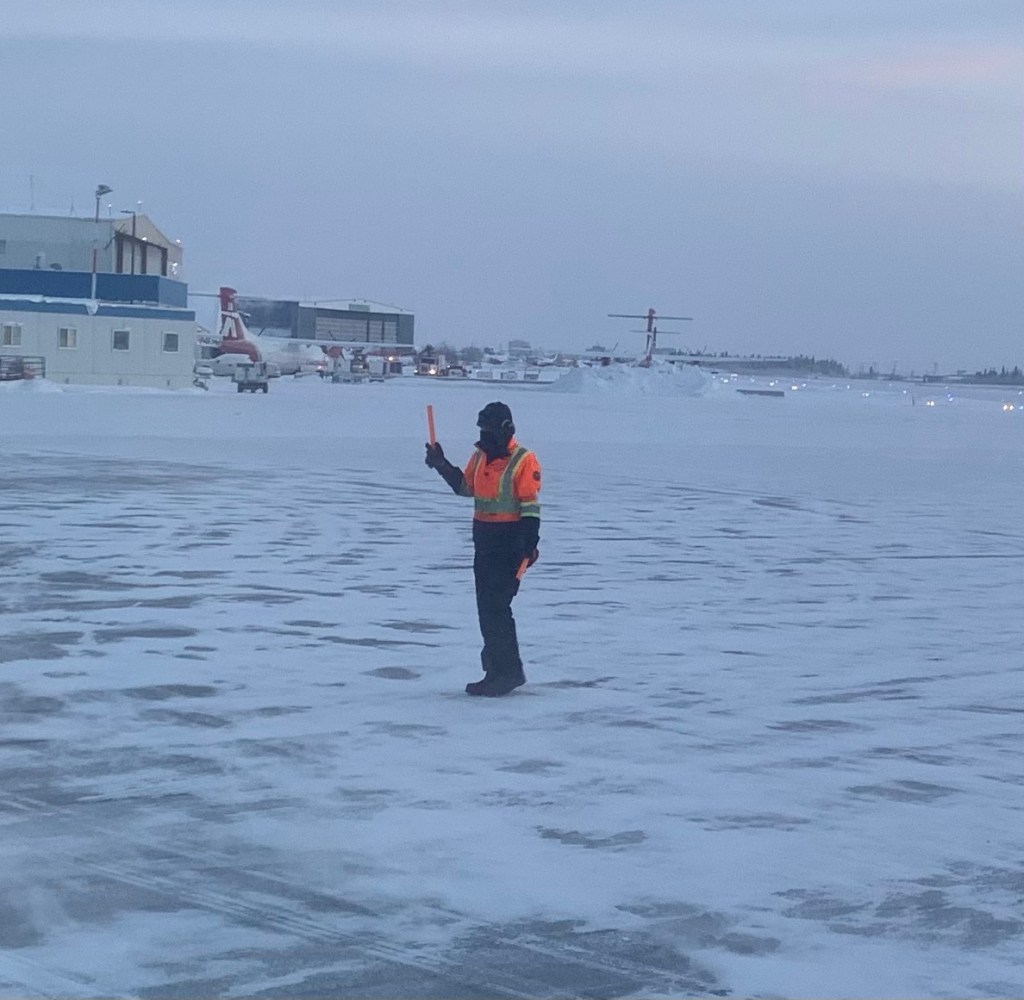
Last weekend’s storm (massive rain, massive snow, more massive rain, then a freeze) caused the ice pans to block the water flow from further up-river, resulting in a flood. Parts of the nearby town have been evacuated and other parts are completely under water.
Penticton (and most of British Columbia) has had a much colder winter than usual. Heck, over the last six months, it’s had unbelievably bad weather, period.
First there were heat waves (referred to as “heat domes” by the media). No matter what they were called, they were bad. I will never forget seeing on June 28 a temperature of 46°C (115°F) on our deck. In the shade.
Then there were the fires. Almost all of the town of Lytton was consumed by them. Throughout British Columbia, the air quality was terrible and the heat unrelenting.
Then autumn brought intense rain accompanied by high winds. The rain saturated the soil, the wind pulled the fire-dead trees from the ground, and this lead to extreme flooding and landslides, especially in the lower mainland. Dozens of landslides swept vehicles from the roads and trapped people and communities in isolated pockets.
British Columbia’s Coquihalla Highway Photo Courtesy of Jonathan Hayward/ The Canadian Press
The Coquihalla Highway, a main four-to-six lane artery that carries supplies and people through the mountains, was seriously damaged in 20 separate places. The community of Abbotsford, a major supplier of dairy and other agricultural products and situated in the lower mainland, suffered extreme flooding and enormous economic damage.
Now we’re being hit by record-breaking cold temperatures with freezing rain, snow and slush. The media are doing reports on how people can help to save the non-migratory hummingbirds from freezing to death. According to the scientists, this is the tip of the (melting) iceberg because these “weather events” are going to get worse.
Question is, what are we doing to mitigate this situation? And, what are we doing to get ready for what’s coming?
Here’s Stuart’s latest book. I have bought it but haven’t read it yet although my husband has. He thoroughly enjoyed it. It’s available on Amazon. Please visit Stuart’s site for further info.





 In the Net! - Pictures and Stories of Life