Category Archives: Commentary

Butterfly Beauty

Penticton is home to the western tiger swallowtail butterfly. They are primarily yellow with black stripes and also some blue sections near the distinctive “swallowtail,” so-called because of their similarity to the swallow family of birds.
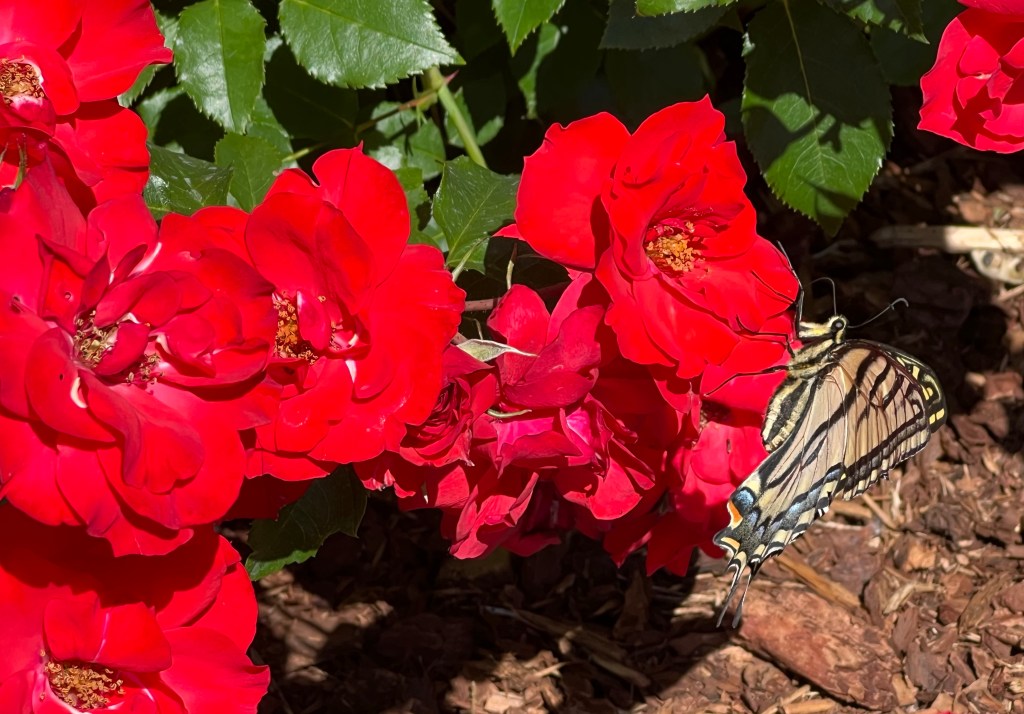
I saw this one while walking through the Penticton rose garden.
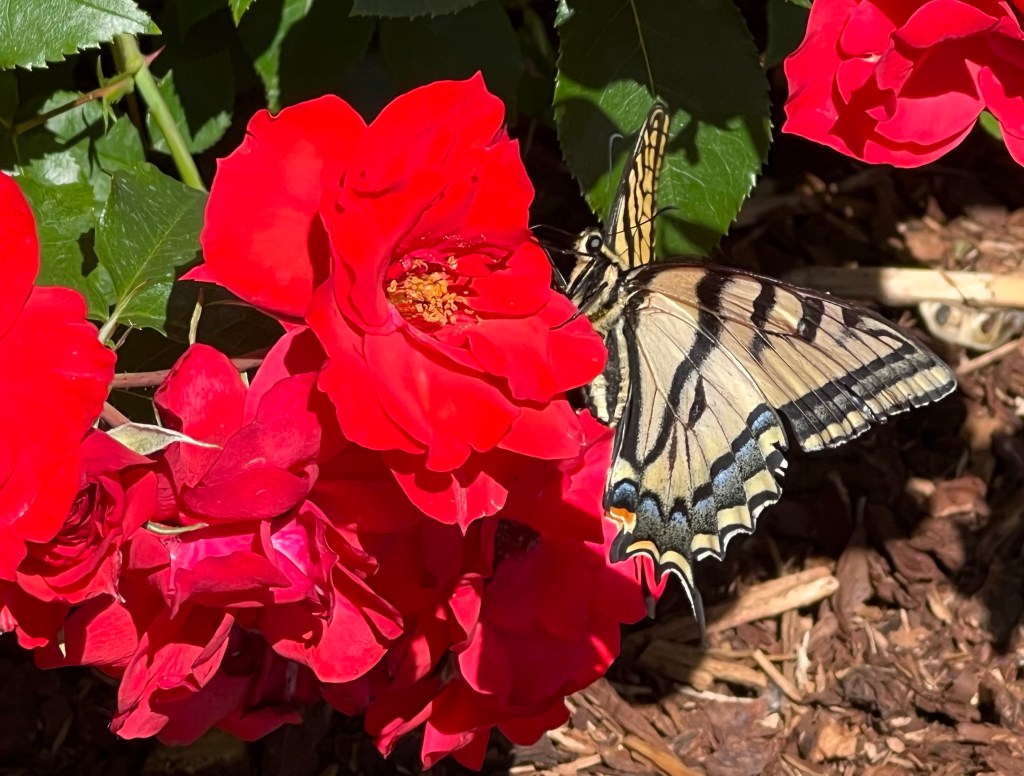
Unfortunately, their numbers are declining because of pesticide use and measures are being taken in some areas to support them, including raising them from caterpillars.

Happy Monday.

Breakfast, Northern Flicker Style

While out for my morning walk I saw this northern flicker busily engaged with his breakfast.

I at first wasn’t sure what he was doing – it looked initially like he was digging a hole – but his attention was completely captured.

He was right next to the sidewalk and eventually flew away because someone came too close.

After he left I could see that he had found an ant colony and was feasting on them and their eggs.

Northern flickers will often eat the bugs that are infesting trees, so they actually help them to stay healthy. They will come to your yard if you put out suet and a water source, and will also proceed to feast on any bugs you have lurking around there.

Northern flickers are protected as their numbers have been in decline, so I was happy to see this little guy.

Happy Saturday.

Marmots

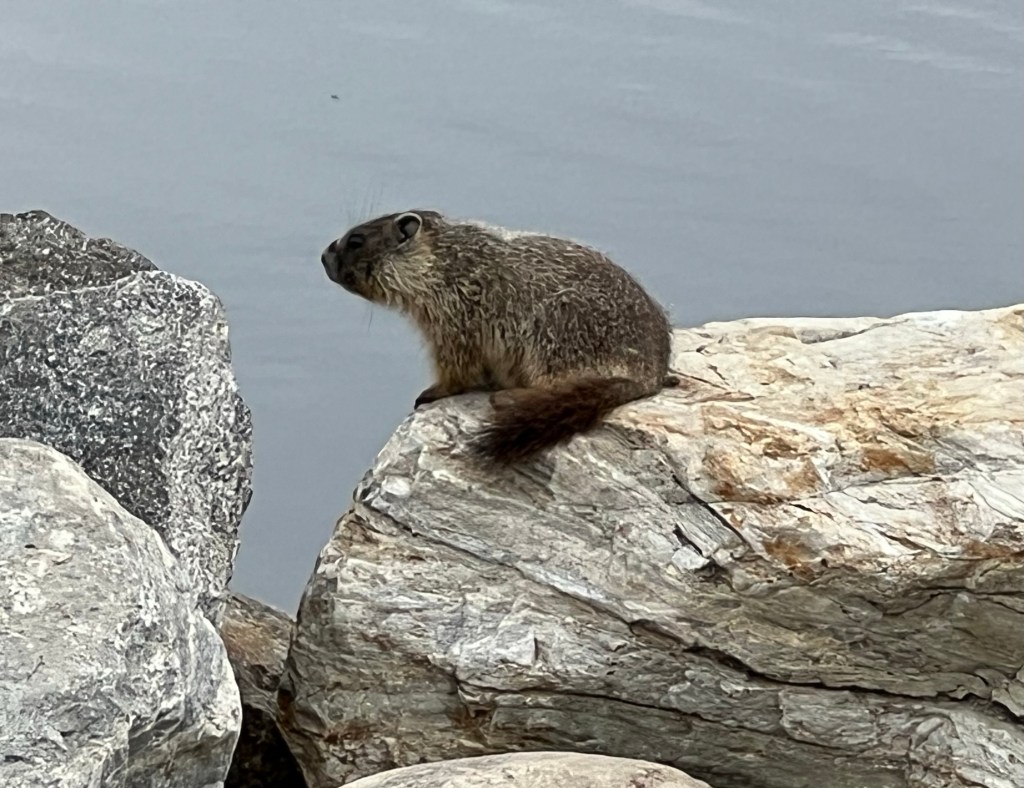
We have a colony of marmots along the rock breakwater at the edge of Okanagan Lake. M and I discovered them on one of our morning walks.

This one was stock still and keeping a close eye on us, ready to give his community a warning if needed.

There were a number of community members about, socialising and eating.

This one has a different colouration, probably because it seems to be younger.

There are quite a few different varieties of marmots, but essentially they are large ground squirrels and are a part of the family sciuridae. This family also includes the famous weather-predicting groundhogs of stage and screen.

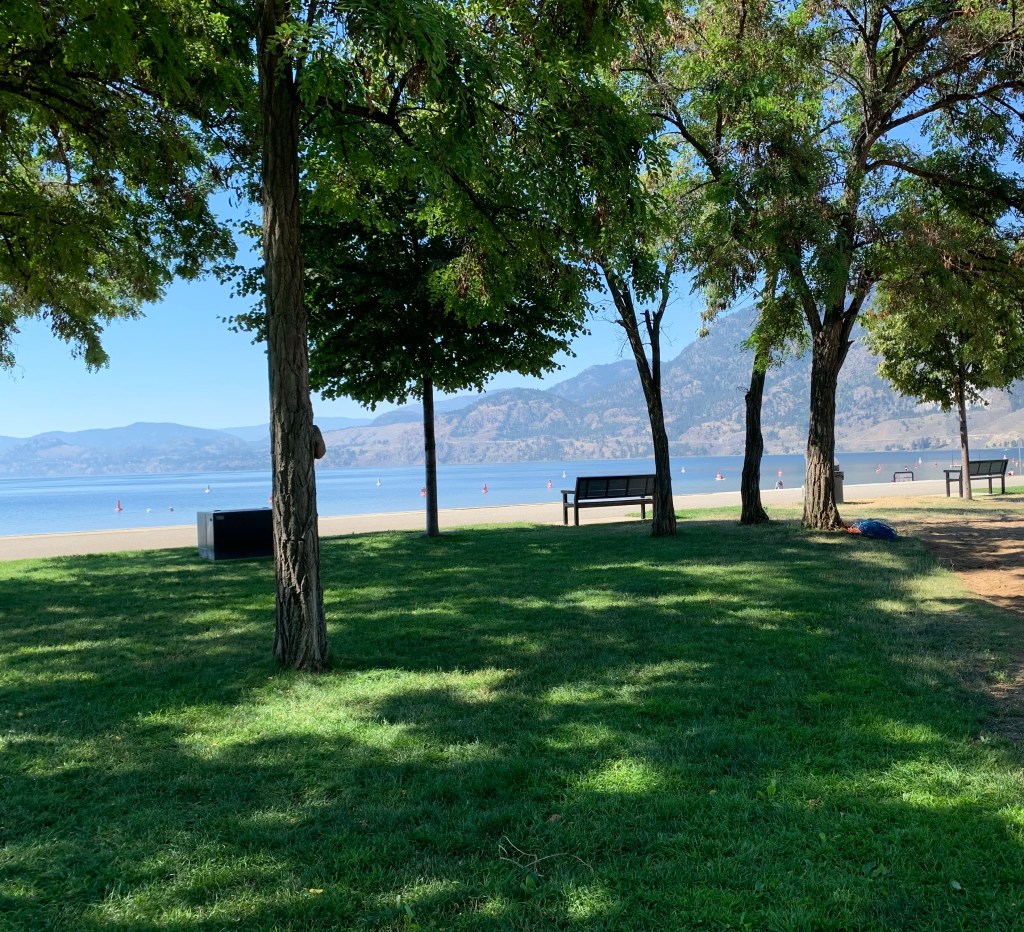
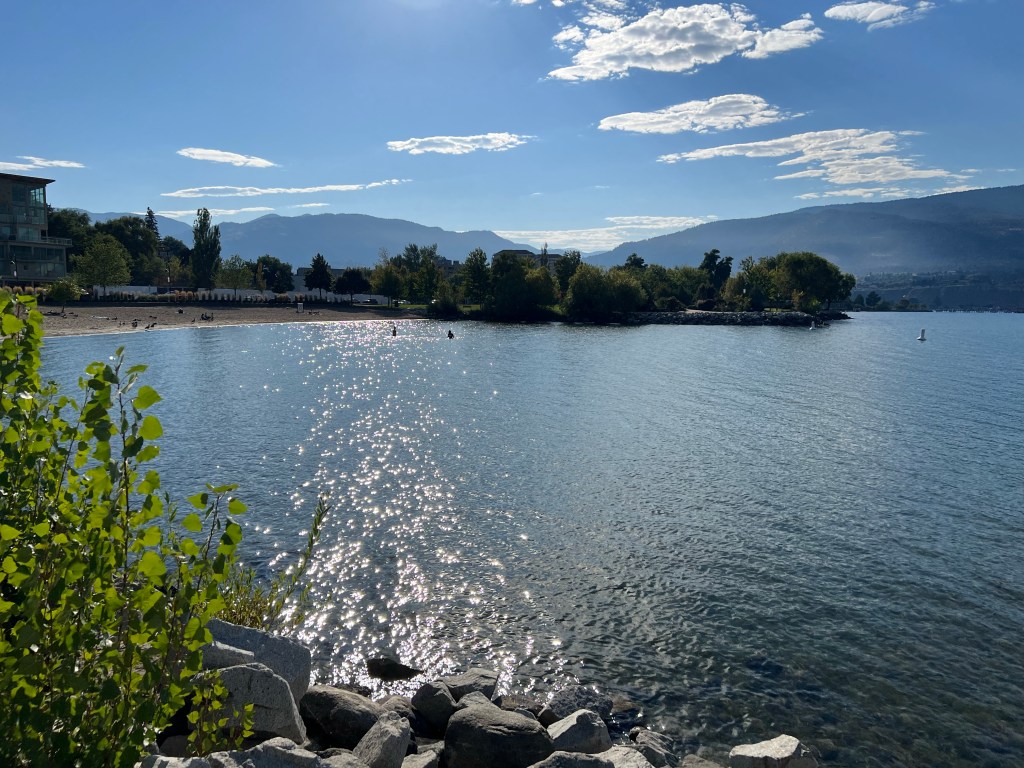
This little community has found a great location to call home; it’s just around the bend in the path shown below, where it begins to follow the shoreline.

Happy Wednesday.

Sun Reflection

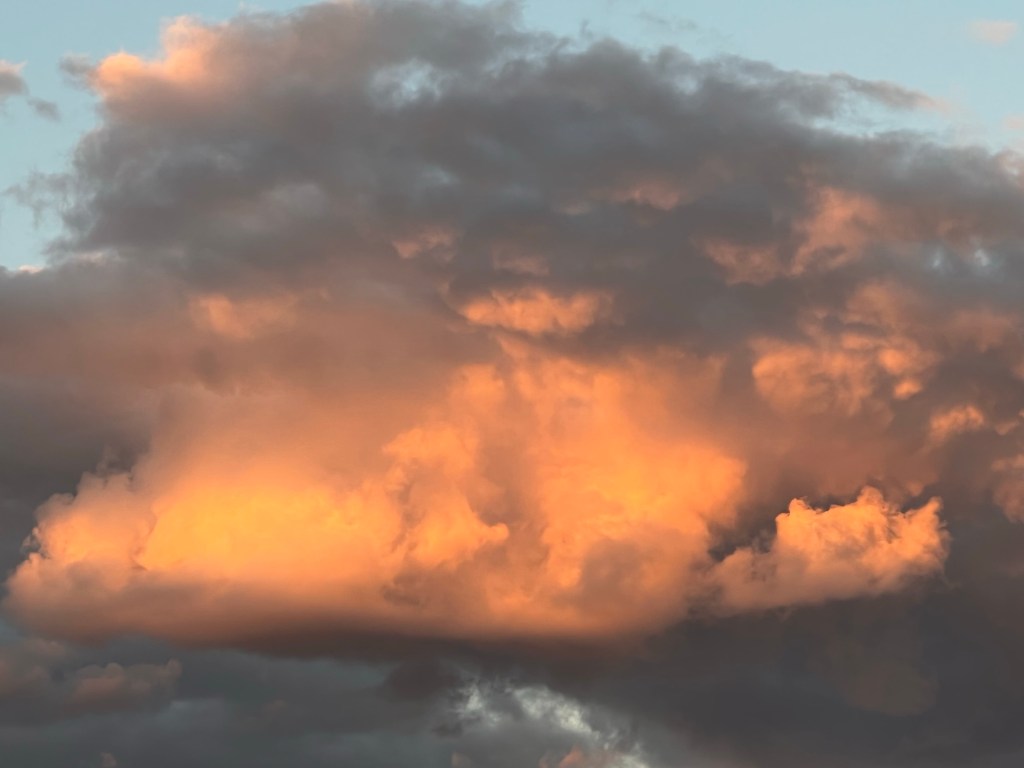
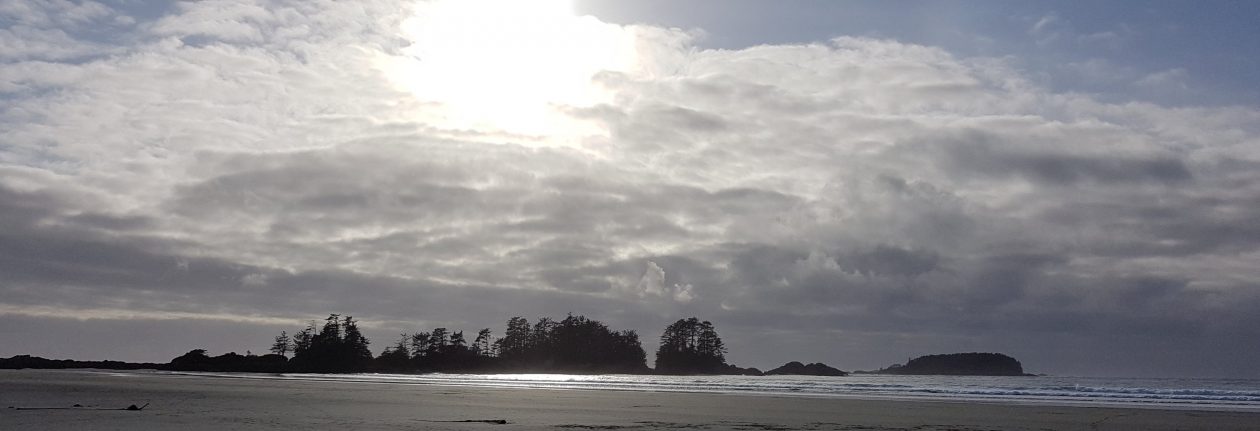
We have had quite a bit of rain over the last few days and there have been beautifully lit sunset or sunrise cloud formations.

We’re happy to have the rain as we have also been experiencing very warm days, too, and this keeps our fire risk much lower.

I’m wishing for good soaking rains for Alberta and the other areas of the country that have been severely affected by forest fires.

Happy Tuesday.

It’s Lovely Lavender Time

Lavender grows very well in the Okanagan. The soil and weather conditions are rather great for it, so it’s quite prolific.

Not only does it look and smell wonderful, it’s also thought to be a calming and centring element of aromatherapy. I have a small bottle of lavender oil next to my bed; I don’t think it puts me to sleep but it certainly has a fantastic scent!

Lavender does well as a dried plant and you can also cook with it (depending on the type and it also has to be carefully sifted). Given its varied and many uses, it is an extremely versatile plant and it shines at this time of year!

Happy Sunday.

A Bit about Penticton

The south end of Penticton is bordered by another lake called Skaha.

Skaha Lake

Another interesting fact about Penticton is that the land it sits on is actually the result of an ancient landslide that cut off the end of the long, narrow Okanagan Lake and created a second one.

Okanagan Lake

Penticton and its surroundings have been inhabited for hundreds of years by the Okanagan peoples who originally settled the area and traded up and down the west coast, including as far as South America.

Okanagan Lake is at the bottom of a very fertile valley.

Penticton is one of two cities in the world that sits between two lakes; the other is Interlaken, Switzerland.

Happy Friday.

House Finches

House finches, unlike starlings or sparrows (these birds are considered to be invasive), are native to Canada and can be found all over North America.

Male house finch (I’m reasonably certain that this isn’t a purple finch; despite the name, purple finches are red).

The red colouring comes from the foods they eat: the more carotenoids they ingest from fruit, flowers and seeds, the redder they will become. That’s why there’s so much variation in colour and they get mixed up with other types of red coloured finches such as redpolls and purple finches. Personally, I always think that they look like someone spilled raspberry juice on them!

Finches love peanut butter and nyjer (thistle) seed, and if you also have a water source in your yard, you will attract many of them, sometimes 20 or 30 at a time. They’re busy, non-aggressive little birds who love to chat non-stop with each other and are beautiful to watch.

Happy Thursday.

Duck Duty

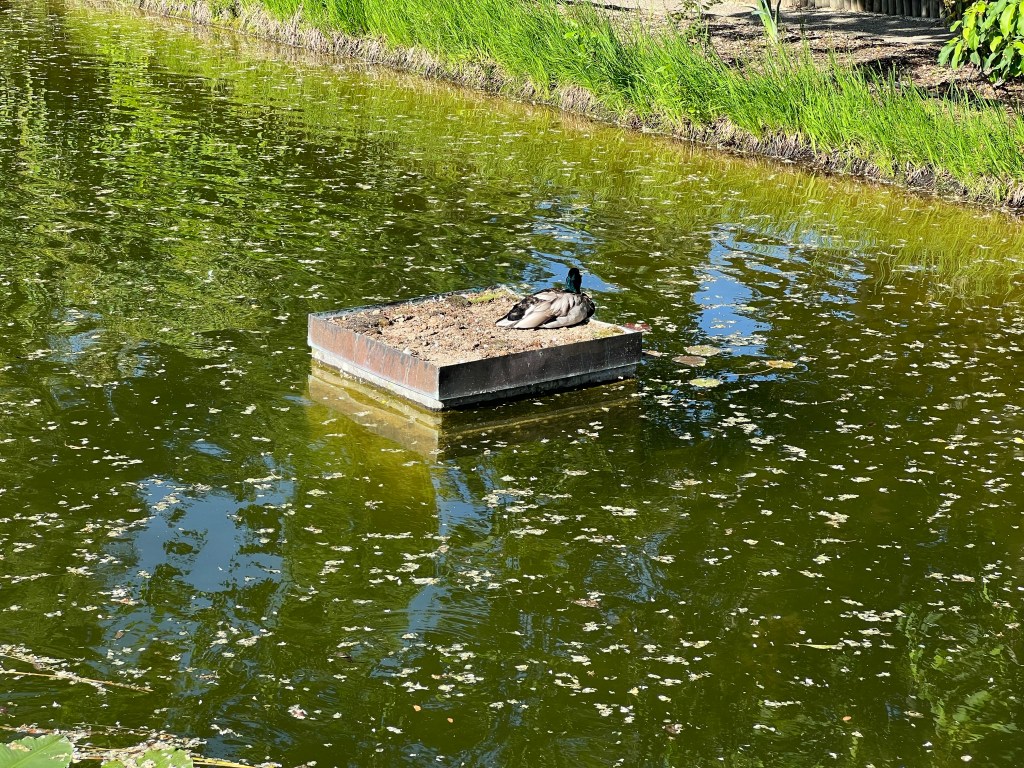
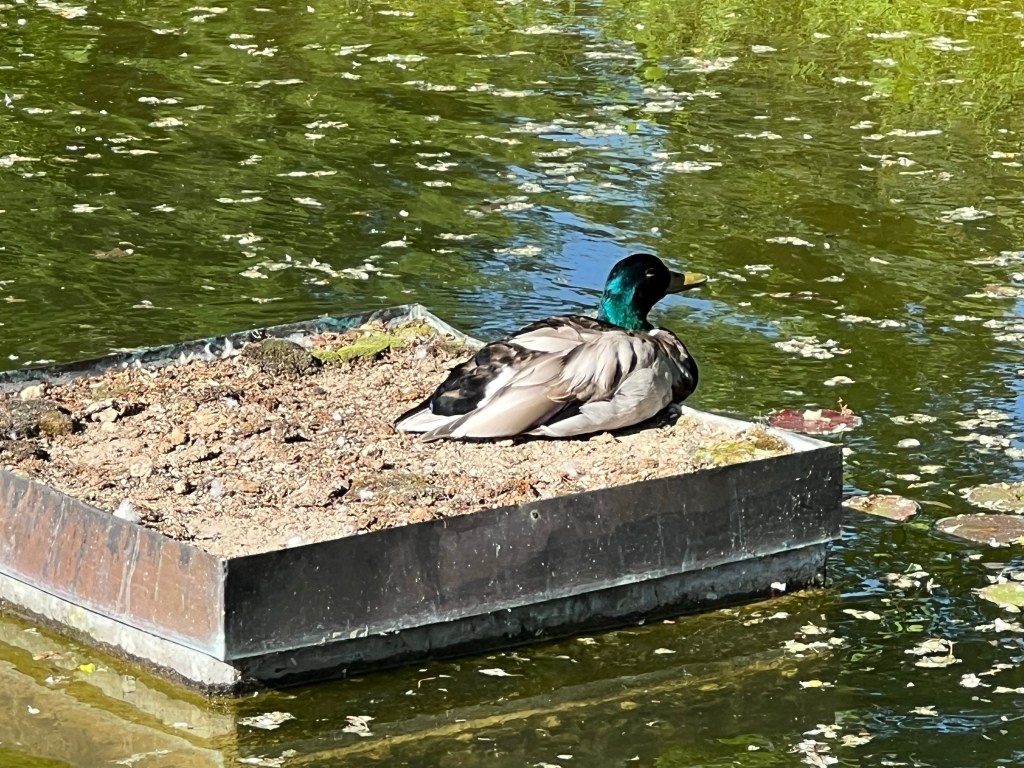
While visiting our nearby Japanese Garden a couple of days ago, I saw a male duck sitting very quietly on one of the platforms set into the garden pond for the placement of a sculpture or plants.

When I got closer, I could see that there was a depression in the platform where the dirt had been pushed away and I realised that daddy duck was incubating his offspring.

Ducks form seasonal pair bonds that last until the males have to leave to find a protected spot to do their molting, usually after the young ones hatch.

The ducks have been in a bit of upheaval because their favourite little creek has been running high (a situation that’s improving for them), but this duck seems to have settled on this spot for his family.

Happy Monday. Have a ducky one.

Woodland Caribou

The woodland caribou is known in Europe as reindeer, so it’s appropriate that they inhabit the Northwest Territories, or “Santa country.”

They actually don’t live northwards enough to call the true North Pole their neighbourhood though, because as their name indicates, they prefer wooded areas.

Shy and somewhat introverted, they are sociable only in small numbers and inhabit the same small area for their entire lives; they don’t migrate.

Unfortunately, their numbers are also dropping. Efforts are being made to help them recover, and the Northwest Territories’ woodland caribou are starting to do better.

Happy Saturday.

Mysterious Spiral Light

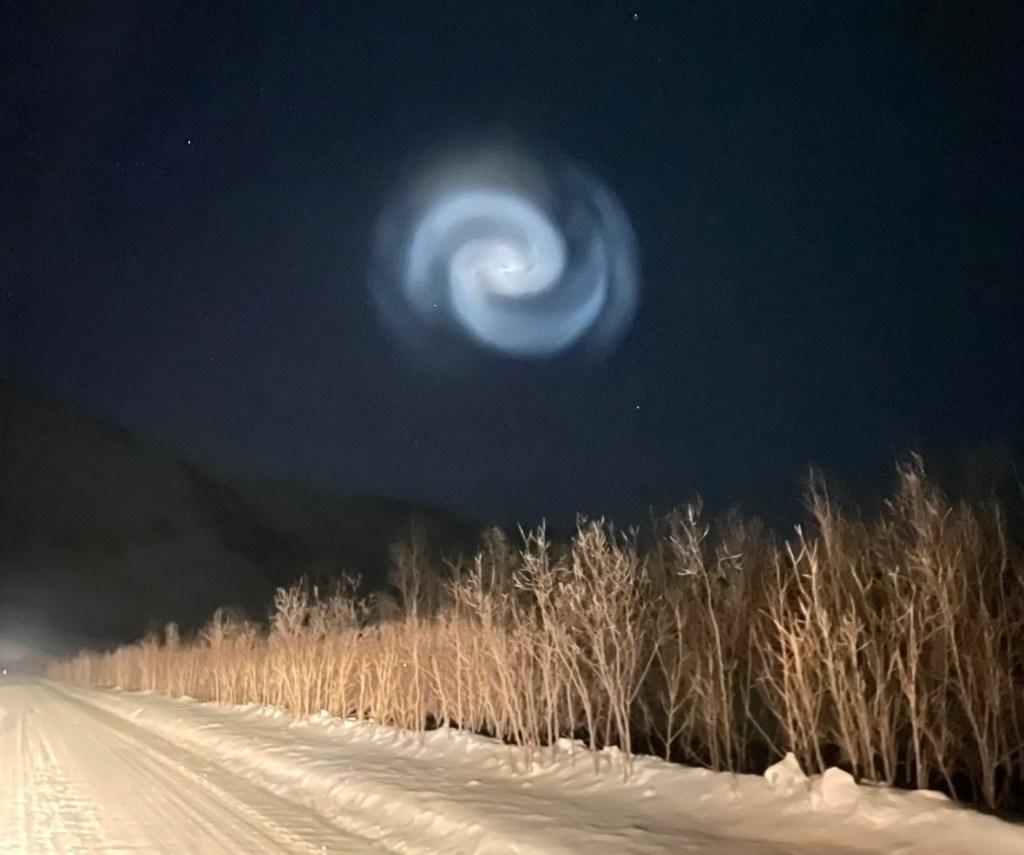
This mysterious light spiral showed up in the night sky over many parts of the north on April 16.

Photo courtesy of Talia MacDonald

Scientific researchers from several universities have said that this phenomenon was caused by unspent rocket fuel attributed to a SpaceX launch, and not to an alien invasion. 😉

If this is indeed the product of a SpaceX rocket, I find it very disturbing that Elon Musk’s company is dumping enough fuel into the atmosphere to be that visible from an estimated distance of three kilometres (1.9 miles).

Although this is an ongoing debate that’s tied up in politics and money, shouldn’t these space/satellite companies be held to the same account on pollutants as others? What do you think?