We have had extremely smoky conditions since Wednesday with a nearby forest fire contributing a lot of the smoke while more has been heading from those brutal fires 2200 km (1367 miles) to the north of us in the Northwest Territories.
This image courtesy of the B.C. Fire Service shows the smoke billowing from a huge fire about an hour north of us.
After a hazy evening on Wednesday we soon became absolutely choked with smoke and hit a “10” on the air quality index, which means that people really should stay inside unless wearing a mask.
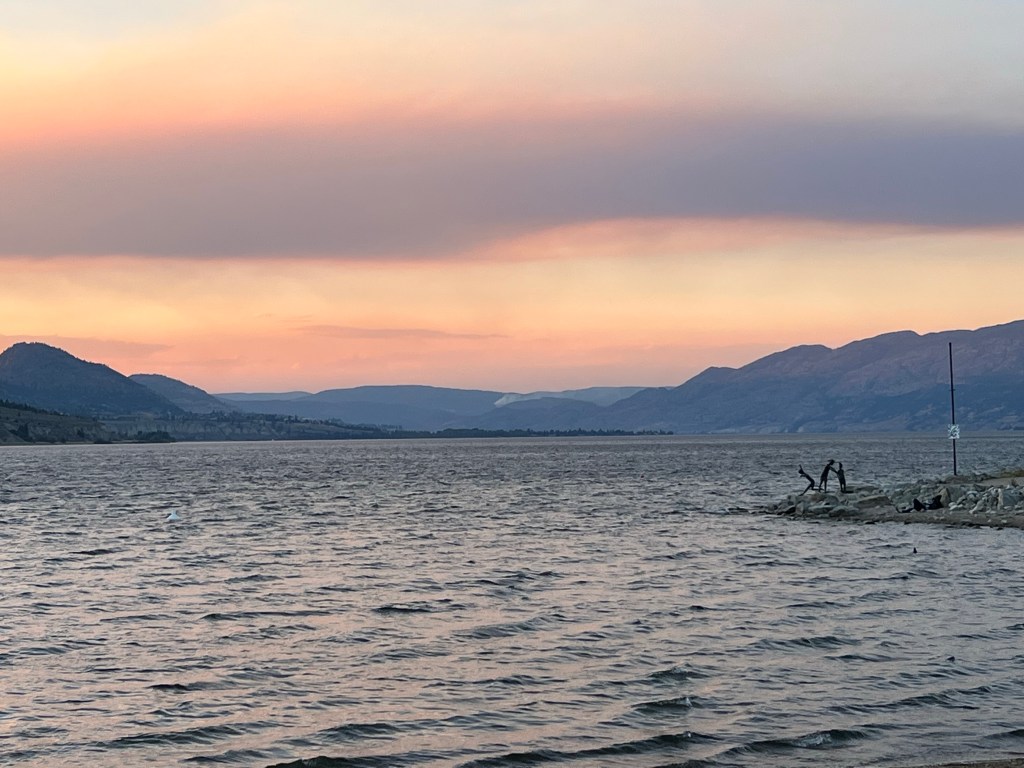
Smoke blanketing the valley at sunset.
Looks rather awful, doesn’t it?
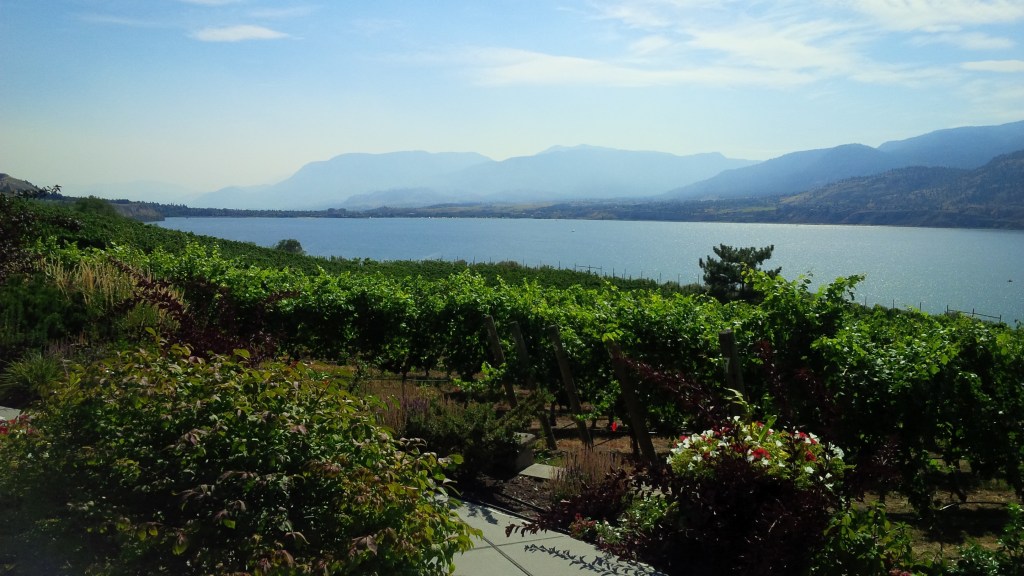
We are thankfully expecting several days of rain within the next 24 hours though, so I hope we will soon be looking more like the above picture very soon!
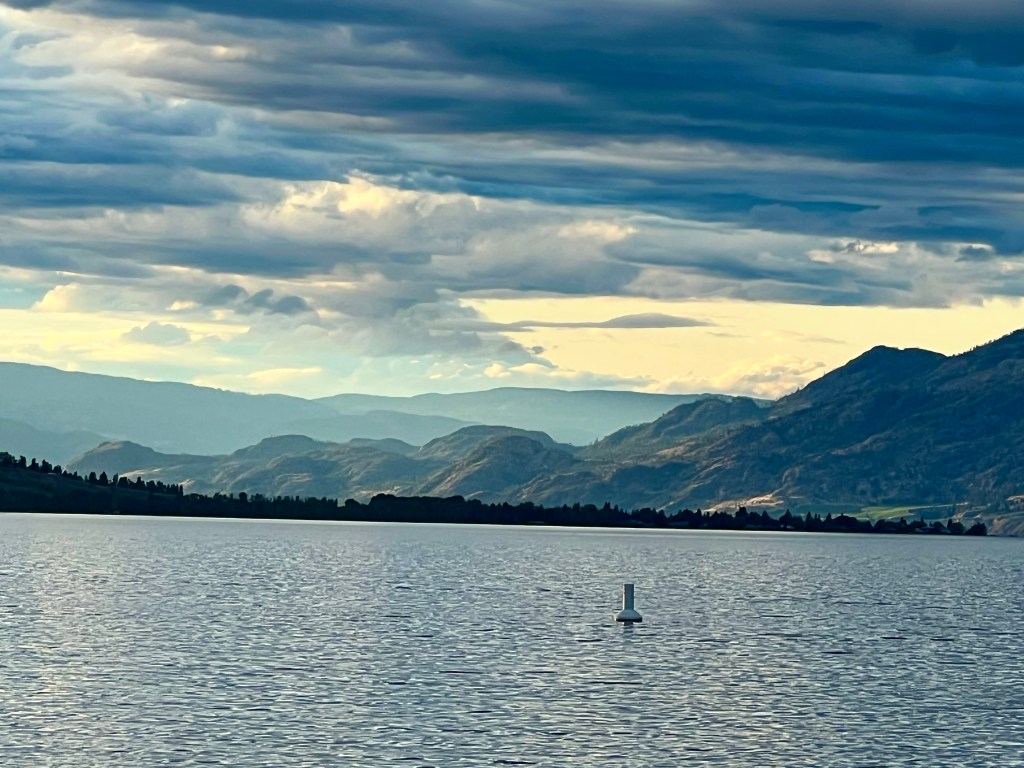
This morning Okanagan Lake was much more visible and the sky considerably cleaner. Officials are describing the forest fires in our area as “held,” which means they are under control and on their way to being completely extinguished.
Clear air.
We saw some smoke later in the day but it was comparatively little and indicated that the fire crews have made tremendous progress. It’s such wonderful news!
We finally got a good rainfall in the Okanagan which has helped tremendously with the fires in West Kelowna, Westbank First Nation, Lake Country and Kelowna.
A little evening rainfall.
M and I have been staying inside because the air quality has been so terrible. Our area was beginning to look like an apocalyptic movie; it was very dark out and the smell of wood smoke was extremely unsettling. At one point our fire alarm went off because smoke was managing to leak inside. Nevertheless, yesterday the air cleared up enough for us to take a short walk outside.
Okanagan Lake beach cloaked in smoke.
The beaches were eerily empty – the premier had asked tourists to leave because hotel spaces were needed for evacuees – and the downtown was uncharacteristically quiet for this time of year. After days of concentrated acridity, we were at last able to see something of Okanagan Lake although it was still wearing a smoke veil. But as we were coming home, it happened – rain, that is. Finally there was a good soaking which has hugely aided in the fire fighting efforts. Today, most of the road closures were rescinded and the Okanagan travel ban has been lifted. Hopefully, our skies will soon be completely clear again.
Many in the Okanagan have lost homes and possessions and are facing the huge task of re-building and starting over. I wish them all the best for the future.
The environmental damage has been enormous. All the hectares of forests, all the animals, the atmosphere … The only good news is that at least no one was hurt or injured, in part a testament to the forest fire safety planning and execution of those plans and to the extreme efforts of fire fighting personnel and their supporters.
My friends and colleagues in the Northwest Territories are still under threat and have been evacuated to numerous places all over the country. Although those fires seem to be holding, I hope they will soon be out and everyone is able to safely return home.
Four leaf clovers only occur about once in 10,000 clovers, so finding one really is quite lucky. Here’s a picture of one from several years ago; it was subsequently framed and kept in a prominent location.
I’m not a believer in horse shoe luck or four leaf clover luck or ladybug luck. But if anyone needs luck right now it’s the people who have lost homes, possessions, neighbourhoods and in some cases, entire communities to these raging fires that are afflicting this country. The other group that needs luck are the fire fighters and their supporters. Here in the Okanagan they are often doing 40 hour shifts under the most extremely trying and difficult circumstances.
We have smoky skies right now because of another fire, but it’s nothing like the smoke, embers, and fires many others in this country are presently facing: evacuations, air rescues and lifts, loss of homes and possessions, appalling environmental damage … all I can say in the positive is that at least no one has been hurt.
Right now, Canada is facing its worse fire season in recorded history. We’re the second-largest country in the world (after Russia), almost half of that expanse is forest, and a lot of it is presently on fire. So far, an area the size of Portugal has already burned.
There are so many fires that they have to be triaged; in other words, the most threatening to human life and property get the most attention. While many fire fighters from around the world have selflessly come to help, there aren’t enough in the world to deal with all these fires; a sad and wrenching fact.
I hope the many fires we are experiencing throughout the country are soon extinguished, especially in the Northwest Territories where the damage has been extreme and the threat is still very present. Yellowknife, the capital, is now being evacuated.
A smoke imbued sunset above Lake Okanagan from fires to the south of us in Idaho and Washington settles over the valley. If you look at the back of the photo in the centre, you can see yet another smoke plume. I hope that one was extinguished quickly.
Wherever you are, I hope you’re having a smoke-free Friday.
I am heading to the Northwest Territories, leaving behind my beautiful but smoky Okanagan Valley; we are presently socked in by smoke from a huge fire to the north of us.
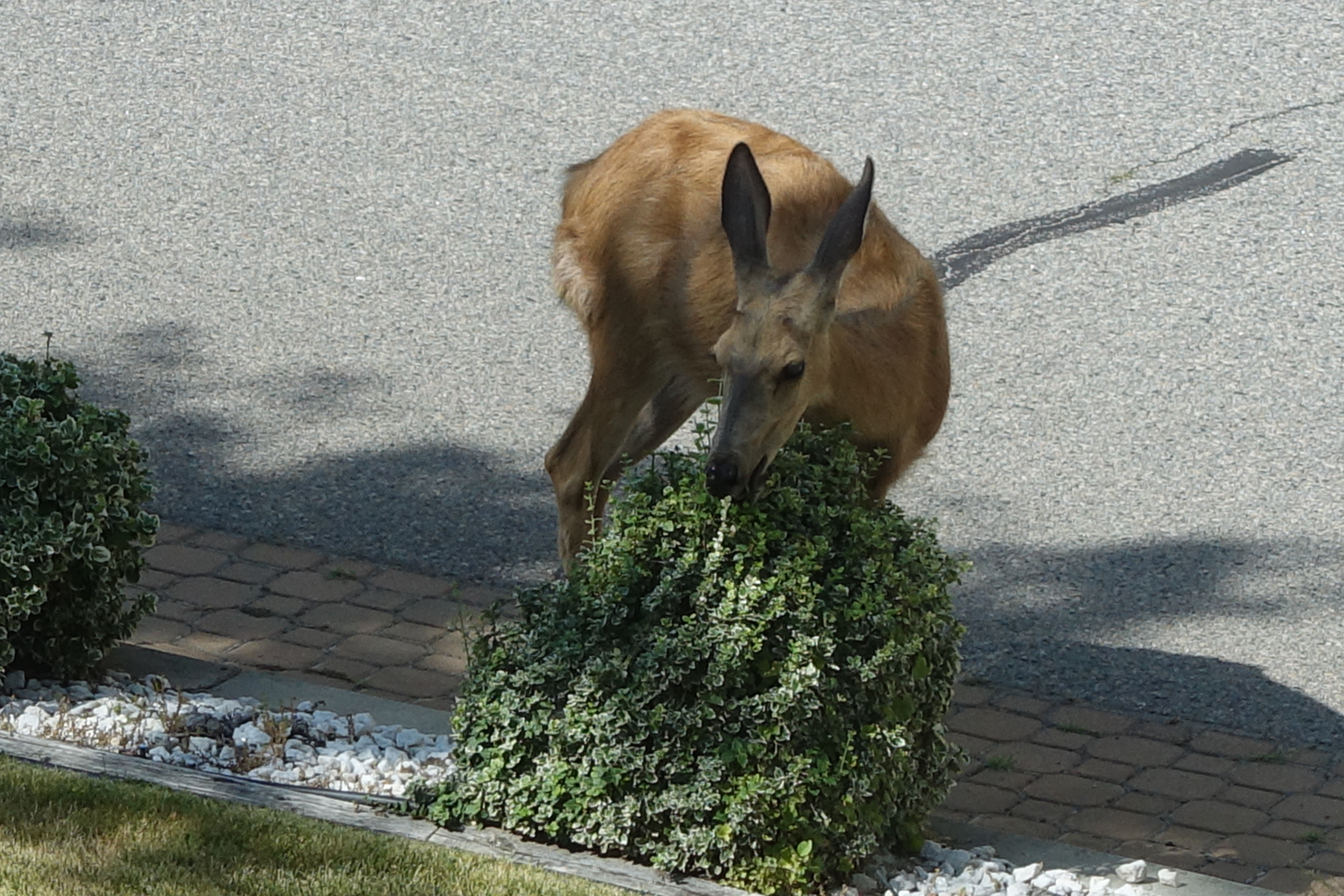
This little deer stopped by our place for a snack.
Does this one taste good?
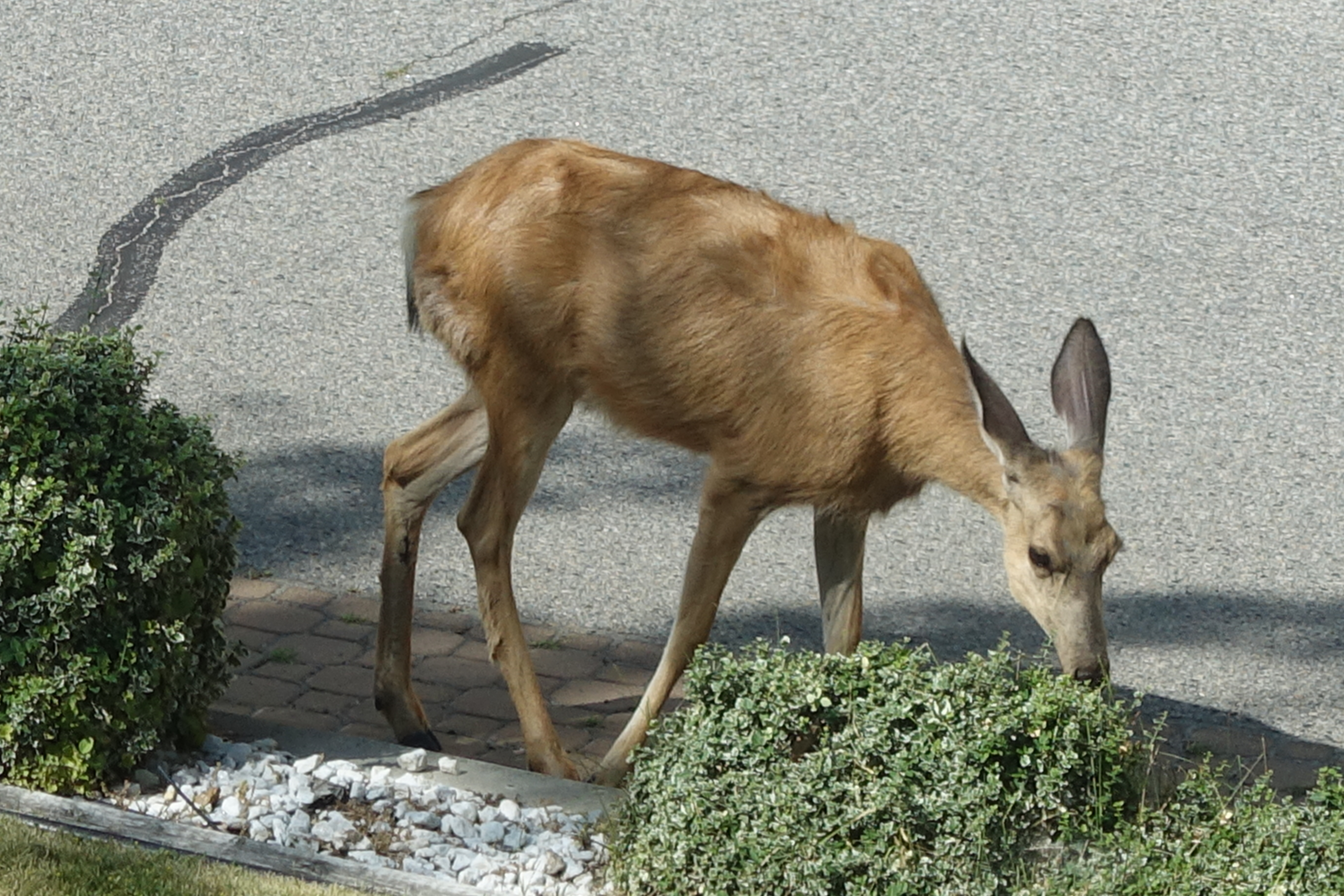
She looked a little skinny and bedraggled and her face seemed a bit injured. I wondered if she had escaped our huge, nearby fire.
Maybe I’ll try this one.
She didn’t seem upset or perturbed, though.
No, I like the first one better.
There has been an uptick in the number of deer and other animals (apparently, bears as well) we are seeing in the city, probably because of the fires. They are finding refuge wherever they can, but it’s terrible to realise there are many animals who haven’t escaped or are badly injured.
After our time under the “heat dome” where our temperatures reached into the mid-to-high C40s, we have finally cooled down to the more usual, which is about low-to-mid 30s for this time of year.
After all that extreme heat and only very minimal precipitation, moisture conditions are dire and fires are developing everywhere. Currently, there are 180 fires in British Columbia, 12 of which are a potential threat to safety. Additionally, the smoke and heat from these fires are combining to create a separate weather system that has lead to huge vertical smoke clouds with their own lightening bolts and fire tornadoes.
A smoke-hazy Okanagan Lake from Saturday.
One fire has already consumed the majority of a small town, Lytton, which became famous for breaking temperature records in Canada for three days in a row. Before 90% of it was destroyed late last week by a swiftly-moving fire, it recorded a temperature of 49.5°C (121°F).
There are no fires in our immediate vicinity, but there is smoke.
Clear views from a nearby location a year ago.
I hope that we get some rain soon and the firefighters are able to get these fires under control, but this will likely be just a temporary fix. Climate scientists have indicated that we should start expecting much more of this in the seasons to come.
The Okanagan city of Penticton was recently threatened by a forest fire. There were evacuations and many people were on alert.
Through the unceasing efforts of firefighters and pilots, the fire was doused with nearby lake water and is now under control. The alert has ended and everyone is safe.
I wish a quick end to the fires in California and safety to everyone in its vicinity.






 In the Net! - Pictures and Stories of Life