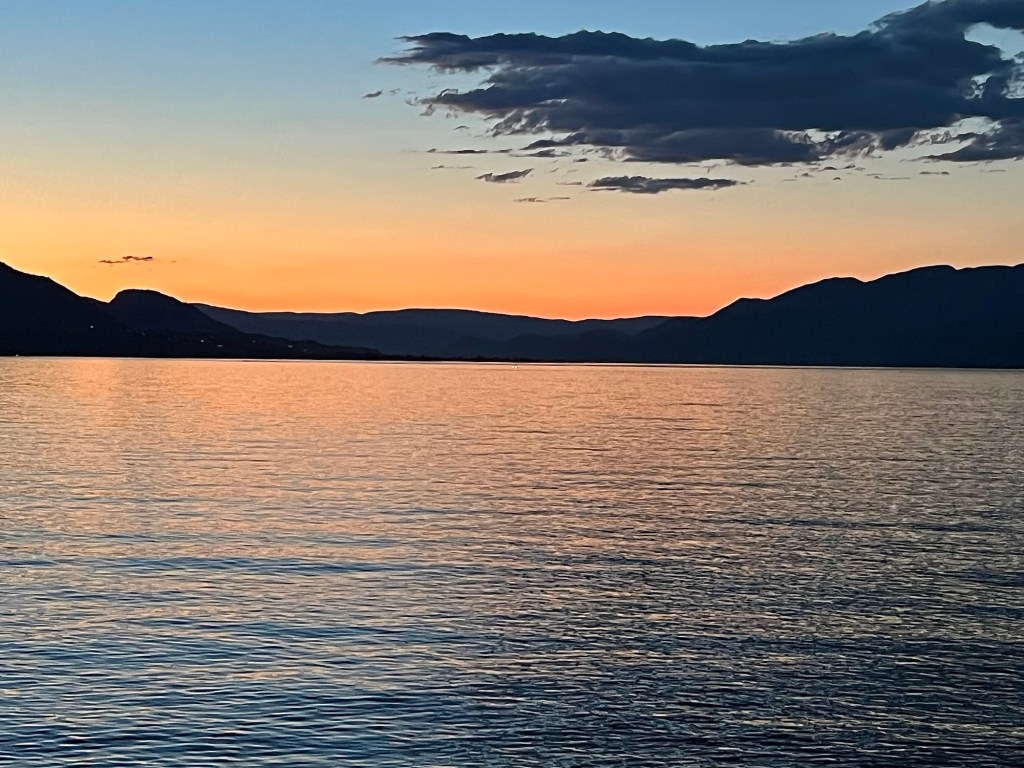
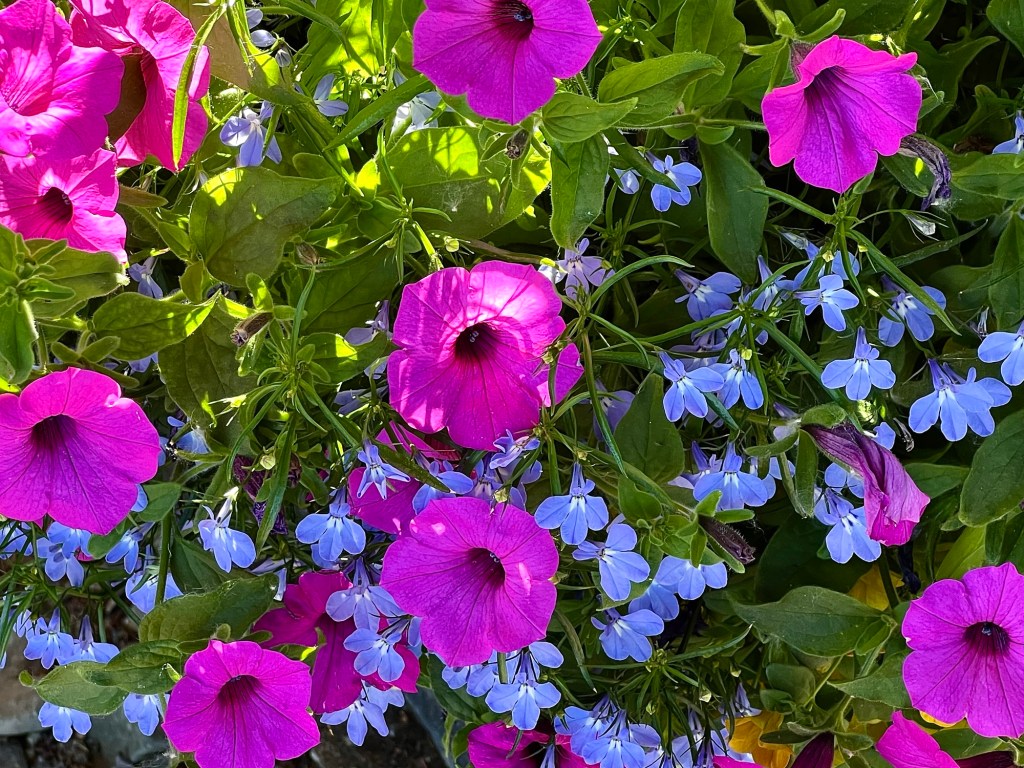
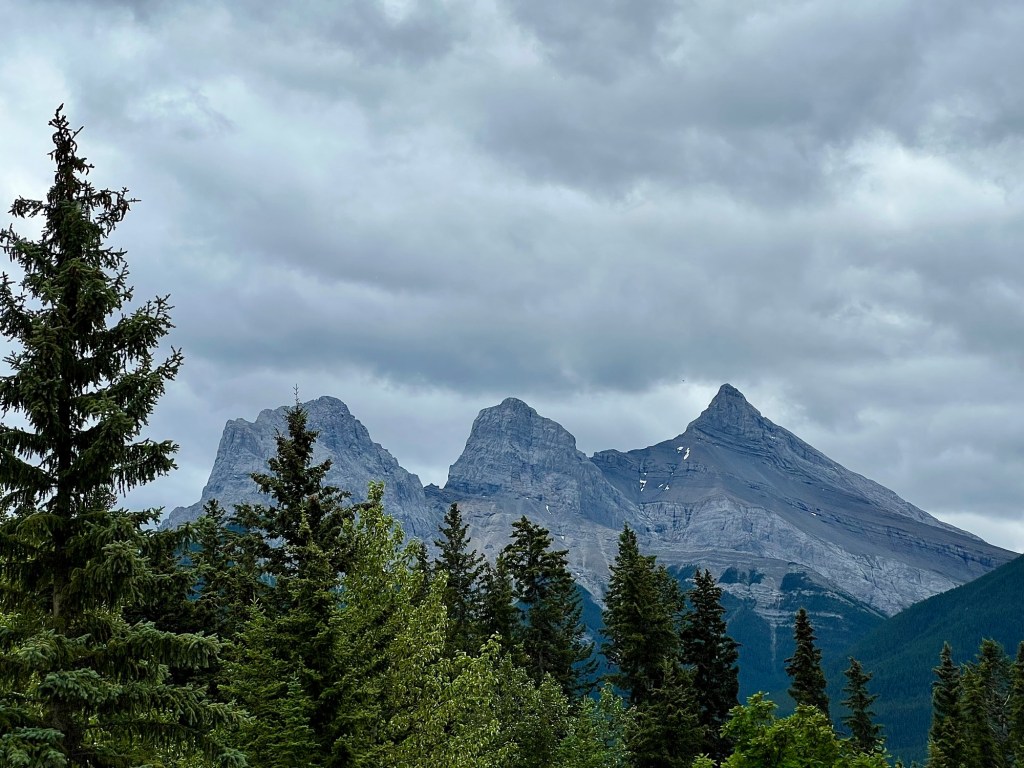
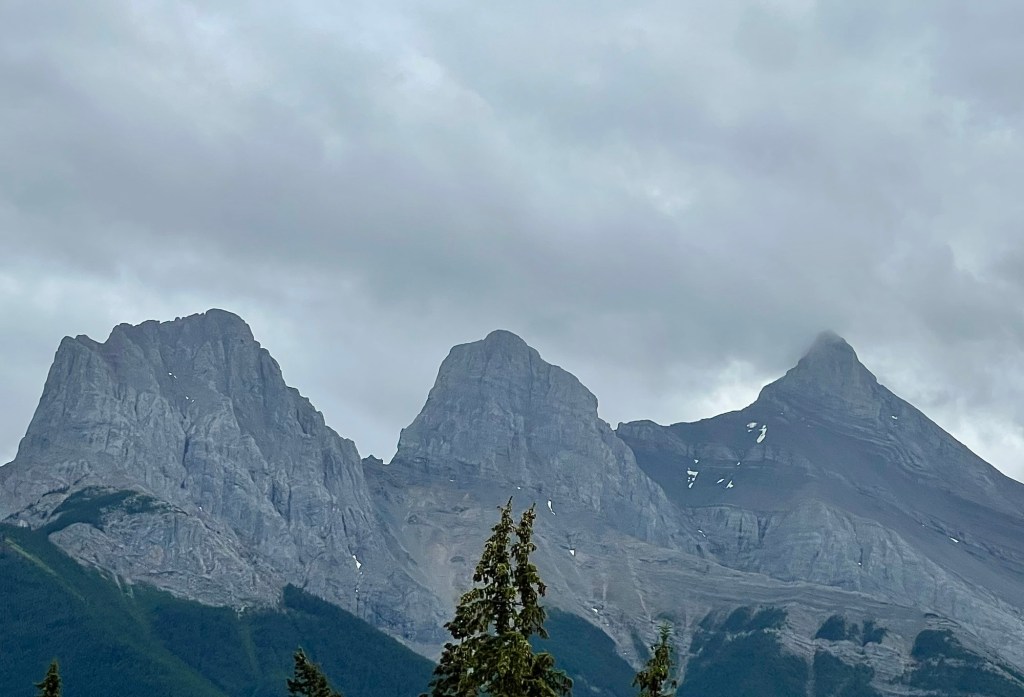
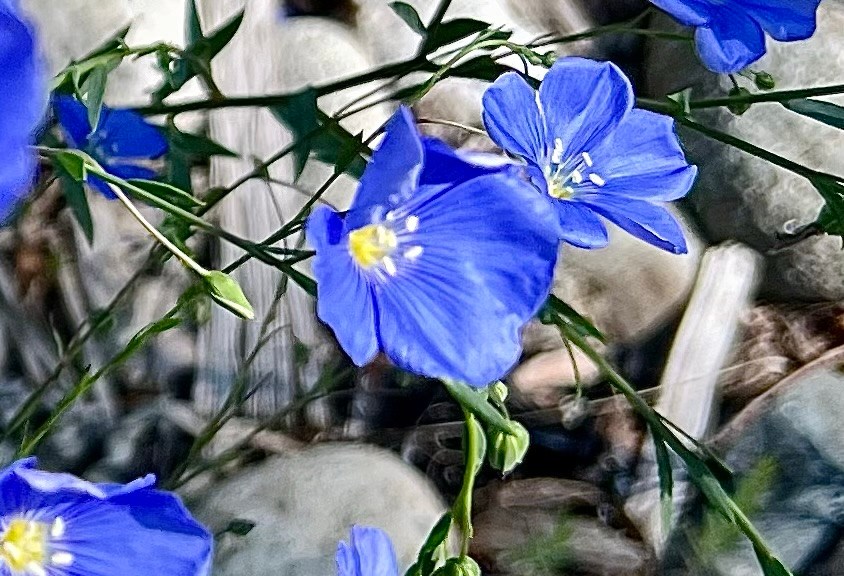
June is bursting with lovely flowers! Here are a few that I’ve seen over the last week.


Happy Friday.
June is bursting with lovely flowers! Here are a few that I’ve seen over the last week.


Happy Friday.

The crystal clear Edith Lake is a sight to behold …

… especially when it glows a somnolent blue and turquoise on a warm, late afternoon …
Happy Thursday.

Wordless Wednesday 6/4/25
A beautiful moon shot from Laura at Laura Roettiger Books. Please click the link above to see more of her lovely photography.
We travelled south on the Ice Fields Parkway – so named because of all the ice fields or glaciers that are visible along the way – through the Rocky Mountains from Jasper National Park to Banff National Park.

This beautiful route parallels the Athabasca River along the way.

This river is quite murky because of all the rock particles it contains …

… but its power and beauty are nevertheless undeniable.


Happy Wednesday.
We had a lovely day hike through the Maligne Lake and River section of Jasper National Park.


The warm weather, bright sun and fresh air was wonderful.
Happy Tuesday.
Seagulls. Bray, Ireland
I hope you enjoy this beautiful photo from Katarina Bodovski. Please click the link above to see more of Katarina’s lovely pictures.
On July 21, 2024, four wildfires started within the boundaries of Jasper National Park. At the time, the park had been experiencing serious drought conditions that were accompanied by hot, dry winds. Three of the fires were caused by dry lightening strikes and the fourth through human ignition: sparks from work on a car engine started a grass fire that quickly escalated.

The next day, July 22, all four fires merged into the largest one ever recorded in the park for the previous 100 years; it eventually developed a self-perpetuating weather system containing fire tornadoes and continuous high winds.

By July 25, 25,000 people had been evacuated from Jasper townsite and the park itself. By July 26, Parks Canada announced that 358 of the 1,113 structures within Jasper townsite were damaged or destroyed but that all critical infrastructure such as the hospital, schools, and the wastewater treatment plant were saved.

It took until August 17 for the fire to be classified as “held” and on September 7, it was declared as “contained.” One fatality occurred; a firefighter died when a burning tree fell on him.

It’s completely normal for forests to periodically experience burns. Decades-long collections of dry forest floor detritus together with occasional hot summers have always caused them.
It’s also normal for our planet to experience periodic warming and cooling trends. However, the normal heating trend that we’re currently experiencing has been exacerbated by human activity which has lead to higher temperatures and drier conditions than we should have; this in turn brings about more and larger fires. These fires lead to more planetary heat, and the cycle continues to grow.

Nature is amazingly resilient, however. It has been less than a year and already the grasses and bushes are returning; the ungulates love eating the new growth and they have the added advantage of being able to better see the predators! The trails – even through burned areas – are re-opening and visitors are returning, too.

Much of this gorgeous gem of a park escaped the fire …
… and after a morning of clear-sky hiking through stunning scenery we sat next to this lovely river to eat lunch. This particular restaurant had a great view!

Jasper’s fire is a reminder that nature does things in ways that she selects as healthy responses to certain conditions; sometimes, those responses are swift, brutal and merciless. But human interference in that process will eventually lead to consequences, consequences that are worse than what we’re now seeing with the cataclysmic sweep of fires now burning through three of our western provinces.

Let’s hope that we learn nature’s lessons before she decides that we’re the problem and we’re selected for discontinuation.
During our recent trip through northern British Columbia, Yukon and on to Jasper National Park we saw lots of animals, but they visually weren’t at their best. They have just come through winter, they’re in the process of shedding their coats, and they either have young ones or are about to. In short, they are busy parents just trying to recover from winter cold!


Being able to see all these animals was particularly wonderful especially as most of our sightings were in a national park where they are well protected.
Happy Sunday.
After a drive from Fort St. John, we arrived at Jasper National Park’s Patricia Lake where we would stay at Patricia Lake Bungalows for the following three days.

It was a good day but also a long one, so it was wonderful to be welcomed by these attractive scenes.

We found it to be an extremely relaxing, lovely place to stay …

… and we enjoyed every moment we could with this stunningly gorgeous, glacially green-tinted lake.

Many thanks to Allan (https://10yearsin0.wordpress.com) who first blogged about his stays there.
The next leg of our trip took us from Muncho Lake to Fort St. John, a six-and-a-half hour journey that we broke up by stopping to take walks and also to admire the magnificent scenery along this route (highway 97 or also called the Alcan or Alaska Highway).

Because there are so many beautiful natural sights, you will need to stop often to really do them justice …

… but I have learned over the years how to take pictures from a moving vehicle, too (not while driving, though!).

That said, stopping is best, both to stretch your legs as well as to see all these stunning natural wonders.


The next day found us arriving at one of Canada’s gems, Jasper National Park, so there are more posts coming about that beautiful part of the world. That said, any visit to Jasper also includes a look at the terrible destruction caused by the forest fires that started there in late July, 2024.