Entitled Watching You Watching Them, this photographer was gifted with an example of the bird he was studying right outside his cabin window.
The Cordilleran flycatcher is declining across western North America as the changing climate causes shrinkage of the riparian habitats (i.e. river and other freshwater corridors) along its migratory routes and on its wintering grounds in Mexico. In Montana’s Rocky Mountain Front, it typically nests in crevices and on canyon shelves. But one pair picked this remote research cabin instead, perhaps to avoid predation. The nest was built on the head of a window frame by the female. Both parents were feeding the nestlings, flying out to snatch insects in mid-air or hovering to pick them off leaves.
So as not to disturb the birds or attract predators to the nest, Alex Badyaev hid his camera behind a large piece of bark on an ancient spruce tree leaning against the cabin. He directed a flash toward the trunk, so the scene would be illuminated by reflection, and operated the setup remotely from the cabin. He captured his shot as the female paused to check on her four nestlings. Behind her—the cabin serving as a conveniently spacious blind—the biologist recorded his observations.
The Deh Cho Bridge is a one km-long cable-stayed bridge across a 1.6 km span of the Mackenzie River on the Yellowknife Highway near Fort Providence, Northwest Territories.
I’ve crossed many bridges, both physical and figurative. Some have been “cable-stayed” and others have been ready to fall into an immense crevasse.
The figurative bridges have sometimes been the very worst and I would have given anything to have had decking under my feet.
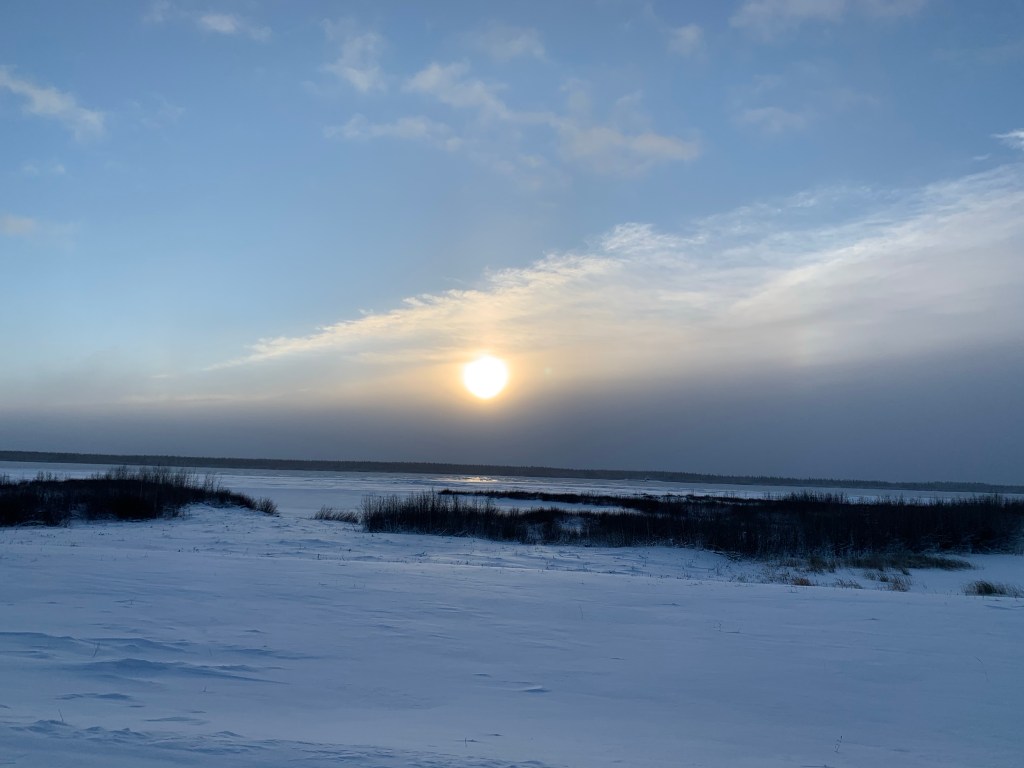
The Northwest Territories’ Mackenzie River is the centre point of the longest river system in Canada, and includes the second largest drainage basin of any North American river after the Mississippi.
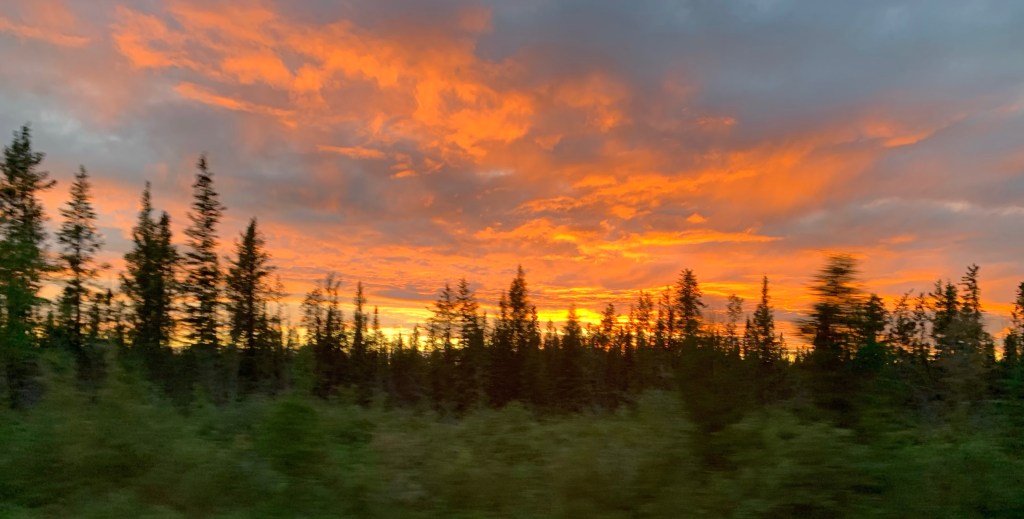
Winter Mackenzie RiverSummer Mackenzie River
At times, it’s large enough to make you feel as if you’re on an ocean.
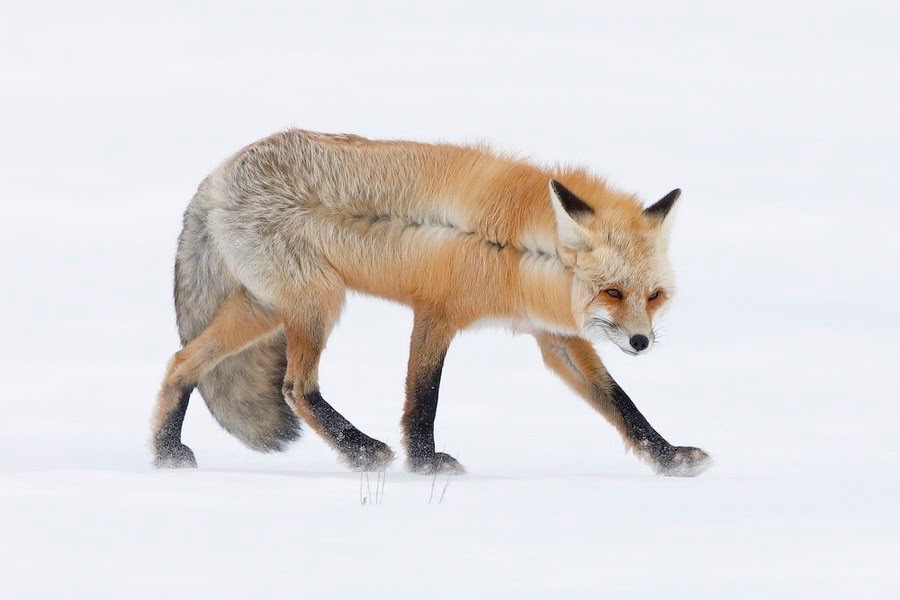
A determined fox continues to hunt, despite the nasty weather.
John Blumenkamp Wildlife Photographer of the Year
Entitled A Fox for All Seasons, this photograph was taken on a freezing February afternoon in Yellowstone National Park in Wyoming. Photographer John Blumenkamp watched the fox for hours, weathering the wind and sudden drops in temperature to take this stark image of a winter survivor.
Frank Deschandol / Wildlife Photographer of the Year
This amazing photo was taken in France and shows two different types of wasp: the red-banded sand wasp (left) and the cuckoo wasp (right). The photographer was trying to capture the cuckoo wasp but got a bonus with both of them.
I’m not a fan of wasps, but this photo is beautiful and the work it took to get it pretty amazing.
As a mostly northern country, we sometimes face interesting considerations.
File photo.
Officials in Jasper National Park, Alberta, are warning motorists not to let moose lick the salt from their vehicles.
And they are extremely attracted to salt, especially the kind that may be all over your vehicle in the winter.
Parks Canada file photo.
As you may imagine, an 820 kilo (1800 lb.) moose coming near your car might not be a good thing. It’s dangerous for them and you; moose can be aggressive and will charge if they feel threatened. And, as an added incentive, there’s a $25,000.00 fine for non-compliance.
Another reason for the problem is that the wolf population (the main moose predator) has been declining, and now there are more moose than usual.
The advice? Drive away carefully when you see moose approaching your vehicle.








 In the Net! - Pictures and Stories of Life