In common with the rest of western Canada, we’ve suddenly turned colder. We’re still above 0C (32F) during the day but are going below 0 at night. Meanwhile, Vancouver, very unusually, is apparently going to get wet snow and minus temperatures overnight as well. Ugh.
Of course, here in the Okanagan Valley we have it comparatively easy. Much of the prairies are getting highs around -20C (-4 F). Strangely though, a lot of the east is coming in at +20C (68F) but may be getting much colder toward the end of the week. Nevertheless, if you’re about to travel from east to west, a 40 degree temperature difference might make for a bit of a packing challenge – such wild weather!
So to take our minds off these bizarre differences, I thought we could do with some brighter pictures of what is to come.
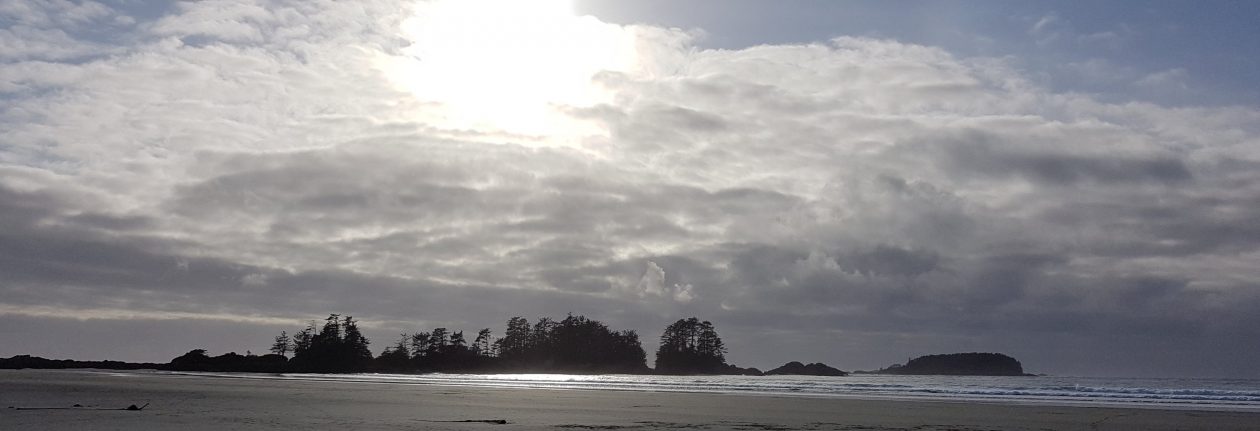
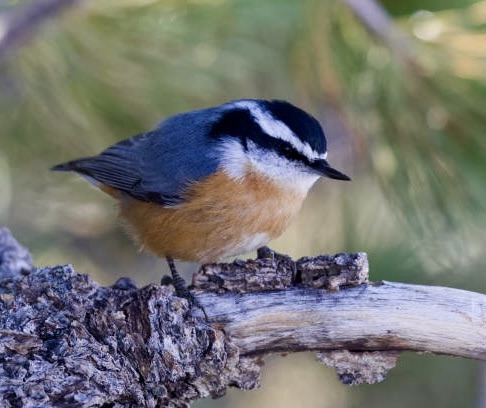
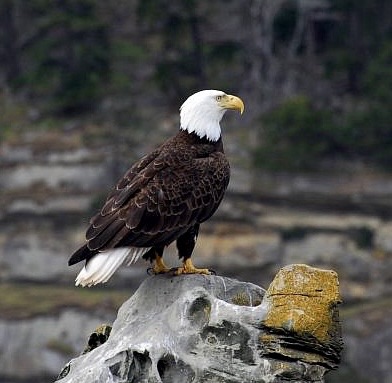
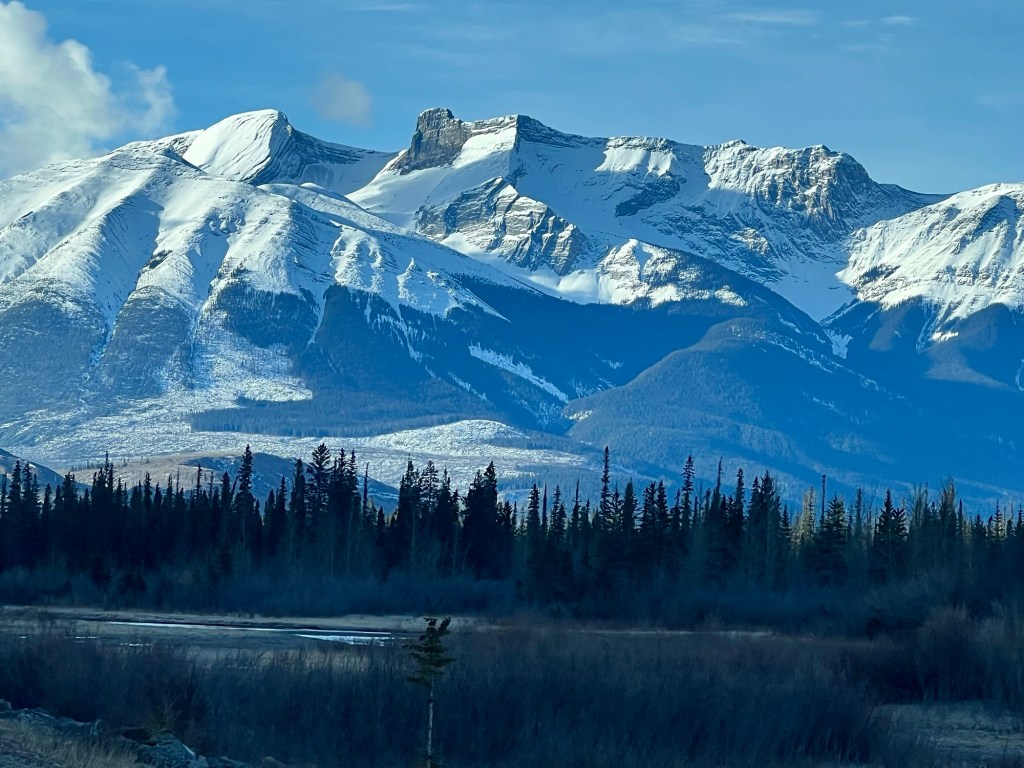
Nuthatch cuteness. Eagle magnificence. A butterfly tea rose. A sunflower with friend. Southern sunset beauty.
Happy March! It’s definitely the month for weather variability if not unpredictability. Cold wind one minute, warm sun the next. Depending on where you live, there might even be snow, sun, sleet, and thunderstorms all during the same day! It can at times be absolutely *spinny.
Although our weather has been somewhat unpredictable over the last couple of months – something that seems to be true in many locations – I hope it begins to settle into a nice slow spring.
Slow would be very, very good as we can probably then avoid a similar forest fire season as last year’s, something that is desperately needed given that much of the province is still classified as suffering from severe drought.
Happy weekend.
* spinny – Canadian word meaning foolish, silly or unreasonable
An uncommon intersection is occurring today: a leap year, a lion-like in-coming March and, I hope, an out-going lamb-like March.
The last time we had a February 29 was in 2020, and I hope there isn’t a repeat of what was shortly to follow, of what had actually already started. I was still in the Northwest Territories then, and I took this picture of children having immense fun playing on a giant pile of snow that had been pushed up by road-clearing vehicles. None of us knew it then, but they were coming up to having their fun seriously curtailed. March was arriving like a lamb, but Covid’s hobnailed boots were about to teach us a thing or two. Fortunately however, we are past that.
Herewith are some lion-like March starts:
NWT: cleaning up after a huge early March storm in 2022. NWT: an icicle, my heavy-duty truck plug-in cord and another early March clean-up, 2021.Penticton: a leaden, windy, chilly lion-like late February sky, 2024.
Some lamb-like March departures – I like the lambs more, don’t you?
Jasper National Park: April 2, 2023. NWT: an April 1 blue sky, 2022. NWT: under a bright blue April 2 sky in 2021.
And last but not least:
Vancouver Island: hiking in a rainforest, March 27, 2019.
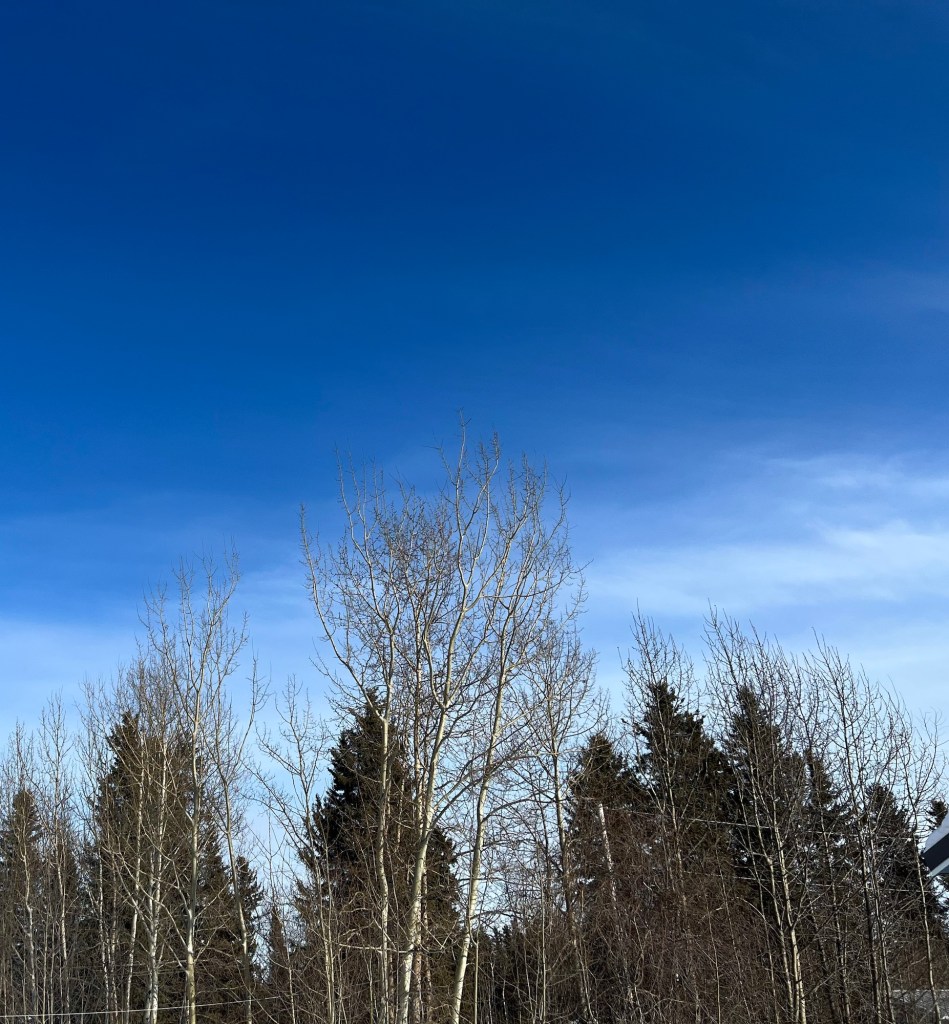
More often than not, March has done its lion- like best but has meekly disappeared by the time April arrives. Although we need a coolish, slower spring in order to facilitate our continued drought recovery – and to mitigate forest fires, too – there’s no reason why some sun and blue skies can’t be a part of that.
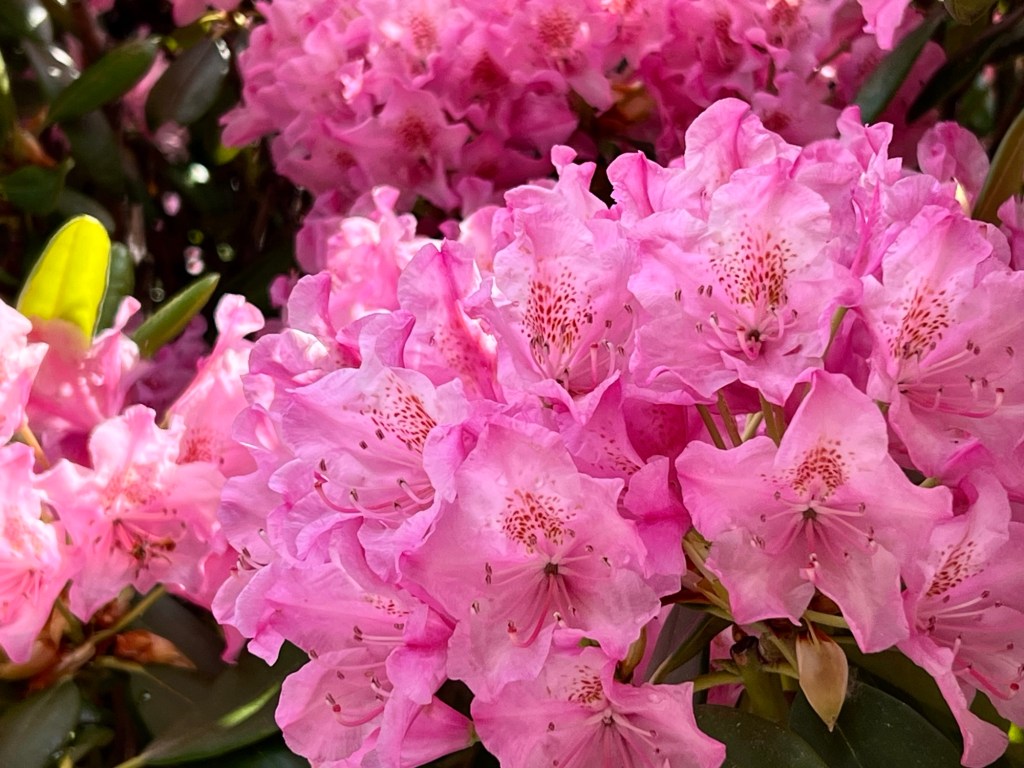
Penticton: May azaleas, 2023.
Happy Leap Year. It’s much better than the last one.
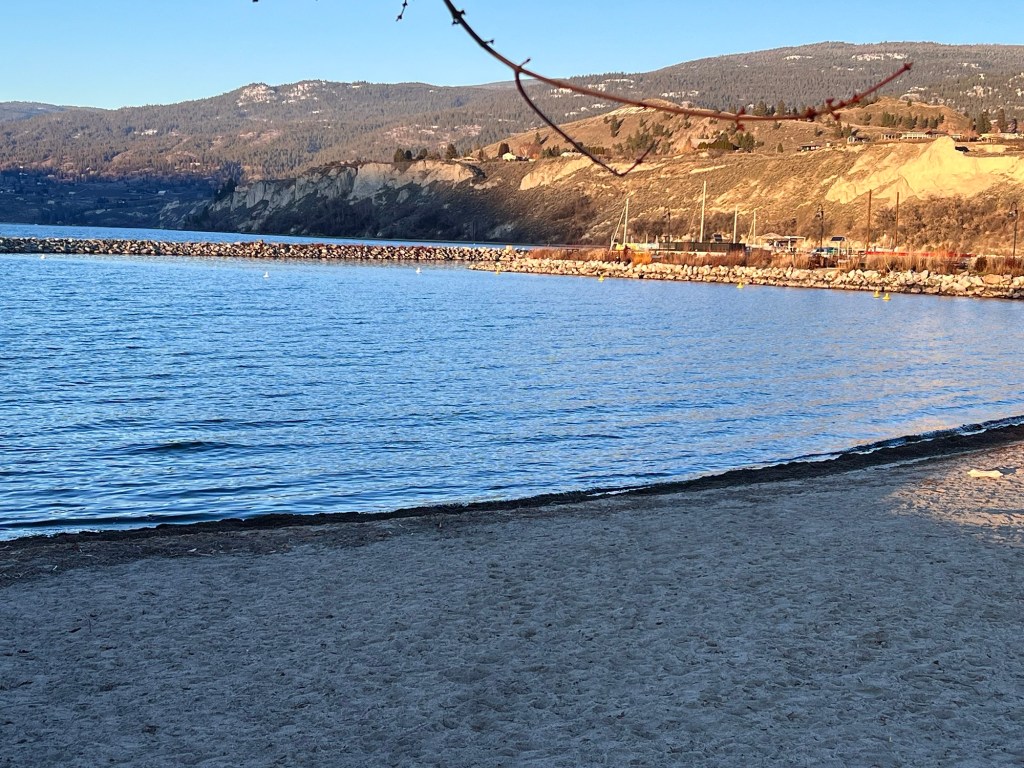
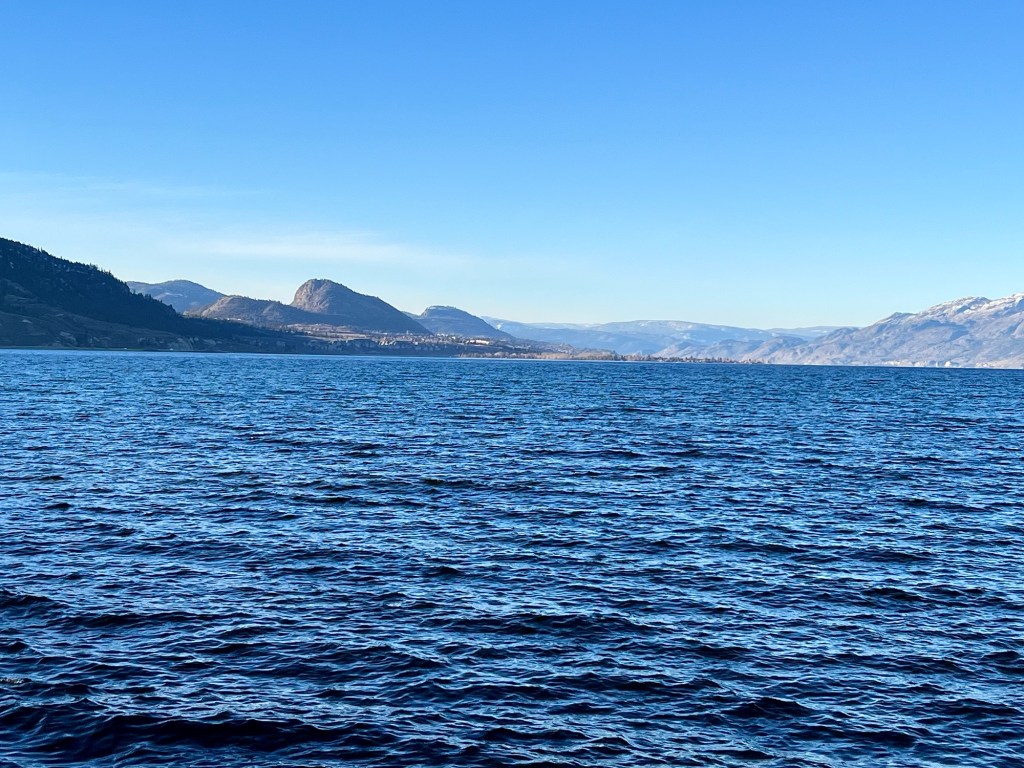
I recently took a walk on the beach beside the Penticton marina. It’s a small one tucked away on the east side of the lake, away from the bustle of the many hotels and restaurants on the west side.
Except for a couple of busy mergansers, it was completely empty. There were lots of duck tracks in the sand, but this day most of them were off somewhere else.
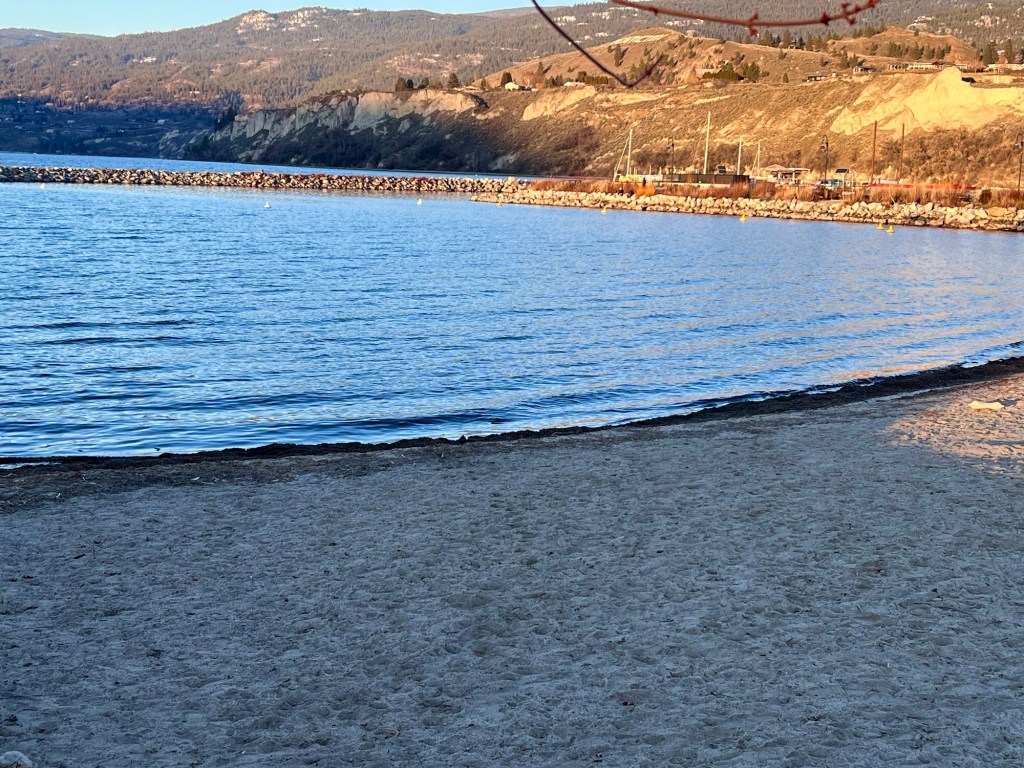
In the warmer months, this beach is very busy with swimmers, lots of families, sailboats going past, and picnickers. I’ve even seen people in early November, wearing light jackets but sitting on the beach in their lawn chairs, still enjoying the sun and the view. It’s laidback and unpretentious …
… and the scenery is rather fantastic. I’m glad that this little beach, bordered on one side by a park, to the north by the lake, to the east by the marina, and otherwise by nearby homes, is quietly available. But once we begin warming up, it won’t be lonely for long.
According to the groundhogs, we’re supposed to get an early spring. If memory serves, six weeks earlier. And since spring starts on March 16, then the early version should be underway now.
Certainly, we’ve had stabs at it for a bit here and there, but then the wind comes out of the north – there may or may not be a rain and/or snow accompaniment – and reminds us that there are glaciers and icicles way up there.
At least the sun has been shining and the sky has been blue! But I guess the lesson here is that I shouldn’t rely on weather prognosticators, either rodent or human.
… that is the blogging question. With apologies to Shakespeare, I’m referring to comments left on your blog. Do you make a point of answering all of them?
You can’t stop the ducks from making lots of comments!
Unless it’s spam, disrespectful or rude, I always answer comments, and if I should happen to miss one, I feel a bit upset when I spot it later on – I hope I haven’t missed any, but since I started this blog in 2012, I unfortunately probably have. It certainly hasn’t been intentional, however. Nevertheless, I make efforts to ensure that I answer anyone who takes the time to comment, even if the commenter has only left a generic “nice post” comment.
Comments about the Rocky Mountains? Definitely!
I sometimes find it mildly annoying when I leave a comment and there’s no response, especially if I’ve taken an inordinate amount of time to think carefully about what I want to say or if there have been responses to other comments but not mine. I give the benefit of the doubt – maybe my comment was simply missed – so this has never lead me to drop a follow.
Autumn colours are often comment-worthy.
How do you feel about unanswered comments? Do you have firm rules or are you rather laissez-faire? Do you feel it’s not necessary to answer all comments?
Although the origins of St Valentine’s Day are somewhat shrouded in mystery, it’s likely that it was intended by the early Christian church to replace the ancient Roman fertility feast and celebration of Lupercalia with a more religious one.
Lupercalia was evidently a licentious, drunken, three-day blowout from February 13-15 where animals were sacrificed and their skins used to beat young women – apparently to ensure their fertility – followed by young men pulling the names of these young women from a jar as part of a mating ritual: the lottery of love!
Sounds brutal. I think I would have been in hiding somewhere outside the Palatine Hill. Yikes.
Ostensibly, into this mix came a couple of early Christian priests named Valentine, both of whom were executed by Emperor Claudius II on February 14 but in different years. They were honoured by the early church with a celebration in their name: St. Valentine’s Day.
About three centuries later, Pope Gelasius tried to get people to wear clothes and to eliminate the pagan aspects of Lupercalia by reframing it as St. Valentine’s Day, which was supposed to be a day of religious reflection and observance.
In the meantime, though, the busy Normans were celebrating something called Galatin’s Day – galatin meant “lover of women.” It seems that the word galatin became confused with Valentine, the Normans conquered England and passed it on, and the rest is history. The pope’s effort to make the original celebration a religious one was in vain.
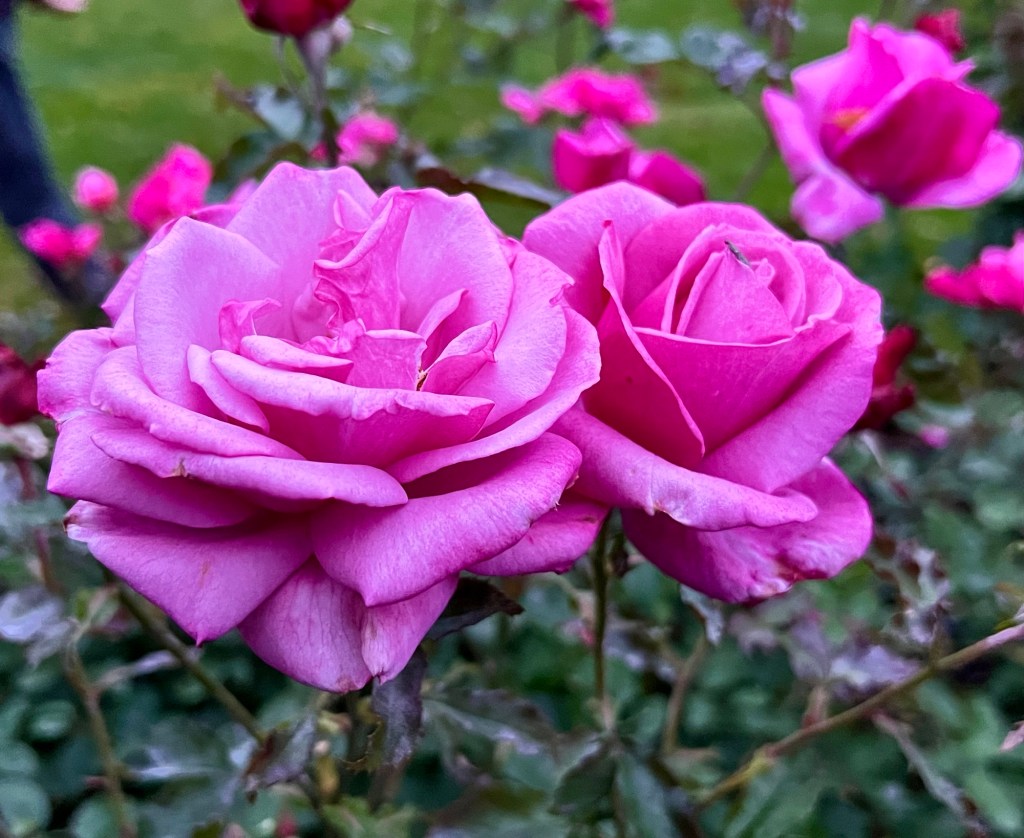
Throw in some major romanticism from Chaucer and Shakespeare and we now have a “day of love” that’s cast in stone – or maybe that’s rose petals.
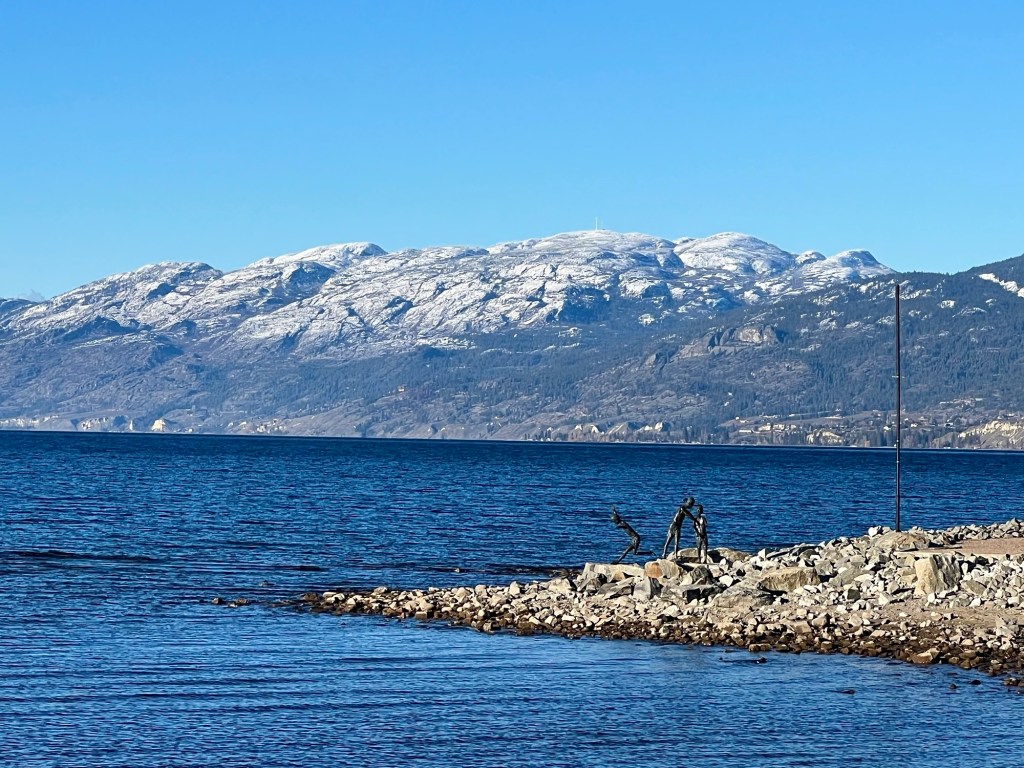
Yesterday’s snowfall/rain was quickly replaced by sunshine …
… but the mountains remain sprinkled in icing sugar snow.
The clear skies and spring-like air of the valley also reminded me that we aren’t far from the life represented by the sculptures on the rock promontory. Do you see them?
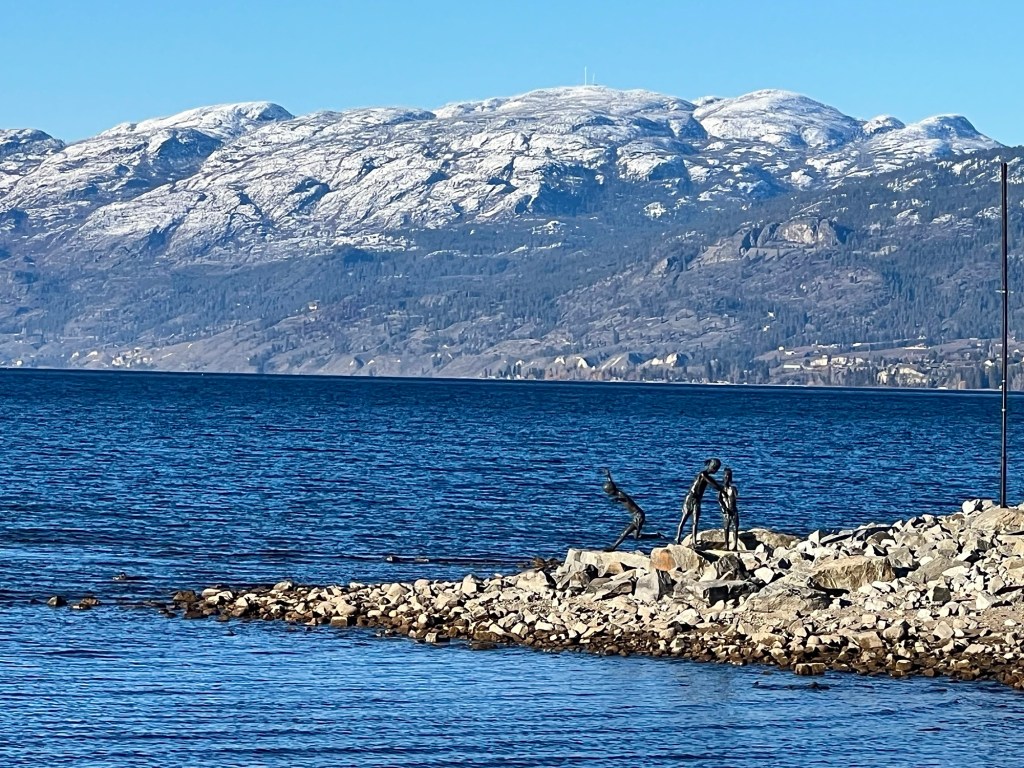
Here is a a much closer picture of them from a few summers ago.
These playing children – the epitome of carefree summer fun – remind me that even in February, we’re really not far from July.
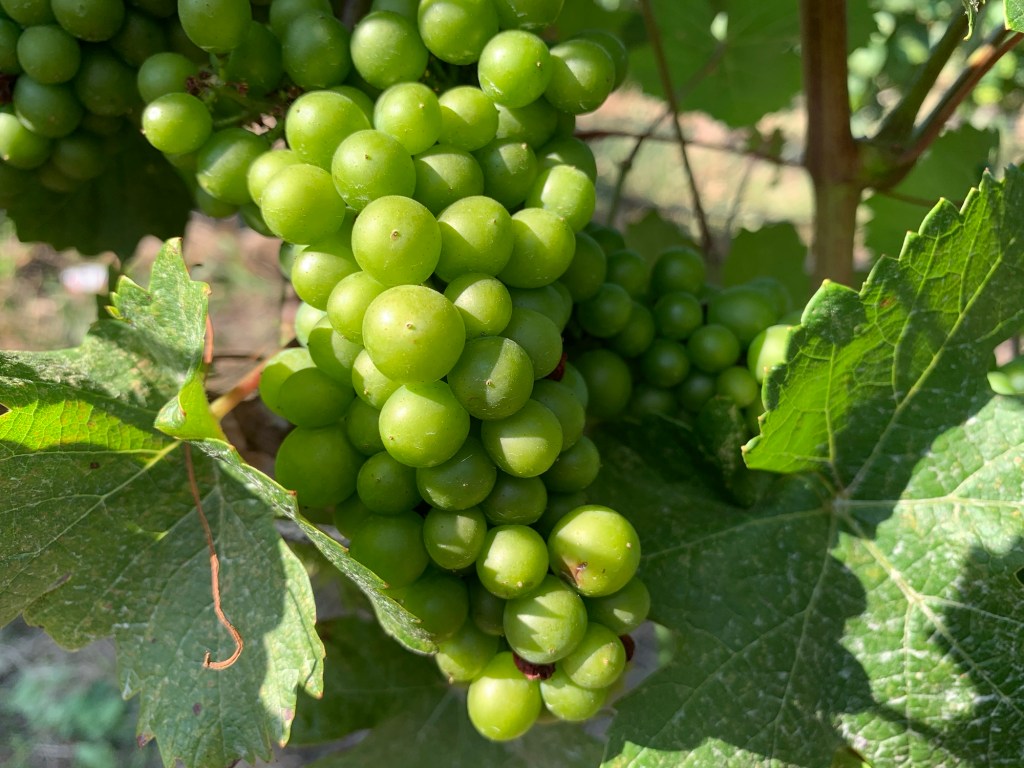
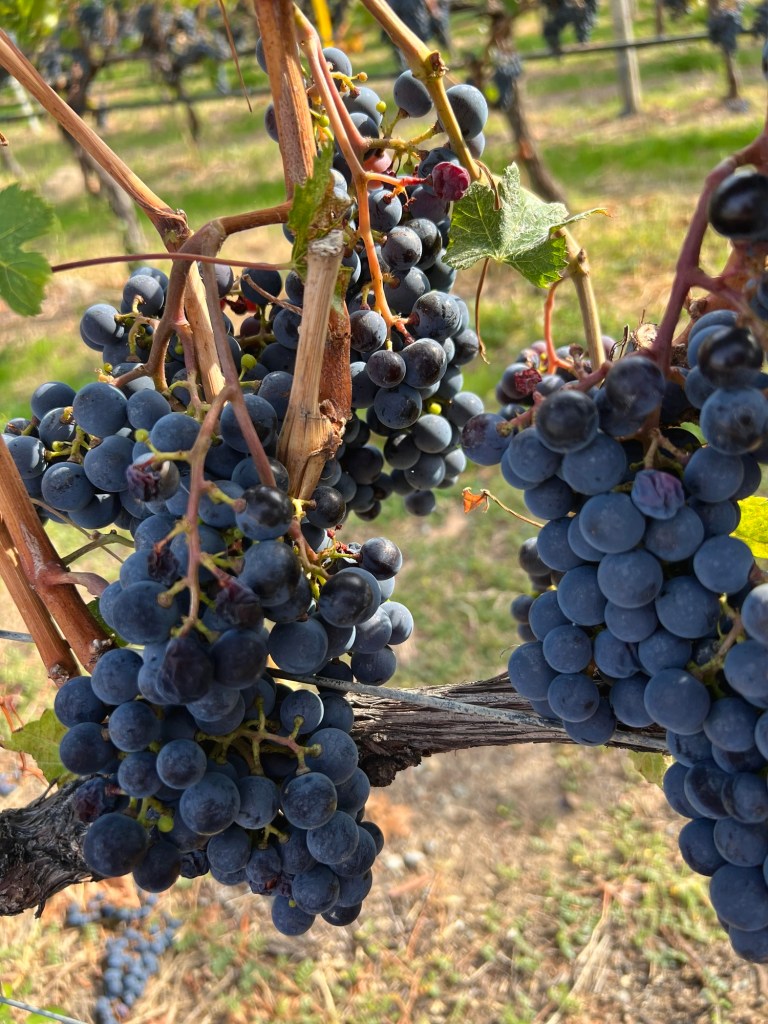
The Okanagan Valley experienced a deep freeze for a few days in January. At times, the temperature dropped to -25C (-13F), leaving farmers scrambling to protect their trees and vines with heaters, fire pots and continuously flowing water. In this area, such low temperatures are extremely unusual; the last time this type of freezing occurred was 34 years ago in 1990.
As you can imagine, the owners of orchards and in particular, wineries, are very worried about the damage that has been done. Some reports are that as much as 60% of the grape vines have been destroyed and that there has been significant damage to some of the orchards.
Farming has never been for the faint of heart. When everything falls into place, all goes well. But the number of unexpected issues, especially from the weather, can cause catastrophe.
A lot rides on agriculture in this valley. It’s heavily connected to tourism and is also a huge employer, but the smoke and fires from last summer together with the January freeze may make it impossible for some people to continue. I hope not, but life is sometimes extraordinarily unfair.
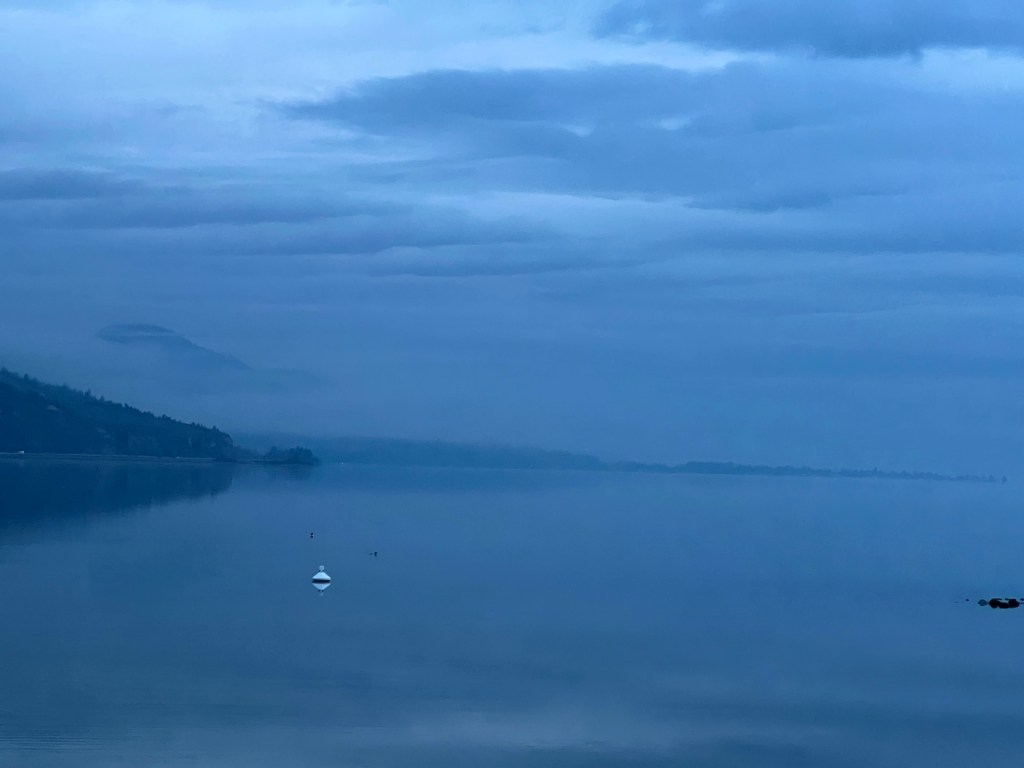
Okanagan Lake has been incredibly foggy over the last week.
The skyscape and moody, ethereal atmosphere has been incredible.
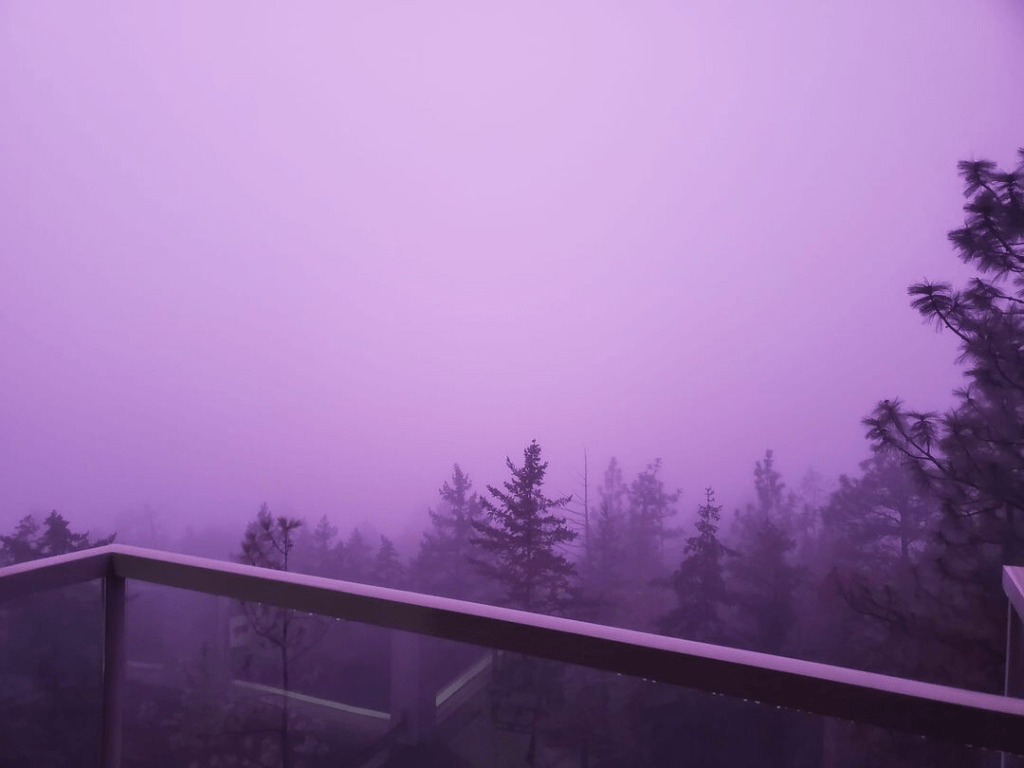
We have even experienced a very rare pink fog.
Photo courtesy of Dana Coates
Yes, a pink fog – there were no filters applied to the above photo. The heavy moisture content in the air caused the blue wavelengths of the rising sun to be scattered out, resulting in a pink fog. Further up the valley, the fog was actually red. This incredibly rare phenomenon didn’t last long; only about 10 minutes.
Pink or not, the fog is beautiful, and there’s one other advantage: any groundhogs lurking about will definitely not be seeing their shadows and sending us six more weeks of winter!













 In the Net! - Pictures and Stories of Life