Tag Archives: travel

Should I Visit Jasper National Park?

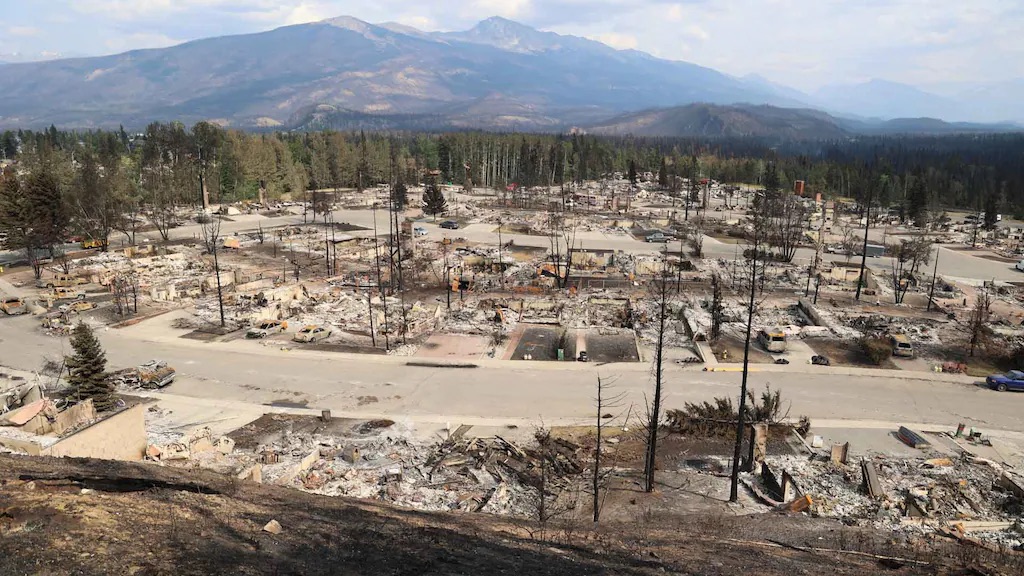
The answer to that question is a resounding yes! Although in the summer of 2024 Jasper National Park suffered a terrible forest fire that resulted in the destruction or serious damage of a third of the townsite and the loss of 325 square kilometres (202 sq miles) of park forest, it is recovering well and appropriately.

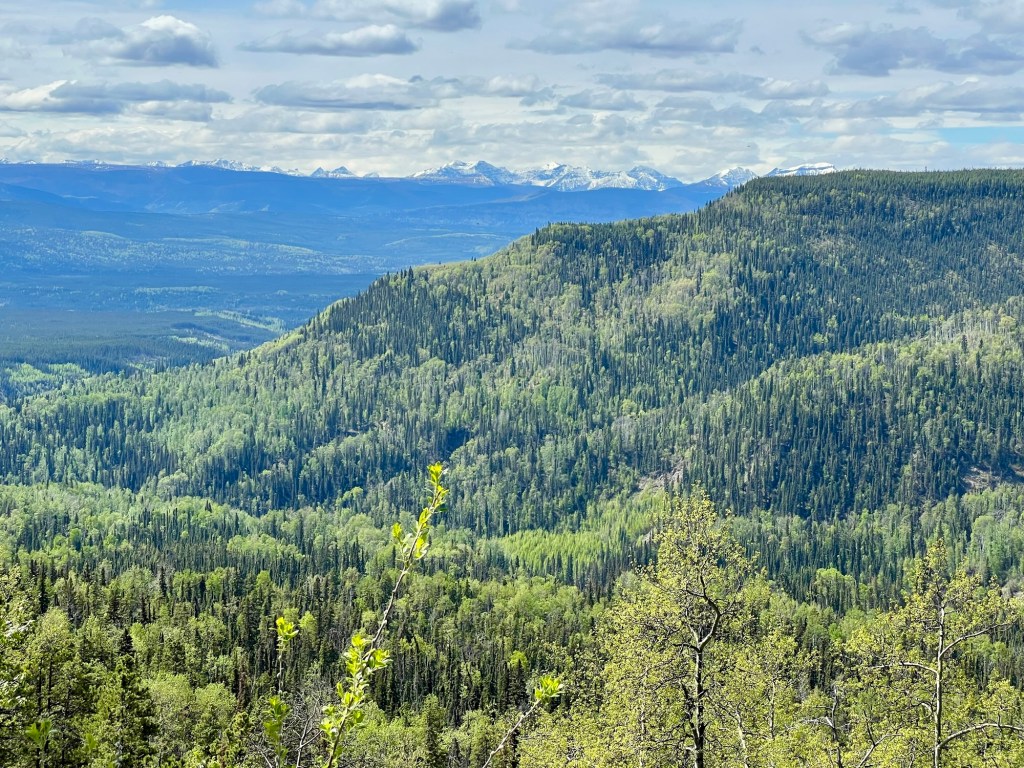
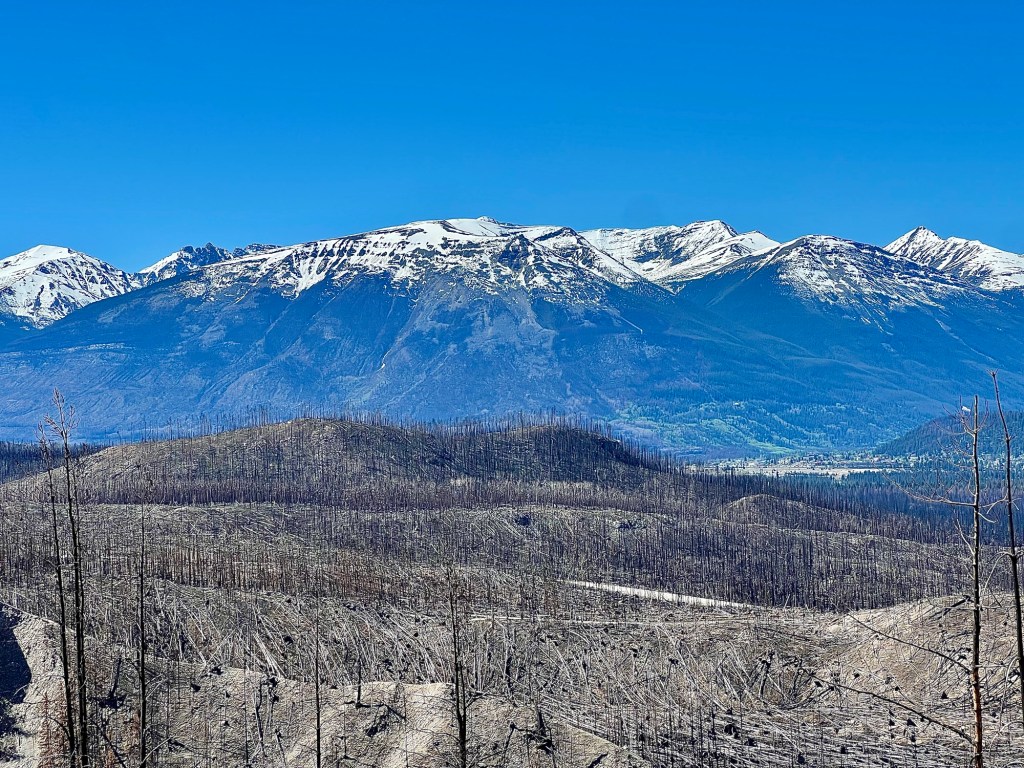
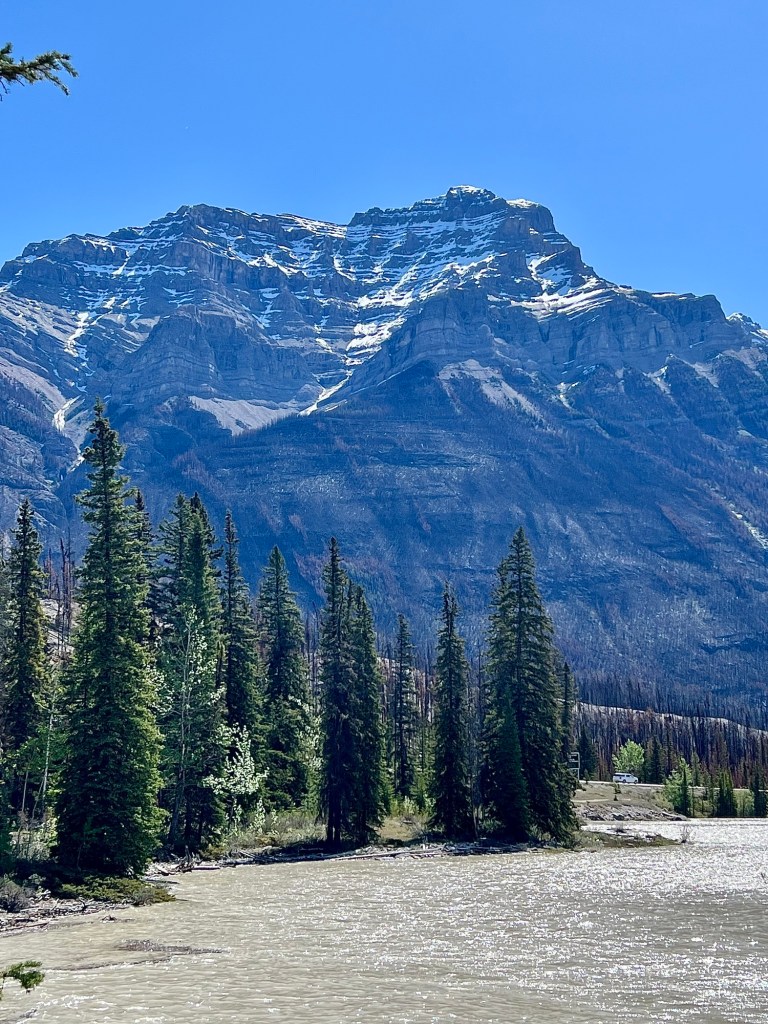
Rocky Mountains in the distance.

When we recently visited we saw that all heavily damaged buildings or the remains of destroyed buildings, vehicles, and other items have been removed from Jasper townsite and rebuilding and new construction are moving along at an accelerated pace. Other than the lots made vacant by the fire (and that are now being prepped for reconstruction) there is little evidence that a major fire occurred.

Jasper, August 1, 2024. Photo courtesy of Parks Canada

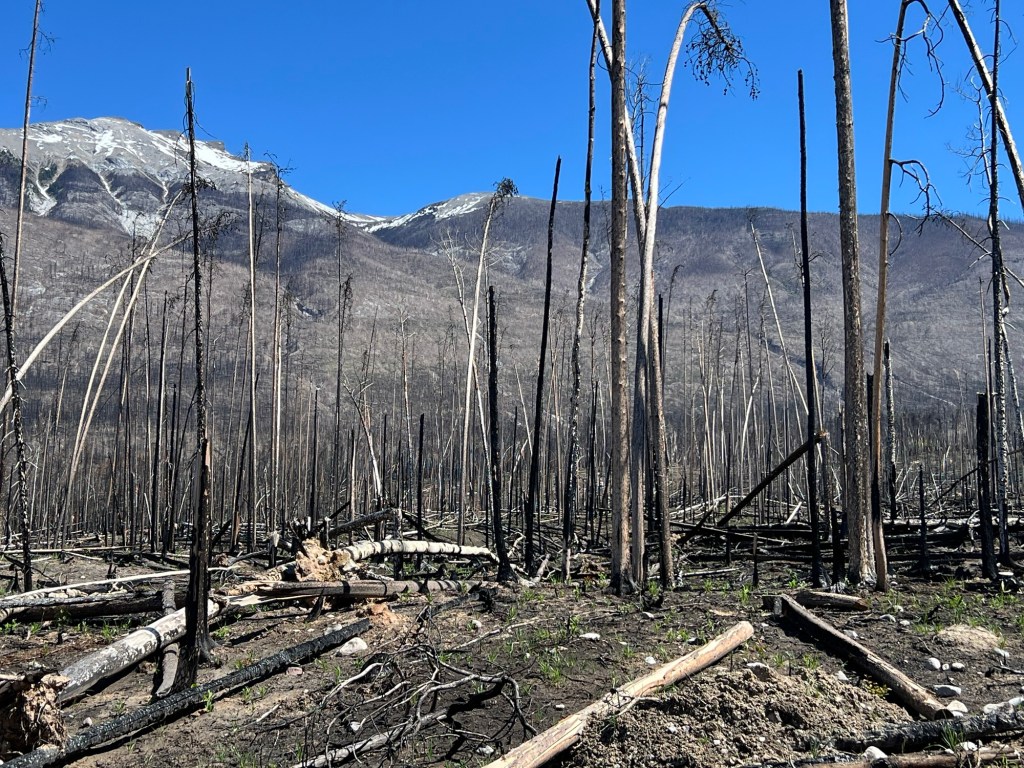
Some parts of the Maligne Lake area of Jasper Park were very significantly damaged with, in some areas, trees completely destroyed right down to the ground.

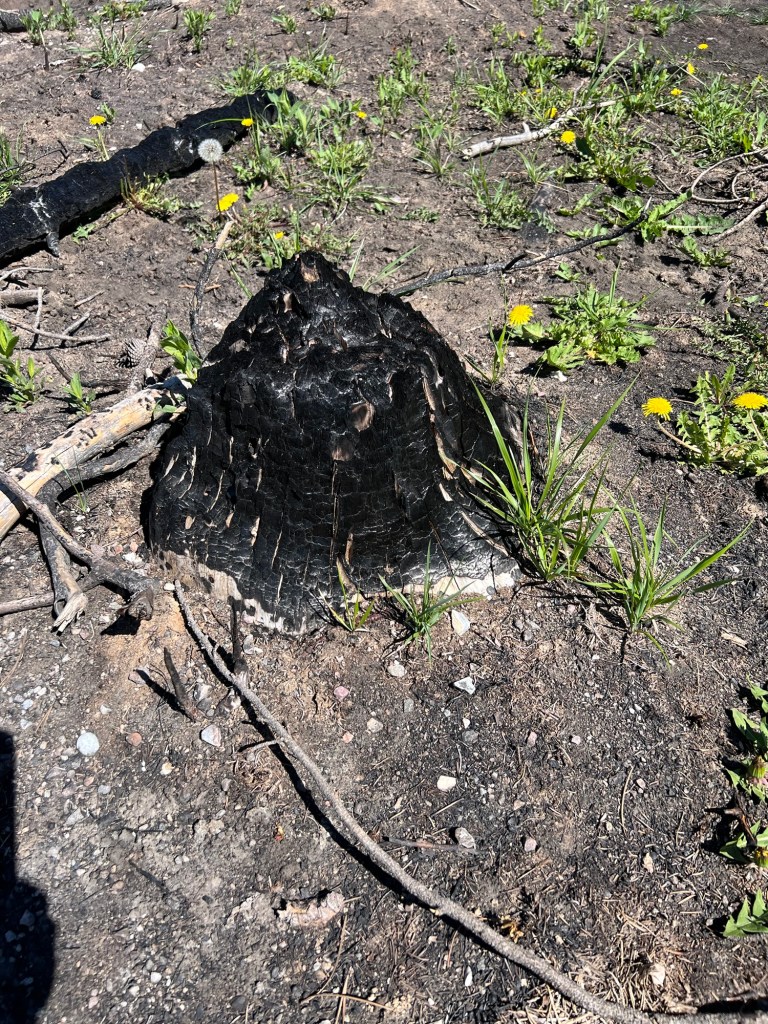
No ash, no burned trees left, only stumps.

The fire was at times so hot that it generated its own weather system, a swirling tornado of flames, gases and heat. Essentially, many of the trees were cooked until nothing was left.

A large area of burned forest.

When we visited in late May/early June, a few of the trails remained closed due to fire damage and unsafe conditions. However, the vast majority of the trails, even through the burned areas, are open. Hiking through the burned areas is also an education about the forces of nature: we saw grasses, wildflowers, weeds, and even very tiny trees growing again; the forest will recover.

This photo gives a sense of how far the fire extended as well as a contrast with the healthy forest in the background.

Many people have thought that they shouldn’t visit Jasper this year, that it’s perhaps too soon. But the people of Jasper townsite and the employees of the park, hotels, restaurants, outfitters and all the others who rely on tourism for their livelihood will welcome you. They have worked very hard to prepare the townsite and to reopen the trails, and of course, the vast majority of the national park escaped the fire. 95% of it is as beautiful and iconic as ever.

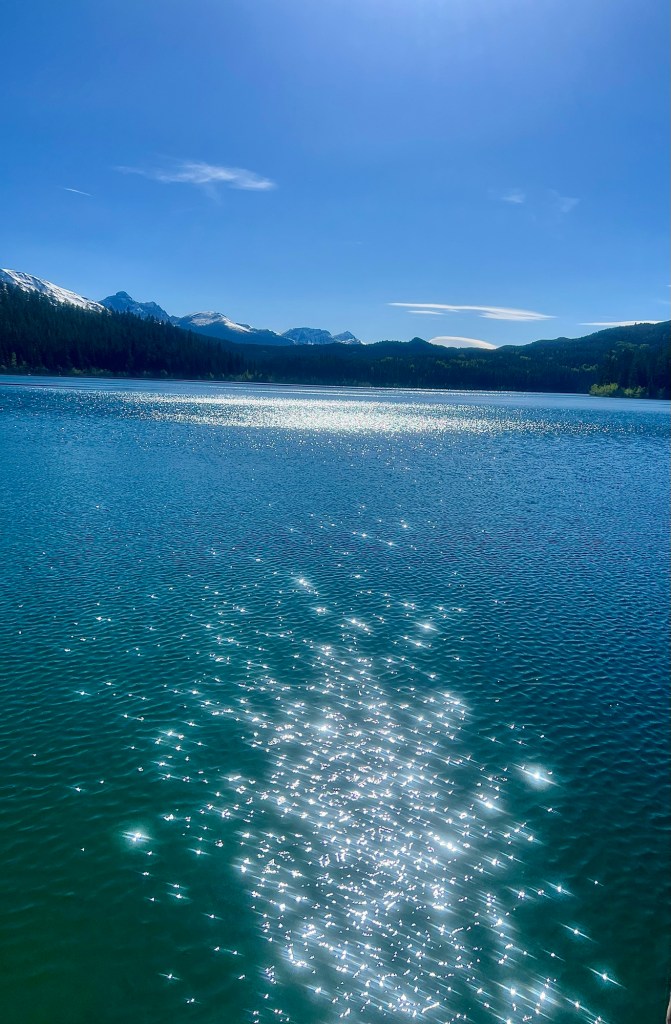
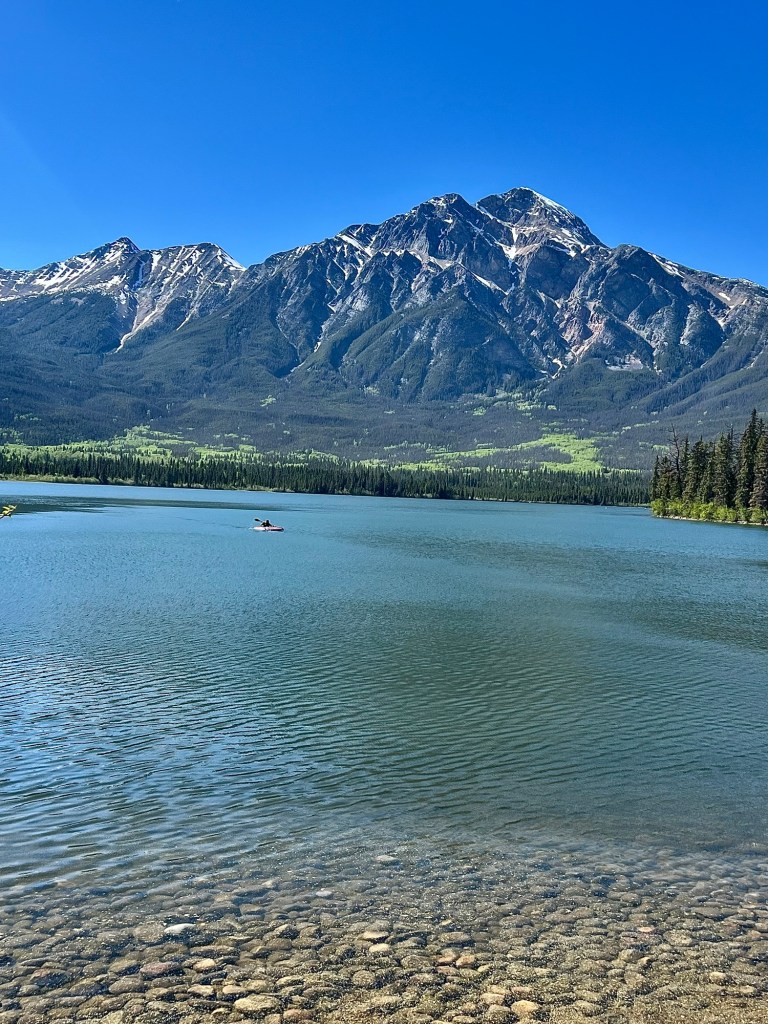
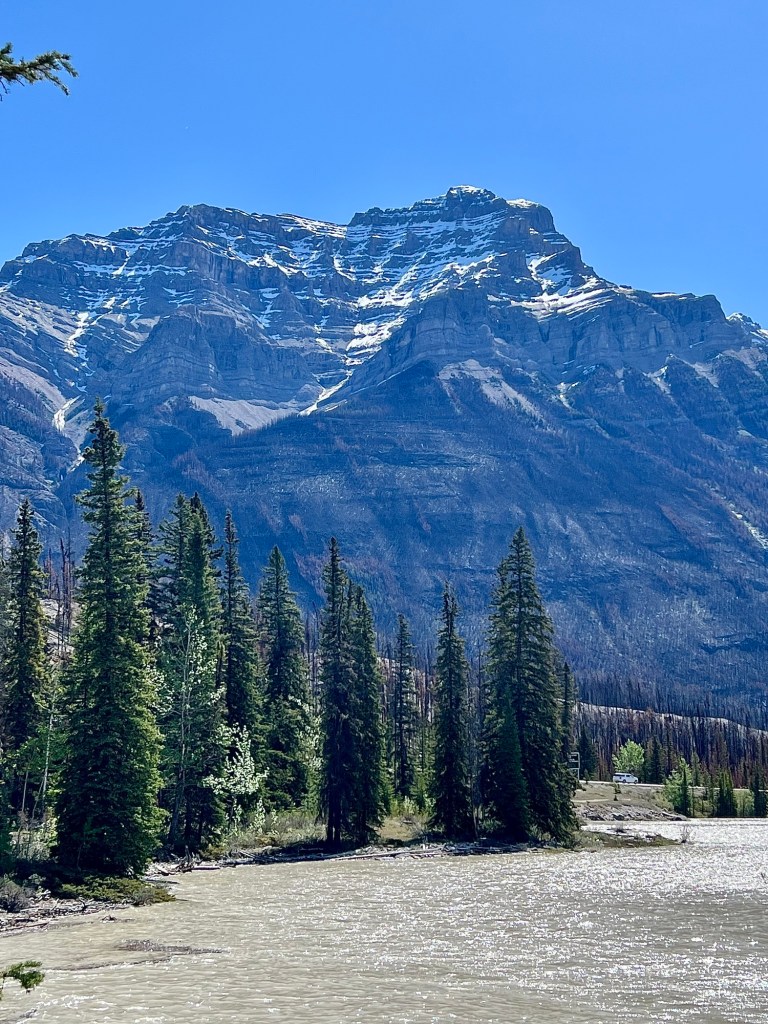
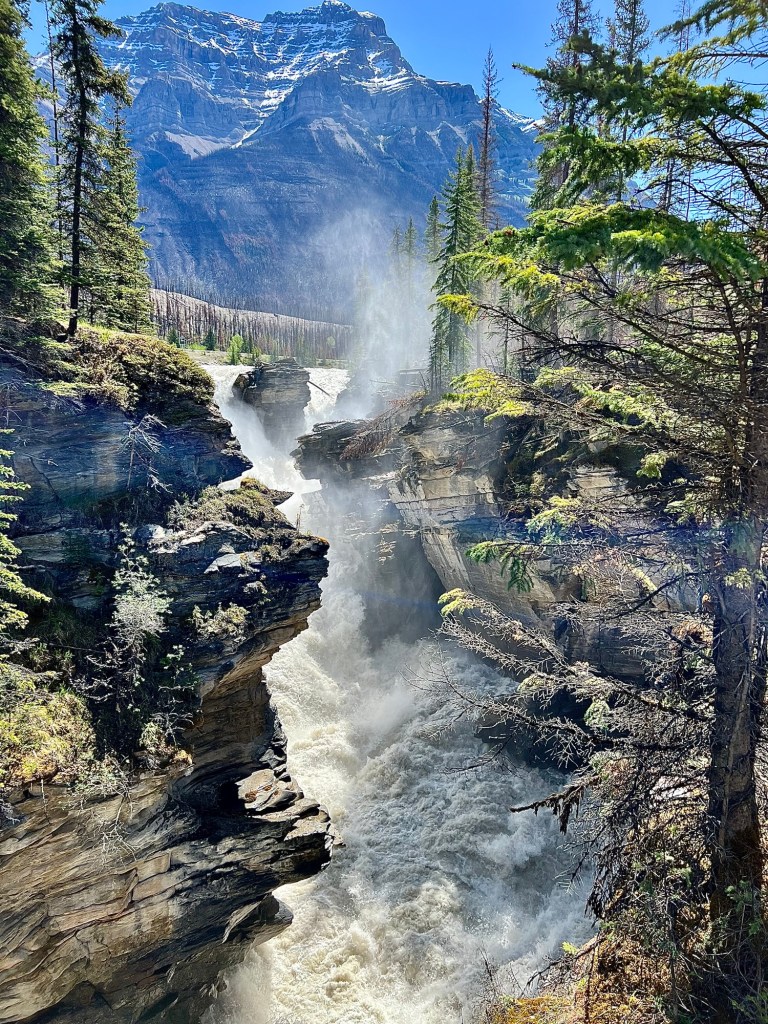
Here are a few of those iconic views.

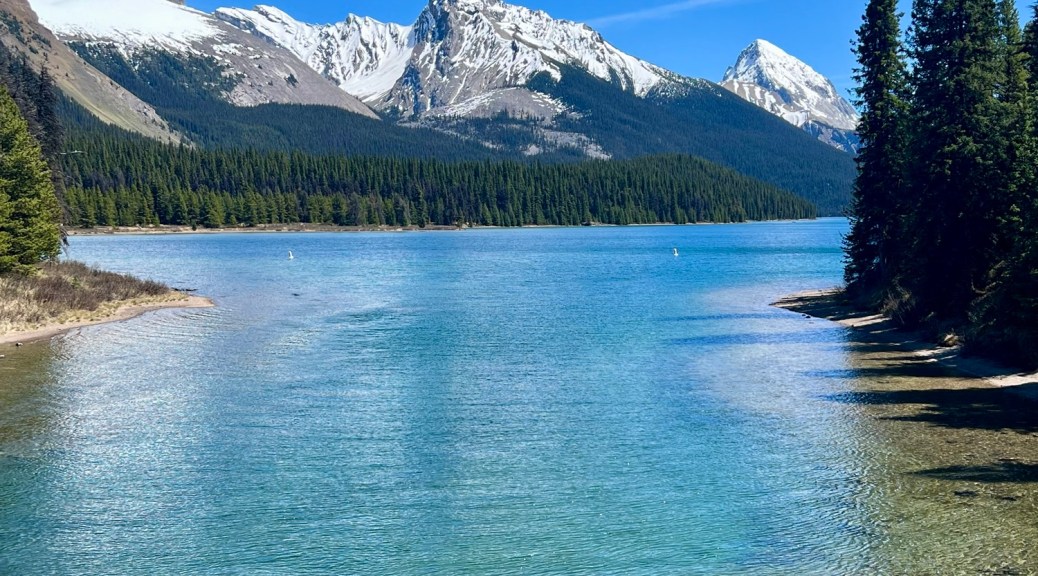
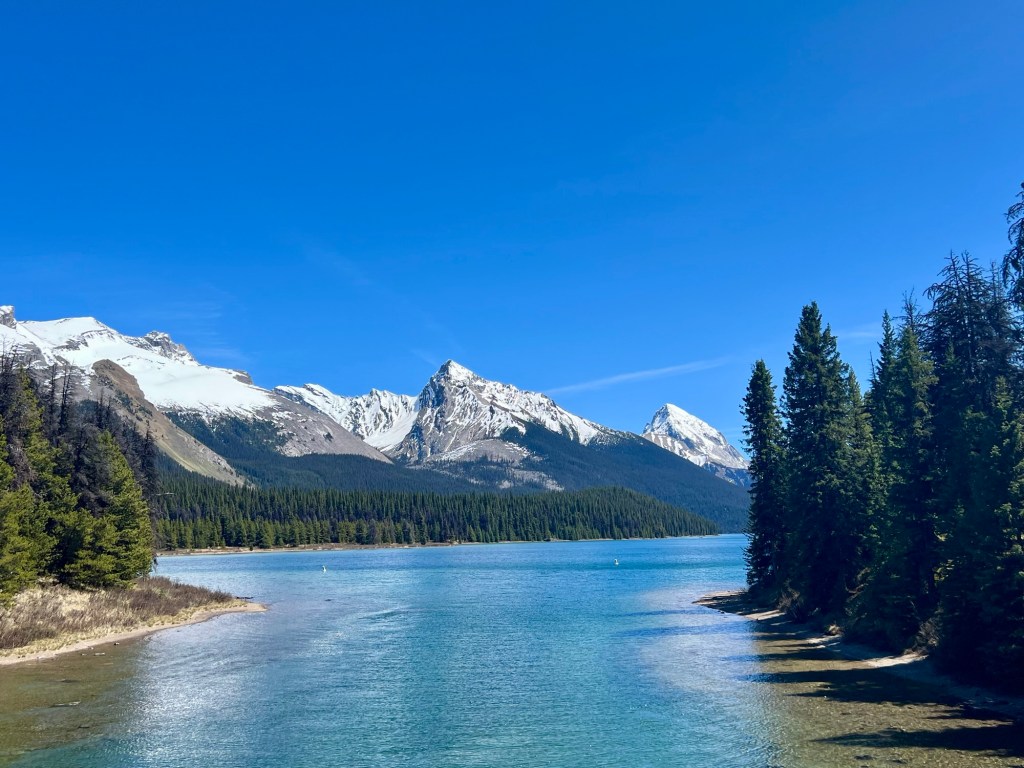
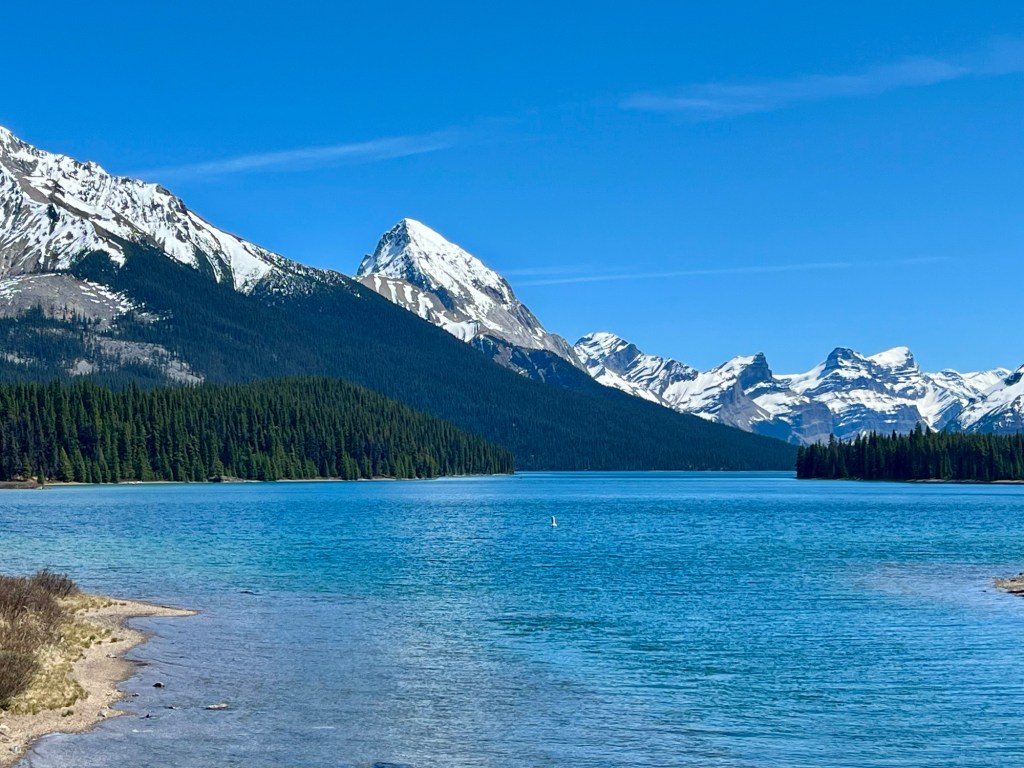
Maligne Lake
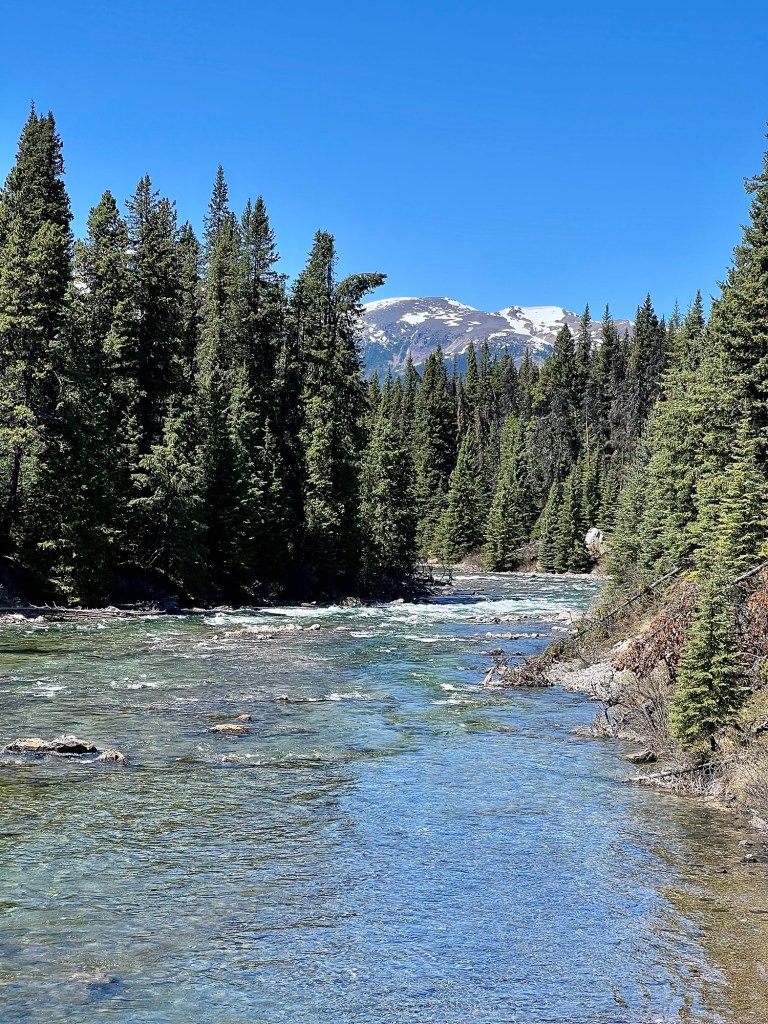
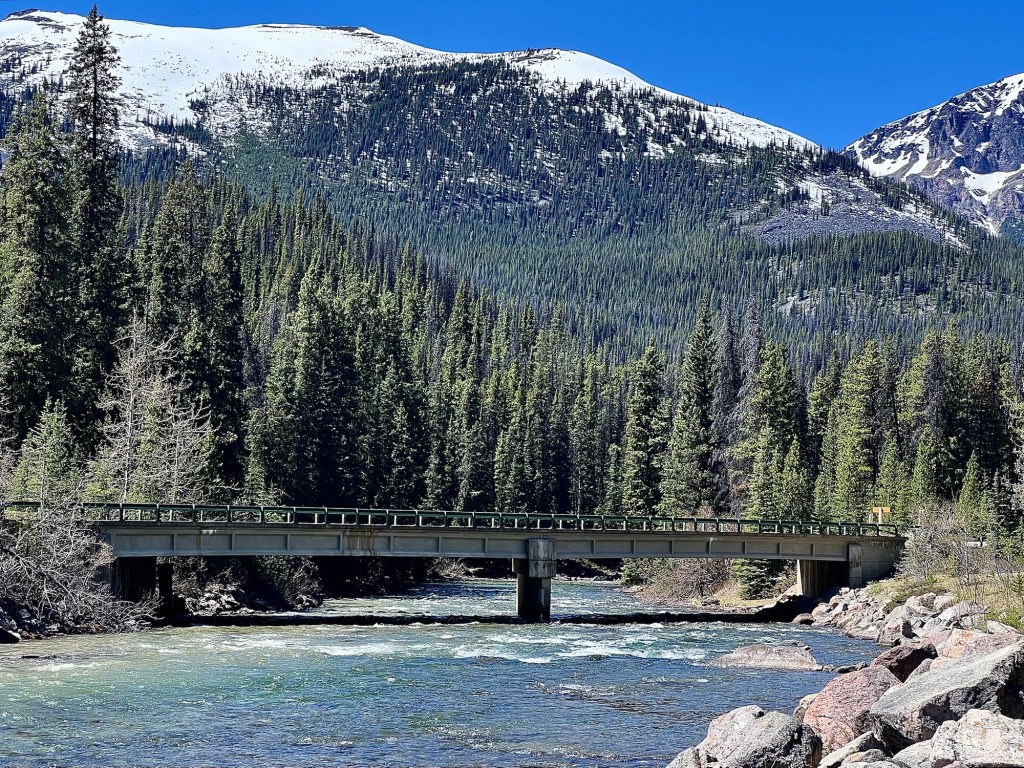
Maligne River
Patricia Lake
Pyramid Lake
Athabasca River
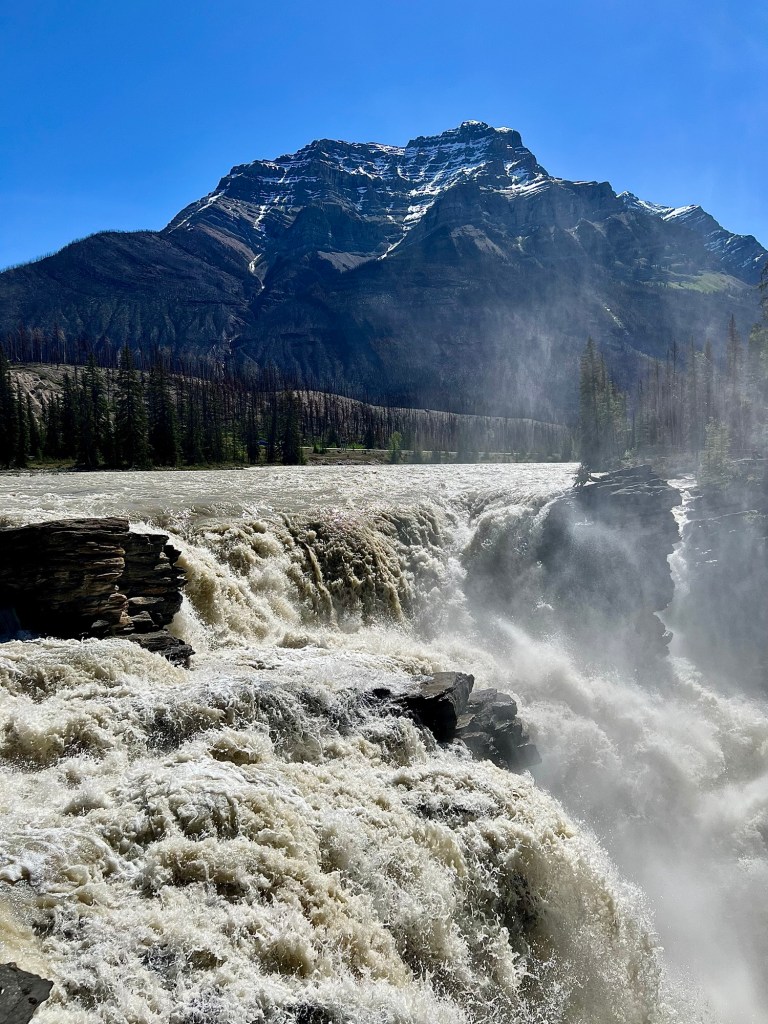
Athabasca Falls

We very much enjoyed our visit and felt that spending our money there was well worth it so yes, if you’re thinking of going, you should.

Happy Thursday.

Wild Geese

I’ve seen lots of adult Canada geese around, but the goslings are still being minded in more secluded areas while many of the adults forage on their own.

Adult geese on a getaway.

This is a rather unique characteristic of these geese: once their young have hatched, the parents will organise themselves into groups called crèches where a large number of goslings are minded by a few adults while the others go off to eat or sometimes just to sleep or relax. They take turns minding the little ones. And here we humans thought we had child care all figured out!

Goose on gosling guard!

Outside of town at a smaller lake I recently saw a couple of crèches of about 20 goslings each being minded by two adults. They were very busy! 40 goslings and four adults! Wow. At least the goslings seemed to be very laid back. I guess it’s adulthood that brings with it the grumpy aggressiveness that the Canada geese love to display!

I was being given the stink-eye.

There were a number of mallard ducks around, too, but it seems that many of the birds, even the finicky quail, get on well with the ducks.

When I got back to town I saw a number of geese on Okanagan Lake enjoying an adult time of it.

Although Canada geese are often seen as nuisances, they are an extraordinarily successful species. They mate for life, are extremely committed parents who will go to great lengths to protect their young and they certainly know how to share the workload for the betterment of everyone in the group.

Pretty great characteristics.

Happy Wednesday.

To See and Appreciate

The beauties of the world are there …

The beach near our home.

… for us to see and appreciate …

Dandelions – a big favourite – for our marmot community.

… if we choose.

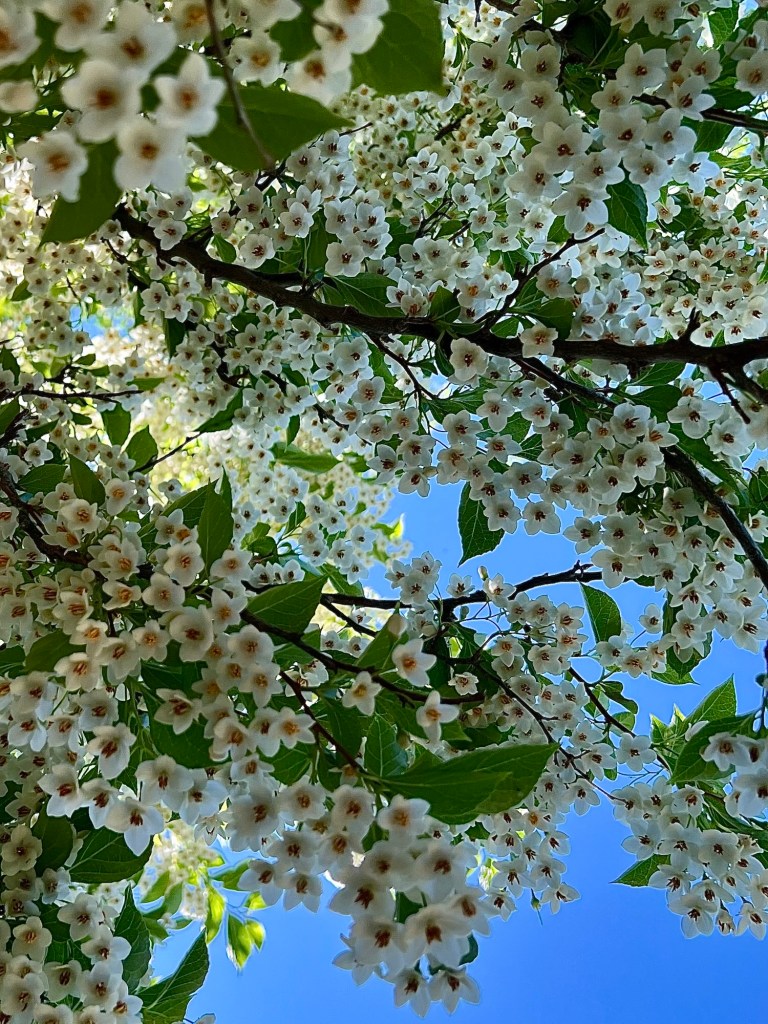
Under a snowbell tree.

So many, many around the world …

A duckling among the lily pads – mom and dad were close by.

… would give almost anything …

Lovely orange poppies.

… to live as well as untold numbers of us fortunately do.

A Little Perspective

Sometimes things are so big that we need a comparison to really get the picture. Here’s one.

We stopped at an outlook for a walk while driving the Icefields Parkway through the Rocky Mountains …

… and saw how dinky the highway looked compared to the enormous mountain towering above it.

It was a stunning, breathtaking vista …

… and a reminder that in the scheme of things, we are very puny beings.

Happy Monday.

Athabasca River and Ice Fields Parkway

We travelled south on the Ice Fields Parkway – so named because of all the ice fields or glaciers that are visible along the way – through the Rocky Mountains from Jasper National Park to Banff National Park.

This beautiful route parallels the Athabasca River along the way.

Athabasca River

This river is quite murky because of all the rock particles it contains …

… but its power and beauty are nevertheless undeniable.

Upper Athabasca Falls
Mist rising from the pounding water.
Here’s a short video.
The falls are squeezed into a tight Venturi-like chute …
… accelerating the water’s velocity.
One more video.

Happy Wednesday.

Jasper National Park, the Beauty … and the Destruction

On July 21, 2024, four wildfires started within the boundaries of Jasper National Park. At the time, the park had been experiencing serious drought conditions that were accompanied by hot, dry winds. Three of the fires were caused by dry lightening strikes and the fourth through human ignition: sparks from work on a car engine started a grass fire that quickly escalated.

Acres of burnt forest stretch into this mountain and the horizon.

The next day, July 22, all four fires merged into the largest one ever recorded in the park for the previous 100 years; it eventually developed a self-perpetuating weather system containing fire tornadoes and continuous high winds.

The frame of a burnt sign.

By July 25, 25,000 people had been evacuated from Jasper townsite and the park itself. By July 26, Parks Canada announced that 358 of the 1,113 structures within Jasper townsite were damaged or destroyed but that all critical infrastructure such as the hospital, schools, and the wastewater treatment plant were saved.

Kilometres of dead trees.

It took until August 17 for the fire to be classified as “held” and on September 7, it was declared as “contained.” One fatality occurred; a firefighter died when a burning tree fell on him.

Grass is returning.

It’s completely normal for forests to periodically experience burns. Decades-long collections of dry forest floor detritus together with occasional hot summers have always caused them.

It’s also normal for our planet to experience periodic warming and cooling trends. However, the normal heating trend that we’re currently experiencing has been exacerbated by human activity which has lead to higher temperatures and drier conditions than we should have; this in turn brings about more and larger fires. These fires lead to more planetary heat, and the cycle continues to grow.

All that remains of a completely burned tree.

Nature is amazingly resilient, however. It has been less than a year and already the grasses and bushes are returning; the ungulates love eating the new growth and they have the added advantage of being able to better see the predators! The trails – even through burned areas – are re-opening and visitors are returning, too.

Maligne Lake escaped the fire.

Much of this gorgeous gem of a park escaped the fire …

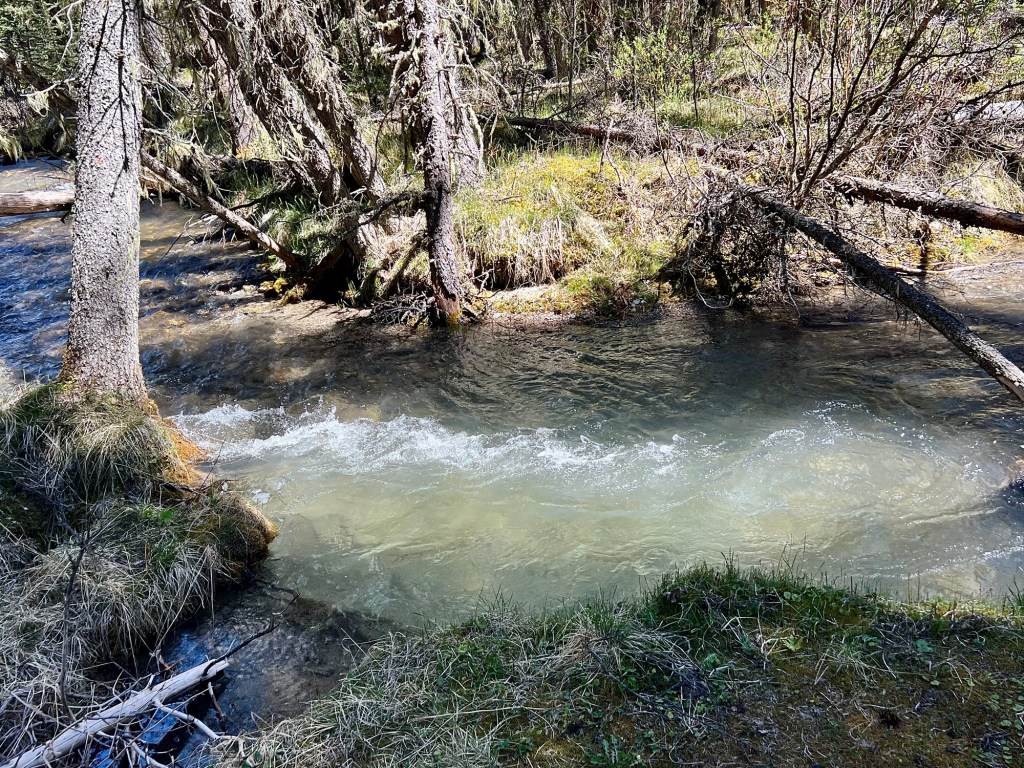
… and after a morning of clear-sky hiking through stunning scenery we sat next to this lovely river to eat lunch. This particular restaurant had a great view!

A beautiful river.

Jasper’s fire is a reminder that nature does things in ways that she selects as healthy responses to certain conditions; sometimes, those responses are swift, brutal and merciless. But human interference in that process will eventually lead to consequences, consequences that are worse than what we’re now seeing with the cataclysmic sweep of fires now burning through three of our western provinces.

Pristine glacial-green waters.

Let’s hope that we learn nature’s lessons before she decides that we’re the problem and we’re selected for discontinuation.

Wildlife Photo Collection

During our recent trip through northern British Columbia, Yukon and on to Jasper National Park we saw lots of animals, but they visually weren’t at their best. They have just come through winter, they’re in the process of shedding their coats, and they either have young ones or are about to. In short, they are busy parents just trying to recover from winter cold!

Bison
Time for an afternoon bison siesta.
Adorable bison calves, also snuggling for an afternoon nap.
Caribou/reindeer
Do you see the little hatchlings? They are certainly well camouflaged!
Caribou/reindeer
Mountain goat
Elk – these mothers had hidden their calves behind some scrub – I could just barely make them out. Elk can be extremely aggressive in protecting their young, so it’s best to keep your distance.
This not-so-great picture of a cow moose who also had a calf nearby meant that I kept my distance from her as well. Moose can be unpredictable so it’s best not to bother them.
We also saw this bear who looked like he just really wanted to go back to sleep!

Being able to see all these animals was particularly wonderful especially as most of our sightings were in a national park where they are well protected.

Happy Sunday.