Cedar waxwings are native to North America and frequently seen during the summer. Many of them migrate south but quite a few will overwinter in southern British Columbia, especially on Vancouver Island.
It was lovely and unexpected to recently see this pretty bit of brightness.
For 32 years ending in 2007, the iconic Toronto tower was the world’s tallest freestanding structure until it was displaced by the Burj Khalifa, a skyscraper in Dubai, United Arab Emirates.
M and I have both been at the top of the tower before – as you can imagine, it has spectacular views of the city and Lake Ontario – but we felt that we didn’t need to go again. Do you see the moon to the left of the tower, above its viewing deck?
Instead, we enjoyed it from the rooftop patio of an adjacent hotel which itself provided beautiful city and lake views. Here’s one of the Skydome, where we had just watched a Blue Jays baseball game.
It was a beautifully warm, clear day, great for looking at the lay of the land!
London, Ontario, has many historical buildings that stretch back two to three centuries. I liked the look of this approximately 150-year old church tower silhouetted in the waning light of day as a street light began to take over.
We recently drove through the Rocky Mountains of Banff and Lake Louise on a beautifully sunny day.
You can see that there’s still snow on the peaks and this being the mountains, the breeze was brisk, but the sun shining on our backs as we took a short walk to stretch our legs was beautifully warm.
Greetings from the gorgeous spring Rocky Mountains of British Columbia and Alberta.
We took a long-way-around drive in the countryside to visit a favourite winery.
We tried a new production year of a wine we have repeatedly enjoyed and also admired the view from the huge floor-to-ceiling windows of their very comfortable tasting room.
Many of their vines suffered in the unexpected January cold snap and they have been severely pruned back so that the plants’ energy can be diverted into root recovery rather than spent on fruit growth.
This particular winery will get past this difficulty because it has stored juice from previous years and they have survived hard times before by creating (and succeeding hugely with) unique blends. Unfortunately, many others, especially the small ones, don’t have that kind of fallback. I understand that the government will be allowing wineries to buy juice from Ontario (and will also subsidise costs) until this hurdle has been cleared.
On the way home we stopped in several places to take a walk and enjoy the views and although we had a couple of sun showers we didn’t see that as a negative.
The Okanagan Valley is home to the cutest little quail that run – they do fly if they have to but mostly they run – very quickly through parking lots, across roads and under low-lying bushes.
More than once I have been completely startled by 20 or more quail bursting from under some bushes because they have been frightened by either me or something else that I didn’t see.
They will also burst out of hiding to distract predators from their chicks. These little birds are very small. They’re about 17cm (6.5 inches) long and weigh about 75g (3 ounces), so you can imagine how tiny their chicks are!
These birds are not native to British Columbia; they are in fact an invasive species brought here about 100 years ago. However, since they have not posed any kind of threat to any other species, they have found their niche and BC is now home.
Except for this species, that is. Every time they surprise me by bursting out of the underbrush, I have to find my heart and put it back!
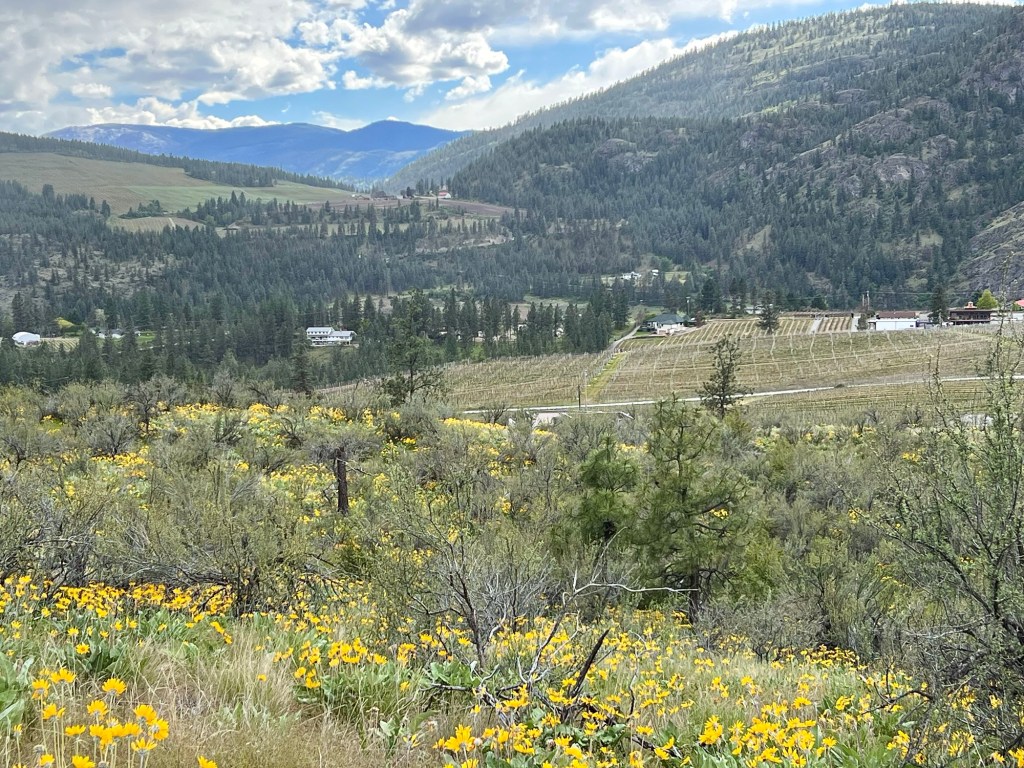
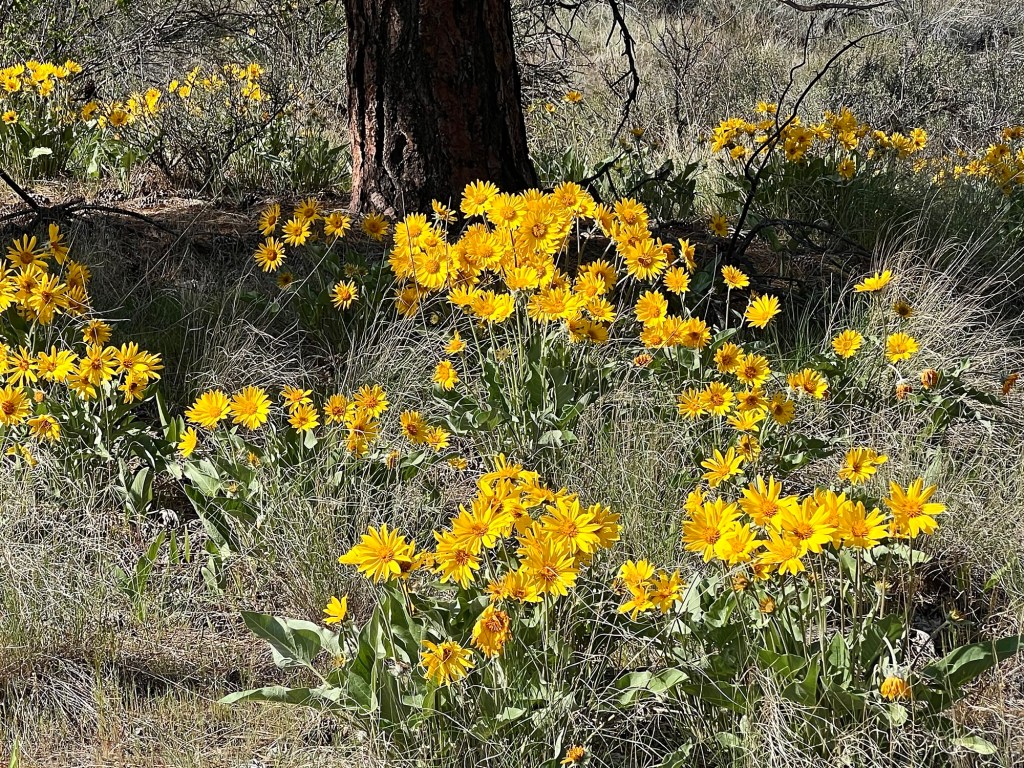
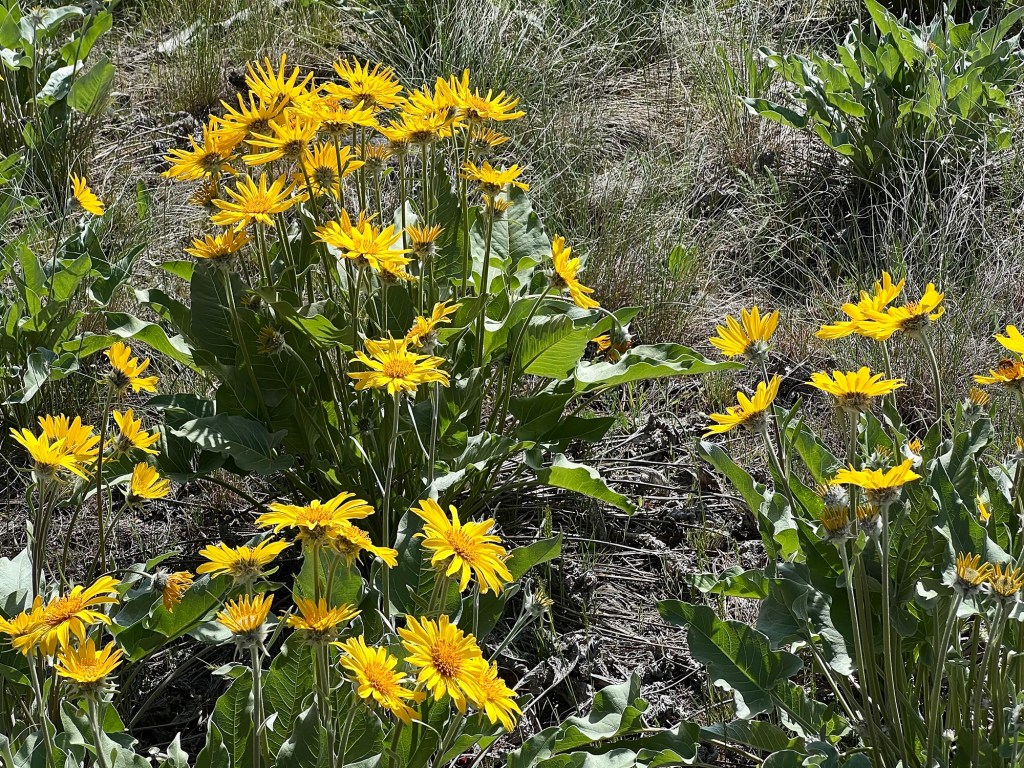
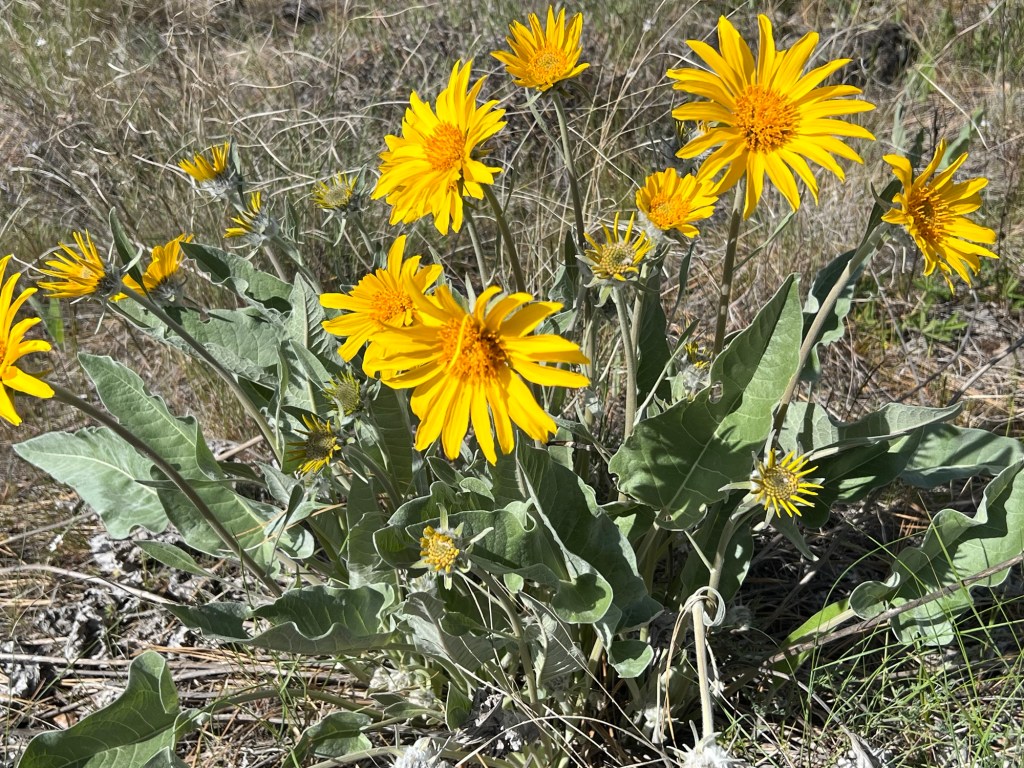
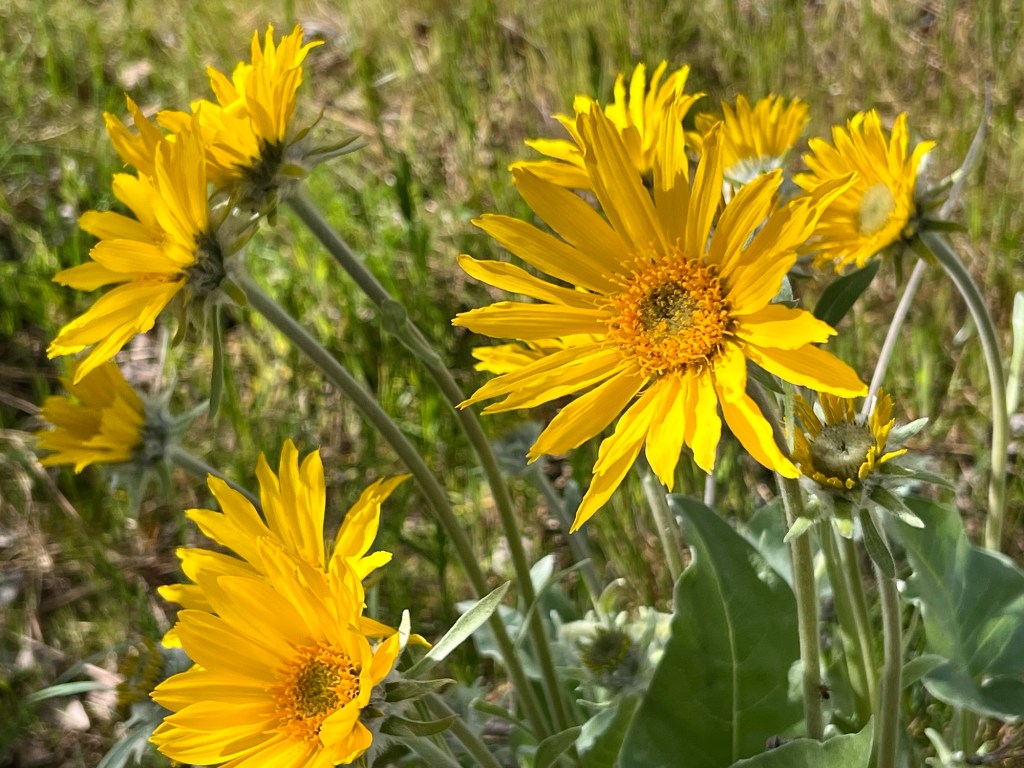
The arrowleaf balsamroot flowers, or as they are locally called, Okanagan sunflowers, are blooming everywhere.
Right now, the bright yellow of their blooms can be found all over hillsides and throughout the pine forests of the Okanagan Valley.
Their profusion is beautiful, but to First Nations, they were an important food source as this plant is completely edible, including its roots. They’re not just a pretty face!
Although they to some extent resemble sunflowers, they look more like yellow daisies and except for the Okanagan Valley of British Columbia and a few other valleys in Washington state, are a relatively rare find, confined as they are in their wild state to certain areas of the west coast of North America.
They won’t last long; in about a week they will start wilting and will disappear until next spring.








 In the Net! - Pictures and Stories of Life