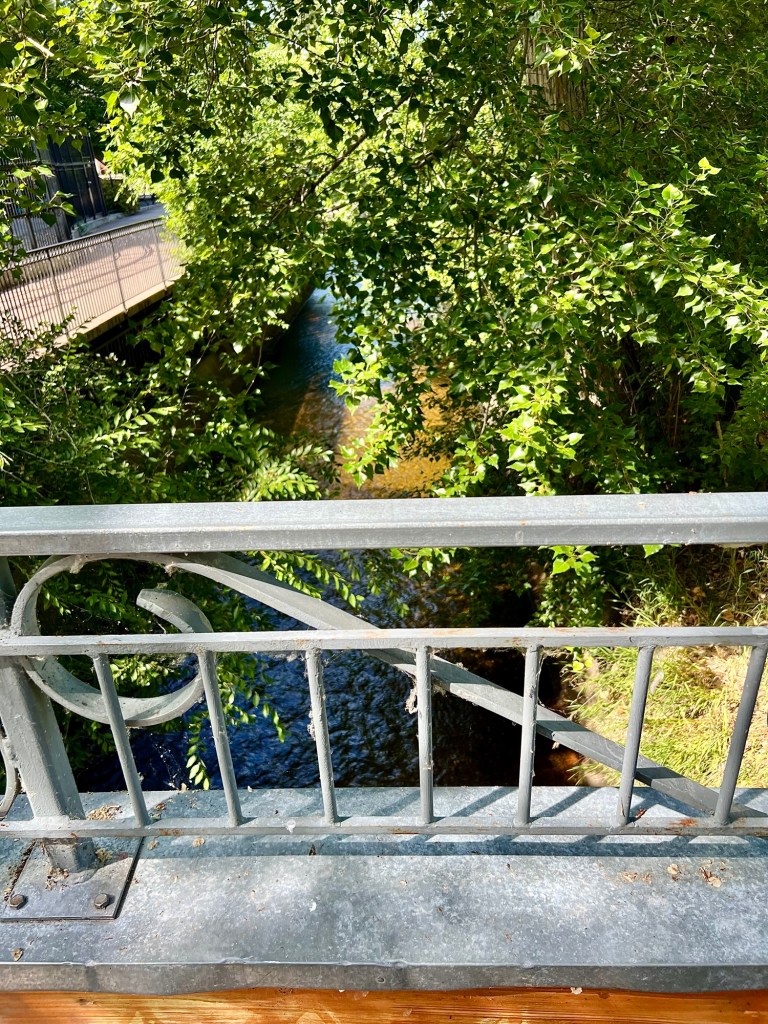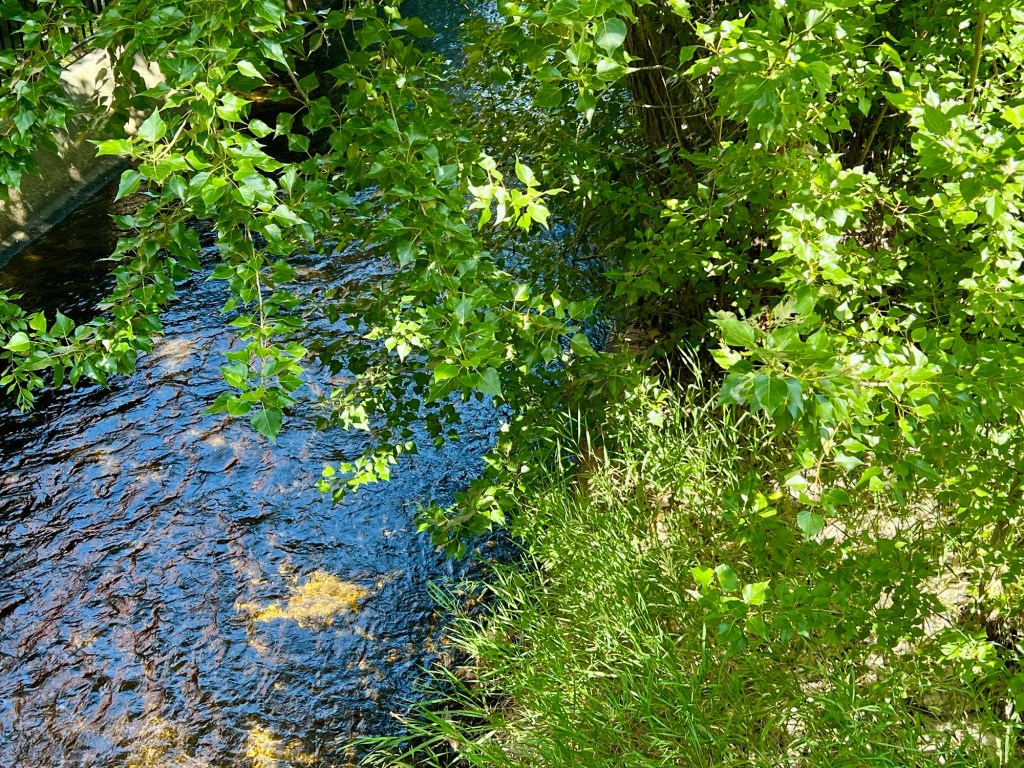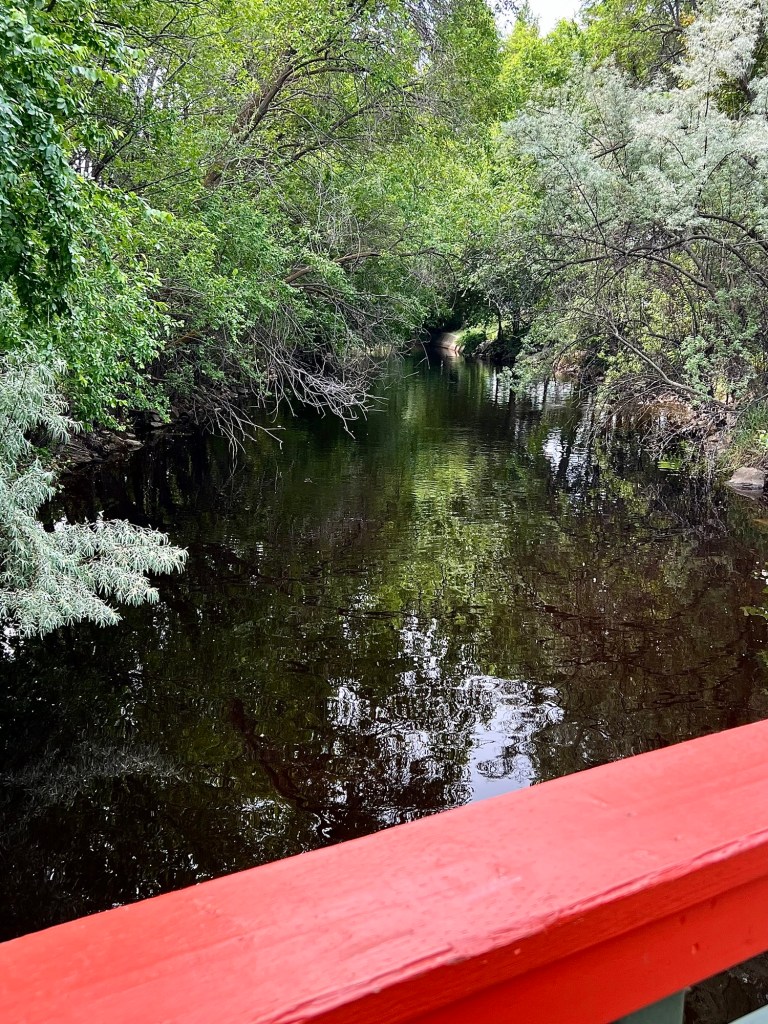
Yesterday I posted about the bridge over Penticton creek but today I’m moving about 400 metres (1300 ft) further along to where the creek empties into Okanagan Lake.
By this time of year, this creek is usually moving very slowly, desultorily, somnolently with only a little water trickling through the centre of this channel.
This year, however, it’s a regular river with lots of water and very happy trees and ducks. After years of drought, this verdant growth is wonderful to see!
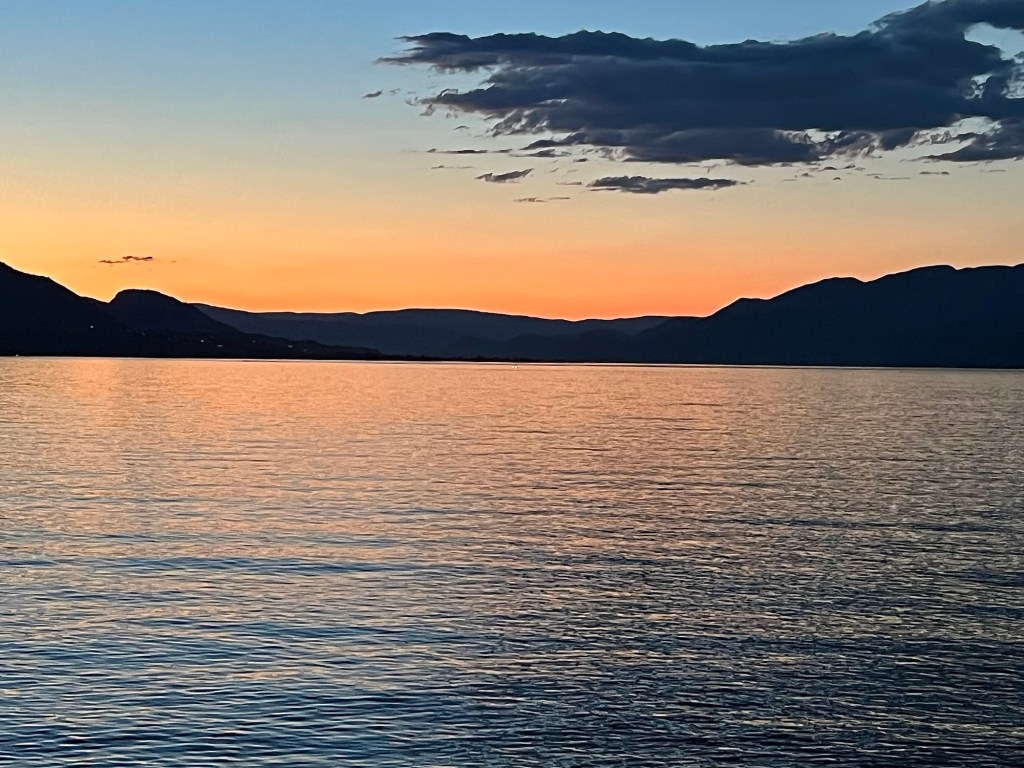
And here it joins the lake, adding to the lake’s water level and giving everyone on the bridge another lovely view.
We live near Penticton Creek and one of its pretty foot bridges.
Usually, this creek is now down to a little dribble, but because we had a wet autumn followed by a wet winter and then a wet spring, this creek has been very full and running swiftly.
And all that very welcome rain – we had been experiencing a three-year drought – has turned the little creek into something of a river, especially where it widens out to empty into Okanagan Lake.
I often stop to admire it, to listen to its gurgling and to enjoy all the trees growing near it …
… trees that are very verdant this year because they have had lots of water …
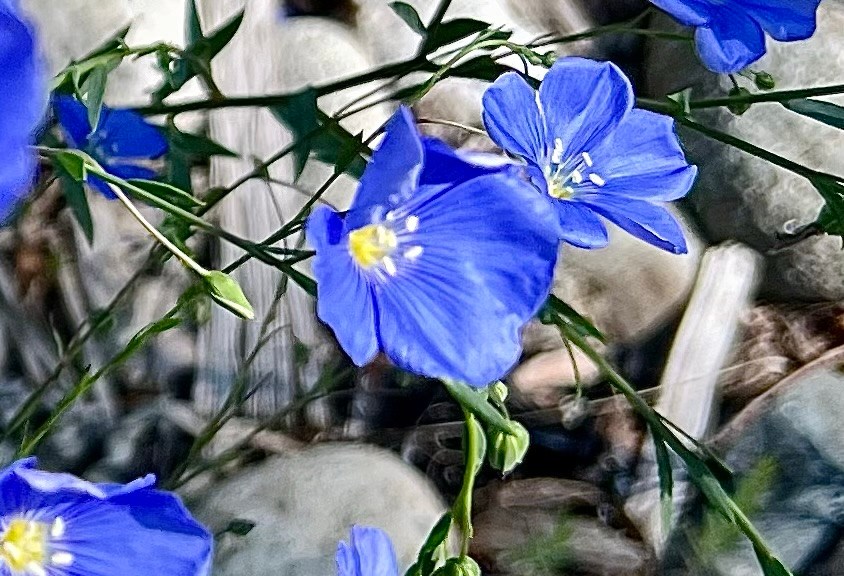
… and to also enjoy the flowers that occasionally grow there, too.
Here in the Okanagan Valley we are geographically at the northern most tip of the Sonoran Desert. As a result, parts of this region can be classified as semi-arid desert. This is one of the reasons why wine grapes do so well here!
We also see many desert plants that might seem unusual for this area but really aren’t; one of these is the yucca. The indigenous peoples of this area consumed yucca plants for their nutritional qualities but also knew about its ability to ease arthritis and often used it for that purpose.
Recent studies have found that it also boosts the immune system and protects against sun damage and diabetes. It’s a rather odd-looking plant with its spindly stalks and huge, bell-shaped flowers, but it contains many health-supporting qualities.
With so many little ones to look after, mama ducks sometimes have a lot to do!
This mama had to go back to encourage the two stragglers to come along after their four siblings zoomed ahead. You can see them in the upper right corner of the above photo.
In very low and gentle tones, she murmured to them and then made sure that they joined their sisters and brothers who had gone ahead.
This duck mama has done an excellent job of keeping her little brood safe. I see them almost daily as she shepherds them around a small pond, keeping them quite protected from predators.
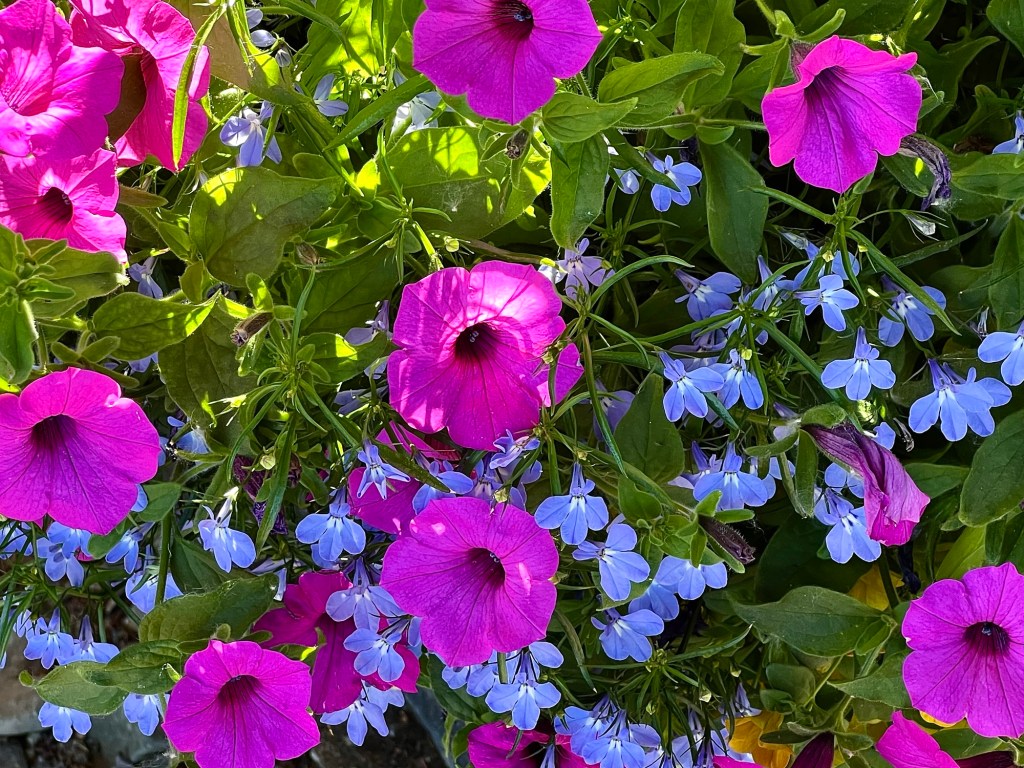
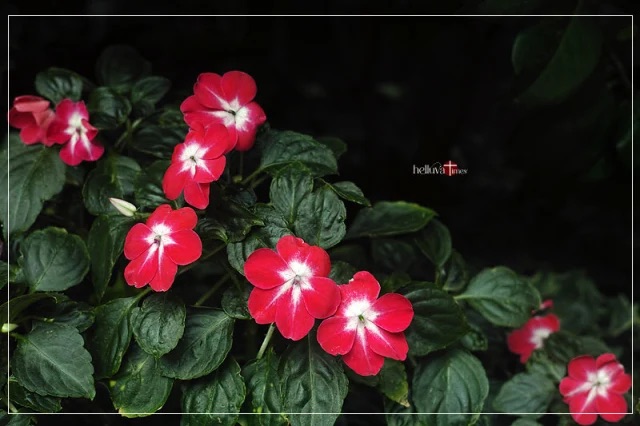
This time of year is so beautiful that choosing some flowers for fleurday can be rather difficult, but nevertheless, and since today marks the solstice, some choices had to be made. So in the solstice spirit, here’s today’s bouquet!
A very fresh daisy …
… a lovely matador rose …
… pretty pansies …
… and last but not least, some very delightful and very fragrant wild orange.
The answer to that question is a resounding yes! Although in the summer of 2024 Jasper National Park suffered a terrible forest fire that resulted in the destruction or serious damage of a third of the townsite and the loss of 325 square kilometres (202 sq miles) of park forest, it is recovering well and appropriately.
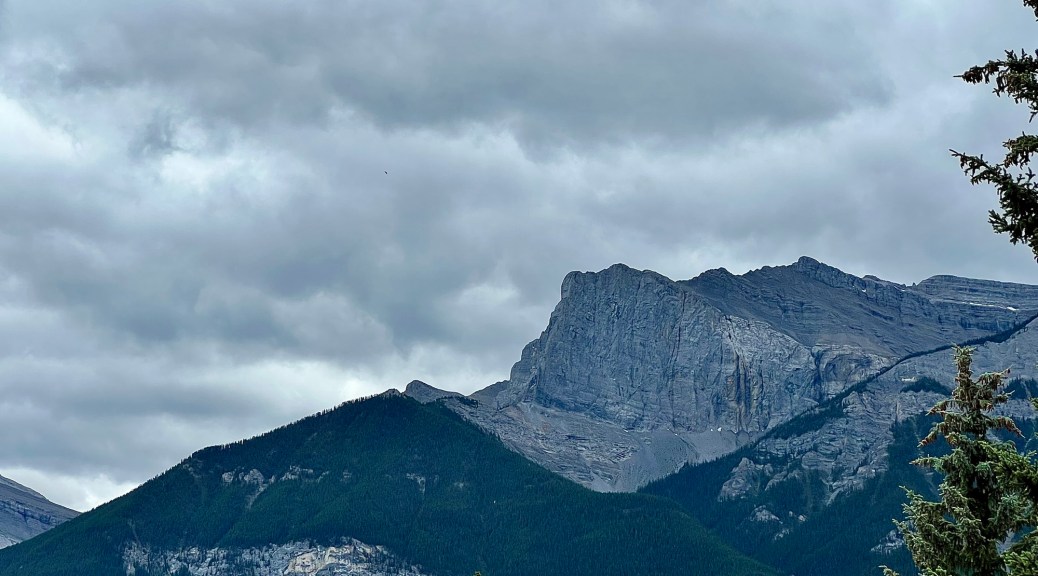
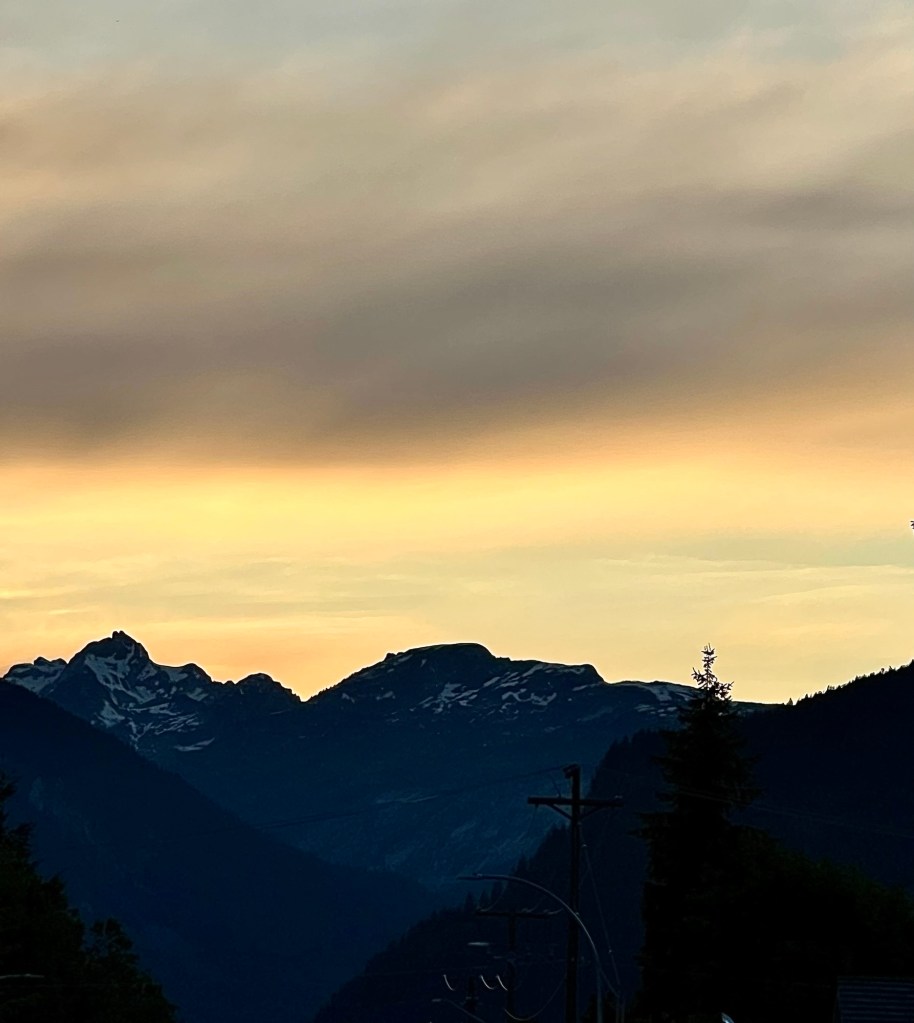
Rocky Mountains in the distance.
When we recently visited we saw that all heavily damaged buildings or the remains of destroyed buildings, vehicles, and other items have been removed from Jasper townsite and rebuilding and new construction are moving along at an accelerated pace. Other than the lots made vacant by the fire (and that are now being prepped for reconstruction) there is little evidence that a major fire occurred.
Jasper, August 1, 2024. Photo courtesy of Parks Canada
Some parts of the Maligne Lake area of Jasper Park were very significantly damaged with, in some areas, trees completely destroyed right down to the ground.
No ash, no burned trees left, only stumps.
The fire was at times so hot that it generated its own weather system, a swirling tornado of flames, gases and heat. Essentially, many of the trees were cooked until nothing was left.
A large area of burned forest.
When we visited in late May/early June, a few of the trails remained closed due to fire damage and unsafe conditions. However, the vast majority of the trails, even through the burned areas, are open. Hiking through the burned areas is also an education about the forces of nature: we saw grasses, wildflowers, weeds, and even very tiny trees growing again; the forest will recover.
This photo gives a sense of how far the fire extended as well as a contrast with the healthy forest in the background.
Many people have thought that they shouldn’t visit Jasper this year, that it’s perhaps too soon. But the people of Jasper townsite and the employees of the park, hotels, restaurants, outfitters and all the others who rely on tourism for their livelihood will welcome you. They have worked very hard to prepare the townsite and to reopen the trails, and of course, the vast majority of the national park escaped the fire. 95% of it is as beautiful and iconic as ever.
Here are a few of those iconic views.
Maligne Lake Maligne RiverPatricia LakePyramid Lake Athabasca River Athabasca Falls
We very much enjoyed our visit and felt that spending our money there was well worth it so yes, if you’re thinking of going, you should.
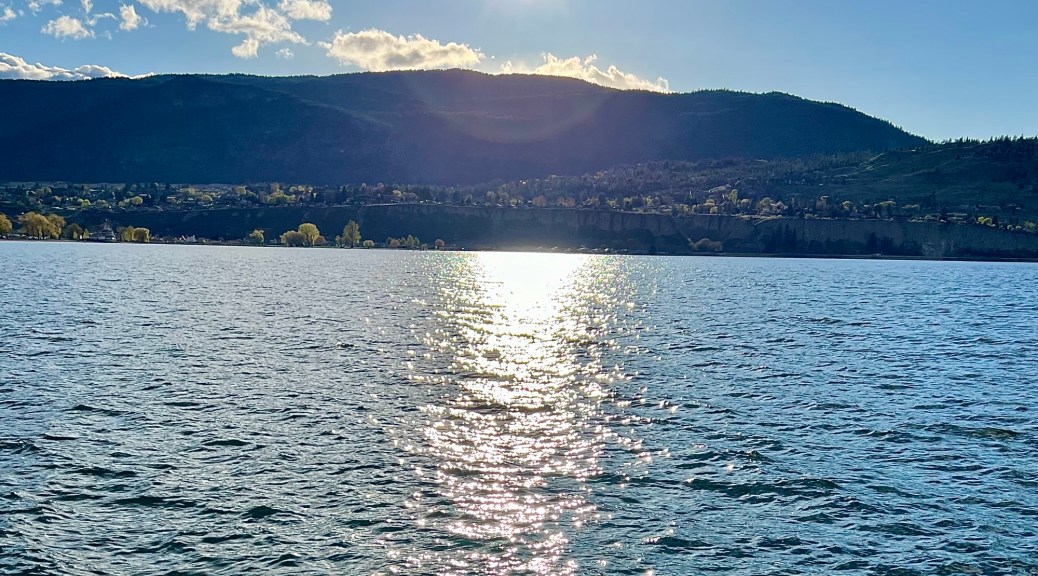
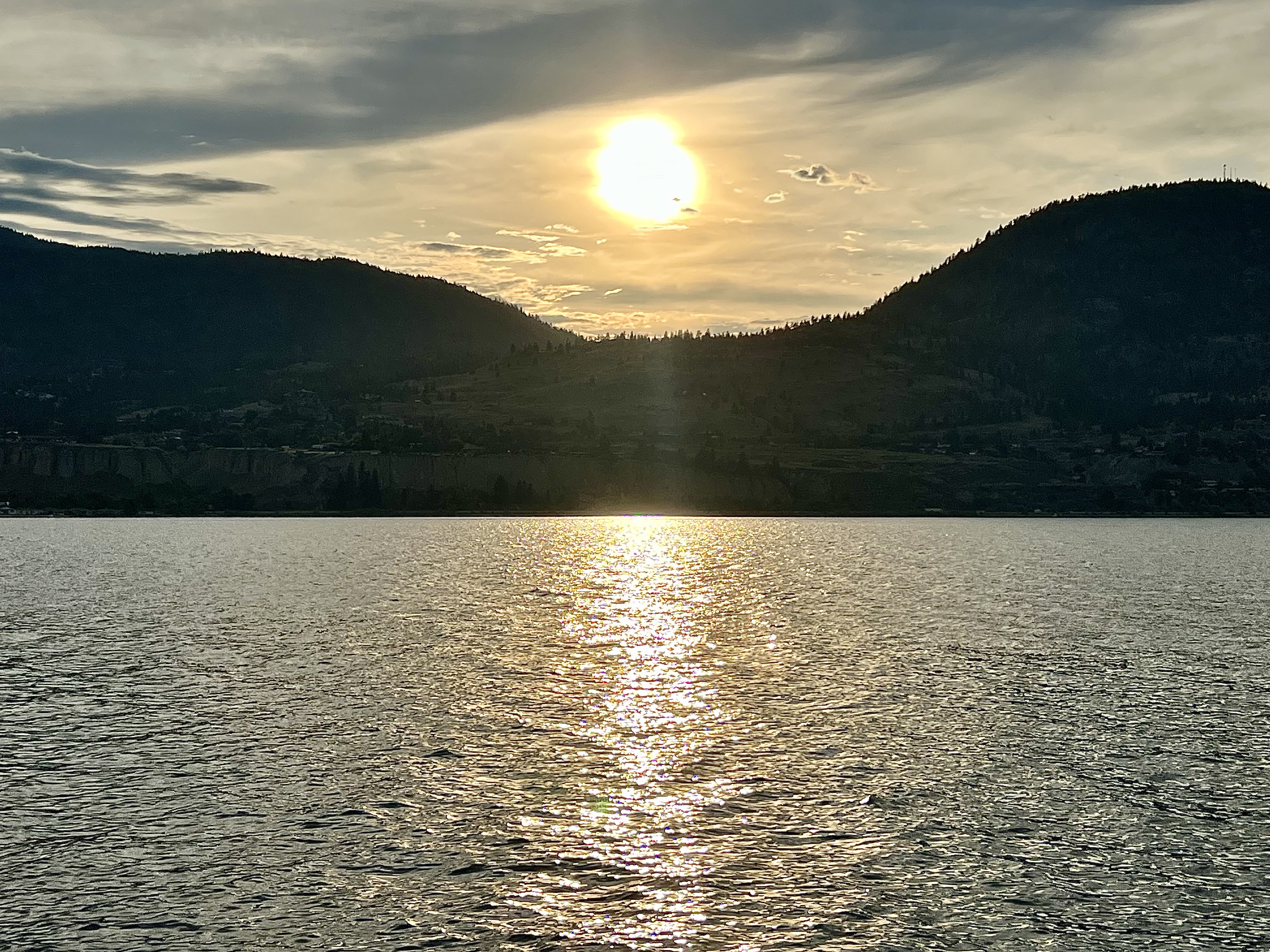
I post lots of pictures of Okanagan Lake since it’s very close and I walk next to it almost every day.
Okanagan Lake about a month ago.
But as I’ve written before, Penticton sits between two lakes; the other at the south end of town is called Skaha. It’s smaller and shallower and as result the swimming, canoeing, paddle boarding and other activities that might lead to a dunk in the water start there earlier because it warms so much faster. Despite the fact that it’s a mountain lake, by the time the end of July arrives, Skaha is about as warm as bath water!
Recent Skaha Lake.
Since moving from the south end of town, we don’t often visit Skaha, but it has a beautiful beach and very calm summer waters.
A sunny, late afternoon Skaha Lake Marina.
We recently did a short hike across one end of it and marvelled at how pretty it is; we may do a beach visit a bit later this month before it becomes really busy.
Research has shown that green is a calming colour, especially the green shades that are found in nature. I think this is very true, because I always feel better when I’ve had a little time outside.
Green reflections in a pond …… and green reflections in a lake. But no reflections here. Just the footbridge over the creek near our home, smothered in more luscious green.