Red is my favourite colour, so maybe that’s one reason why I like autumn so much; my favourite hue is on vibrant display everywhere!
October 30, 2021
The colour of energy and life and passion and adventure, red’s long wavelength is difficult for the visual cortex to ignore. That’s why it’s also the colour of stop signs and fire vehicles.
Red always says, hey, hey, look at me! And in the autumn, that exhortation is also a reminder that we had better enjoy our leafy canopy before it’s gone.
These yellow daisies are still bright and pretty, even though they are fading and will be over soon.
November 6, 2021
I am back in the north and it is overcast and snowing (it will snow at least a little every day for the next six weeks), but I enjoyed a very nice autumn.
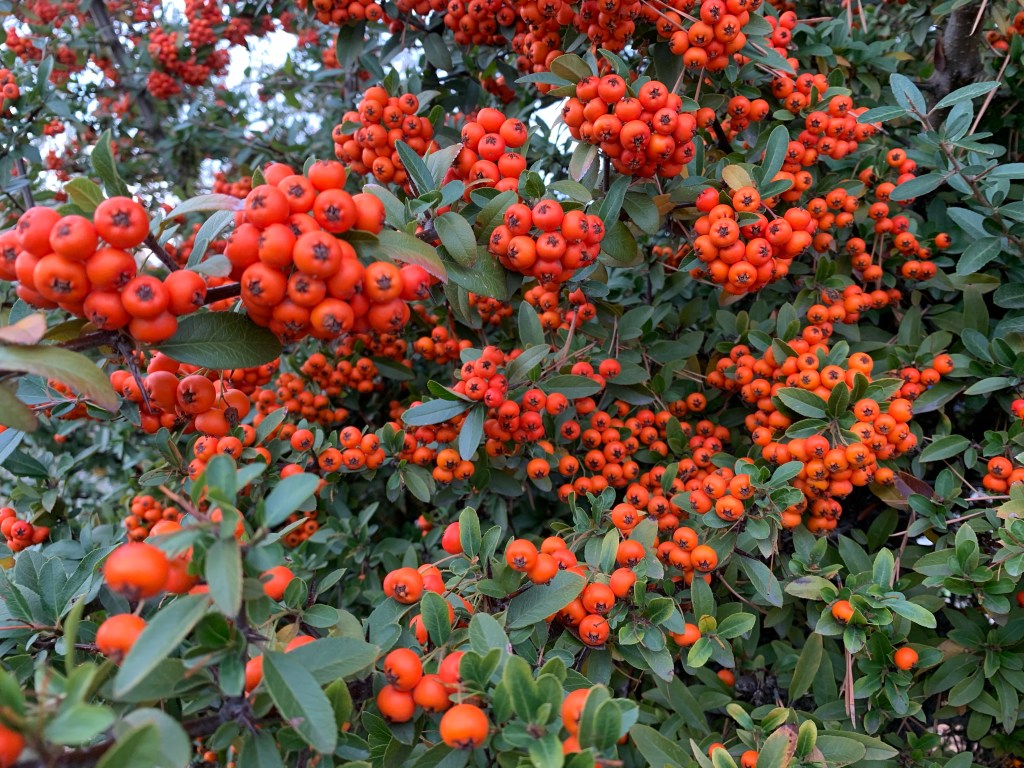
Although Halloween has gone by for another year, the mountain ash with its orange berries and green leaves certainly wears distinctively Halloween colours.
Right now, there are many of these fully loaded trees here in the Okanagan; I hope that doesn’t mean that we’re going to experience a difficult winter as I just came through one! Snow at the end of May, anyone? No thank you.
Mountain ash berries have for many years been used as a treatment for diabetes, gout and heart disease, but there hasn’t been enough research completed to indicate just how effective they might be for combatting these conditions. They are also very rich in vitamin C.
One thing is certain though, consuming uncooked mountain ash berries will cause issues. They won’t kill you, but you will experience very significant tummy troubles such as intense pain, vomiting, diarrhea and bloating.
So if you’re interested in trying them, be sure to stew them, turn them into a jam, or juice them after they have been cooked. When I took survival training in the army, we were very specifically warned not to eat raw mountain ash berries.





 In the Net! - Pictures and Stories of Life