Hello winter!
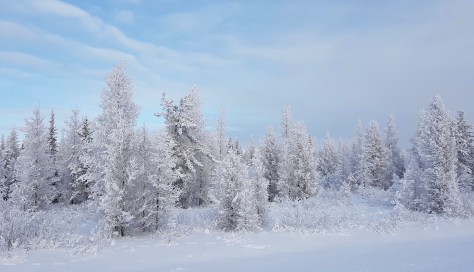
It’s cold, and pewter grey, with blue sky in glimpses and bits.
Lustrous lacy frost hangs on trees and grasses and in the very air itself.
Winter is here, and with it, its beauties and muffled quiet.
🙂

Hello winter!
It’s cold, and pewter grey, with blue sky in glimpses and bits.
Lustrous lacy frost hangs on trees and grasses and in the very air itself.
Winter is here, and with it, its beauties and muffled quiet.
🙂
Well, maybe. It seems that everyone to the south of us is experiencing some interesting cold weather with large dumps of snow. 
We have had some snow, but by Halloween it had mostly disappeared and temperatures were above 0°C. We are getting some snow today, but it’s still fairly warm out. Very strange for this area, but the elders do say that generally, the northern weather is a lot warmer than it used to be. For this year, they also predict a severe winter based on their observations of the behaviour of the animals. I posted about that earlier this autumn. So far, though, that doesn’t seem to be case.
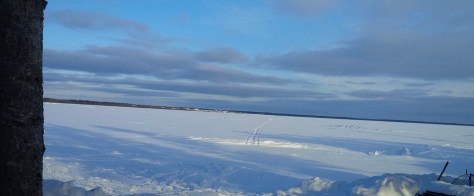
A frozen lake photo from last year.
Yath is the Chipewyan word for snow. Chipewyan is one of the eleven official languages of the Northwest Territories – French, English and nine indigenous languages. There are lots of yath-related words and compound words. The quality and quantity of the yath is very important to the animals and their survival, and hence to the health of the land. Because of that, lots of yath vocabulary came into being.
I never thought that I would think so much about yath. But I do now.
 New yath. (Yup, that’s a small joke. Really small, I know … )
As I already stated, yath is extremely important up here. An entire ecosystem has evolved with it, and many species depend on it for their survival, both animals and plants. It is a seminal part of the culture of the indigenous peoples. But it’s not as healthy as it has been.
The amount of yath that falls is erratic and unpredictable; it starts late, it starts early; it’s too cold at the wrong time, it’s too warm at the wrong time. And that seems to be the case farther south, too.
This exhausts the animals and plants, can damage their health or even kill them outright. A bear that wakes up too early will have nothing to eat, may try to beg from humans, and … a fed bear is a dead bear. A fast thaw can cause flooding followed by drought.

We all need healthy yath. Cold when it’s supposed to be cold, melting when it’s supposed to be melting. Crispy and squeaky in -40°C, soft and sticky in -1°C.
It looks so hardy and tough, but it is actually a sort of delicate white carpet that stains easily, so the next time you’re treated to some yath, I encourage you to try to appreciate its intricacy and necessity, even if you hate what comes with it and the chores it brings.
Greetings from yath central. 🙂
In the north, lilac takes a long time to bloom.
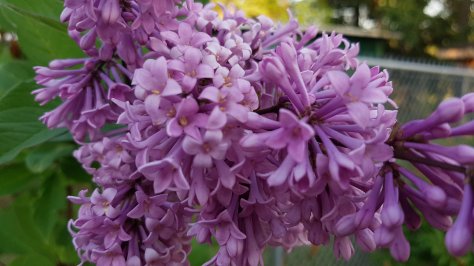
It’s July, yes, but these hardy blooms do arrive, even if late by southern standards.
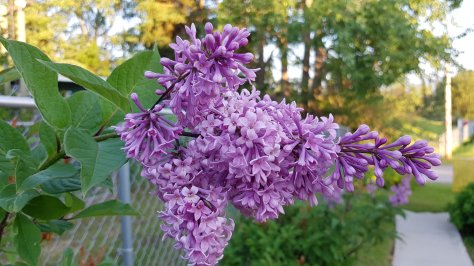
I found this particular bush after a rain when their fragrance was particularly lush and heady.
Hardy they may be, but they spread their gaudy celebration of life with gusto.
Greetings from the lovely northern lilac. 🙂
Here are two more views of the precious rain forest that can be found on Vancouver Island.

The rain forest, although damp and sodden, has a peacefulness that is easily communicated to humans. Our busy lives tire us out so much, and just taking a quick break in a forest is a wonderful, rejuvenating, special thing.
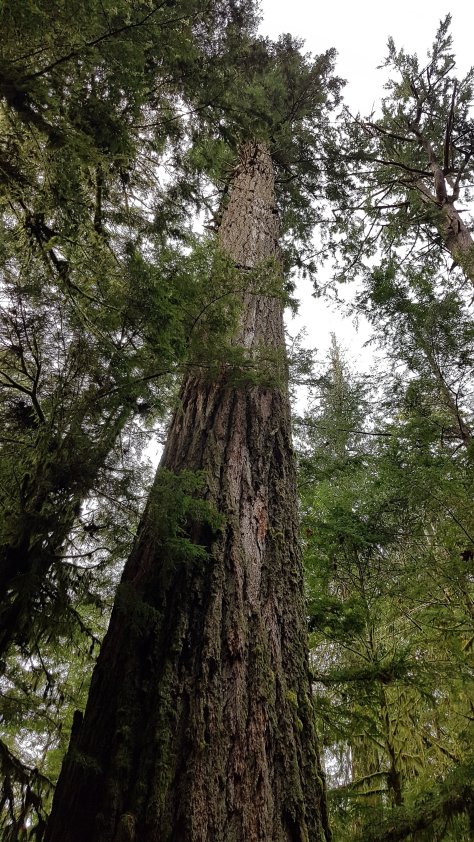
Another view of one of those ancient Douglas firs. Aren’t they wonderful? I hope they live for many, many more decades.
See the sea plant.
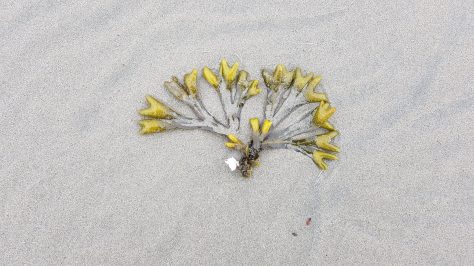
See the sand on the sea plant.
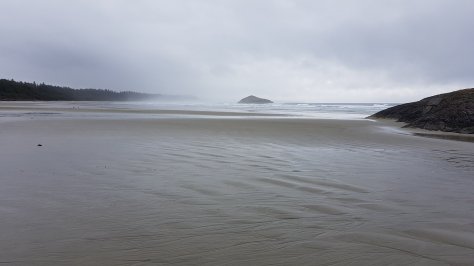
See the surf wash the sandy sea plant away.
Such is the soul of the sea.
🙂
We have melted. 🙂
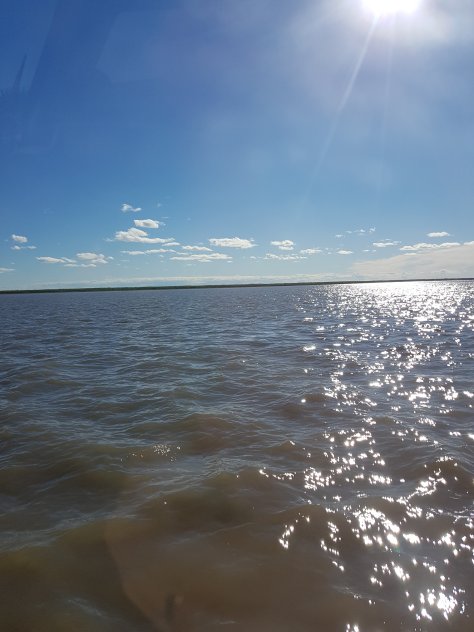
While fires ravage other parts of the country, I wish them rain.
An interstice of beach,

A microcosm of mysterious crags and clinging tree roots,
A shell, a crab,
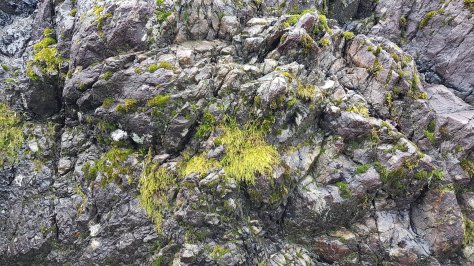
The mother of earth written in sand at my feet.
 In the Net! - Pictures and Stories of Life