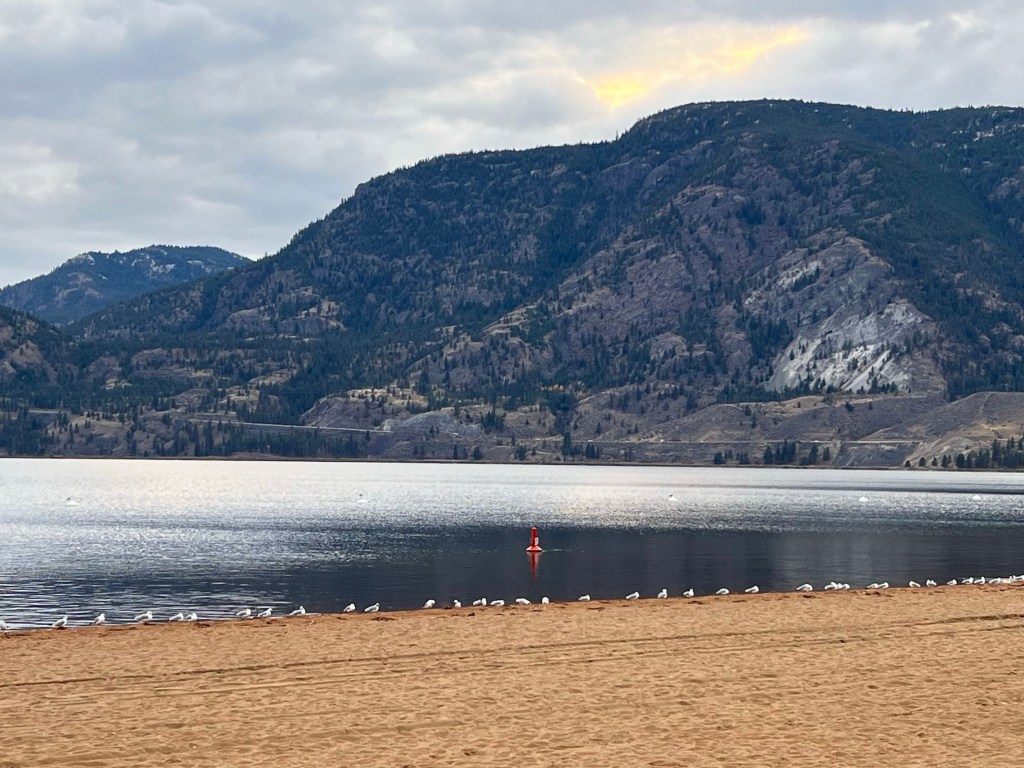
I love how these gulls are all aligned and spaced at the water’s edge. Are they conscious of each other’s need for elbow room (wing room?) and privacy?
I don’t think so. Whatever it was that caused them to spread out like this, it was definitely pragmatic.
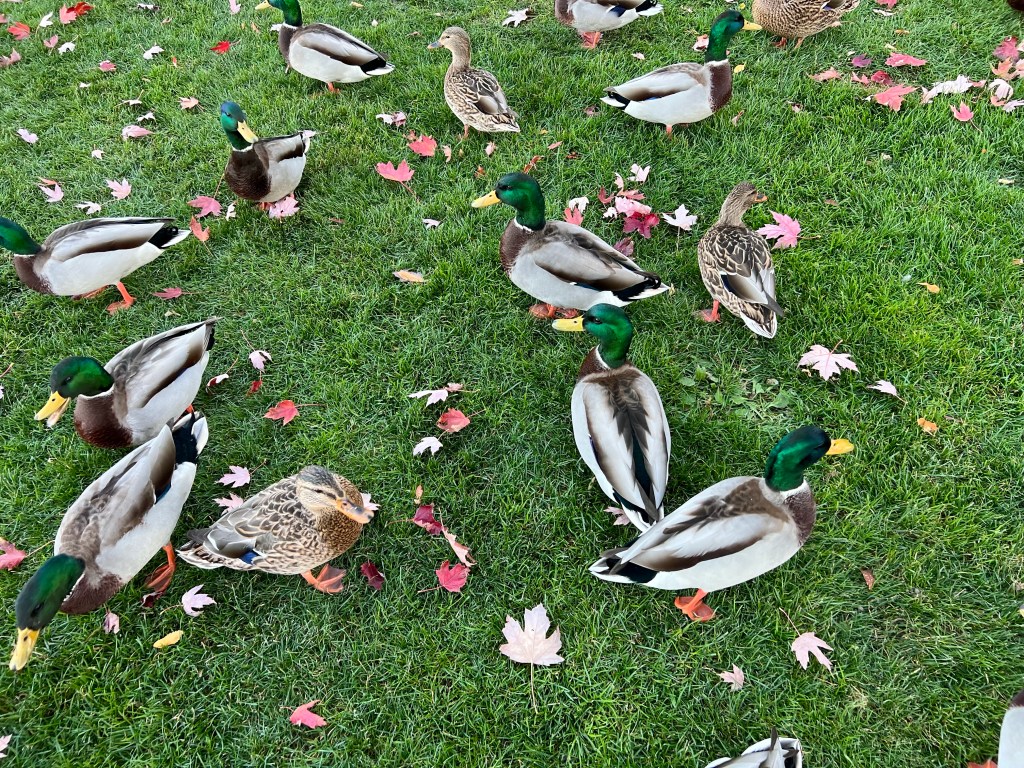
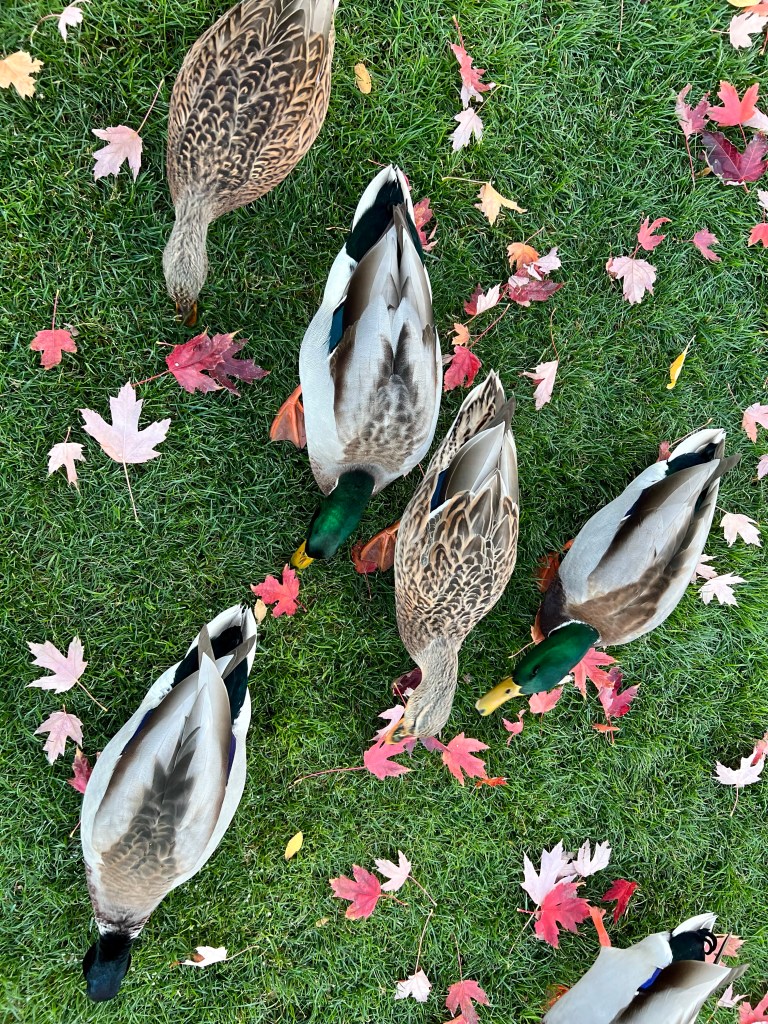
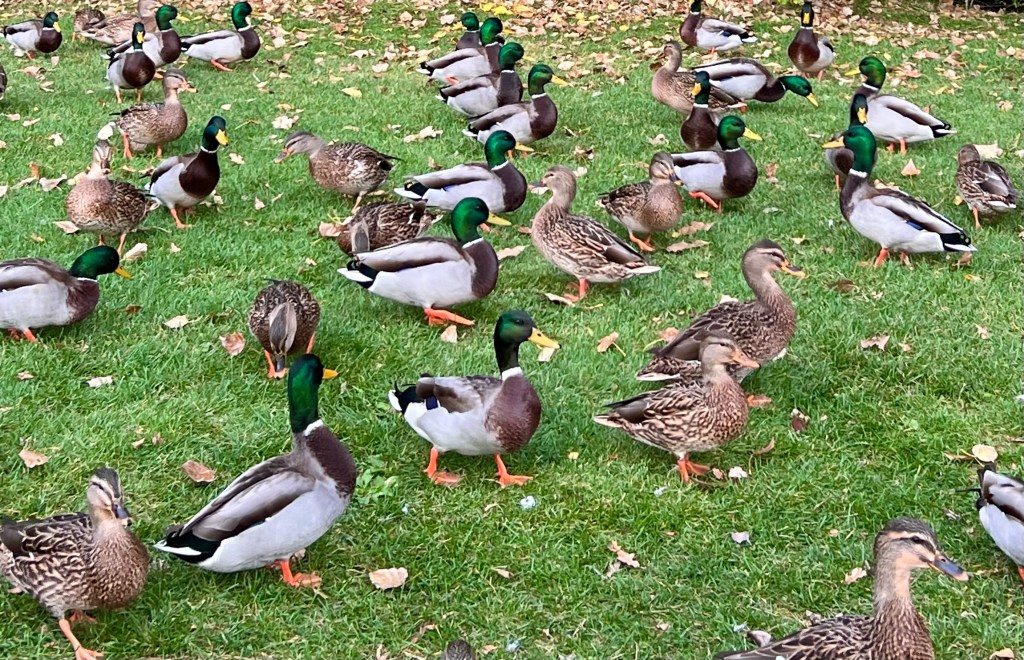
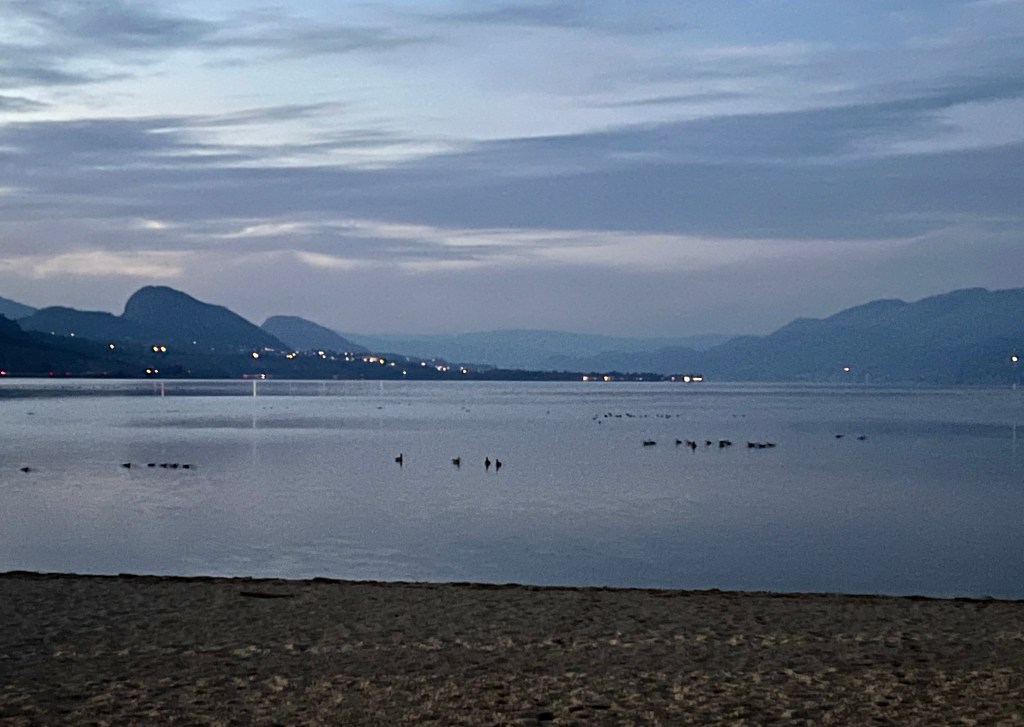
I stopped at the ducks’ favourite spot to provide them with a nutritious treat: cooked quinoa. They loved it and me too as long as I was scattering it on the ground. I was expecting more loyalty but as it turns out they’re rather fickle!
I was quite mobbed and one duck grabbed my pant leg and hung on, definitely wanting me to single him out, but how he was going eat and hold on, I’m not sure.
I wasn’t too concerned about making sure everyone got some, although I did try to do that. These ducks are quite well fed: just as I was finishing up, someone else was arriving with a big bag of veggies cut into duck-sized bites.
These birds are definitely the town pets – make no wonder they stay year round!
Even though we recently had our first frost, the dahlias have been continuing to do well.
Bright and pretty, they probably won’t last long after we have a hard frost, so I’m happy to enjoy them as much as possible before waiting until spring to see them again.
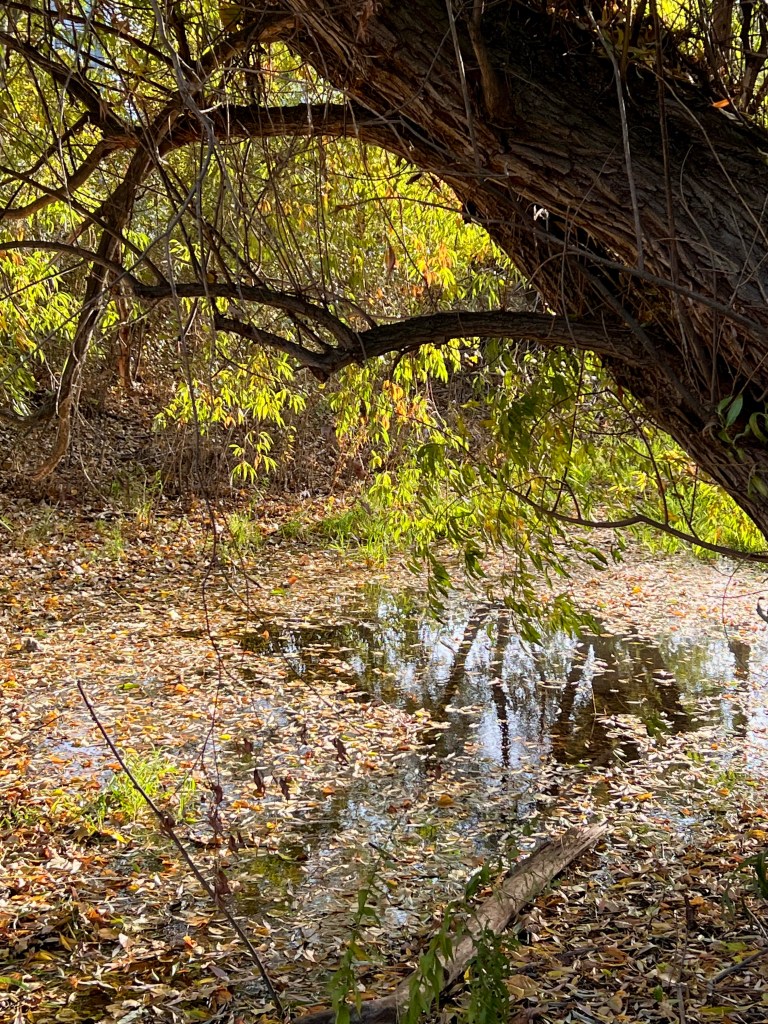
The lovely green and yellow reminds us that even through we’re transitioning to winter, the beauties of new spring life aren’t far.






 In the Net! - Pictures and Stories of Life