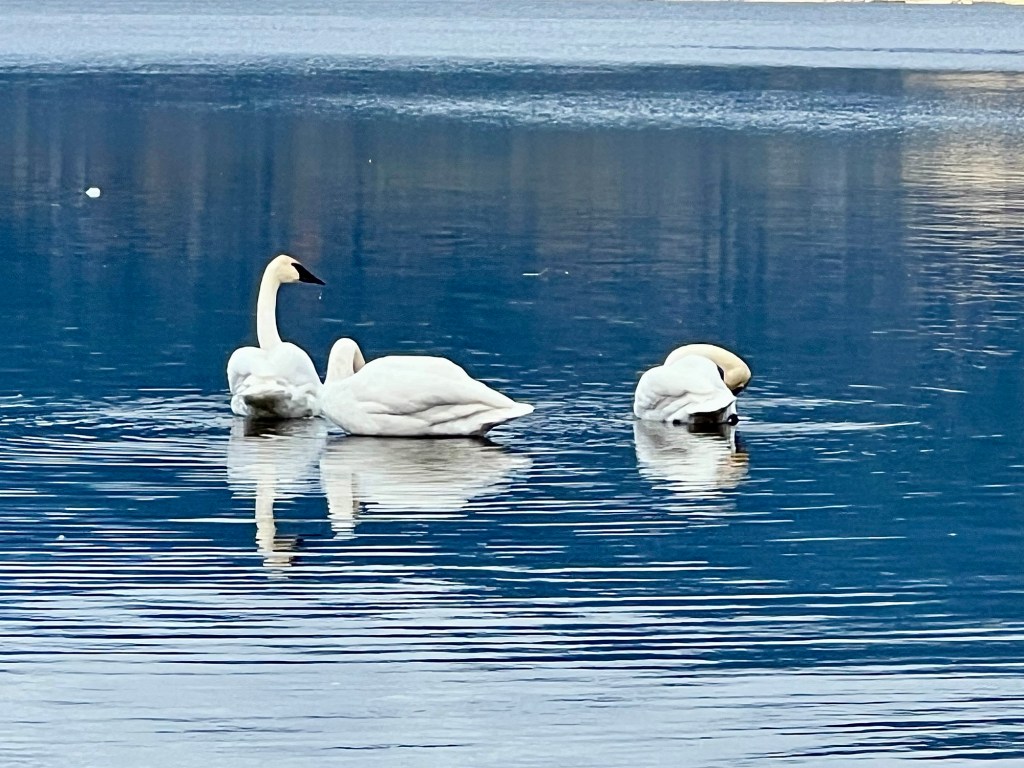
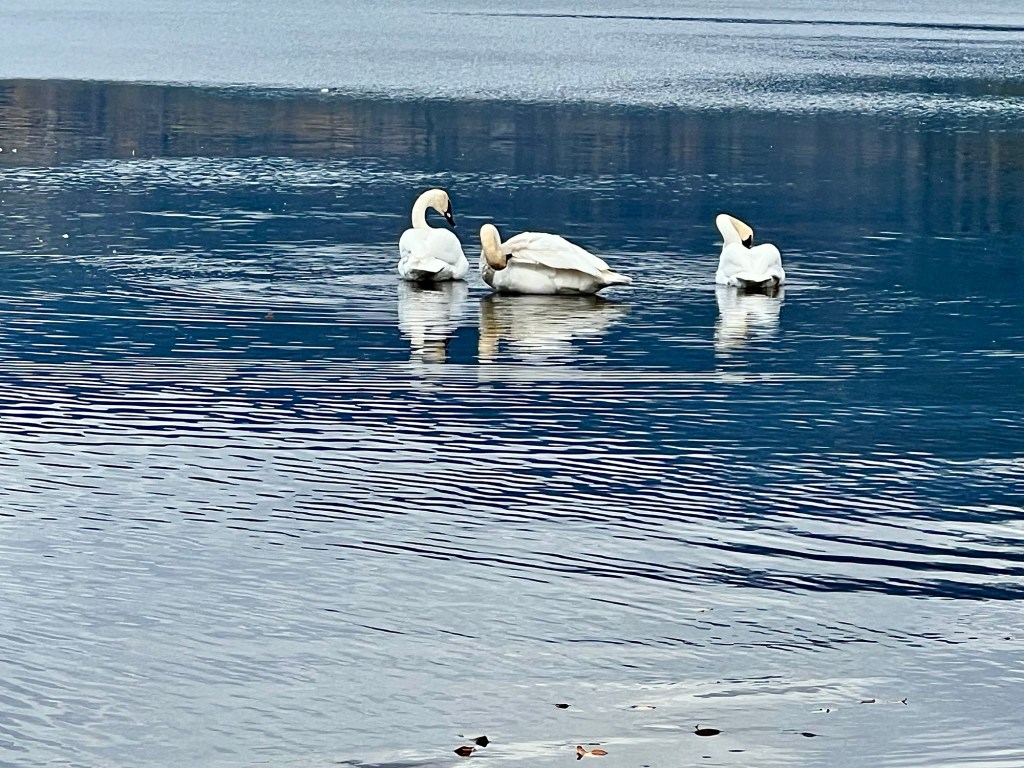
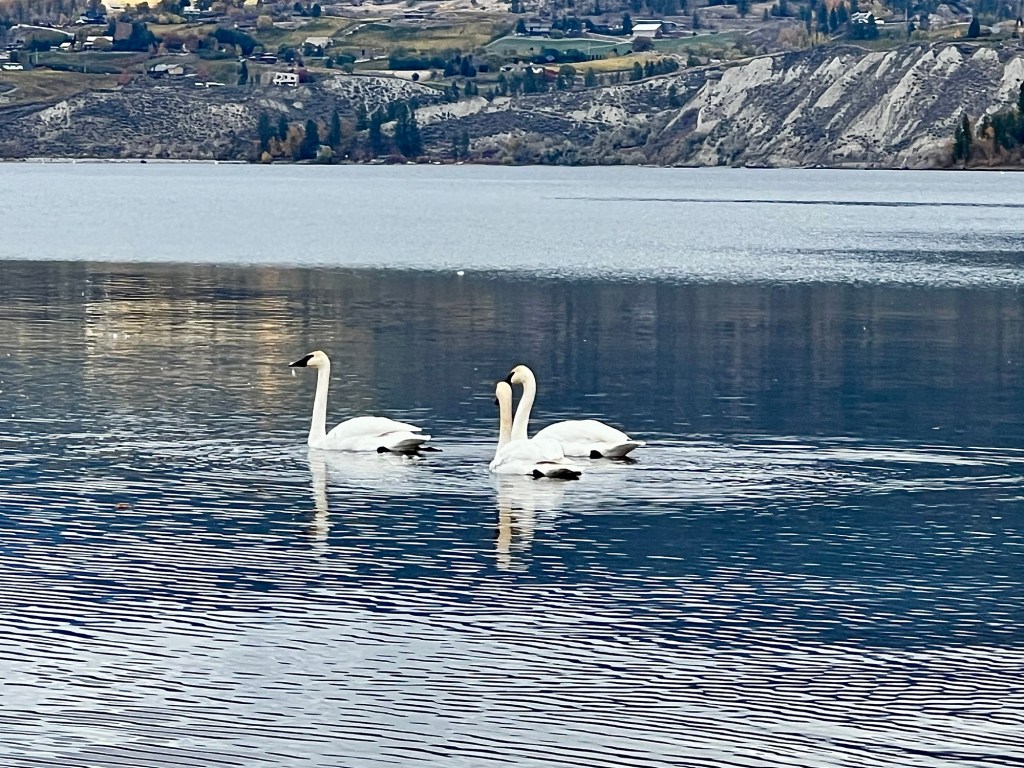
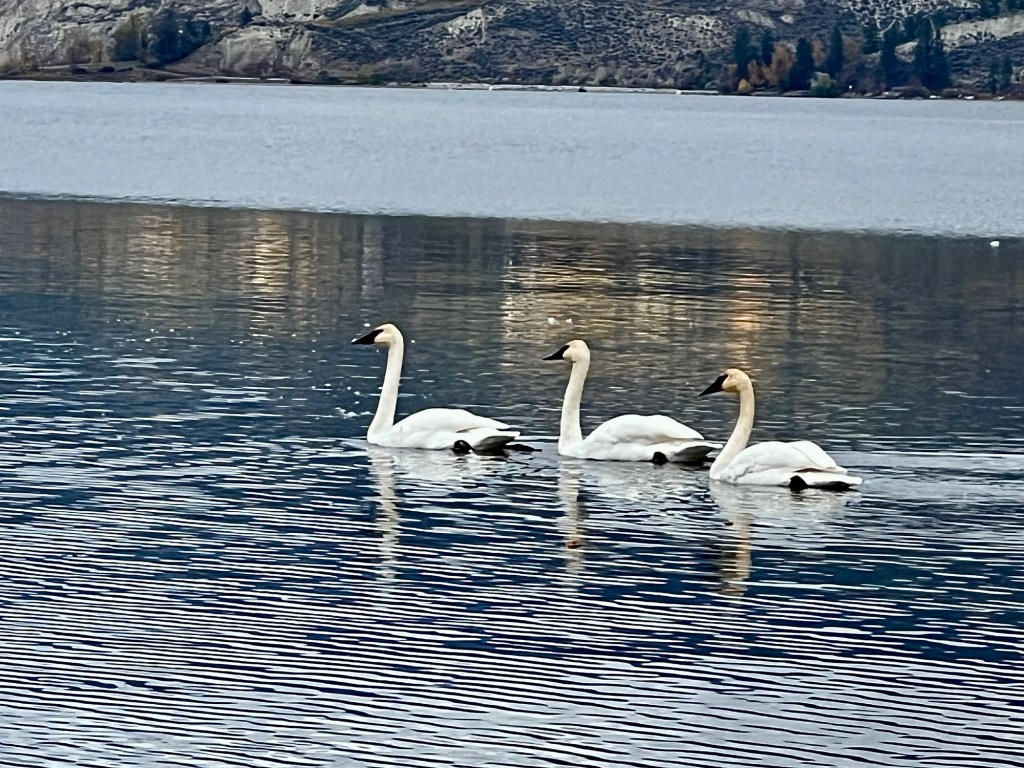
I had heard that swans will overwinter in the Okanagan Valley but I had never seen them here before, either in the summer or the winter. I was happy to spot this little family a few days ago. They seem to be two parents with their juvenile or cygnet.
All that flying means that they have to do some serious grooming. I can hear their conversation now!
Impatient swan: I’ll guard, you two get cleaned up!
Impatient Swan: Okay, you look clean now. Time to go!
Calm Swan: But darling, we’re swans. You know how important it is for us to maintain our image.
Impatient Swan: Okay, but you two look great. Let’s get going before all those Canada geese arrive. They’re so grumpy and mean and they always travel in gangs.
Calm Swan: Darling, you need a break. You’re the grumpy one, you know. Don’t worry about those geese. After all, they’ll never look as good as us. I’ll take point and you can rest your feathers.
Impatient Swan: Okay, I do feel tired. It’ll be good to rest and settle in for a while. How do I look?
Who says that it’s only birds of a feather that flock together? You can definitely flock with scales, too …
We have some trouble communicating but we still understand each other …
… because when the humans are dispensing food, it’s always a great idea to bring your best friends along to share the wealth. More friends, more food, especially if you look cute and needy, something that’s a bit difficult for a fish …
… but we know that sharing with our underwater, scaled friends is a good thing. They would do the same for us!
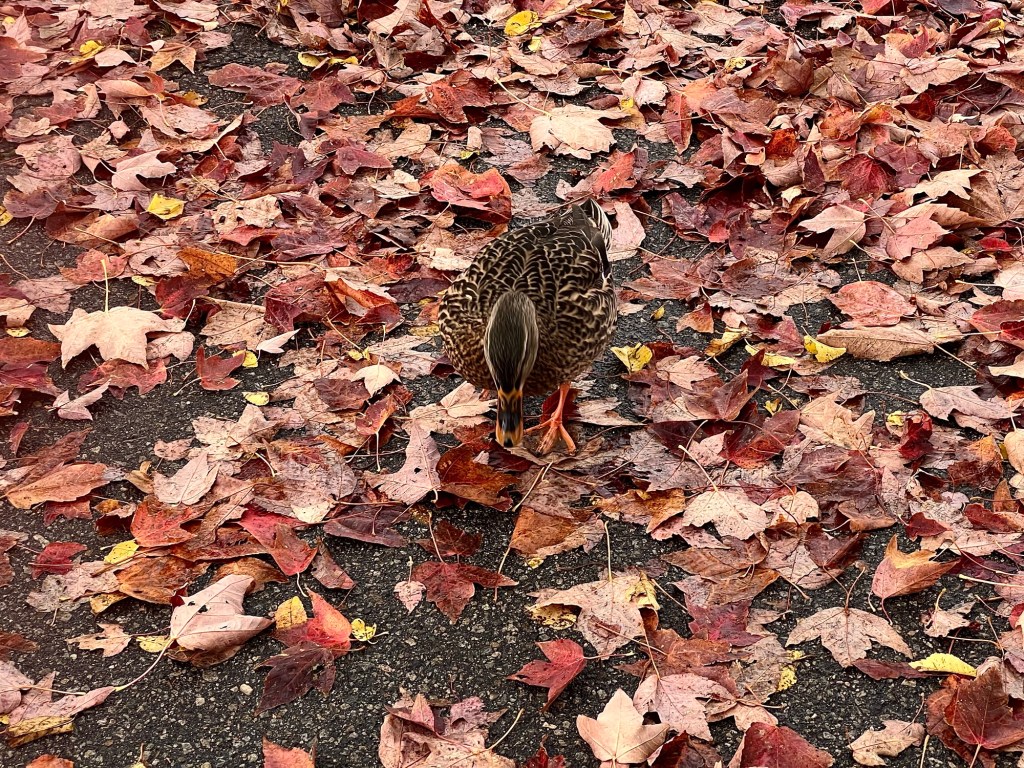
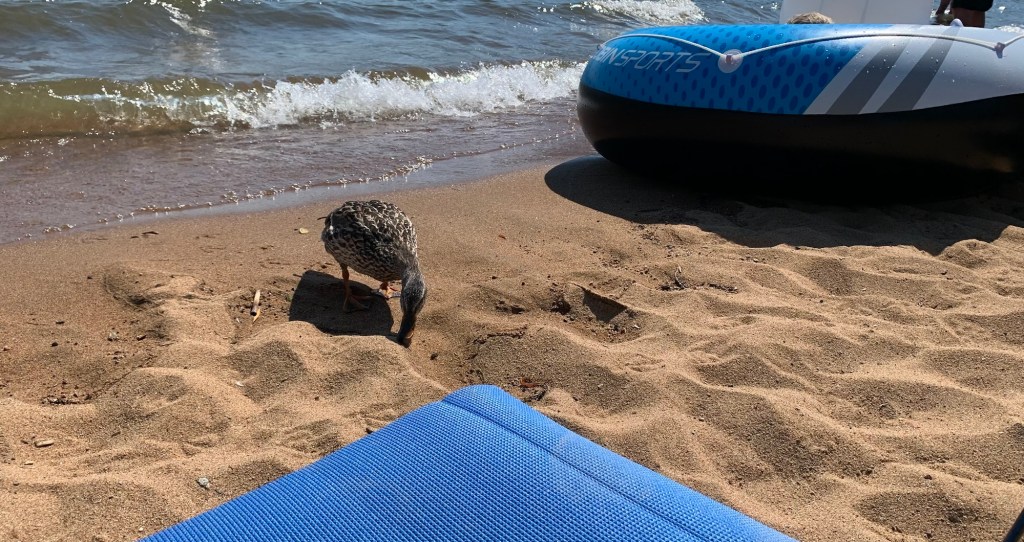
During the summer our resident mallard duck flock scatters all over the parks, beaches and gardens. They can be found almost anywhere, especially if there’s a bit of water nearby.
Skaha Lake beach, July
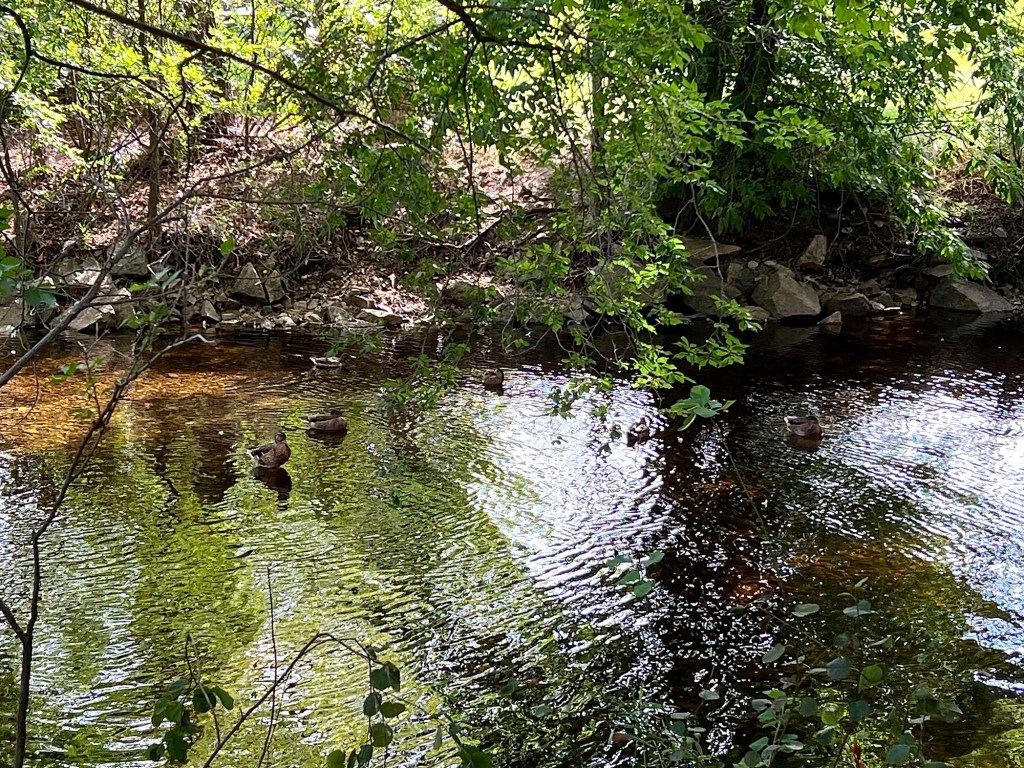
When the sun starts to shine and the days become warmer, they quickly abandon their over-wintering spot in Penticton Creek. Right now, only a few can be found there.
Penticton Creek, August
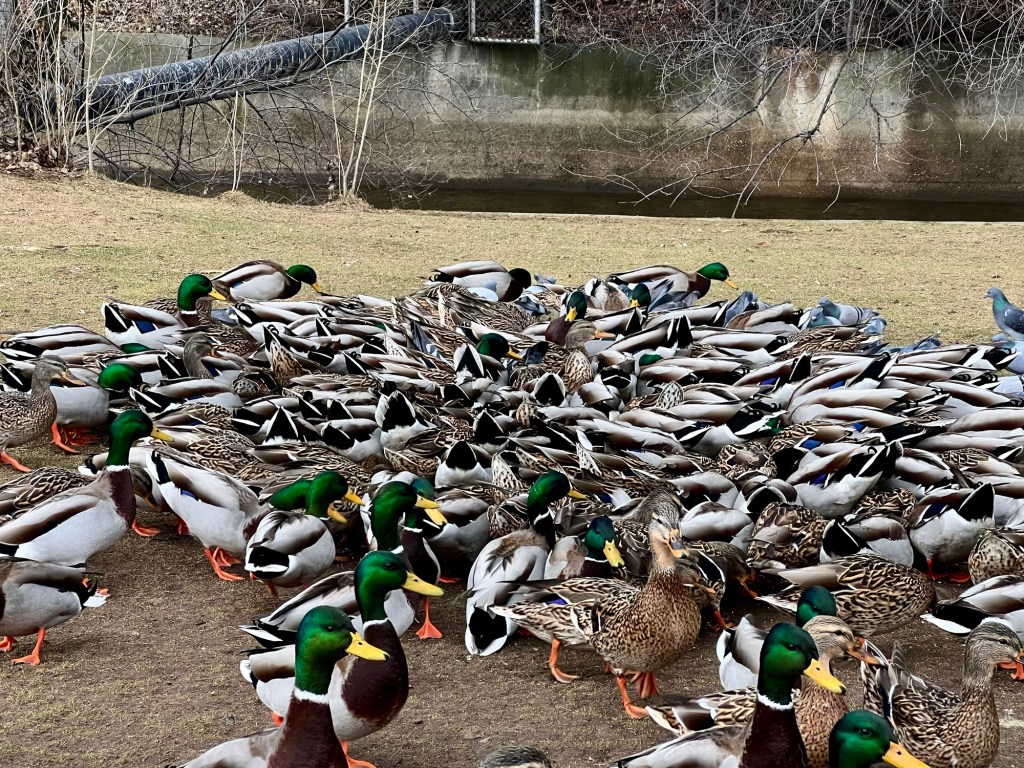
But when it gets colder, they will occupy “Duck Creek” once more, and lots of people – including the city – will make sure they have enough to eat to generate the calories they will need to make it to spring.
I hope you enjoy this lovely post from Christie at 1000 Places and Memories. Please click the link above to read the whole post and to view her pretty wren photos and short videos.
I hope you enjoy these stunningly gorgeous captures from Anneli at wordsfromanneli. Please click the link above to see the rest of the photos and to visit her blog.
The Okanagan Valley is home to the cutest little quail that run – they do fly if they have to but mostly they run – very quickly through parking lots, across roads and under low-lying bushes.
More than once I have been completely startled by 20 or more quail bursting from under some bushes because they have been frightened by either me or something else that I didn’t see.
They will also burst out of hiding to distract predators from their chicks. These little birds are very small. They’re about 17cm (6.5 inches) long and weigh about 75g (3 ounces), so you can imagine how tiny their chicks are!
These birds are not native to British Columbia; they are in fact an invasive species brought here about 100 years ago. However, since they have not posed any kind of threat to any other species, they have found their niche and BC is now home.
Except for this species, that is. Every time they surprise me by bursting out of the underbrush, I have to find my heart and put it back!
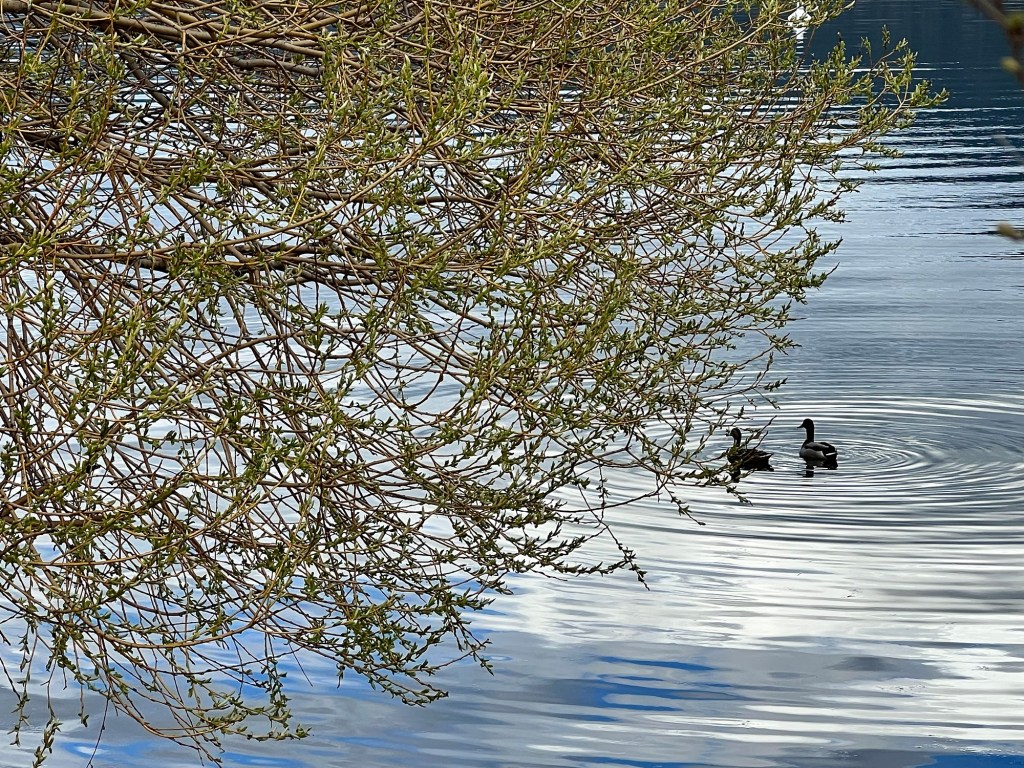
It’s a busy time of year for birds. They’re migrating, or nesting, or getting ready to nest. I’ve noticed that many of the mallard ducks have paired up.
This couple seemed quite content until another male tried to interrupt. That action caused the female to fly away.
A bit later, I saw her surrounded by four males, all trying to get her attention. She took off again; apparently she wasn’t impressed with their behaviour.
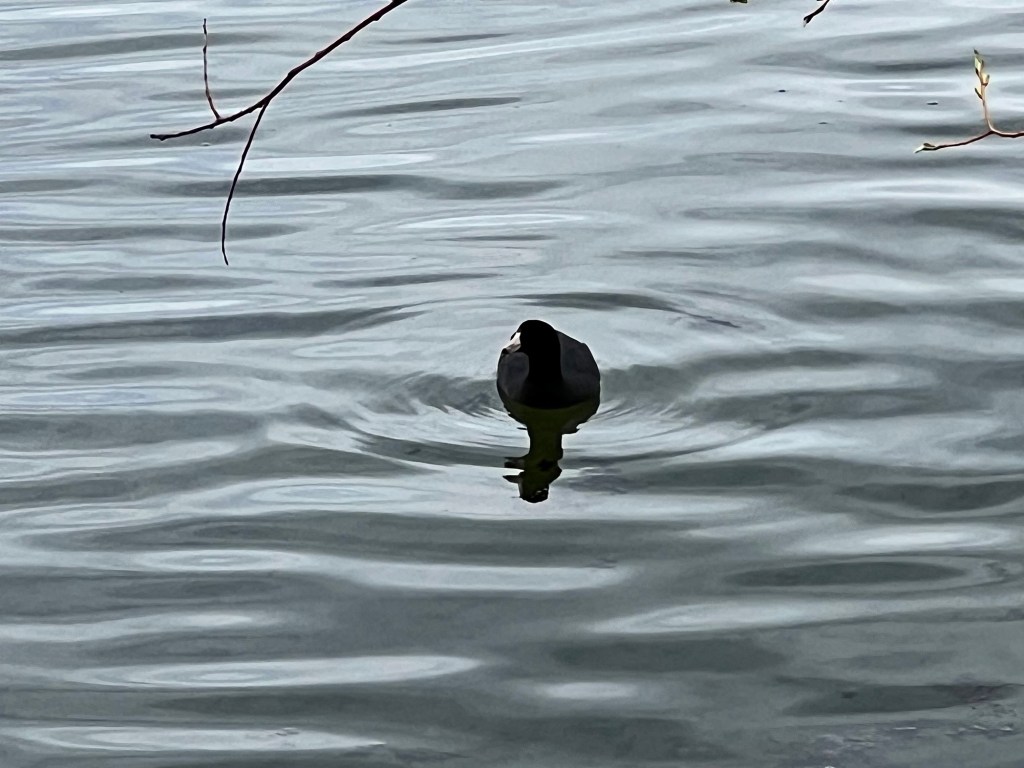
I’ve seen this lone coot in the same location for a few days in a row now. Today I realised that her/his partner is already sitting on a well-concealed nest at the water’s edge. Unlike mallards, coots mate for life and share the work of incubating, protecting and raising their young.
I hope to see the amazingly colourful coot chicks – they are orange and red and only turn black when they reach adulthood – in four or five weeks when their parents will begin teaching them how to survive in the water.










 In the Net! - Pictures and Stories of Life