Well, it’s that time of year when outdoor flowers have become very hard to find. So as a seasonal goodbye, I’m going to do a couple of retrospective posts showcasing some of my favourites from this year’s bloomers.
First up is March, April and May. These are wonderful months for many reasons but not least of which is that the blooms are everywhere and quickly bring us out of our winter blahs.
Lovely March daffodils, always a classic …
… were closely followed by another classic, April tulips, and so many, many other beautiful bloomers.
Cherry blossoms …
… plums …
… and apples … with us and then gone again so quickly.
Magnolias thriving in the April sun …
… a flower feast.
And then there was the heady scent of the lilacs, an old-fashioned flower that’s never really gone out of style.
Early May brought the rhododendrons …
… and dogwoods, British Columbia’s provincial flower.
Irises …
… and peonies …
… and hydrangeas completed a smorgasbord of gorgeous sights and scents.
And, no snow here, just lots of petals!
Although the southern hemisphere is heading into spring right now, for us northerners, I think that a little glimpse of what will be arriving again in March is a good thing.
Today – for the first time – I’m participating in Leanne Cole’s Monochrome Madness. If you’re interested in participating as well, please go to Leanne’s site to see what’s coming up. This week doesn’t have a theme so you can post whatever you would like.
I’ve done a bit of experimentation with monochrome by converting colour photos through Lightroom; others in my collection are naturally monochromatic winter photos and are three of the ones I’m posting here.
Winter eagle
An eagle pair lives near our home and has a couple of favoured perching trees that aren’t far from our deck. In January of 2024 I saw one of them doing some territorial surveying during a very wet snow fall that later turned to rain.
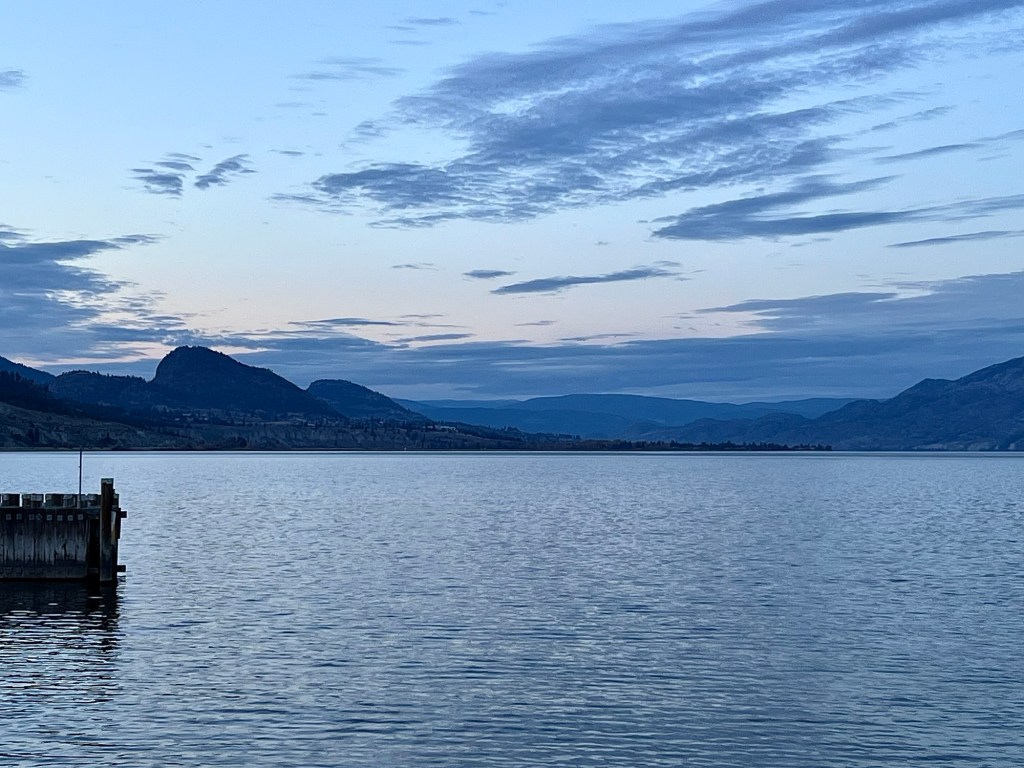
Okanagan Lake
This blue hour photo was taken just after nightfall in early February, 2024. I particularly like the almost perfect reflection in the lake’s surface.
Photo by permission from Dana Coates
The above photo isn’t mine but I’m including it because it’s such an unusual example of a naturally pink monochromatic photo. This is a rare pink fog – there were no filters applied to this picture.
Heavy moisture content in the air caused the blue wavelengths of the rising sun to be scattered out, resulting in a pink fog. Further up the Okanagan valley, the fog was actually red. This incredibly rare phenomenon didn’t last long; only about 10 minutes.
A small flock of coots swim through a monotone December day from 2024.
It was fun looking through my archive for appropriate monotone photos. I hope you enjoy them.
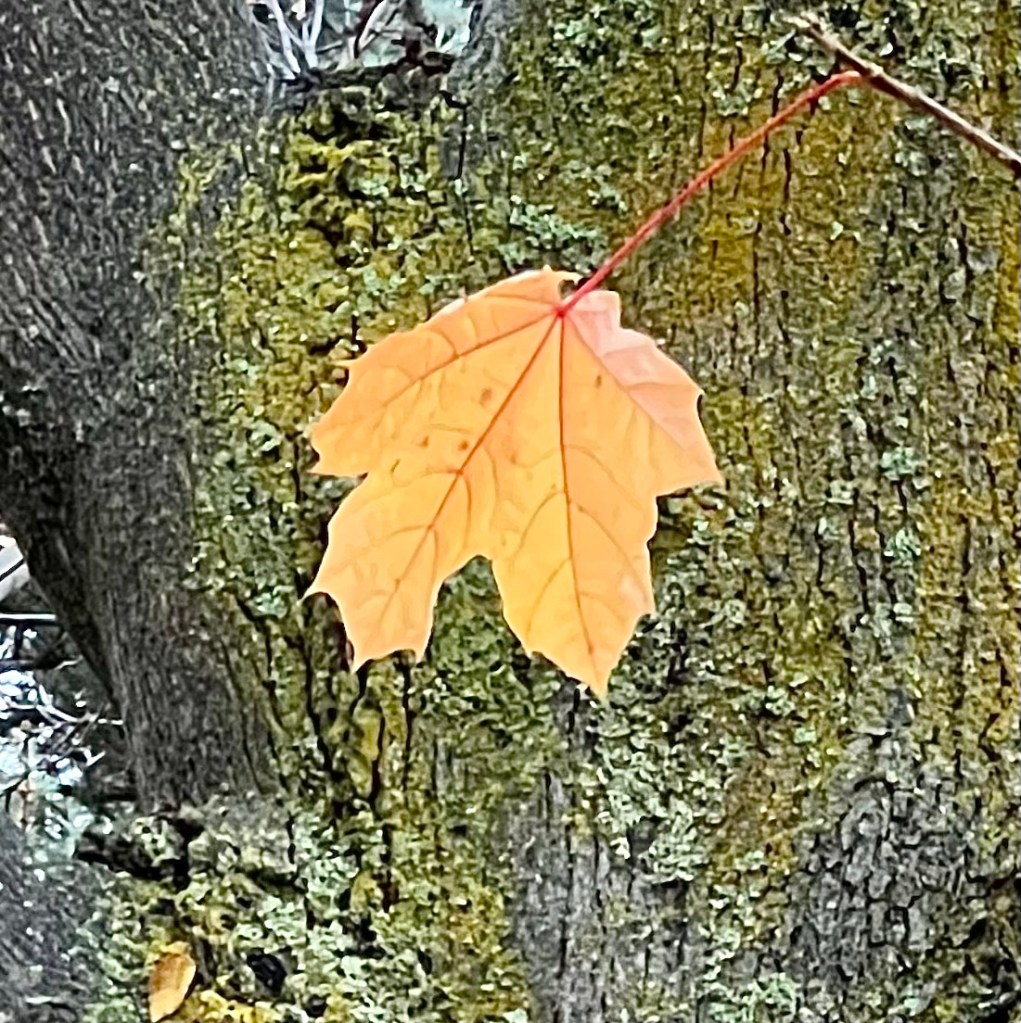
I’ve enjoyed watching large maple leaves gently fall from this tree and now there’s only a very few left including this little one, its time done, its rest awaiting.
There’s something very soothing about taking just a couple of minutes to watch leaves floating to the ground; a very centring activity.
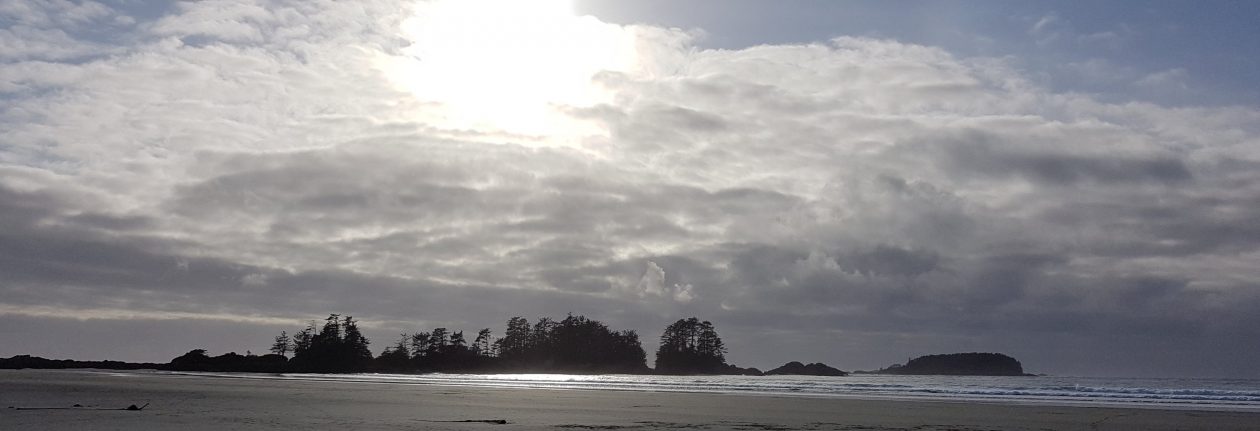
During late autumn we begin getting a lot of valley cloud that can envelop us for days at a time in a sort of luminous cotton ball.
On average, the Okanagan Valley is about 230 metres (754 ft) deep and during late autumn and winter, a thermal inversion occurs which is a thick, low-lying layer of cloud that stops up the valley like a cork in a bottle.
It typically arrives around now and can be unrelenting until about mid-February. While it protects our wine grapes and fruit trees from the winter low temperatures that most of the rest of the country experiences and usually gives us mild, snowless winters, it can also ground air traffic and impact mental health when the sun is blotted out for weeks on end.
Although this phenomenon is common wherever deep mountain valleys can be found, the valley floor’s 132 km (82 miles) long Okanagan Lake contributes to the strength of its effects and causes it to be extremely stubborn here in the Okanagan. So, other than visiting a sunny southern country or sitting in front of a sunlight lamp, how do we get a rest from all that cloud?
Well, one thing we do is to visit a ski resort for lunch. We are surrounded by mountains that have a corresponding number of ski hills high enough to be quite far above the valley cloud, so since we don’t ski any more, we go for lunch to enjoy the sun and blue skies. It’s a lovely break from the overcast.
Another thing I find helpful is to look for the remaining autumn colours.
This cotoneaster is brilliant as is the barberry pictured below.
There are also the seasonal lights – coming soon – that brighten these shorter, grey days.
Light decorations on a city park tree, December, 2024.
Although many people are really affected by the grey conditions that usually develop here during the winter, I find that it does have its own beauty.
January, 2025
The clouds themselves as they hang on the sides of the valley and puff over the lake are lustrously pearlescent and their shapes gorgeous, and given how they protect the valley during the coldest months, I think that’s a fair trade-off.
We have had lots of wind over the last couple of months; much more than normal. That pattern seems to be quietening now that we’re closer to winter, but we’re still experiencing the occasional windy day.
We had another one recently and it cleared away some cloud that had been lingering; you can see the streaky sky in the picture above.
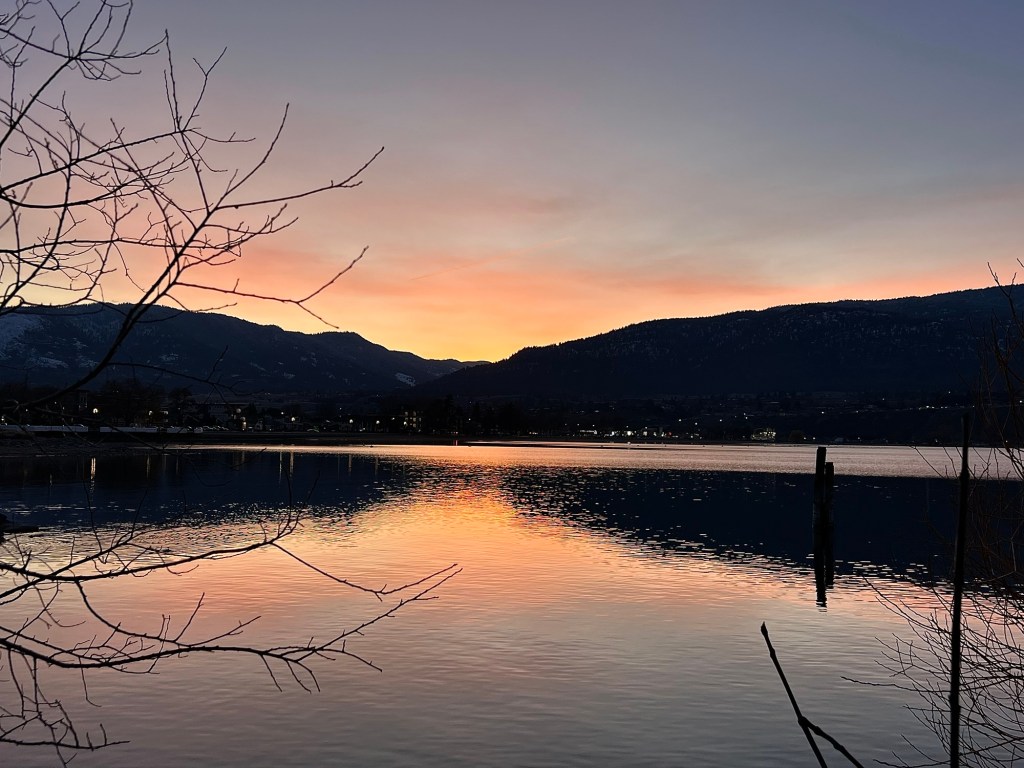
The clear air also gave us a pink toned evening before it became dark and the wind died off.






 In the Net! - Pictures and Stories of Life