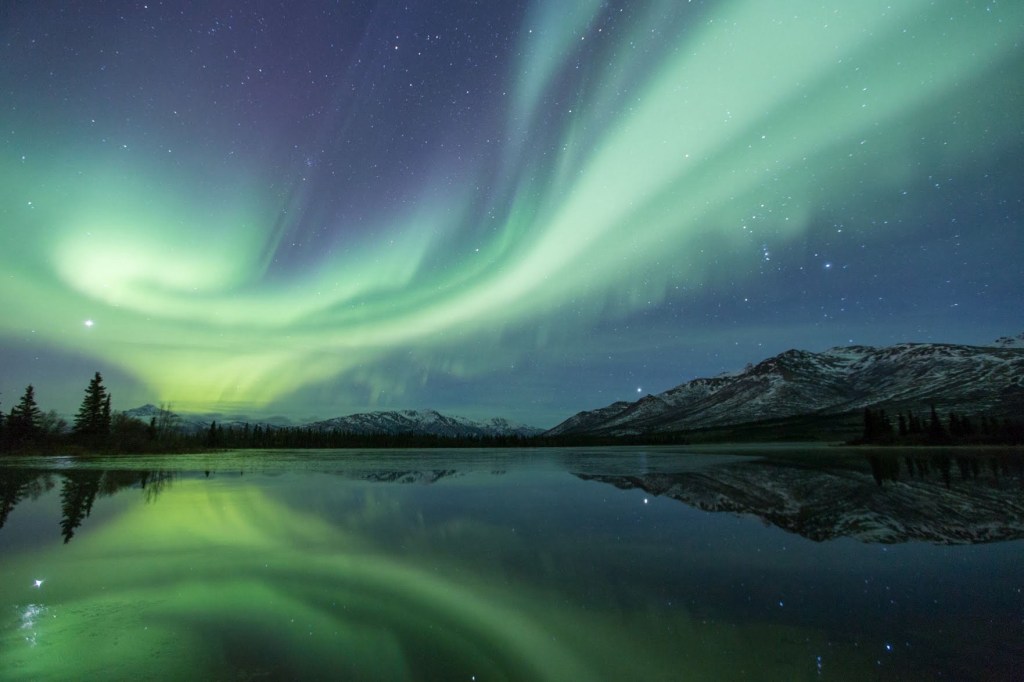
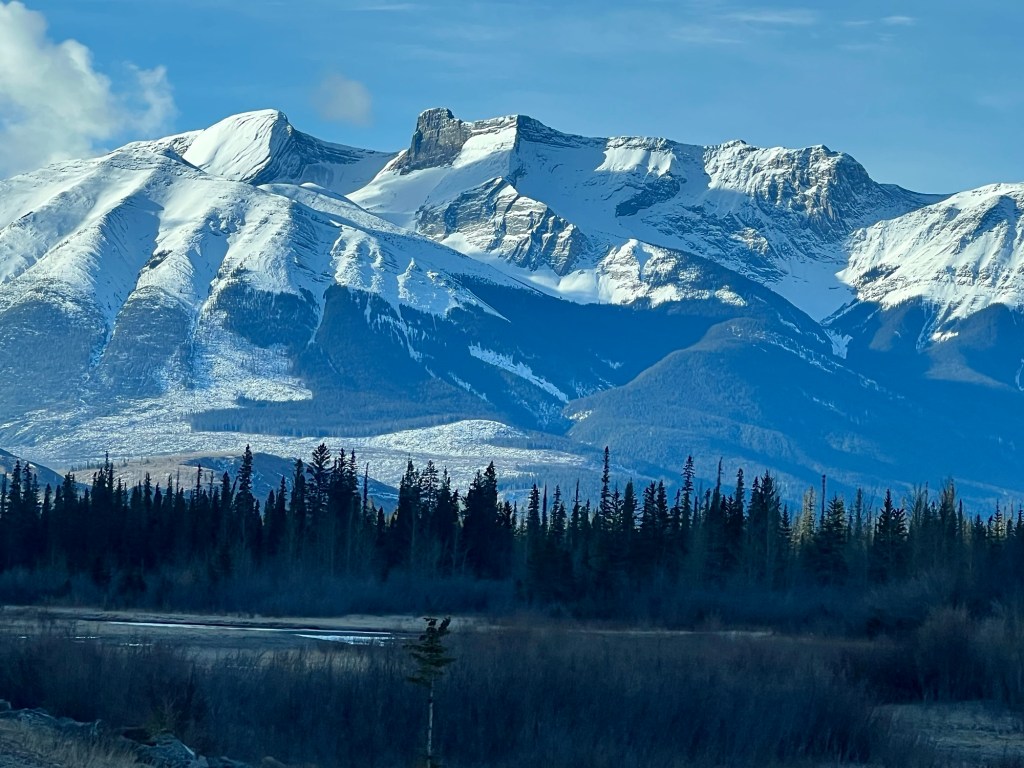
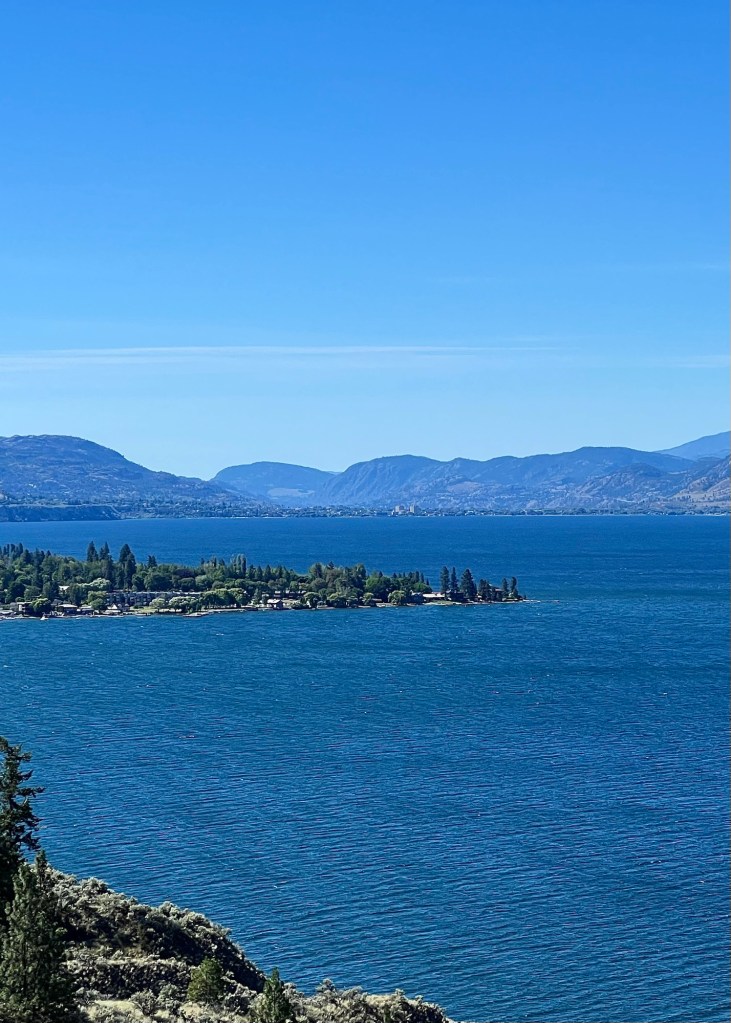
Okanagan Lake, British Columbia Winter in Yellowknife, Northwest TerritoriesA canola field, AlbertaTobermory, OntarioPacific Ocean, British ColumbiaAurora Borealis, Northwest Territories Rocky Mountains, Alberta
The southern portion of the Okanagan Valley is classified as semi-arid desert, but last year’s extreme drought combined with the 10-day cold snap we had in January did a lot of damage. Nevertheless. recovery is happening.
The Okanagan Valley near Oliver, with Osoyoos Lake in the background.
Many of the grape vines were affected by both the drought and the cold snap, as were the stone fruit orchards such as peaches, plums and apricots. Everywhere I looked, I could see many fields being replanted under the new agricultural guidelines while other fields are clearly being left, at least for this year.
A mixture of grape vine and cherry tree fields, while others are lie fallow.
The area is definitely not as lush as it has been in the past, but with new farming approaches and hopefully, more stable weather patterns, there will be a return to something of its former self.
The KVR (Kettle Valley Railway) Trail is a former passenger and freight rail line that was active throughout much of the British Columbia interior from 1915 up until 1989.
View towards Penticton from the KVR Trail.
After the old rail line was closed, the bed was turned into a hiking/biking/walking trail. It’s possible to take this trail from Penticton to Kelowna, a distance of 80 km (50 miles).
View northward towards Kelowna from the KVR Trail.
We have walked various parts of it, but since we don’t camp any more (I don’t think I would be able to walk the next day – sleeping on the ground is no longer in my wheelhouse!), we have never completed the entire stretch on foot. In order to see all of this piece of the trail, we decided to use our truck. (Off-road vehicles are permitted on this portion.)
A view of the William R Bennett bridge across Okanagan Lake with Kelowna to the right.
The views on this beautiful day were marvellous and we were glad we were able to see this entire section; it was rather wonderful.
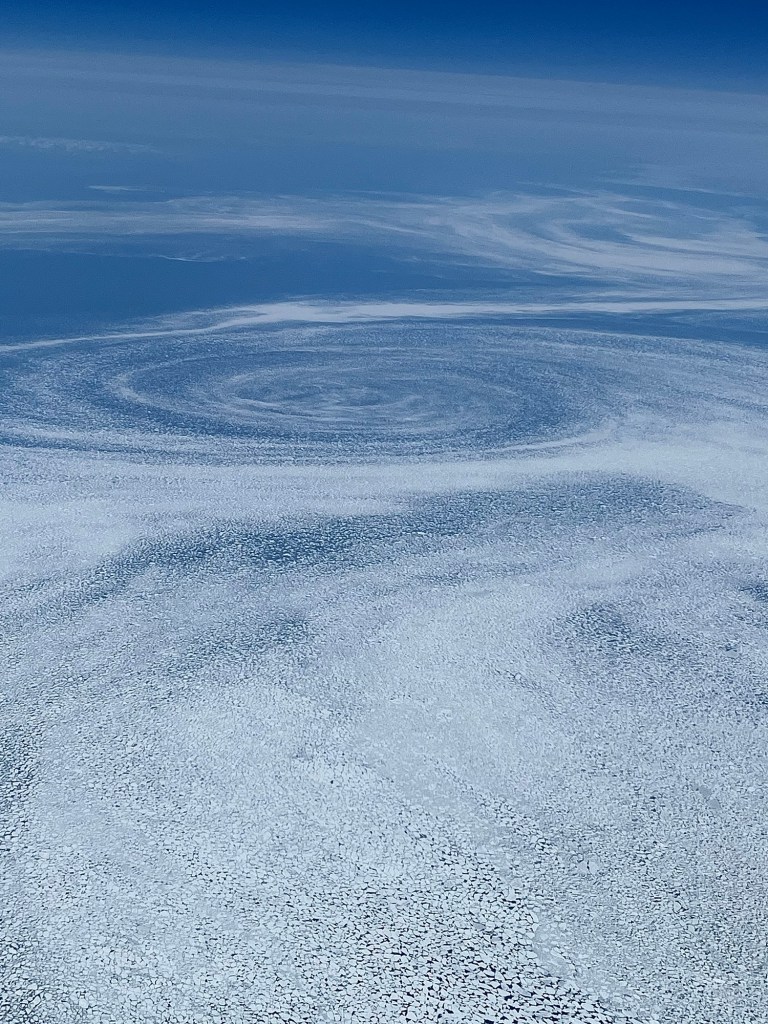
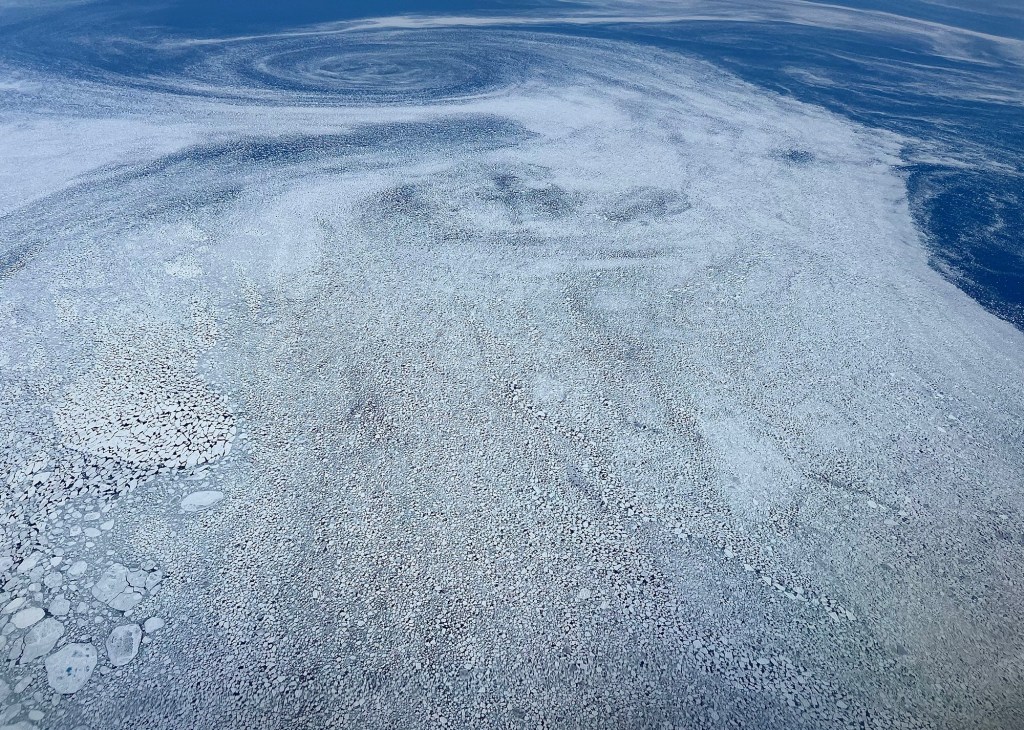
We had beautifully clear weather on our flight from Iceland to Calgary and as we reached the eastern Greenland coast, we had an excellent view of the sea ice fields in their spring break-up.
You can easily see the movement of the ocean currents …
… and we were intrigued by these interesting spiral patterns, but I was unable to find an explanation for them.
There’s no doubt that among these pans are huge icebergs; many of them will make their way down the Newfoundland coast before melting in those warmer waters.











 In the Net! - Pictures and Stories of Life