These beautiful birds are found year-round in southern British Columbia but particularly on Vancouver Island.

With their yellow tummies and bright red wing flashes, they are lovely to behold.
Happy Thursday.
These beautiful birds are found year-round in southern British Columbia but particularly on Vancouver Island.
With their yellow tummies and bright red wing flashes, they are lovely to behold.
Happy Thursday.
The Okanagan Valley is home to the cutest little quail that run – they do fly if they have to but mostly they run – very quickly through parking lots, across roads and under low-lying bushes.

More than once I have been completely startled by 20 or more quail bursting from under some bushes because they have been frightened by either me or something else that I didn’t see.

They will also burst out of hiding to distract predators from their chicks. These little birds are very small. They’re about 17cm (6.5 inches) long and weigh about 75g (3 ounces), so you can imagine how tiny their chicks are!

These birds are not native to British Columbia; they are in fact an invasive species brought here about 100 years ago. However, since they have not posed any kind of threat to any other species, they have found their niche and BC is now home.
Except for this species, that is. Every time they surprise me by bursting out of the underbrush, I have to find my heart and put it back!
Happy Wednesday.
It’s a busy time of year for birds. They’re migrating, or nesting, or getting ready to nest. I’ve noticed that many of the mallard ducks have paired up.

This couple seemed quite content until another male tried to interrupt. That action caused the female to fly away.
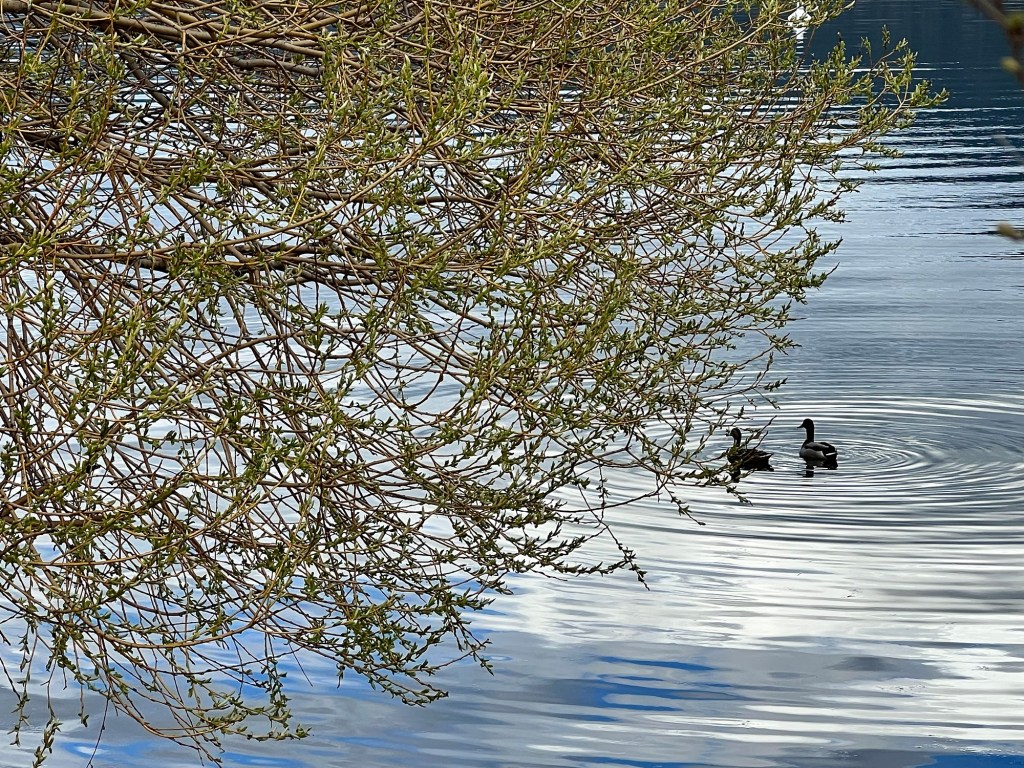
A bit later, I saw her surrounded by four males, all trying to get her attention. She took off again; apparently she wasn’t impressed with their behaviour.
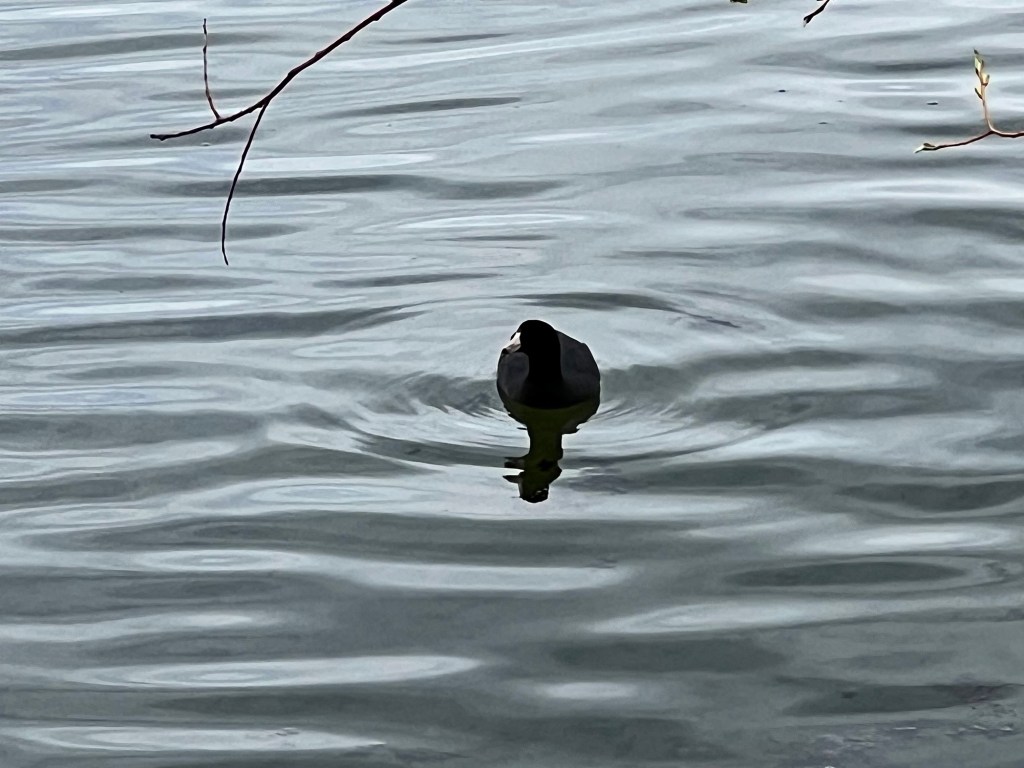
I’ve seen this lone coot in the same location for a few days in a row now. Today I realised that her/his partner is already sitting on a well-concealed nest at the water’s edge. Unlike mallards, coots mate for life and share the work of incubating, protecting and raising their young.

I hope to see the amazingly colourful coot chicks – they are orange and red and only turn black when they reach adulthood – in four or five weeks when their parents will begin teaching them how to survive in the water.
Happy Sunday.

March 16 – 20: My time has been spent visiting the family here, including my 16 year old granddaughter and her parents. I’ve been knitting, and …
Spring Roadtrip, 2024: Sitting Still
I hope you enjoy these marvellous bird photos from Beth at A Year of Kayaking. Please click on the link to see more.
There are springy signs everywhere! First, I noticed a few days ago that the red maples have very suddenly started budding.
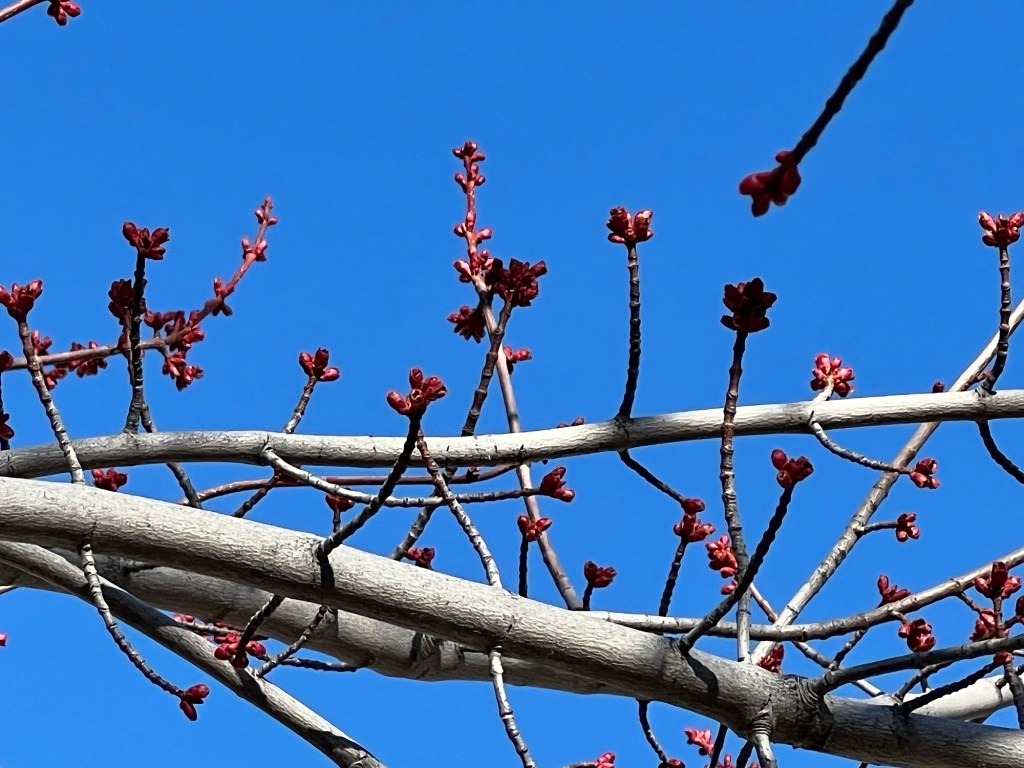
These trees are loaded with pink buds that are so pretty against the blue sky.
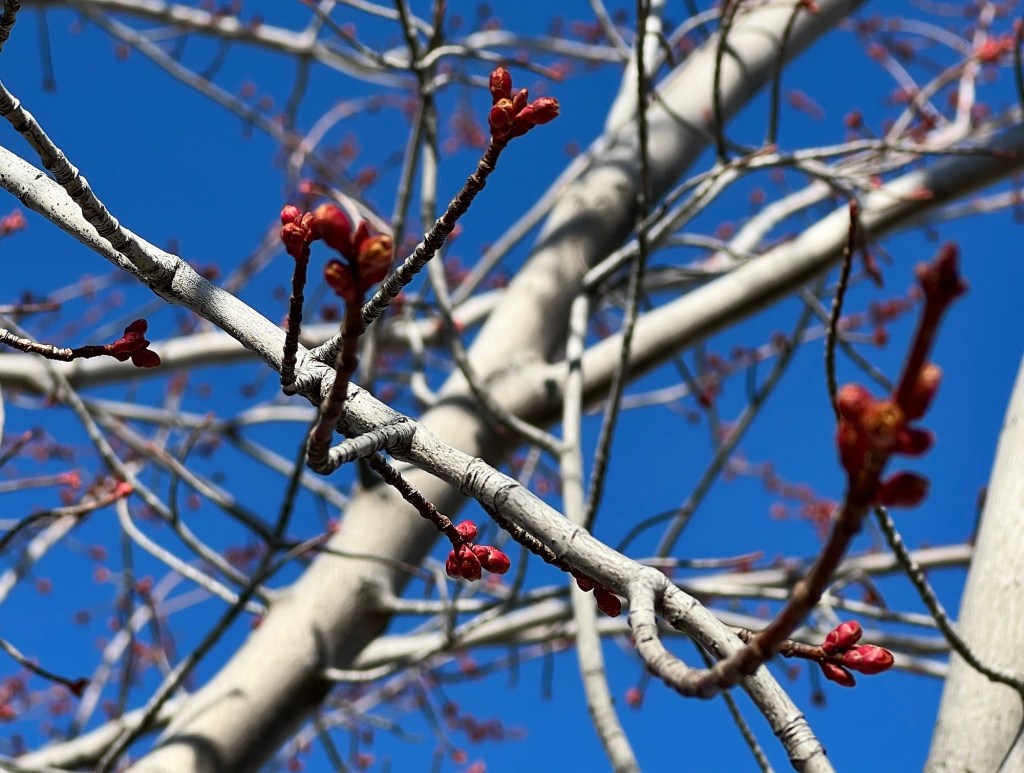
They will soon be leafing in great profusion.
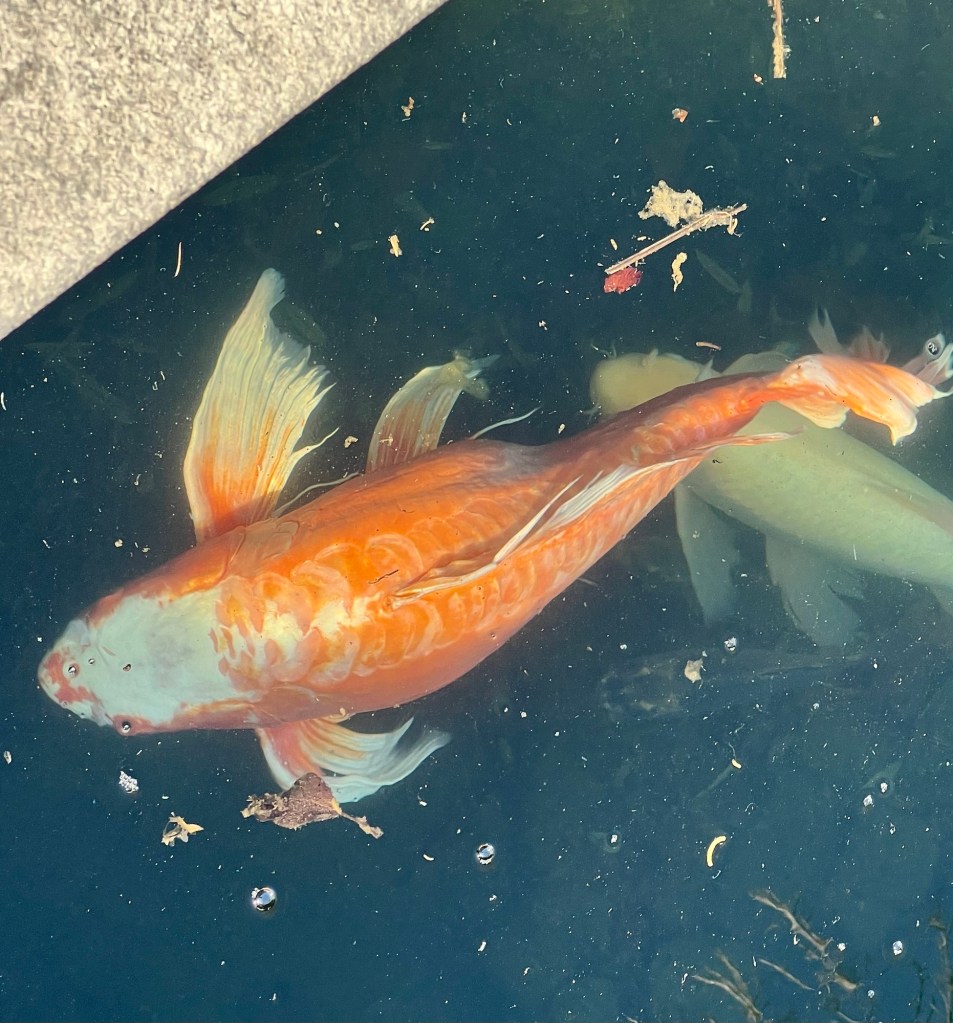
Then I saw that the large koi in the Japanese garden fish pond have come through the winter and their dormancy in good shape.
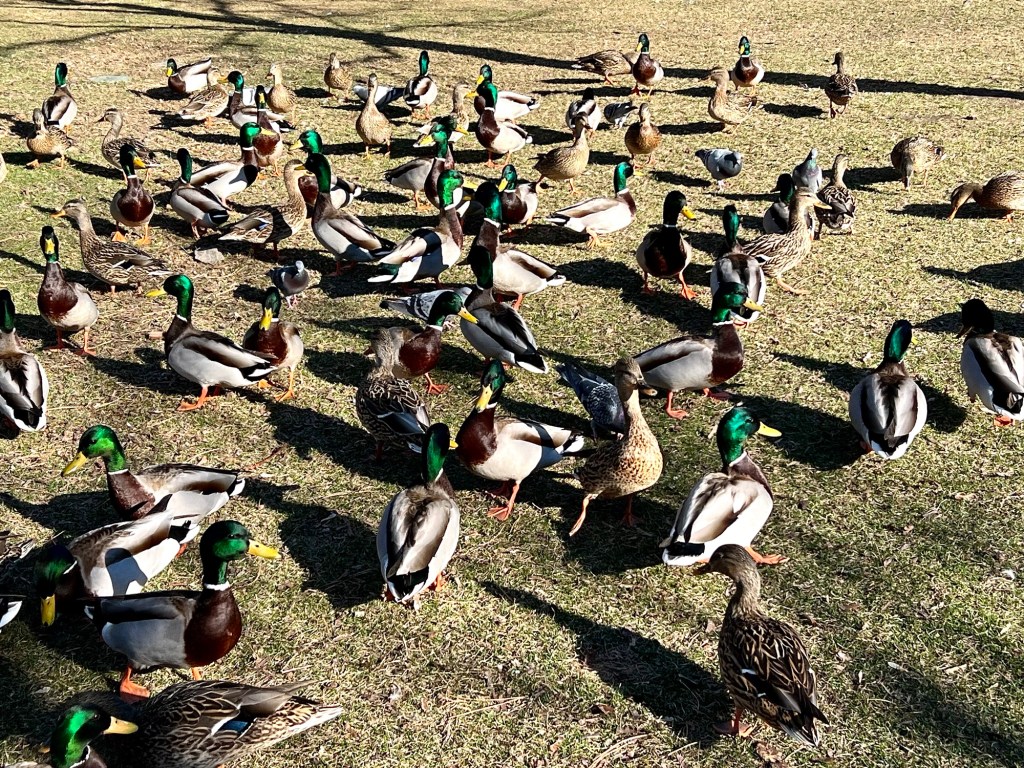
Passing near the creek the always-hungry ducks were happy to see us with our bag of quinoa snacks, and I noticed that the green head feathers of the males are beginning to turn very iridescent, a sign that they will soon be mating.
I hope signs of spring are happening where you are, too.
Happy Wednesday.

PARTRIDGES WITHOUT A PEAR TREECome hither, seek refugeUpon our verdant lawn.Safe from hunters whoseek to drive your kind forth.Your two bulbous …
Partridges Without A Pear Tree
I love this partridge photo series from Annika Perry. I hope you click the link above to view all the pictures as well as to read her accompanying poem. It’s beautiful.
All was quiet at the duck creek – a few sleepy murmurings …

… dreams of quinoa and other grains, juicy bugs and warmer weather …
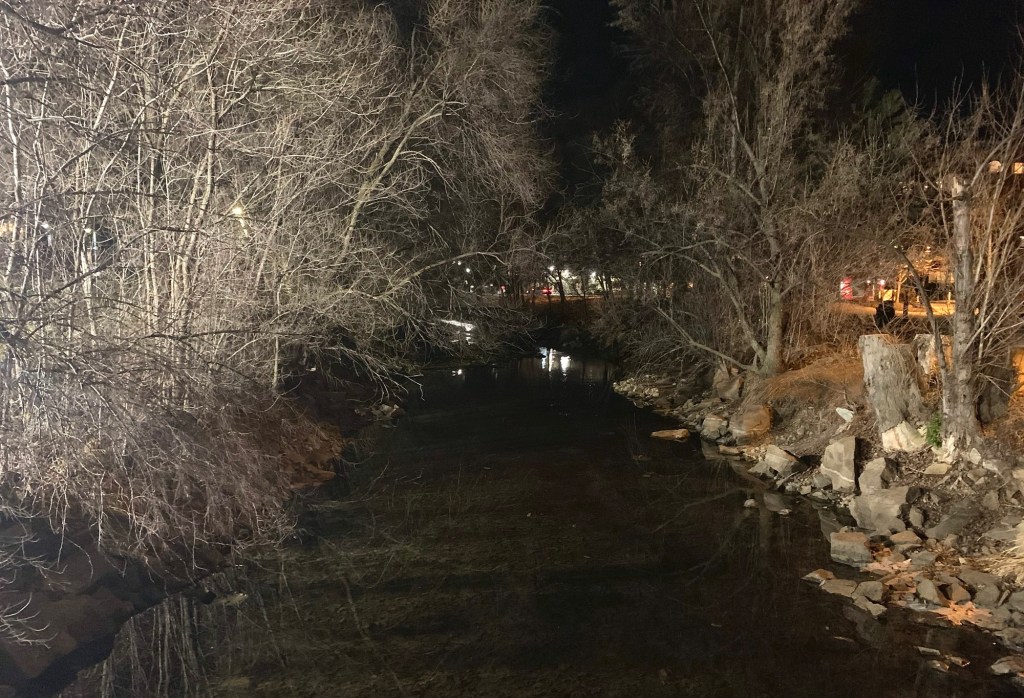
… but spring is coming and they will be busy with little ones …

… dream now while you have time.
Happy Wednesday.
In common with the rest of western Canada, we’ve suddenly turned colder. We’re still above 0C (32F) during the day but are going below 0 at night. Meanwhile, Vancouver, very unusually, is apparently going to get wet snow and minus temperatures overnight as well. Ugh.
Of course, here in the Okanagan Valley we have it comparatively easy. Much of the prairies are getting highs around -20C (-4 F). Strangely though, a lot of the east is coming in at +20C (68F) but may be getting much colder toward the end of the week. Nevertheless, if you’re about to travel from east to west, a 40 degree temperature difference might make for a bit of a packing challenge – such wild weather!
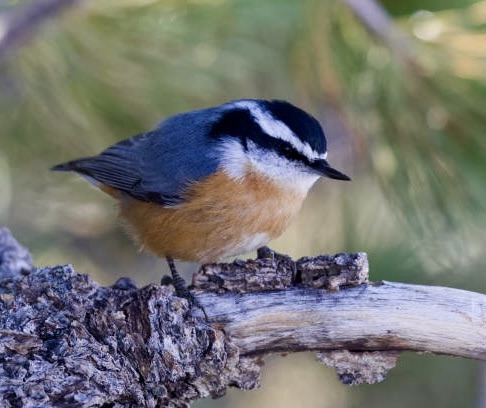
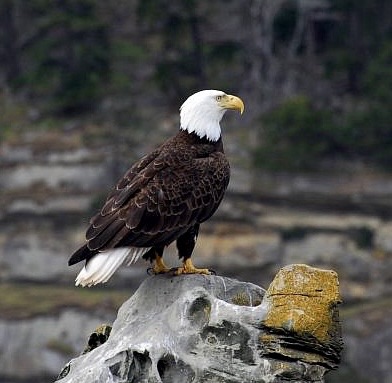
So to take our minds off these bizarre differences, I thought we could do with some brighter pictures of what is to come.


Happy Tuesday.
While out walking we stopped to give our resident duck flock their quinoa quota.
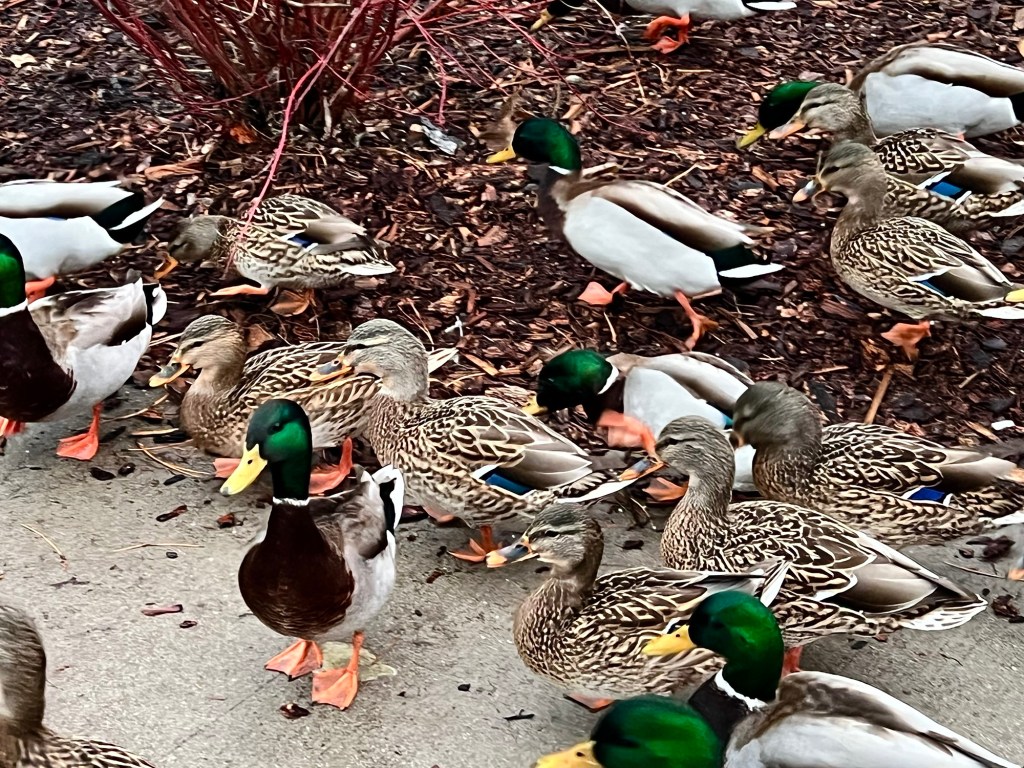
After we were done, a man who had been waiting in his truck for us to finish stepped out and the ducks launched themselves at him in a big swarm! He was carrying about 2 kg (4.4 lbs) of bird seed which he distributed to a very happy flock. We thought they mobbed us, but we have nothing on their reaction to him!

Gathered in a tight knot, we didn’t see much except their backs once the seed was spread.

About three or four pigeons were able to squeeze their way toward some food, but they were mostly excluded.
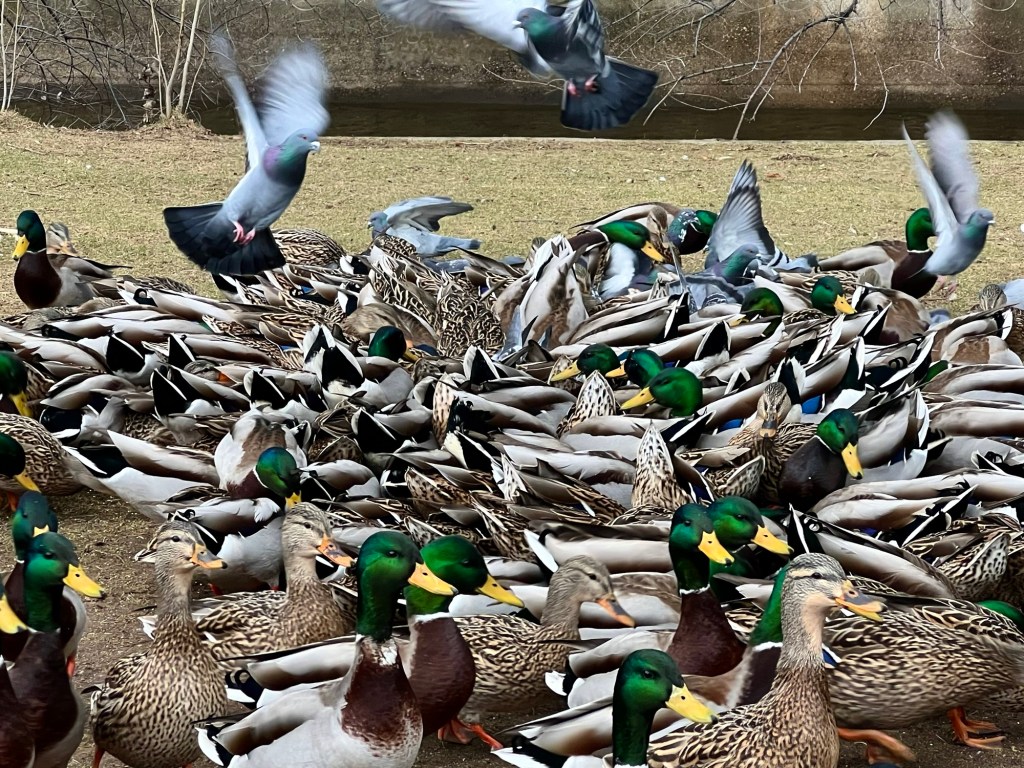
We chatted with him and he related that he regularly comes by to provide them with seed, especially if it’s cold out or their nearby creek is frozen over.

These are definitely some lucky ducks!
Happy Friday.
Western bluebirds are such a fabulous shade of blue. Like robins, they are members of the thrush family and love to eat insects and berries.

Most of them migrate from points further south to the Okanagan Valley to nest but some overwinter, as well. I was very surprised to see the one above so early, but it may be that he stays all year. In any case, I was happy to get a picture of this colourful and very cute bird.
Happy Tuesday.
 In the Net! - Pictures and Stories of Life