Here are two more views of the precious rain forest that can be found on Vancouver Island.
The rain forest, although damp and sodden, has a peacefulness that is easily communicated to humans. Our busy lives tire us out so much, and just taking a quick break in a forest is a wonderful, rejuvenating, special thing.
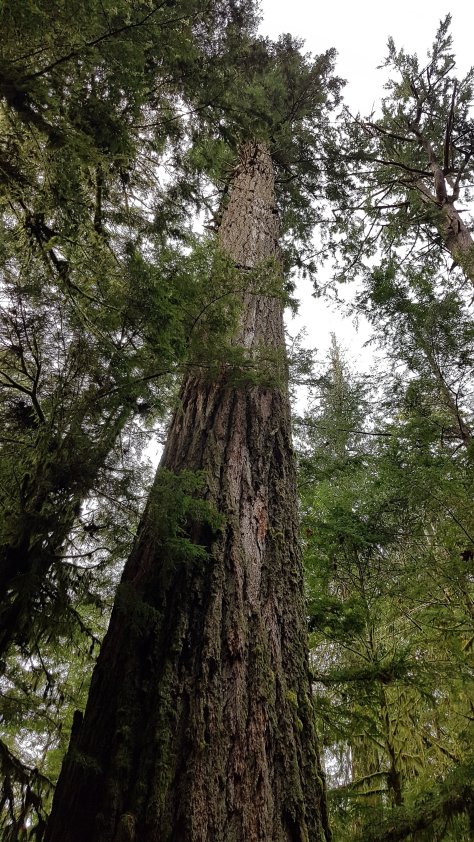
Another view of one of those ancient Douglas firs. Aren’t they wonderful? I hope they live for many, many more decades.
This has become the most popular search term in my list. I have written before about other search terms of this type, such as how to get a narcissist back and how to get a narcissist to fall in love. The titular term is slightly different of course, and making a narcissist want you is not necessarily the same as wanting a narcissist to fall in love or to get him or her back.
There may be a number of things going on here. The first is that there may be the idea of vengefulness in the mind of the searcher. “I want that horrible person to want me so that I can do the same and give him/her the boot. Give him/her a taste of his/her own medicine!”
Or, the searcher may be another narcissist, and in that case, it’s probably an attempt at figuring out how to do a hoover.
Unfortunately, there’s a third option, and that’s the fact that the searcher may really be trying to get the narcissist to “want” him or her. And that’s disturbing, because what that tells me is that the searcher likely
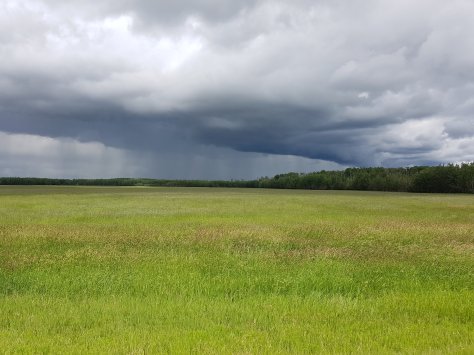
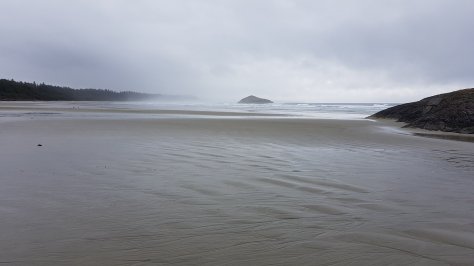
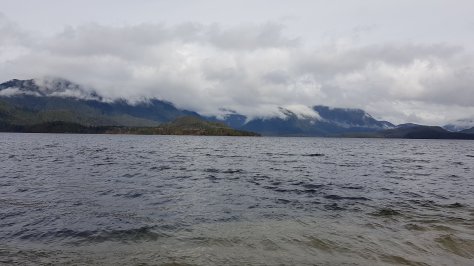
Rain is coming.
knows what the narcissist is but still believes in redemption, in a cure, or that love can conquer all.
And that type of thinking only has negative results: heartbreak, betrayal, manipulation, verbal and emotional abuse (sometimes there’s physical abuse as well), gaslighting, rejection, abandonment, hoovering, more rejection. The behaviour of the narcissist is well-established and steady across years of interactions with others. The course of their interplay with you is very predictable, even if you are never sure what they will do or what is going to come out of their mouths; you know that it’s going to be something, and something unpleasant at that.
Most people are optimistic. Yes, we have periods when we aren’t, but for the most part, the majority of us believe in second chances, change, and opportunities to recoup. Narcissists know this, either consciously or unconsciously, and even if they are the unconscious type who becomes conscious of it, it’s not going to change them.
The people who authentically are trying to get the narcissist to want them are turning a blind eye to what they know. Really, they’re the ones who want the narcissist. The narcissist could care less – a few hoovers, a nice infusion of supply, and then, no more narcissist.
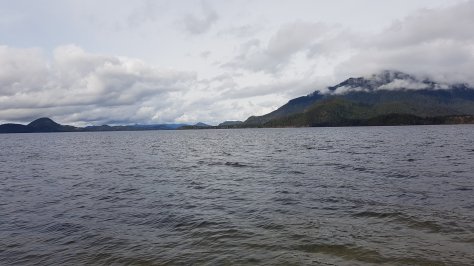
Rain.
Well, the narcissist might turn up now and again, even years apart for a hoover, but for all intents and purposes, the “relationship” is over.
In the end, it’s the victim who has to stop doing the wanting.
Why do people pursue those who have hurt them, manipulated them, betrayed them? Do they feel that it isn’t worth it to themselves to set a standard? (I won’t accept this, this, this and that.) Maybe they’re worried that no one will be left. That unless they accept the narcissist, and convince the narcissist to drop the bad behaviour, they will be alone and everyone will judge them. Or, unfortunately, maybe they are just used to it and can’t imagine another way. Sometimes, it’s that we become comfortable with discomfort.
The charm that the narcissist exudes during the golden period can be heady, wonderful, completely intoxicating.
Once there’s a taste of that, especially if it’s combined with a fear of being judged inadequate if they are constantly alone, or a fear of what might be wrong with them, well, then they’re dealing with what’s in their heads.
The fear that there’s something dreadfully wrong with you if the narcissist can’t be convinced to want you is powerful. The pride that prevents you from moving ahead as a single is also powerful.
And again, the narcissist knows this and takes advantage of it.
This uncertainty in yourself is what the narcissist wants, not you yourself. And you wanting the narcissist? Part of it is that you’re wanting the person the narcissist made you believe you are – an unrealistic golden period version of yourself, and unfortunately, you will fall off the edge of that particular path if you try to stay on it. Yes, you’re wanting what you thought the narcissist is, too, but those feelings you had about yourself during the golden period – you thought you could fly.
Want can never be satisfied; it’s a false economy of hucksterism that the narcissist knows well and manipulates thoroughly. It’s the narcissist’s job to find out what your wants are in order to exploit them.
The narcissist lives externally, and has drawn you into that. There will never be enough love, enough faith, enough loyalty to overcome the narcissist’s deficits and make you feel like you did when you first met the narcissist. There may be glimpses of it, but they’re just that.
It’s unfair, but you will be left holding the “want” bag and will have to deal with it. No Contact is the answer. Many interpret this to mean that it’s for keeping the narcissist at bay.
Yes, it is that, partially. But the most important part is for you. You have healing to do, resting to do, and then, work to do. No Contact allows you to get yourself and your life sorted, to create space so that you can do the work of figuring out why you would love and/or want the narcissist. When you’re asking “how do I make a narcissist want me?” – what are you really asking?
Should I change my clothes? Should I change my hair? Make-up? House?Job? Personality? I know – I’ll become a chameleon and be whatever the narcissist wants me to be in that particular moment. I’ll spend all my time doing that and the narcissist will have so much fun with it experimenting with how many different ways I can be pretzeled. It’ll be a blast!!
Why do you want the narcissist to want you?
Answer the question.
It’s a hard question and will take work and struggle and you will feel frustrated and will want to give up.
But accepting yourself, as you are, with what you have to offer, is worth it.
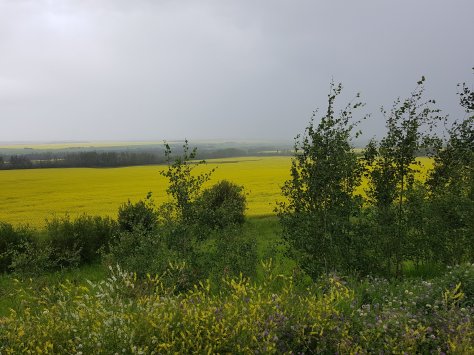
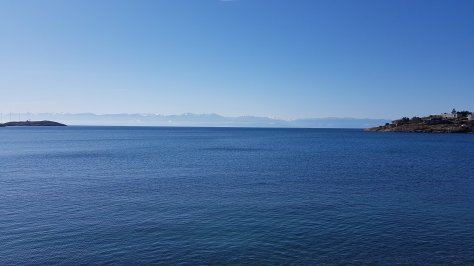
Sun is coming.
The alternative is to accept that you want a mirage and that your life with this individual will be one of denial, deflection and obfuscation. And if you would rather do that, then that’s your choice. Lots of people have made the choice to live that way, but I believe that there’s a better way.
I saw this lovely fellow standing next to the road leading from Wood Buffalo National Park. His coat was shiny and he was very healthy looking after his long winter sleep.
We stopped and then he stopped, and we looked at each other. He made no attempt to come closer, but just regarded us while I took pictures.
I am concerned at his lack of fear. Most of the bears in my locality quickly run away at the sight of humans, but I’m aware that on this particular road, tourists and locals alike will feed the bears, and they grow to expect that.
This is incredibly thoughtless and careless behaviour, because as the warning signs that are posted everywhere say, “A fed bear is a dead bear.” Bears need to be left alone to forage and to keep a healthy distance from humans.
Vancouver Island is home to very old, very sodden rain forests.
Many of the Douglas firs in this forest are 800 years old. They were little trees in 1219, when St Francis of Assisi was founding the Franciscans and Genghis Khan was a teenager.
It rains a lot here. A lot! As a result, the trees are covered in velvety moss fronds.
In areas where the sun gets through more easily, the moss is less prevalent.
These trees have seen a lot and are still standing and growing. It is our job to make sure that they can continue their life journey.
Greetings from the giant firs of Vancouver Island.
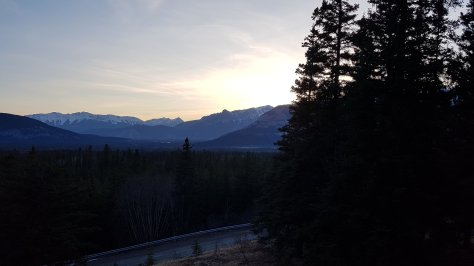
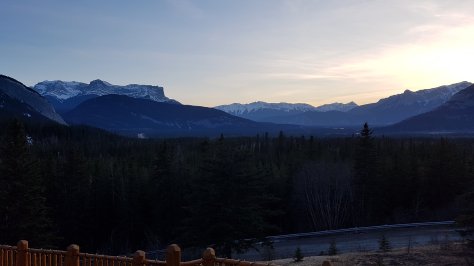
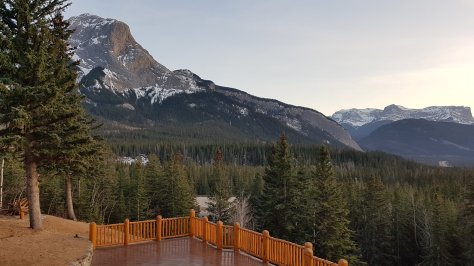
It was a wonderful respite after eight hours of driving through the mountains. There was great food with a wonderful room in the original lodge that was built more than 100 years ago.
The view from the dining room is stunning, with the mountains gazing serenely from their redoubt.
When I left off at the end of part one, my boss was becoming very ill but was still at work.
Her decisions had started to become dodgy and unreliable, a complete reversal of character and ability for her.
I needed a rest from the demanding situation and took my summer holidays, and while I was away, she suffered an embolism and was suddenly gone. It was extremely and very mercifully quick.
I rushed back to a funeral, a dazed and grieving staff, including three new hires, and a huge workload.
Despite the fact that everyone knew she was terminal, people were shocked; many had bought into the notion that she was curing herself through traditional medicine, a modality in which she had such complete faith that it bled over to others. (I believe. Do you believe? Or something like that.) The new hires were more shocked than anyone, since they hadn’t been aware that she was sick.
As a group, we started putting one foot in front of the other, and got on with it, in spite of feeling sad and stunned. We got going again; we had to. The work carried on.
I was placed in an “acting” role and I set about the business of wrapping my head around all the things that needed to be done. There were a lot of them.
In the meantime, however, a coup was fomenting. A couple of people who were “grieving” on the surface were planning to put their chosen candidate into the head role – a chosen candidate whom they could control.
20 days into my new job, I was sitting in my temporary new office at my temporary new desk, bordering on letting myself slide into a private little collapse. I perched on the edge of my seat, white knuckling the desk’s edge, breathing hard and teetering on the verge of just walking away.
I had a few hostile employees who wanted to replace me. Others were angry at my boss for dying, and for telling them that she was getting better when she wasn’t. We experienced all the stages of grief like we were on a rocket sled.
No one had any idea how much had to be done, the timelines involved, and the contingencies needed. People kept materialising out of nowhere, demanding everything and taking responsibilty for nothing. Criticism hung on the air like a fog. And, there was the imposter factor. I kept thinking that I didn’t know what I was doing, that I was a know-nothing kid dressed in her mother’s work clothes, that I was in waaay over my head.
So I did. I pressed pause. I shut the door to my office. I set the phone to voice mail. I sat, and I meditated.
After I got rid of the ex-narcissist out of my life, I had learned meditation from my counsellor, and in this maelstrom of work and emotion, I had stopped doing it. I needed to get back to it.
I took a break, I re-grouped, and I fought my way through it, day after day and week after week.
I focused on what was going well: top notch support from head office, a supportive spouse and friends and faith in myself.
I won the permanent position. I got my staff in line; the ones who are discontented are moving on, and new ones are coming in. But it was a hard slog and I had to get tough. The staff who failed in pursuit of “their” candidate were angry and bitter.
It’s getting better now. The learning curve angle is beginning to soften, and a good team is starting to develop.
But pausing my life? Yes. It’s necessary. Sometimes you have to stop, take a look, and decide if this is where you should be, if it’s for you. A realistic self-examination is key, not just for yourself but also for those you work with.
That’s something that I learned from this, both by watching it and by experiencing it myself. Being able to recognise your weaknesses and consider them is not shameful, and being realistic about your strengths isn’t shameful either.






 In the Net! - Pictures and Stories of Life