As I mentioned in that post, we were in for a bit of a surprise. We left Húsavík and while on our way to Akureyri thought that the weather was improving.
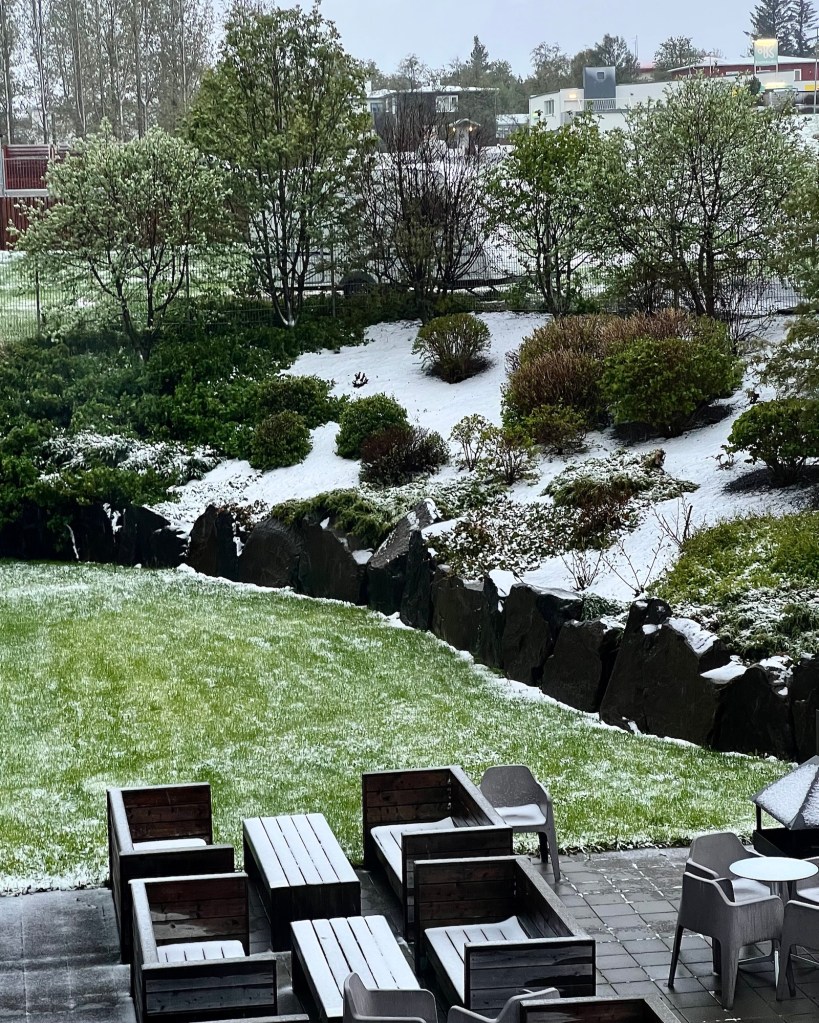
We had a booking for whale watching the next day, but during the night, the predicted storm started giving us quite a shellacking.
Awakened by the wind at about 3:00 a.m., M looked outside to check on the weather (that far north it was still light out) and saw that the snow was blowing parallel to the ground with gusts of about 80 km (50 miles). Our whale watching was a definite cancel, but we were worried about getting back to Reykjavik for the day after, and anxiously kept track of road conditions for the following 24 hours.
But none of what we were seeing on the Icelandic highway app was reassuring: gusts to 90 km (56 miles), ice pellets, snow, freezing rain, temperatures around +1-2C (33-35 F), completely perfect conditions for dangerously ice covered roads with obscured visibility.
We awoke bright and early the next morning to find that the main route – highway one – to the south was closed in at least two places.
We went to breakfast to drink coffee and to think this one through. There were things on our side. We’re very experienced in winter driving conditions and have literally seen it all, including driving through the Rocky Mountains during a December ice storm. We had rented a four-wheel drive manual which gave us some snow clearance and traction, and lastly, we had the time to drive very slowly.
We decided to take the chance: the road closure was 1.5 hours away, and we thought that clearing and sanding might have occurred by the time we got there, given that this is the main highway. We pulled out of Akureyri with a stockpile of trepidation and all the supplies we would need to wait out the storm in our vehicle if necessary.
At first, it wasn’t too bad, but then we had this:
The snow ruts were ice encrusted and caused pulling to the left or right if we had to move out of them. This is actually a two-lane highway, but with all the snow buildup, you wouldn’t know it.
When we arrived at the first closed section, snow clearing had already occurred and the road was open once more, but then we also started descending from the highlands, and within 30 minutes had much better conditions.
We were delighted to get out of that weather, and the further south we went, the better the weather became.
When we stopped to stretch our legs and pry our tense fingers off the steering wheel, we were even rewarded with a foss, or waterfall.
I hope you enjoy this lovely post from Christie at 1000 Places and Memories. Please click the link above to read the whole post and to view her pretty wren photos and short videos.
When we stopped for a little hike while on our way to Sault Ste Marie, we spotted the pretty little town of Spanish below the trail bluffs.
It’s protected a bit from Lake Superior because it’s on an inlet, a good thing since storms on this lake can be rather nasty.
It was still a bit early for the marina to be populated with boats but it wouldn’t be long.
We had a beautiful vantage point over the lake and the little town; the trail was quite a nice one if rather buggy. We had to really keep moving to stay ahead of them.
On May 30, 2024, we left Reykjavik, Iceland, in our rental car and stopping frequently to admire our surroundings, had a leisurely drive to Geysir Hot Springs.
Since 1647, all geysers have been called after these geysirs in Haukadalur, Iceland. The word geysir means “to gush,” and that’s certainly what they do, very dramatically and heatedly!
Strokker Geysir
The “original” geysir has erupted intermittently since the 13th century, but in more recent centuries it has stopped for years at a time; it is presently in a dormant state, but the nearby Strokker Geysir is still putting on a show.
This entire area is incredibly active with hot pools and much smaller geysirs everywhere.
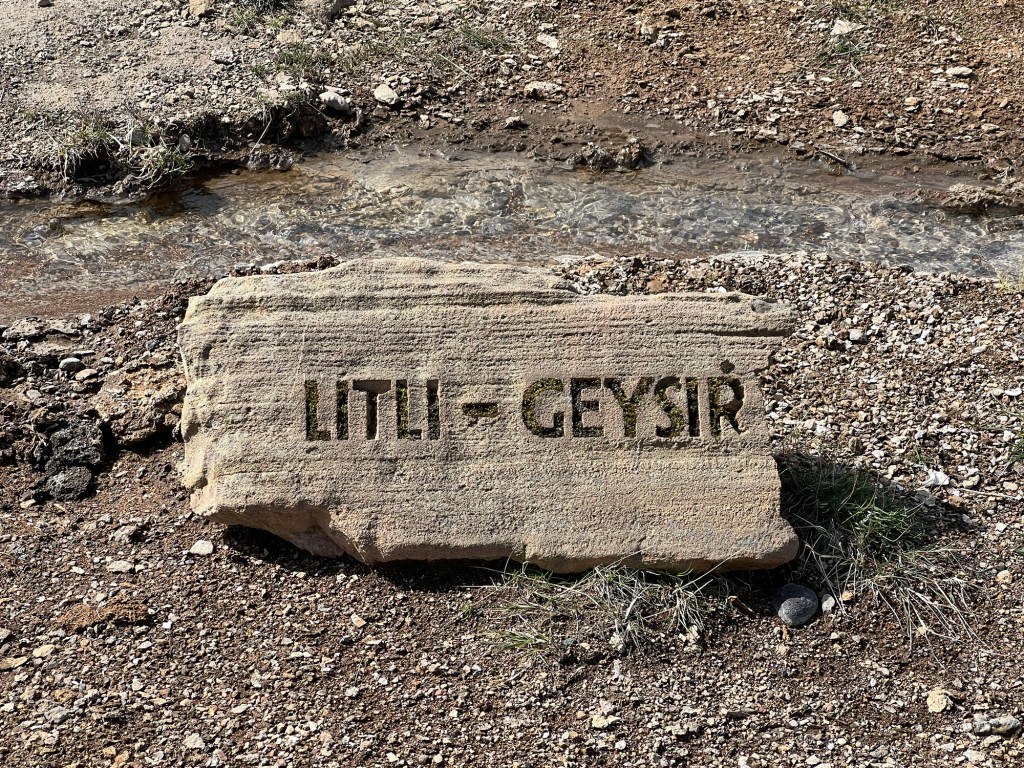
Loads of hot water. Littlest Geysir.
I tried to get a burst set of photos of the Strokker eruption but there was a healthy crowd doing some pushing and squeezing causing the camera to be jostled at the last second, so I didn’t really make any great shots.
The Strokker just at the start of its eruption.
The Strokker Geysir erupts approximately every seven minutes and reaches about 60 metres (200 ft). It’s very impressive if quick.
This is the best picture I have; as I indicated, my arm was jostled at the last second and I wasn’t able to get all of it in the frame.
Although it was about 12C (54F) out, the immediate area felt quite warm because of all the steam in the air.










 In the Net! - Pictures and Stories of Life