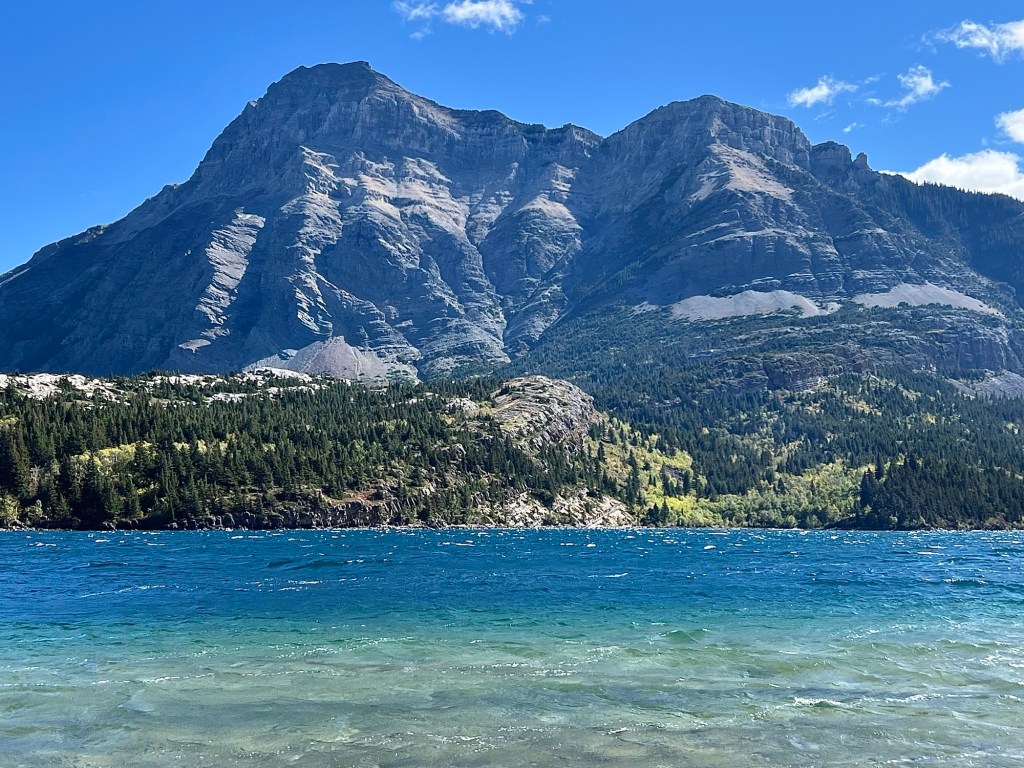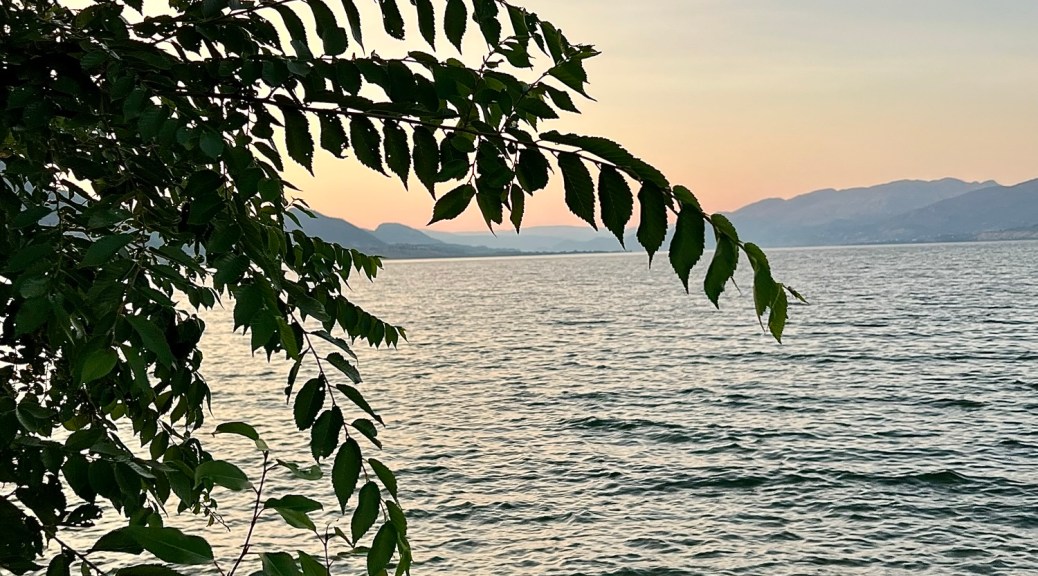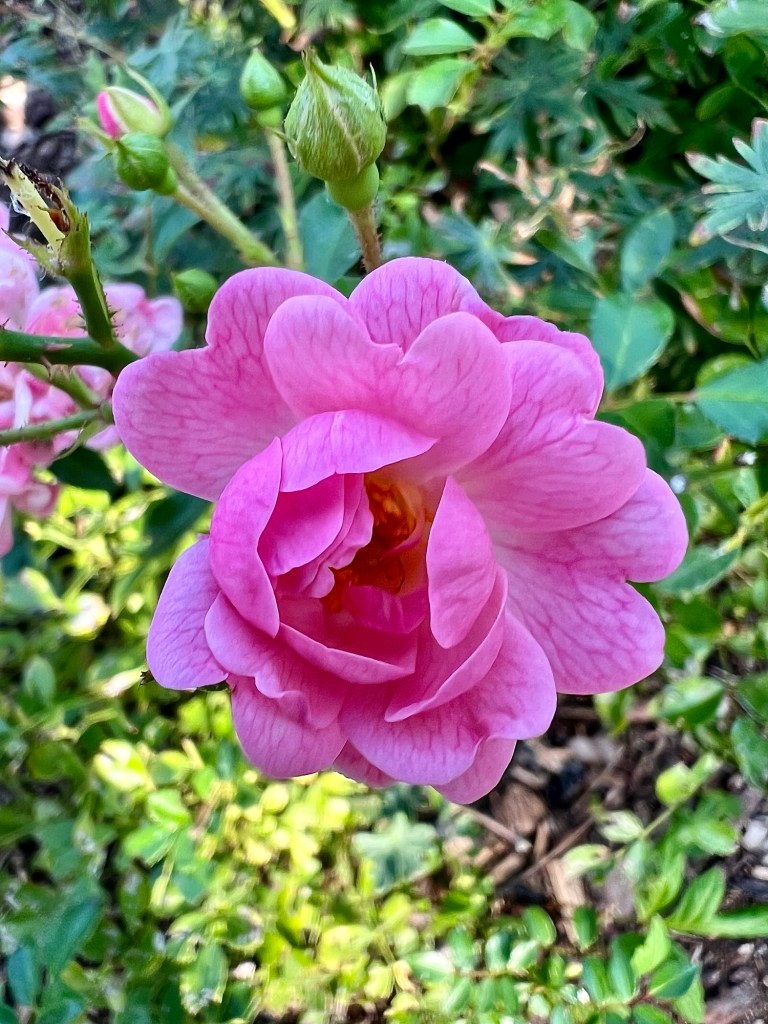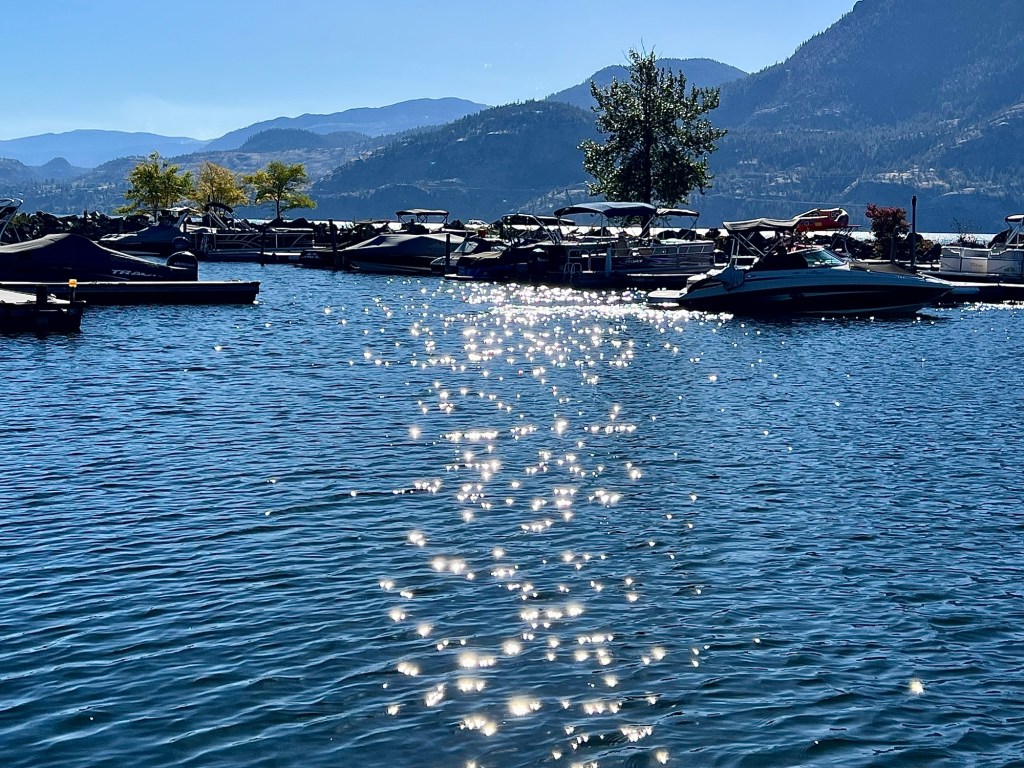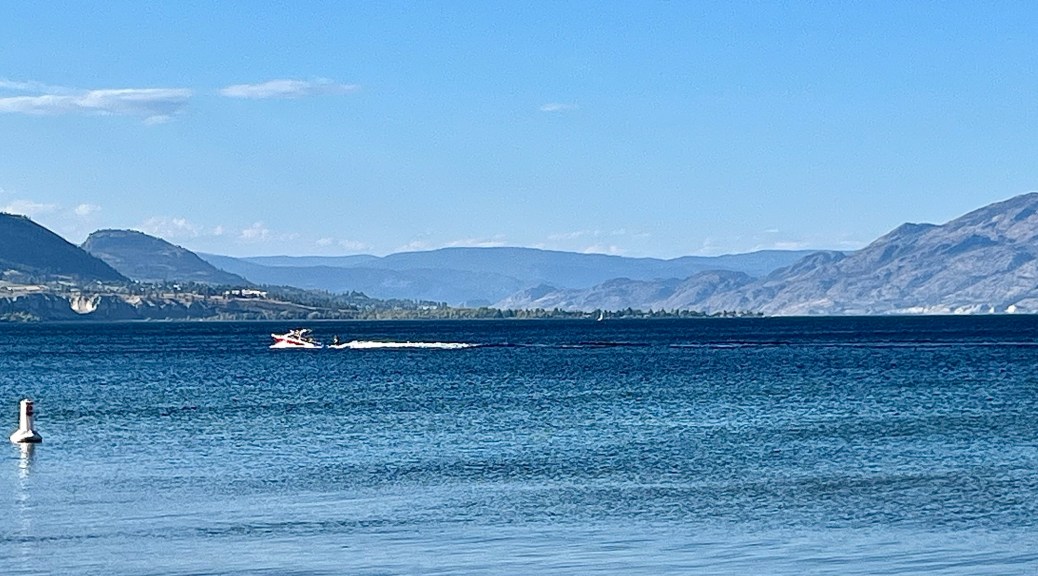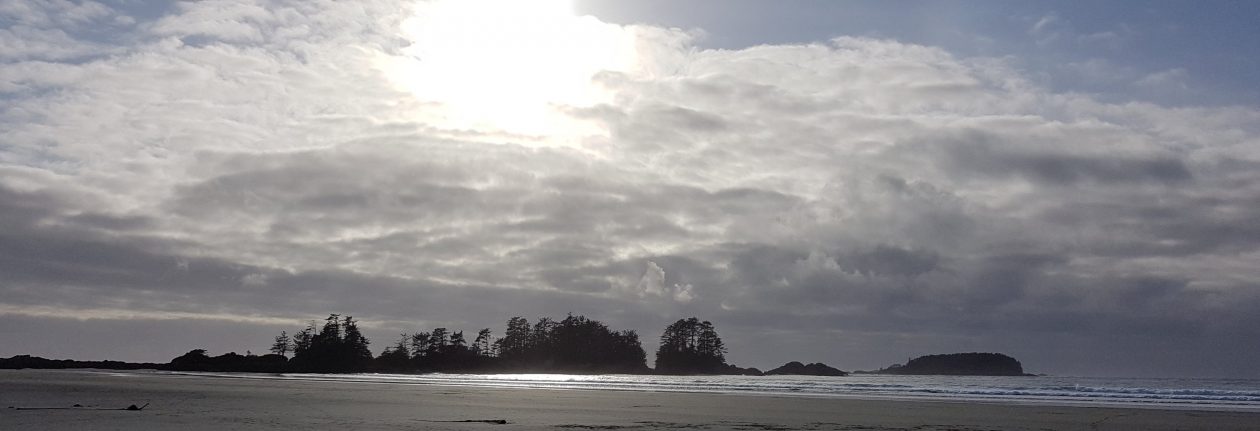
A day may be grey and rainy …

… but once the sun pushes through …

… the colours emerge …

… to remind us that …

… even when all seems dark, the sun is still there …

… and will return.
Happy Monday.
A day may be grey and rainy …

… but once the sun pushes through …

… the colours emerge …

… to remind us that …

… even when all seems dark, the sun is still there …

… and will return.
Happy Monday.
Here are some varied summer evening-sky scenes to remember as this lovely season begins to disappear into autumn.

A blue hour with moon …

… a silhouetted mountain …

… an overcast sunset …

… and sunset-reflected clouds …

… together with a lovely view of evening Rocky Mountains …

… are images to take with us as summer unwinds.
Happy Sunday.
We have had extremely smoky conditions since Wednesday with a nearby forest fire contributing a lot of the smoke while more has been heading from those brutal fires 2200 km (1367 miles) to the north of us in the Northwest Territories.

After a hazy evening on Wednesday we soon became absolutely choked with smoke and hit a “10” on the air quality index, which means that people really should stay inside unless wearing a mask.

Looks rather awful, doesn’t it?

We are thankfully expecting several days of rain within the next 24 hours though, so I hope we will soon be looking more like the above picture very soon!
I posted about colour-shifting hydrangeas last week but since they’re so beautiful and in the middle of their annual costume change, I’m visiting the same topic yet again but this time regarding a different type of hydrangea.

An hydrangea that shifts from red to purple, blue or purplish-blue and back to pink or red again is a “Bigleaf” hydrangea that is reacting to soil ph levels. In one of the city parks there’s one of those; it puts on a magnificent colour show all summer long and well into autumn.

This hydrangea is not to be confused with the “Cardinal” hydrangea that blooms red and stays in that colour zone throughout the summer, though. I posted about that type of hydrangea a couple of years back.
Above and below are a series of pictures from this spring and summer showing its beautiful progression. All photos show the same hydrangea shrub.


When it completes its final metamorphosis back to red I’ll post more pictures of this beautifully variable hydrangea.
Happy Friday.
Humanity has been enthralled with flight for centuries. As far back as the 15th century, Italian artist and scientist Leonardo da Vinci experimented with aircraft designs. He intensely studied birds and developed an amazing understanding of flight principles; his book Codex on the Flight of Birds contains incredible insight into basic aerodynamics.

Although he was unable to bring his designs to fruition because of the technological limitations of the time, he is credited with the fundamental design concepts for the hang glider and the helicopter.

He was far ahead of his time and at the forefront of the remarkable flying technologies that we now so readily take for granted.

What would da Vinci think of all our present flight capabilities? Everything from parasailing to drones to space flight?

I think he would love it!

Happy Thursday.

Wordless Wednesday 9/2/25
A lovely capture from Laura at Laura Roettiger Books. Please click the link above to see more of her beautiful photography.
… probably the best month ever.


Happy Wednesday.
On August 30 the Penticton Yacht Club had their annual sailboat regatta on Okanagan Lake. The weather was great for it and there seemed to be the right amount of wind, too.

I spent some time watching the boats leaving the marina …

… and organising themselves for the timed race up the lake to Kelowna, I believe – I’m not completely sure of that, though – which would be about 88 km (55 miles).

Watching these boats brought back memories of my own sailing days on Lake Ontario, many moons ago now.

Races such as these can be a lot of fun especially for keeping your skills up and can even be fun for those on the shore watching those lovely white sails against blue skies and blue water.

Happy first Tuesday of September.
The following is an opinion piece by columnist Andrew Coyne originally published in The Globe and Mail on August 29, 2025. Given Donald Trump’s behaviour and the unwillingness or inability of those around him, including Congress, to exert some control over him, the issues and questions that Coyne raises in this article are particularly germane, especially in light of Trump’s continued threats against our sovereignty and our right to exist as a country.
Donald Trump is on the brink of becoming a dictator. Can he be stopped?
~ by Andrew Coyne

By now it should be clear that the subjection of the United States to the dictatorship of Donald Trump is no longer a theoretical possibility or even a distant probability. It is an imminent reality.
It is not here, quite – critics of the President remain at large, the courts are still attempting to enforce the rule of law, the results of the 2026 and 2028 elections have not yet been determined – but the pieces are being put in place at astonishing speed.
To call what is happening a “slide” into authoritarianism, as if it were something anarchic and uncontrolled, would not be apt. It is more like a cementing. Having slipped back into power by the narrowest of margins, Mr. Trump and his acolytes have been steadily expanding from that beachhead, each new power serving as the means to acquire still more.
Often these powers have been acquired illegally, in brazen defiance of the Constitution. But so long as no one holds them to account for it, and so long as the administration refuses to be held to account, they become ratified by convention, or practice, or sheer nerve, the de facto rapidly congealing into the de jure.
At some point, American democracy will find it is caught, immovably, a colossus in quicksand. The question is whether it has reached that point, or, if it has not reached it yet, whether it can still avoid doing so.
The examples pile up by the day. In recent days, weeks and months, Mr. Trump and his officials have:
Indeed, the portents are ominous. Commit violence on Mr. Trump’s behalf, and he will see that you suffer no penalty. Attempt to stop or prevent it, and he will have you fired or prosecuted. Criticize him, or represent his critics in court, and he will lean on the organization that employs you.
Think the courts will save you? He has stacked many of them, intimidated others, and will have no hesitation in ignoring those that remain. You can see him lining up a test case for the ultimate act of revolutionary disobedience, defying a Supreme Court ruling – maybe over tariffs, or illegal immigrants – and with it finally dispatching with the rule of law altogether.
Certainly he need have no worry about his own personal legal liability: the Court has already found that he is immune from prosecution, at least for acts committed in his “official capacity.” But who would even attempt to bring him to justice? The senior levels of the Department of Justice are filled with political allies or his personal lawyers.
The Congress? But both houses are controlled, narrowly, by the Republicans, and while Congresses in the past have been willing to face down a President of their own party, the current GOP is made up of individuals who either share his dictatorial world view or are too frightened of him, and even more of his followers, to stand up to him. That is only likely to grow in line with his powers.
Ah, but there are next year’s midterm elections. Mr. Trump’s approval rating is mired in the high-30s. The Senate may be out of reach, but surely the Democrats can retake the House. Then the process of reeling in Mr. Trump can begin.
But you haven’t been paying attention. What do you think all that gerrymandering is about? Why do you think Trump is ranting about mail-in ballots? What else do you suppose is being arranged at the state level, out of reach of the national media? The chances of a free and fair election in 2026 must be rated at 50-50 at best.
Suppose the Democrats do retake the House. How do they enforce their will on a President who does not recognize the legitimate authority of Congress? By appealing to the Supreme Court? But we know Mr. Trump’s view of the rule of law. How many divisions does the Supreme Court have?
And as you ponder all this, remember: It’s only going to get worse. We are still in the very early days of this presidency. Mr. Trump’s behaviour has grown steadily more outlandish throughout, trashing norms and stepping over boundaries previously considered inviolable even by him. How much more outlandish is it likely to get between now and January, 2029, when Mr. Trump’s term is supposed to end?
Emphasis on: supposed to. As others have observed, Mr. Trump has not been carrying on like someone who expects to leave office in three-and-a-bit years. (That US$200-million ballroom he is building off the White House – or perhaps the White House is off it – is a clue.) He seems entirely unconcerned by the political opposition his actions have aroused, except to revel in the possibilities for repression they open up.
So 2028 rolls around. Maybe Mr. Trump runs again, as he sometimes muses, in violation of the U.S. Constitution. Or maybe he doesn’t. Maybe the election is free and fair, or maybe it isn’t. Maybe he just stays on, indefinitely. But whatever happens, how exactly is Mr. Trump to be removed from the White House? I mean physically.
By that time he will have replaced the entire command structure of the military with his loyalists. And of the intelligence agencies. And of the FBI. D.C. will have been under martial law for three years. Who, or what, is going to arrest him?
If this sounds over the top, then again you have not been paying attention. Everything Mr. Trump does defies belief, let alone precedent. Mr. Trump’s dash for dictatorship is rapidly approaching the point of no return. So the question that has always hovered in the air is now the urgent question of the hour: How can he be stopped – before it is too late?
That Mr. Trump is bent on making himself dictator is no longer in doubt. That he is well on his way to doing so should not be. If democracy in America is to be saved, its defenders must pour all their thought and energy into devising creative ways to frustrate his ambitions. Because they are running out of options, and out of time.
The Labour Day holiday originated in Canada in 1872 after a prolonged fight for the right to formally organise began with the Toronto Typographical Union who were striking to limit the working day to eight hours. This directly lead to the development of the federal Trade Unions Act, legislation that confirmed the legality of unions and formalised the rules for their place.

Ten years later, the Canadian trade union parades that brought attention to the need for good working conditions were noted in the United States and the United Kingdom, leading to those countries’ own formalised labour movements. The U.K. had trade unions as early as 1717, but they were declared illegal and getting them recognised and organised was a struggle that lasted until the late 19th century.

In 1894, Labour Day became a statutory public holiday in Canada marked for the first Monday in September. Since then, it has become somewhat unmoored from its “fair labour practice” roots and tied more closely to other traditions.

In North America, it’s the last long weekend of summer; for many, September 2 is the first day of classes for the new academic year. Between trying to enjoy a last bit of time off and getting students ready to return to school or uni, it can be very busy.

In Canada it’s the start of Canadian League football and traditionally was also the point at which you were no longer supposed to wear white – a practice that is no longer with us, I’m happy to say. Many also see it as a firm but unofficial end to summer fun and relaxation and the start of getting back at the job of serious work. No more summer hours!

Although its connection to labour unions may have seriously weakened over the years, Labour Day itself and the fact that it exists as a holiday represents the determination, focus and struggle of those early organisers who fought to ensure the beginnings of the fair labour practices and standards we enjoy today.
That’s something to remember and honour.