Waterton National Park is in the southwest corner of Alberta between the Rocky Mountains and the prairies. Named after conservationist Charles Waterton, it borders Glacier National Park in the United States and is part of the Waterton-Glacier International Peace Park, a UNESCO World Heritage Site.
The blue dot marks the park; the grey line just to the south of it delineates the Canada-U.S. border.
Often overshadowed by its more famous sibling parks Banff and Jasper, it contains 505 square kilometres (195 sq. miles) of wilderness and mountains with stunning scenery and fantastic hiking trails among its many mountain lakes.
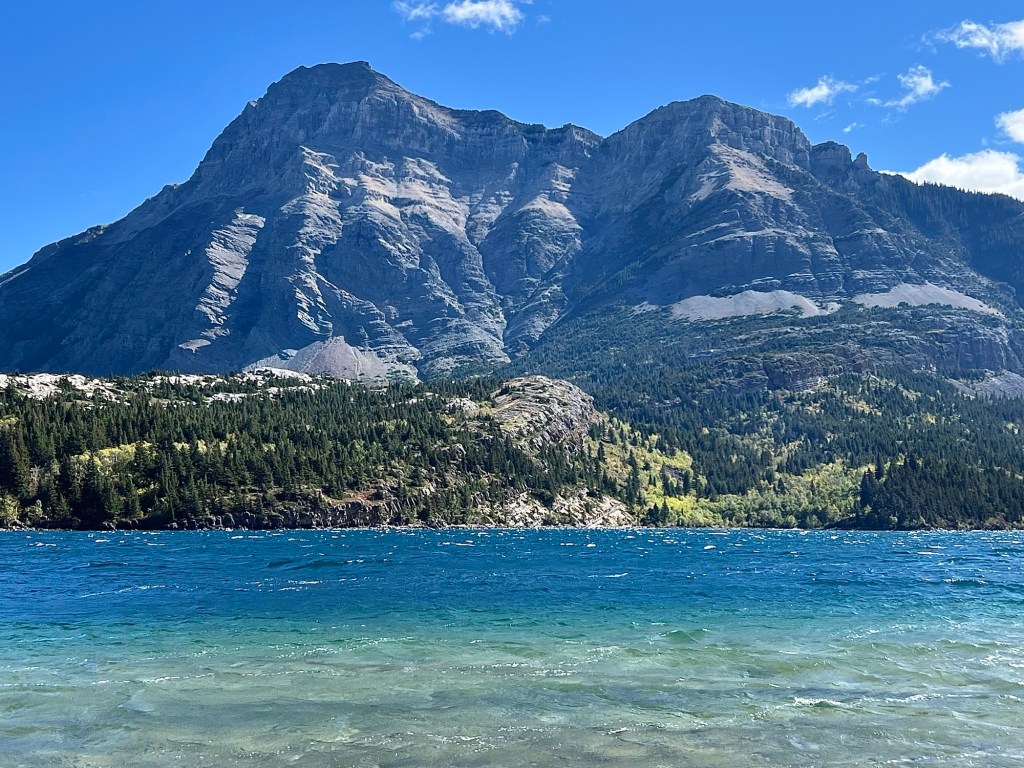
Upper Waterton Lake
The lakes frequently display the intense blue, green or greenish-blue colours of glacial run-off that is often found in the Rocky Mountains.
We had beautiful weather for our first day of hikes and although it was quite windy at times we didn’t mind.
Nevertheless we’re not used to hiking at 1800 metres (6000 ft) or pushing in windy conditions and by mid-afternoon we were ready to return to our hotel to recuperate before dinner!
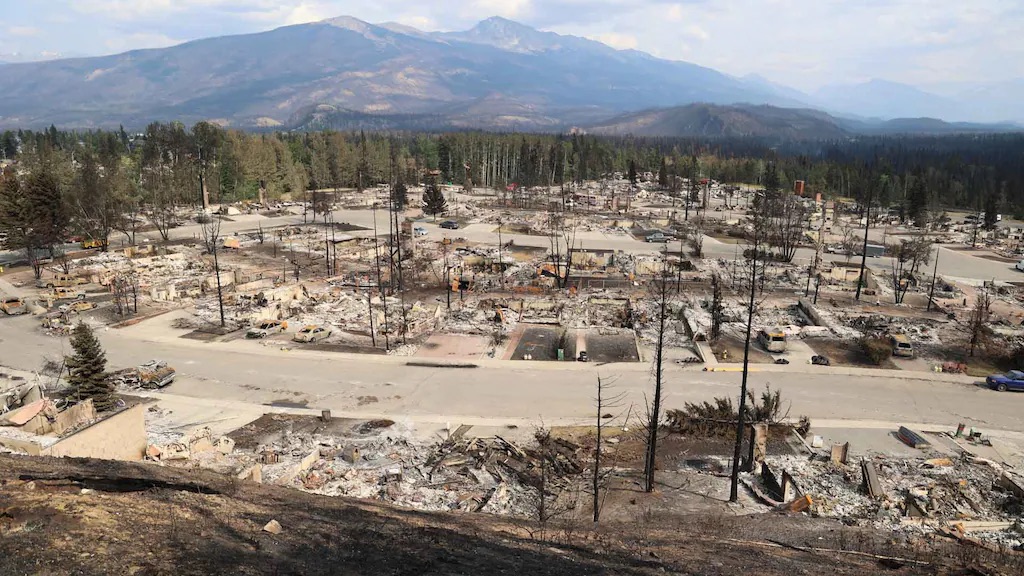
The answer to that question is a resounding yes! Although in the summer of 2024 Jasper National Park suffered a terrible forest fire that resulted in the destruction or serious damage of a third of the townsite and the loss of 325 square kilometres (202 sq miles) of park forest, it is recovering well and appropriately.
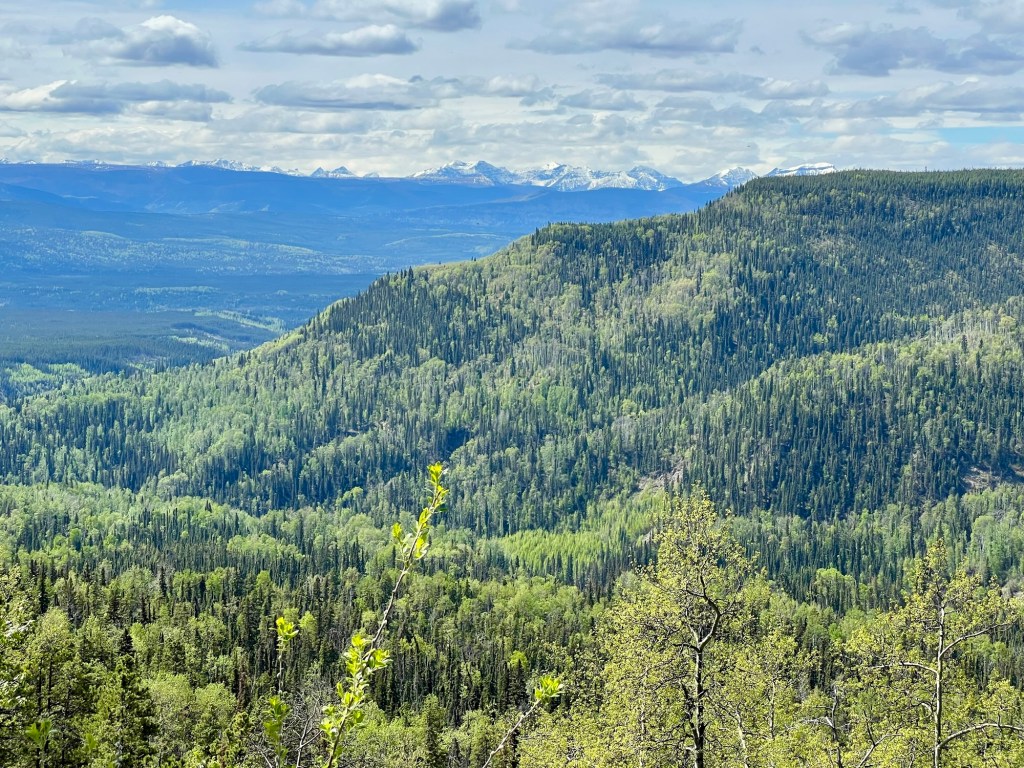
Rocky Mountains in the distance.
When we recently visited we saw that all heavily damaged buildings or the remains of destroyed buildings, vehicles, and other items have been removed from Jasper townsite and rebuilding and new construction are moving along at an accelerated pace. Other than the lots made vacant by the fire (and that are now being prepped for reconstruction) there is little evidence that a major fire occurred.
Jasper, August 1, 2024. Photo courtesy of Parks Canada
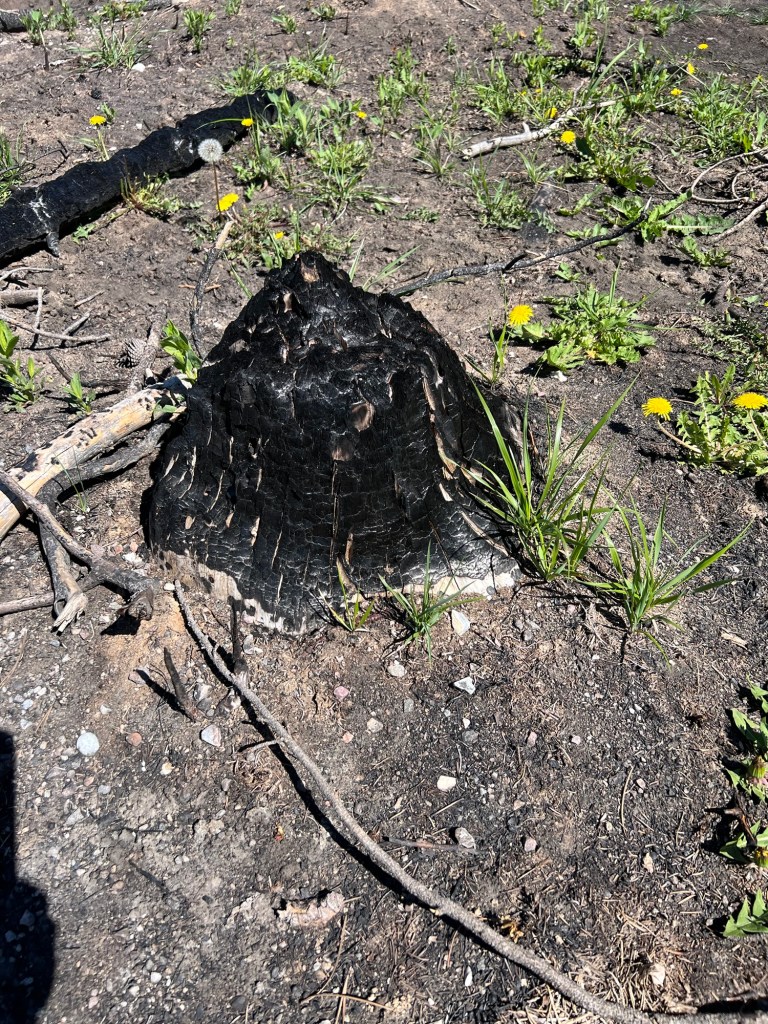
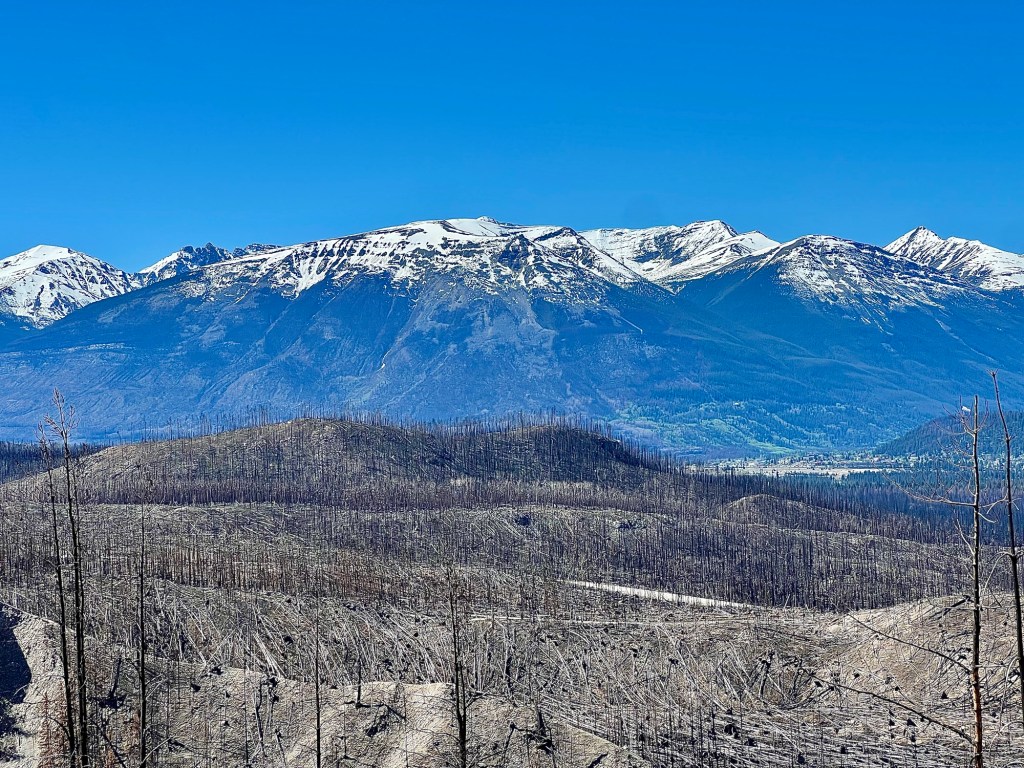
Some parts of the Maligne Lake area of Jasper Park were very significantly damaged with, in some areas, trees completely destroyed right down to the ground.
No ash, no burned trees left, only stumps.
The fire was at times so hot that it generated its own weather system, a swirling tornado of flames, gases and heat. Essentially, many of the trees were cooked until nothing was left.
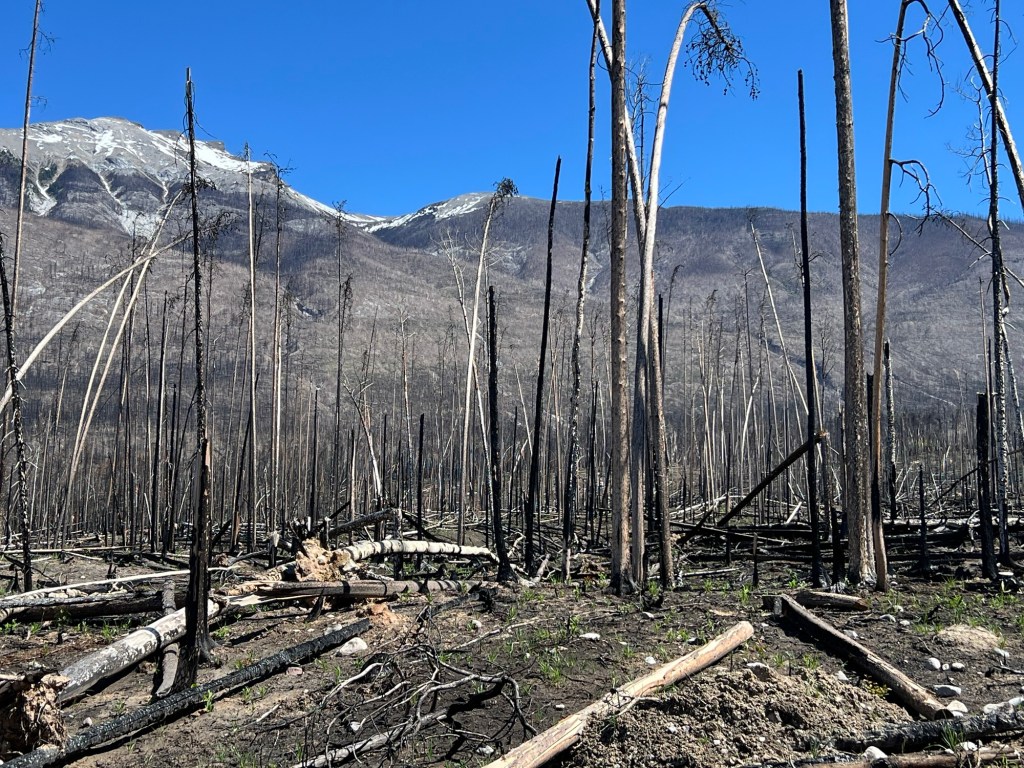
A large area of burned forest.
When we visited in late May/early June, a few of the trails remained closed due to fire damage and unsafe conditions. However, the vast majority of the trails, even through the burned areas, are open. Hiking through the burned areas is also an education about the forces of nature: we saw grasses, wildflowers, weeds, and even very tiny trees growing again; the forest will recover.
This photo gives a sense of how far the fire extended as well as a contrast with the healthy forest in the background.
Many people have thought that they shouldn’t visit Jasper this year, that it’s perhaps too soon. But the people of Jasper townsite and the employees of the park, hotels, restaurants, outfitters and all the others who rely on tourism for their livelihood will welcome you. They have worked very hard to prepare the townsite and to reopen the trails, and of course, the vast majority of the national park escaped the fire. 95% of it is as beautiful and iconic as ever.
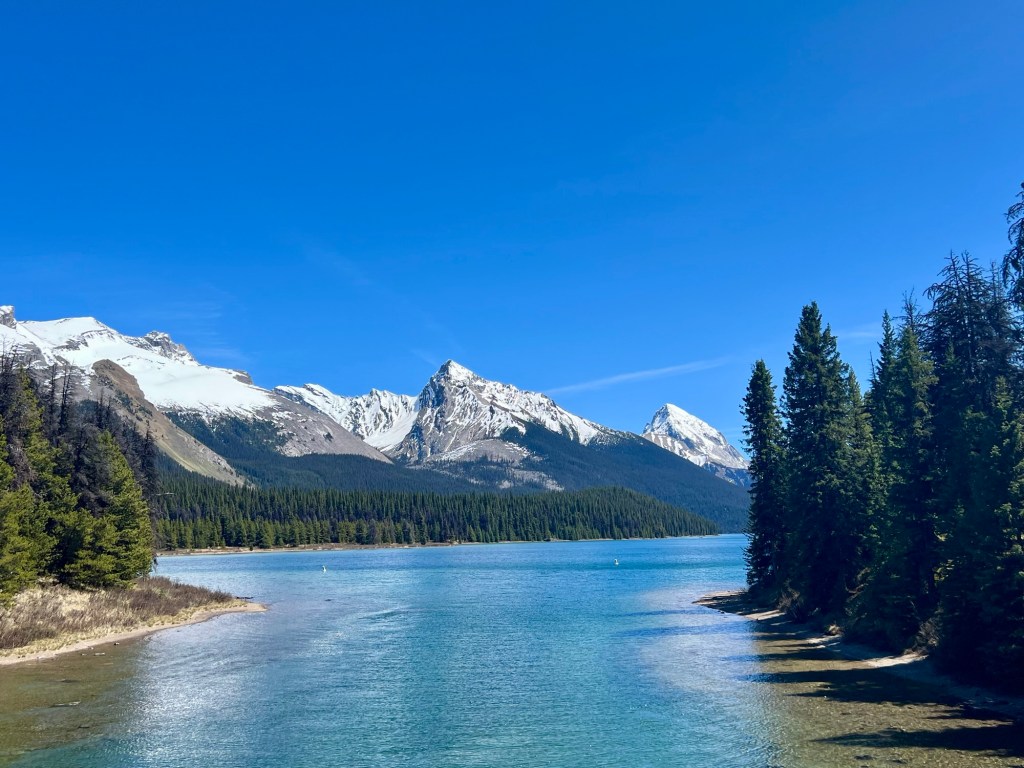
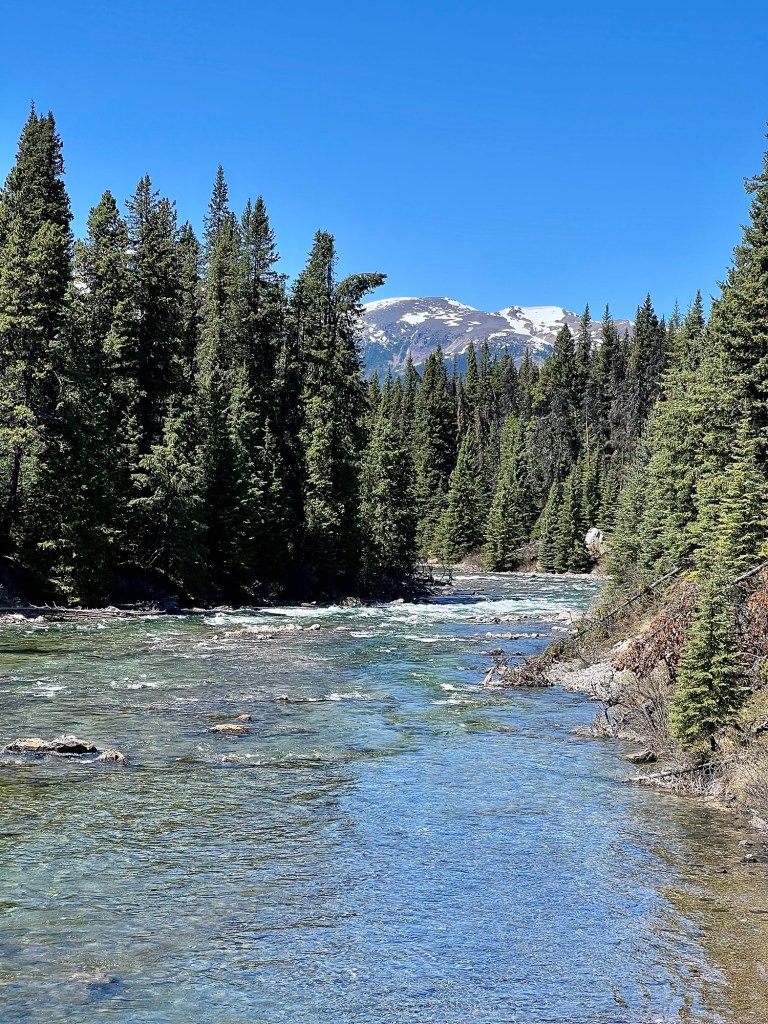
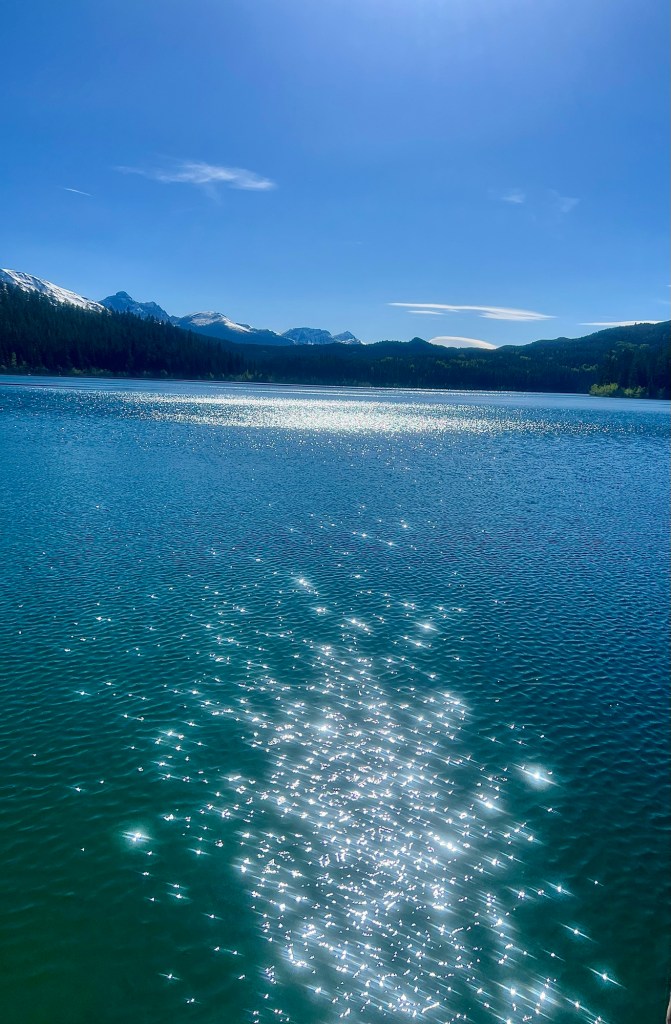
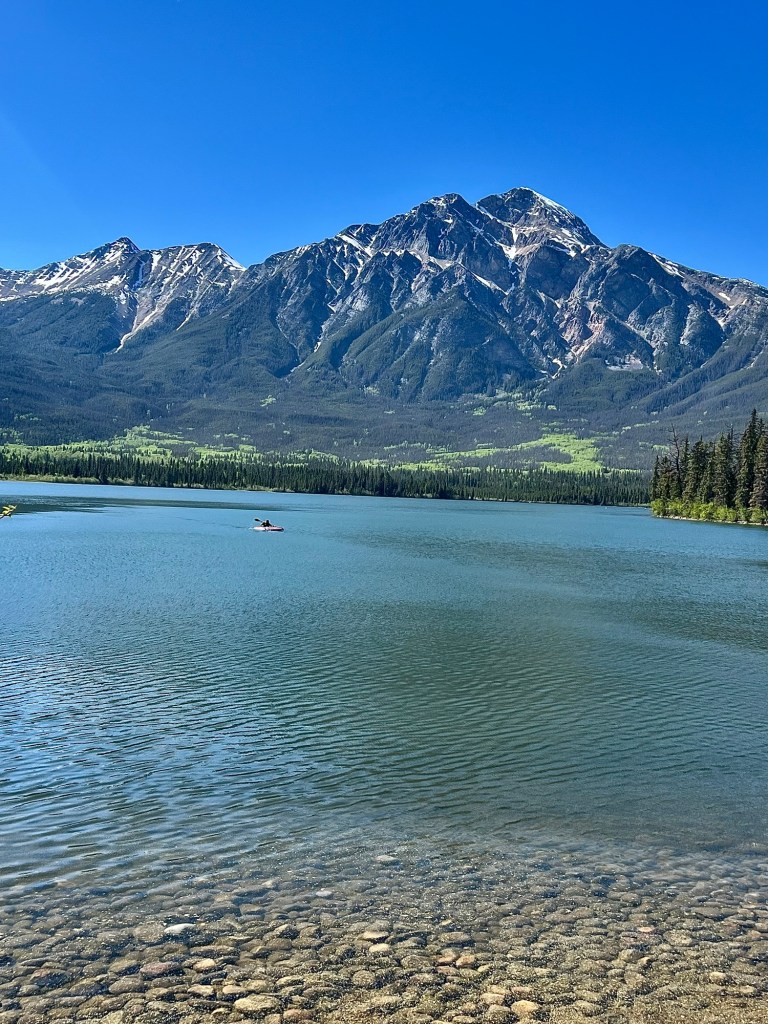
Here are a few of those iconic views.
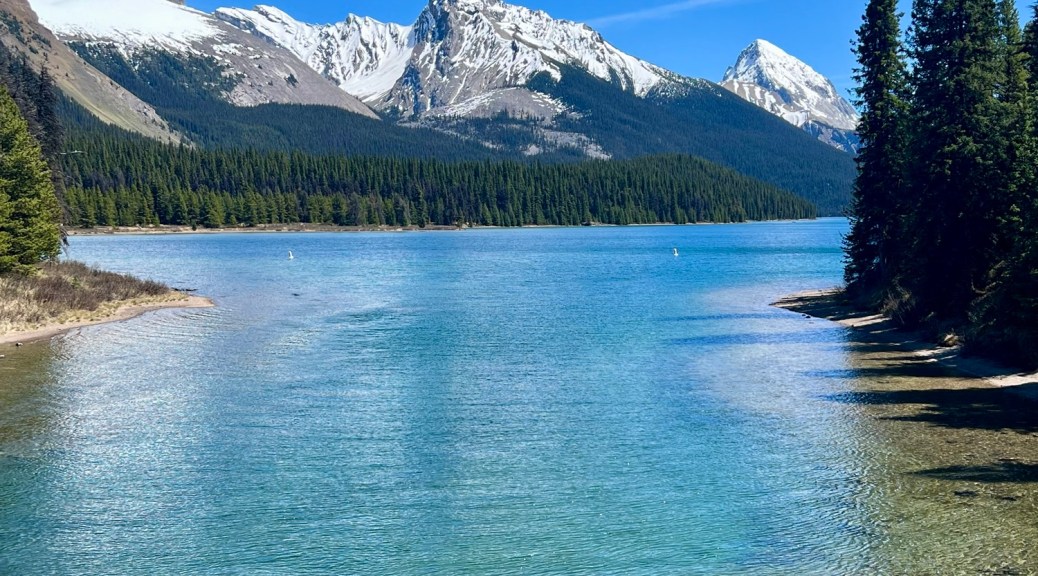
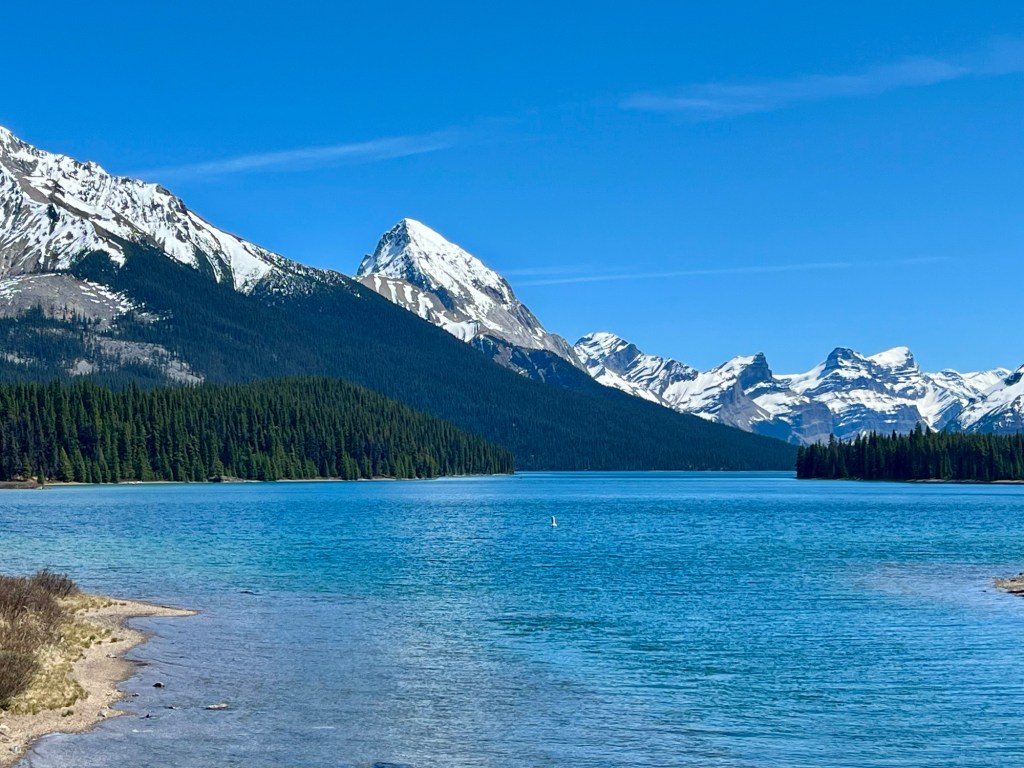
Maligne Lake Maligne RiverPatricia LakePyramid Lake Athabasca River Athabasca Falls
We very much enjoyed our visit and felt that spending our money there was well worth it so yes, if you’re thinking of going, you should.
We travelled south on the Ice Fields Parkway – so named because of all the ice fields or glaciers that are visible along the way – through the Rocky Mountains from Jasper National Park to Banff National Park.
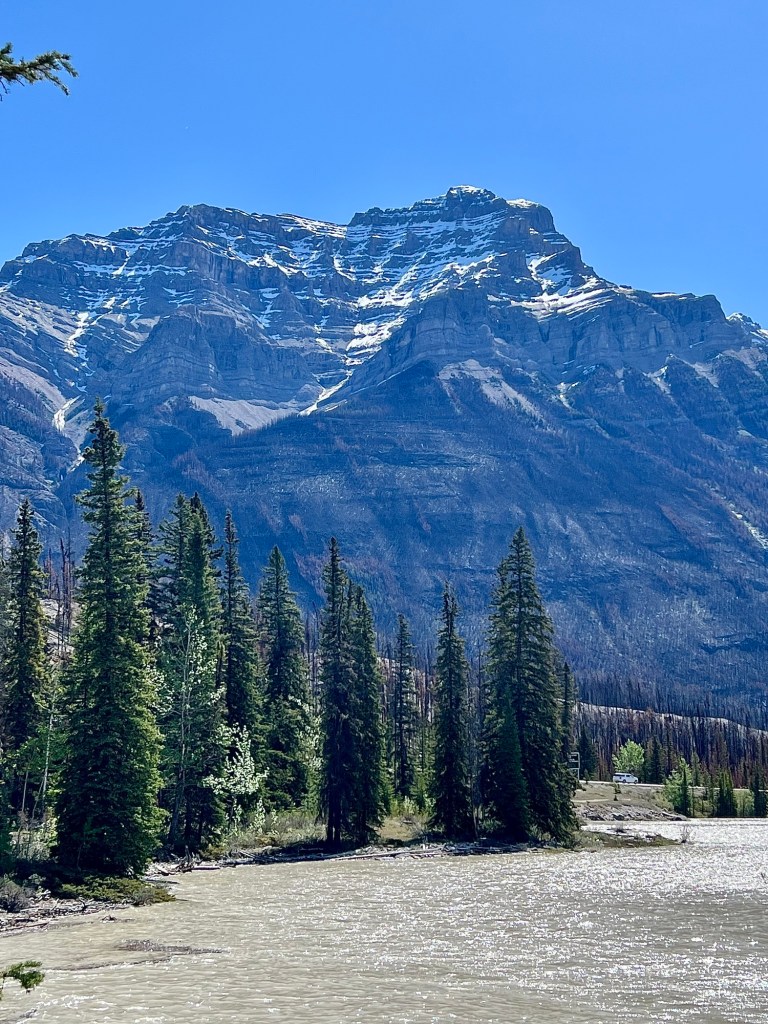
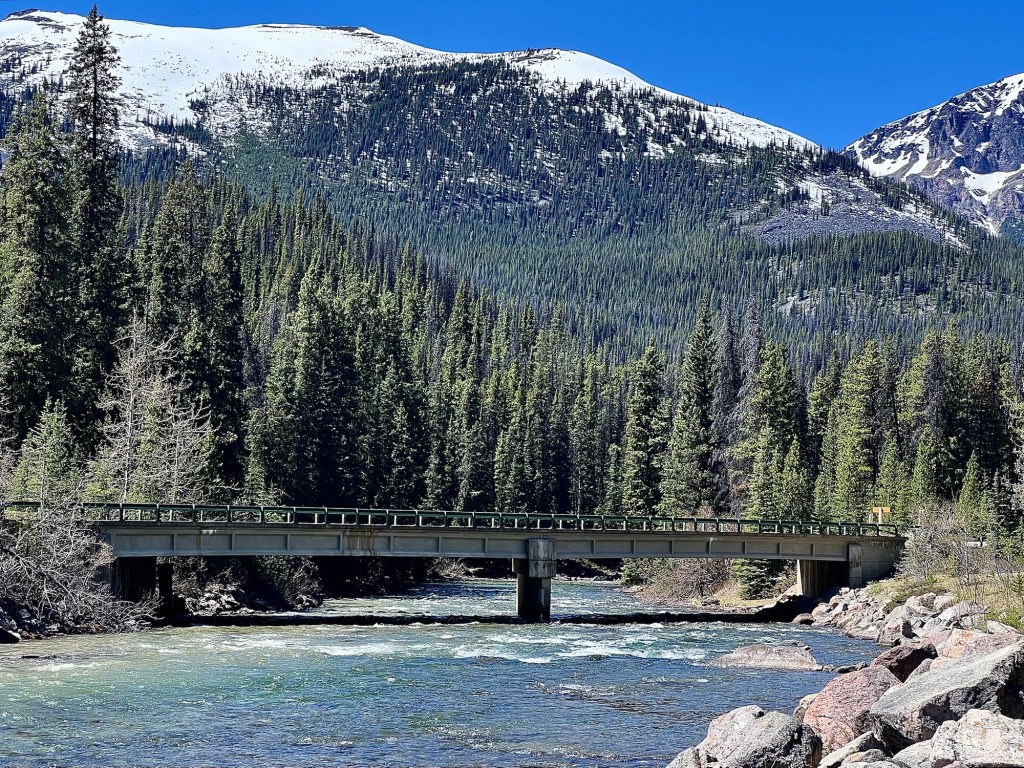
This beautiful route parallels the Athabasca River along the way.
Athabasca River
This river is quite murky because of all the rock particles it contains …
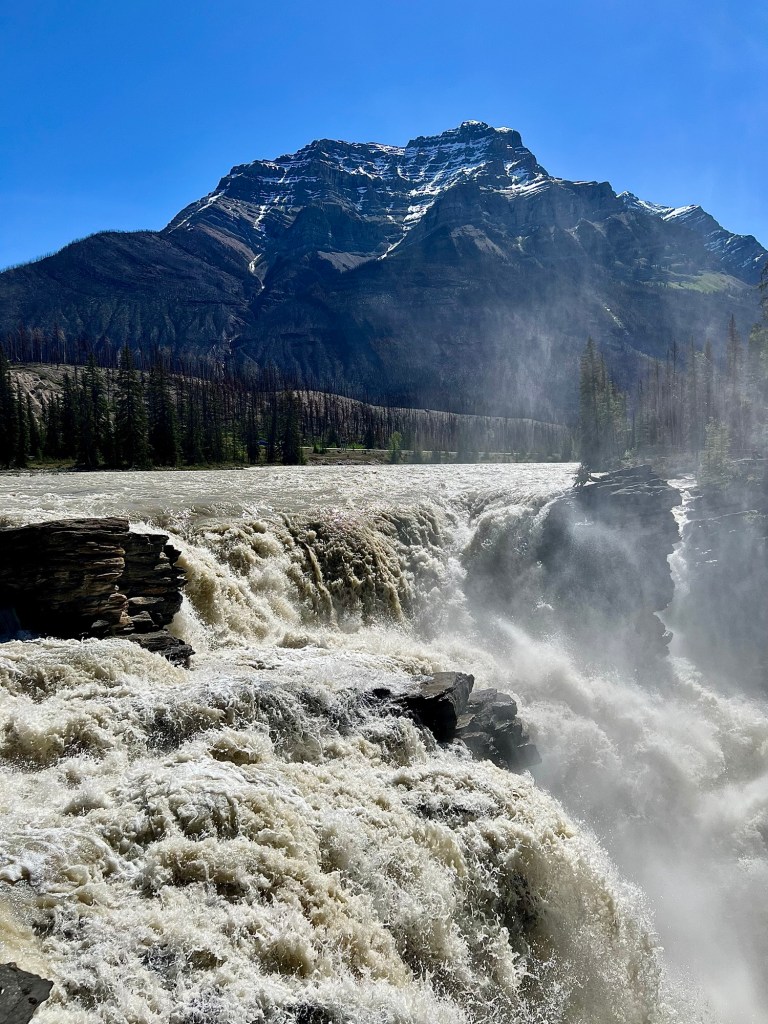
… but its power and beauty are nevertheless undeniable.
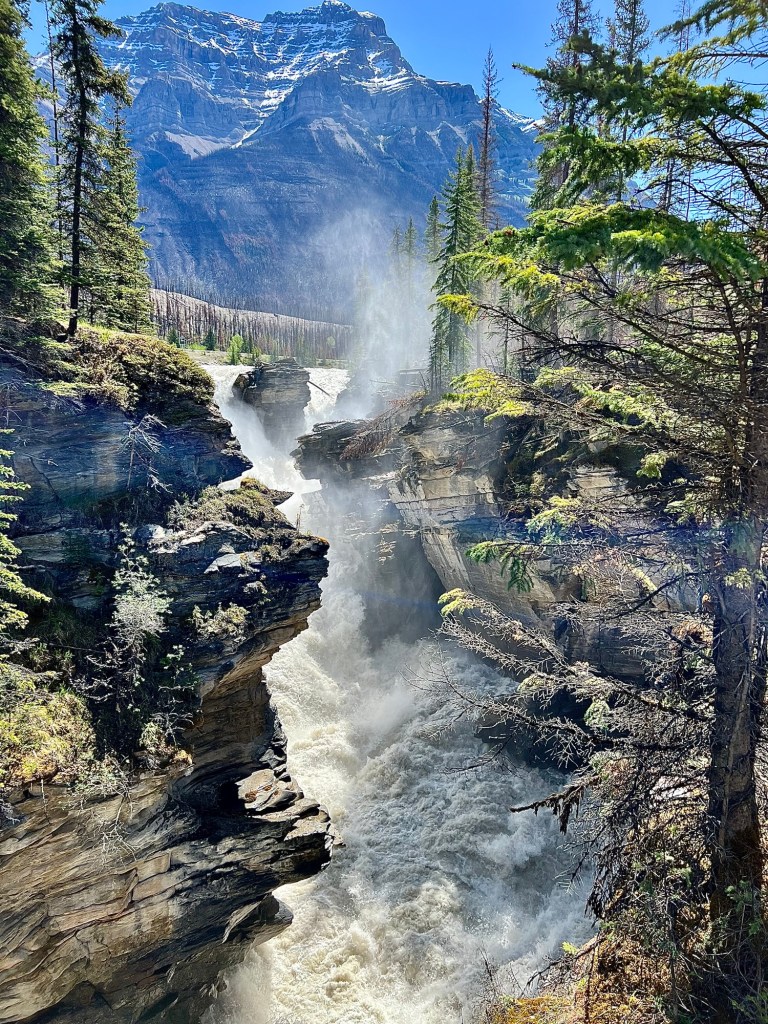
Upper Athabasca FallsMist rising from the pounding water.
Here’s a short video. The falls are squeezed into a tight Venturi-like chute …… accelerating the water’s velocity.
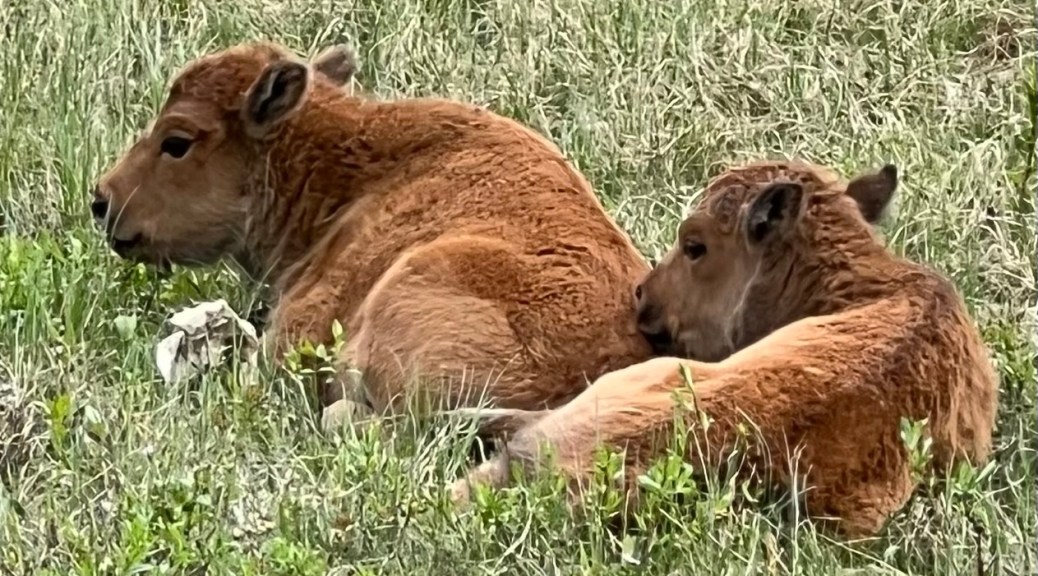
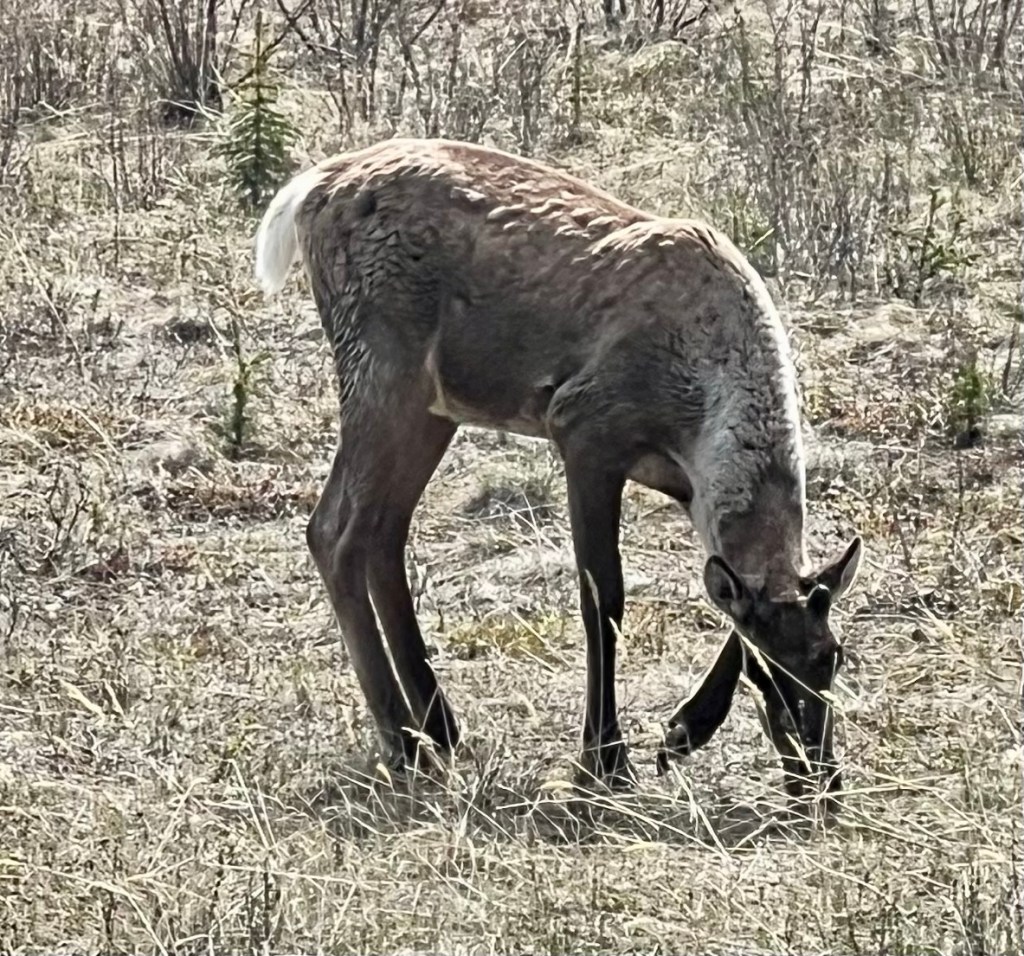
During our recent trip through northern British Columbia, Yukon and on to Jasper National Park we saw lots of animals, but they visually weren’t at their best. They have just come through winter, they’re in the process of shedding their coats, and they either have young ones or are about to. In short, they are busy parents just trying to recover from winter cold!
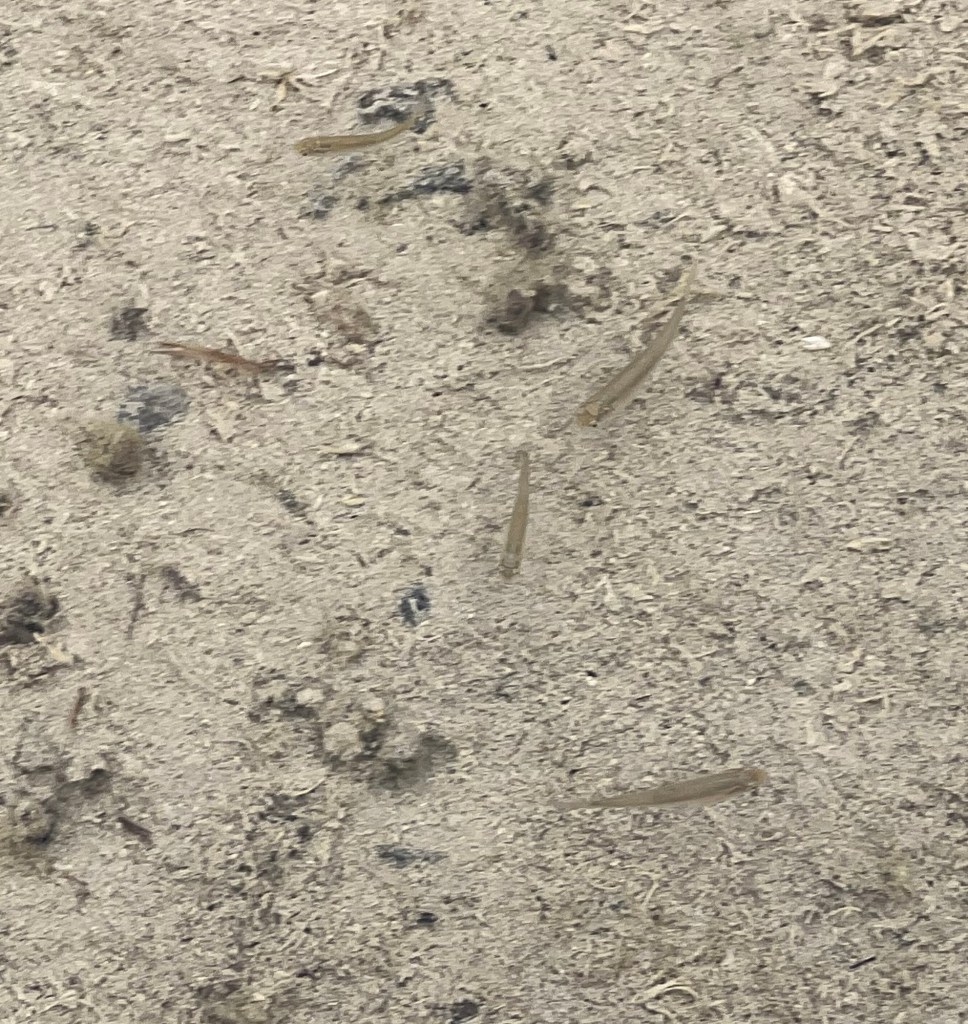
Bison Time for an afternoon bison siesta.Adorable bison calves, also snuggling for an afternoon nap.Caribou/reindeerDo you see the little hatchlings? They are certainly well camouflaged! Caribou/reindeerMountain goatElk – these mothers had hidden their calves behind some scrub – I could just barely make them out. Elk can be extremely aggressive in protecting their young, so it’s best to keep your distance. This not-so-great picture of a cow moose who also had a calf nearby meant that I kept my distance from her as well. Moose can be unpredictable so it’s best not to bother them. We also saw this bear who looked like he just really wanted to go back to sleep!
Being able to see all these animals was particularly wonderful especially as most of our sightings were in a national park where they are well protected.


















 In the Net! - Pictures and Stories of Life