Port Hardy is at Vancouver Island’s northern tip.

We recently had a quick stop in this pretty town with its busy mountain-framed marina.
Happy Saturday.
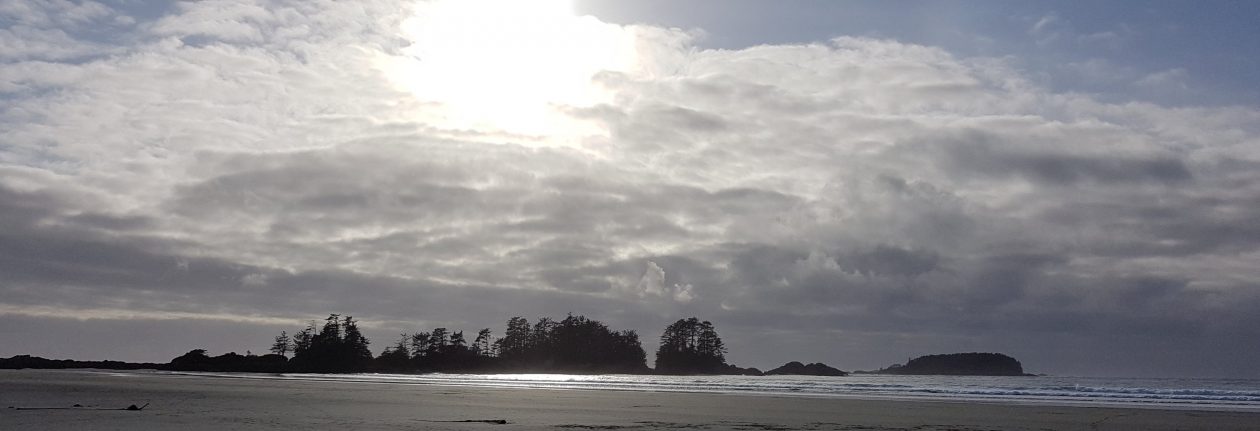
Port Hardy is at Vancouver Island’s northern tip.
We recently had a quick stop in this pretty town with its busy mountain-framed marina.
Happy Saturday.

Even when it’s raining, it’s beautiful. I like the interplay of cloud and mist descending on blue mountains.

As afternoon ended the sun began to break through and we had a lovely evening.
Happy weekend.
… the city from where we took the ferry to Haida Gwaii …

… the huge numbers of resident bald eagles love to soar …

… through the dense forests, marvellous inlets and passages around small islands, and to swoop past decks and balconies and perch anywhere near the life-giving ocean.

And a beautiful ocean it is.

Happy Thursday.
I loved seeing all the wild flowers everywhere on Haida Gwaii – a beautiful bounty.
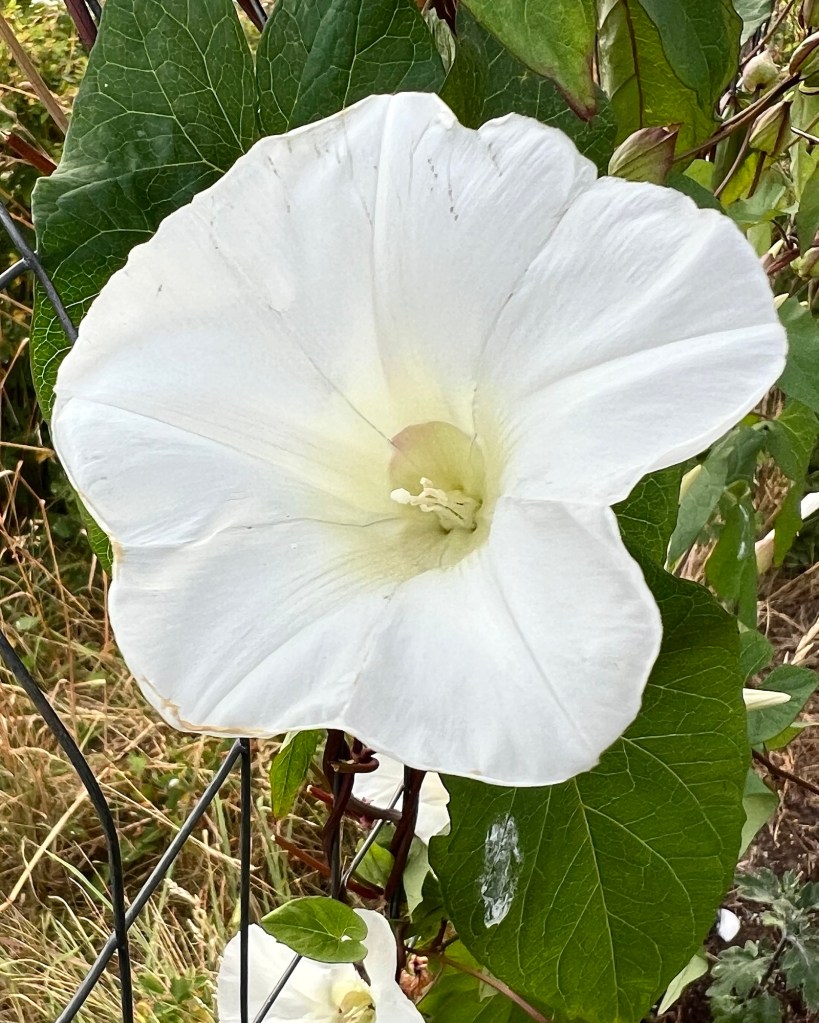

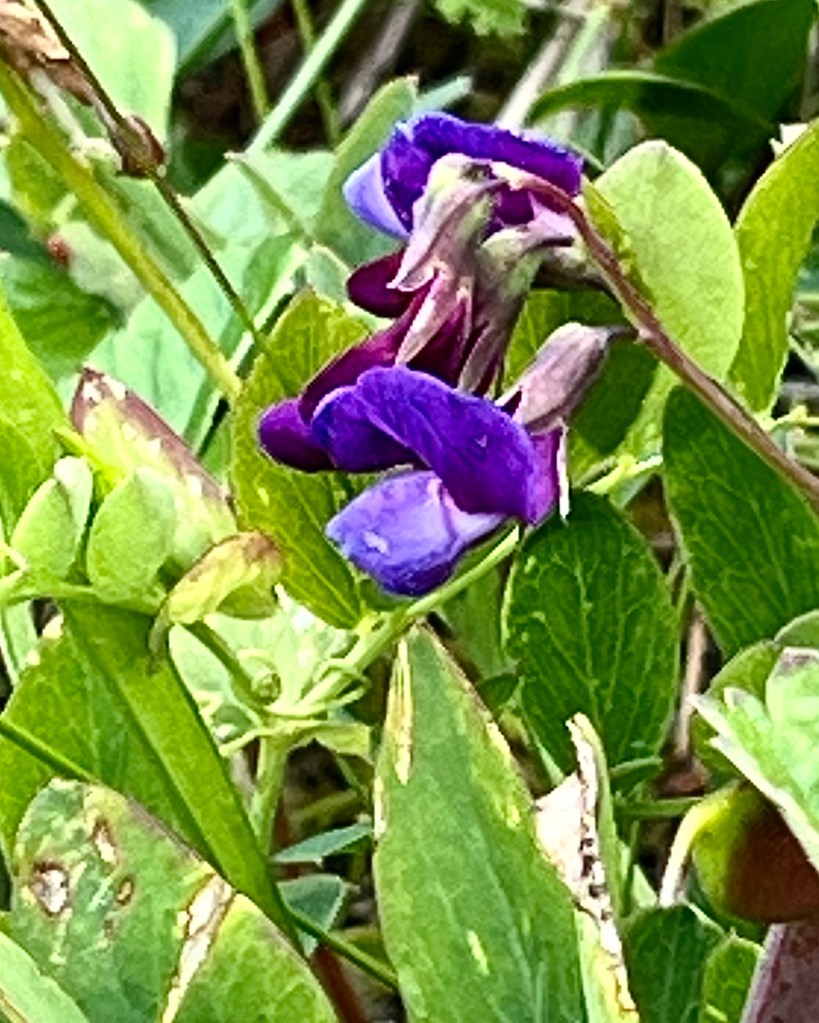


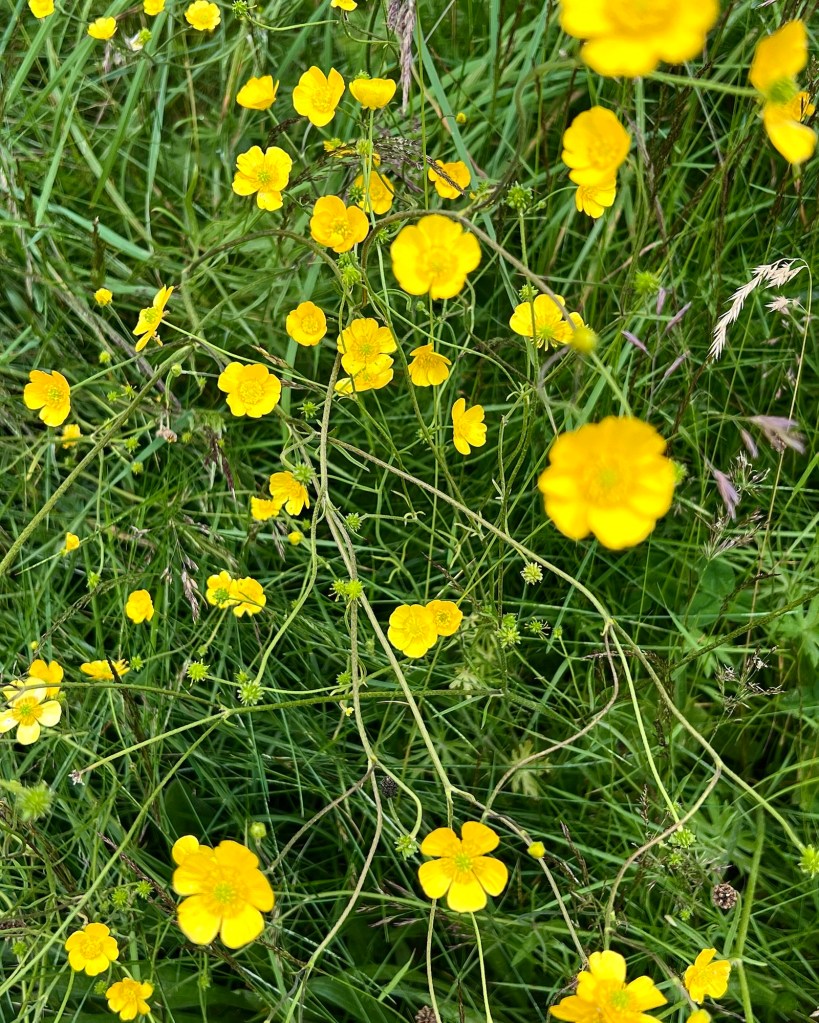
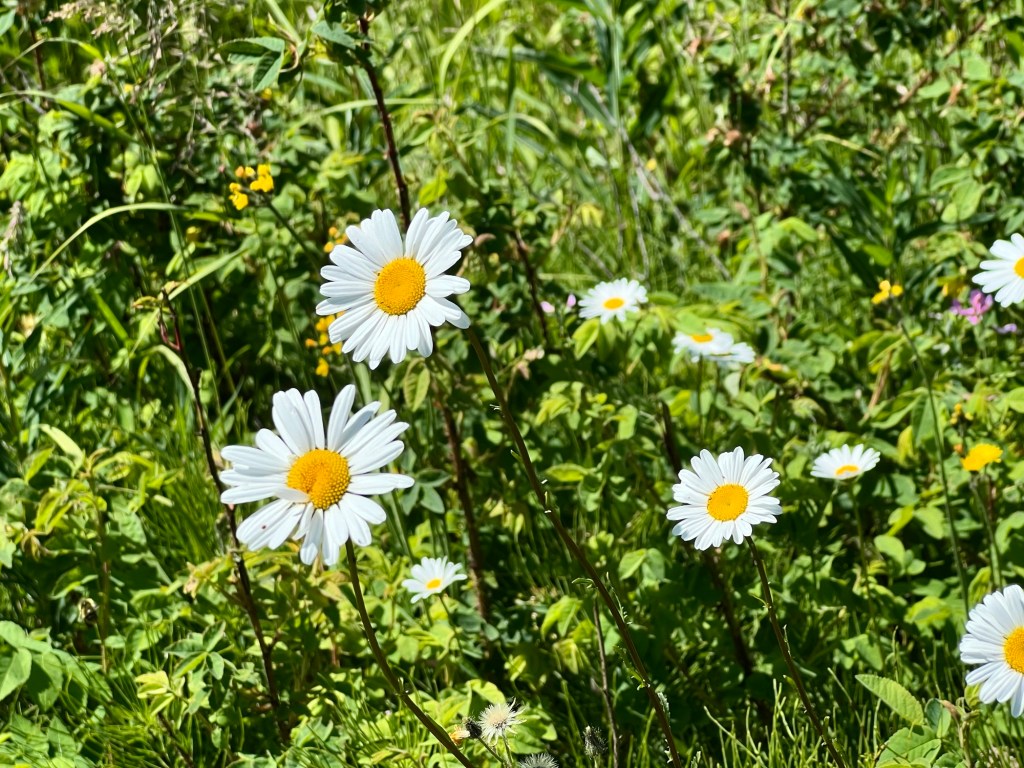
We also saw many, many bees on Haida Gwaii. Their numbers have been dropping in lots of places so it was fantastic to see them thriving.
Happy Wednesday.
We arrived on the archipelago of Haida Gwaii after a very smooth ferry crossing from Prince Rupert.

The distance looks a bit deceptive but we were also crossing the Hecate Strait, an area of ocean that can live up to its namesake, so caution is required, even in the summer.

We spent our first few days in Masset at the northern end of Haida Gwaii and explored lovely beaches and many trails through the rain forest.

Haida Gwaii sits in a very temperate weather zone; it’s almost a “Goldilocks” location. It’s never too hot; never too cold, despite its more northern location. It’s lush, verdant, stunningly beautiful and very, very green with lots of huge old growth trees everywhere.

Near the ocean, we frequently found moss encrusted trees with huge ferns growing on the forest floor in this natural ode to recycling. Old trees die, fall, and then provide nutrients for the next trees and other plants.

There were many of these “nursery stumps” with new trees growing from the old ones.

More will follow later.
Happy Tuesday.
We recently saw this mule deer when we were hiking in a provincial park.

She looked up from whatever yummy plant she was eating, waggled her ears, posed, let me take a picture and then went right back to her lunch.
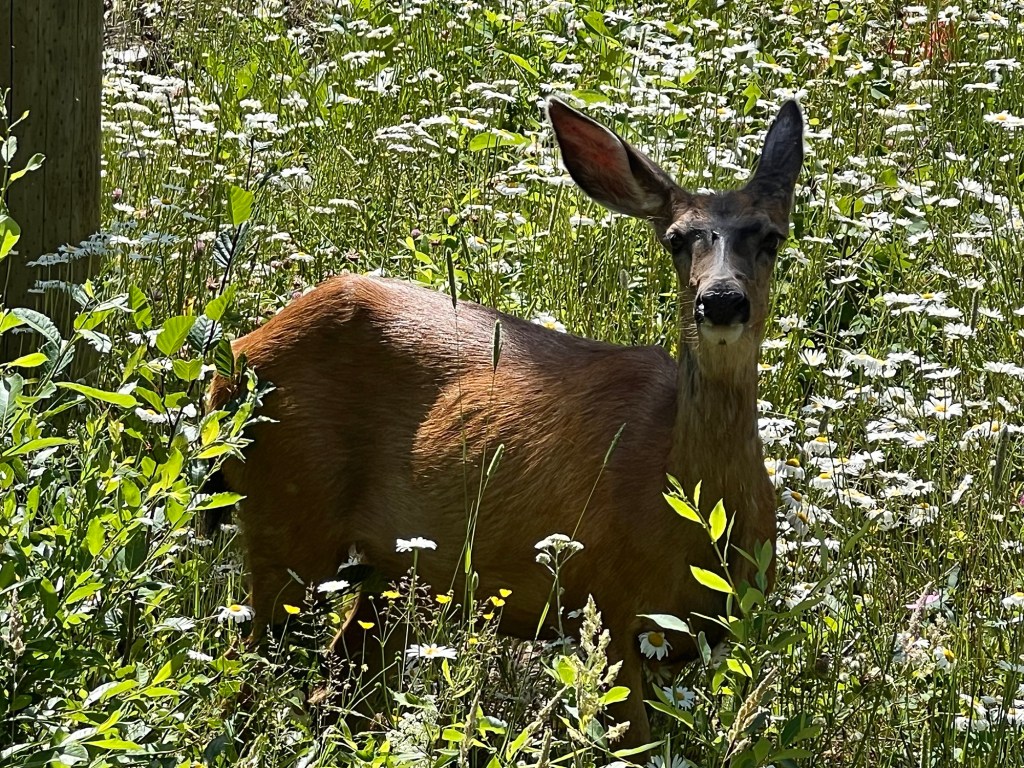
She looked so beautiful and unconcerned as she stood among the daisies, feeling comfortable that no harm would come to her.
Happy Monday.

This continuing series of posts depicts our beautiful world, encouraging people to share them and maybe even help save our unique home planet from …
#ScenicSaturday July 13th 2024:
A beautiful July picture of the River Wye, courtesy of Stuart Aken. Please click the link above to see more of Stuart’s lovely photography.
We have seen some truly fantastic landscapes on this trip through northern British Columbia as we near our ultimate destination: Haida Gwaii.
The rivers are magnificent, which leads me to this question: in the photos below, are you seeing a river or is it a lake? Or, is it a river and a lake?
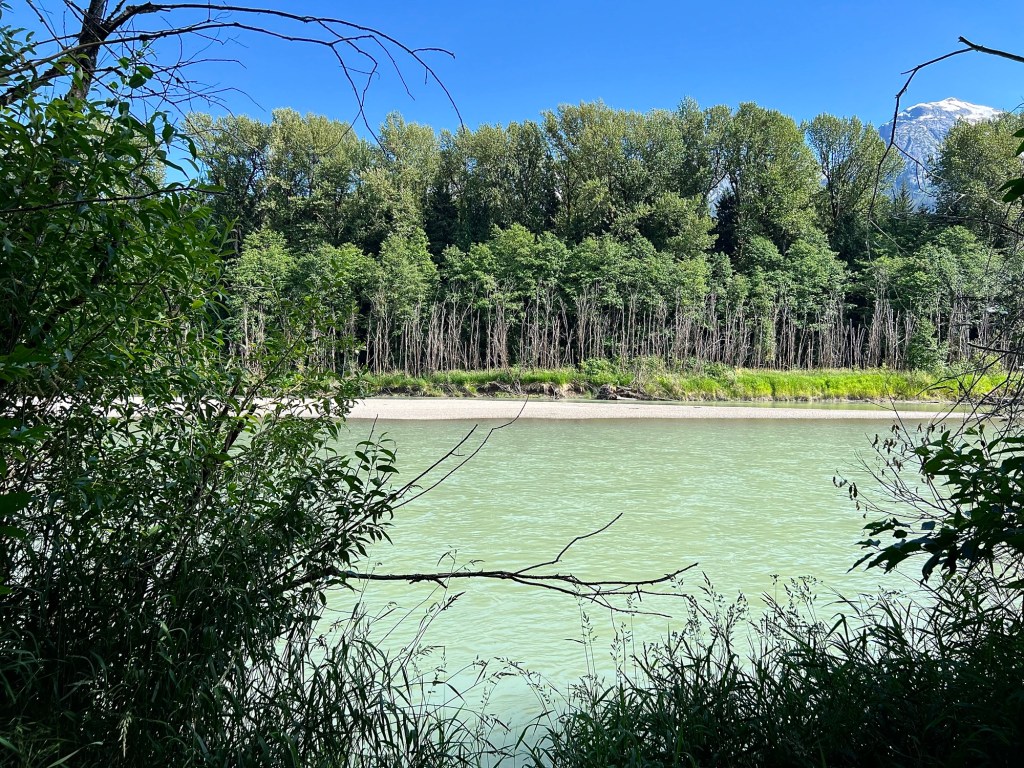


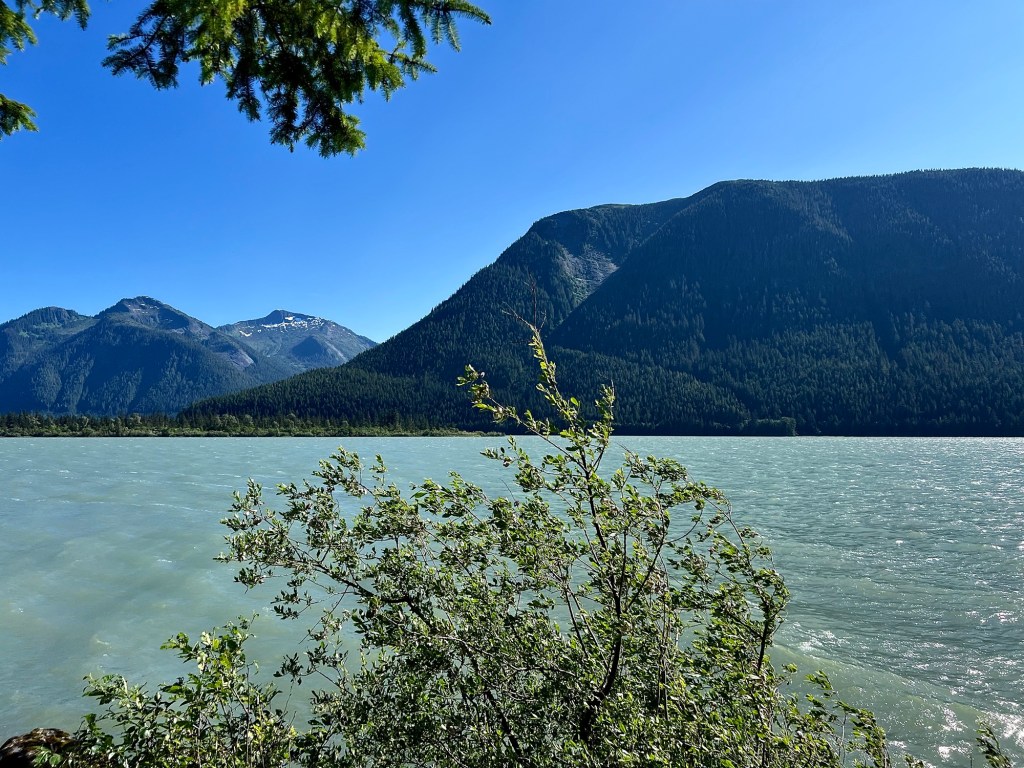
I’ll provide the answer in the comments.
Happy Sunday.
The Bulkley River of northern British Columbia is a major tributary to the much larger Skeena River – I’ll post pictures of the Skeena later; it’s huge.


This river is greenish-grey which indicates that it’s fed by glaciers and their forceful runoff. The colour comes from pulverised rock particles that absorb and scatter sunlight; the rivers and lakes near the Rockies are an impressive bluish-green.
Happy Friday.
We recently left Penticton, British Columbia en route to Haida Gwaii, an archipelago off the northern Pacific coast and the home and ancestral territory of the Haida First Nation. Getting there would take three driving days and one ferry.

After stopping for the first night in Prince George, we continued on to Smithers.

Smithers is near the Hazelton Mountains which are a sub-range of the larger Coast Mountains. In winter there’s a lot of good downhill and cross-country skiing and in summer the hiking is fabulous.

After a decent night’s sleep we drove to one of the peaks and found a good hiking trail.

As we neared the trail head the temperature went down to 24 C (75 F) from 33 C (91 F) in the town of Smithers below. It was a much appreciated break from the heat wave we’ve been experiencing all over British Columbia.

Being able to enjoy the trail in much cooler temperatures was a real plus.

From Smithers all the way to the coast, the forest is lush, dense and beautiful. This is because even though Smithers is fairly far north, its climate is mitigated by the temperate rainfall from the Pacific Ocean which leads to these lovely, almost-rainforests.

There were a number of powerful glacier-fed waterfalls on our route that we stopped to admire.

All too soon we needed to return to our vehicle to continue our drive to Prince Rupert and the coast. Our ferry booking for the sailing to Haida Gwaii was coming up next.
Happy Thursday.
 In the Net! - Pictures and Stories of Life