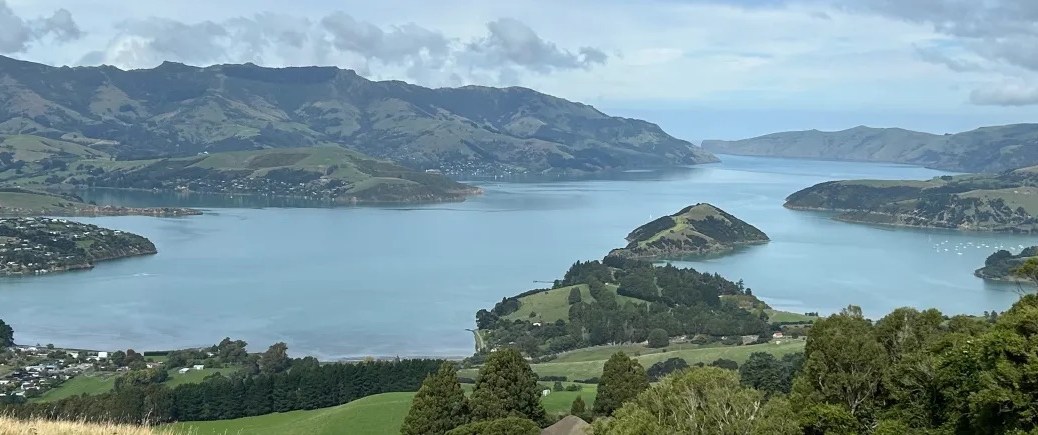
Beautiful photos of and information about New Zealand from Linda at Wandering Canadians. Please click the link above to read about the rest of her visit to Akaroa and to see more of Linda’s posts about her and her family’s wanderings.
I was (and still am) a big fan of Anthony Bourdain. I remember finding his first show, “A Cook’s Tour” on a minor travel channel and soon found myself completely hooked. I read all of his books and watched all of his shows as they came along.
Photo courtesy of Alex Welch, New York Times
I was raised in French-speaking Canada, learned to cook in the French country way, and I always felt, even from a very young age, that one of the best ways to understand a culture is to try its food. So when Anthony Bourdain came along, with his French name and food/travel attitude that aligned with mine, I thought yes, finally! Here’s someone who’s doing a thoughtful travelogue-and-food-as-cultural-identity show.
Icelandic salmon
My desire for travel was inspired by my childhood trips to my mother’s homeland, the UK. On one of these visits, she took me on a side-trip to Paris, and that’s where for me, food and travel merged and grew. Since then, and although I’ve now slowed down, I’ve travelled enormously and have always, first and foremost, accessed a region’s culture through its food.
The best seafood chowder ever; from a visit to Reykjavik.
Food is who we are. We depend on it not only for the practical purposes of sustenance, but also for comfort, warmth, remembrance, history and connection. Food brings us together, both in celebration and mourning, in romance and heartbreak, and very often, just as a pleasure in and of itself.
Many years ago, in a very small neighbourhood restaurant in an off-the-tourist path, outside-of-tourist season part of Venice (this was when actual Venetians still existed, before that marvellous city was more or less turned into a theme park), I was introduced to a wonderful rendition of linguine alle Vongole (linguine with clams). I wound up spending much of the afternoon chatting with the owner, he in his broken English and I in my very poor Italian, drinking local wine and learning more about Italian food – and Italians – than a dozen cook books could ever provide.
Mushroom pasta, one of my favourites.
And this is one of the best things that Anthony Bourdain shared with us: the idea that food is travel, and travel is food. It’s about connecting with the people who make the food, about why it’s an important part of their culture and by extension, why it is that we want those particular foods to become a part of ours. It’s mind opening.
A traditional favourite in my family: winter tourtière (meat pie).
It’s very sad that despite Bourdain’s reverence for travel, for food, for life, his was cut short by one of the very things he frequently discussed in his programs: the human condition. Our condition can be a complex, circuitous mystery, quite often particularly to ourselves. He was so ably conversant with it and at times showed such insight, but as it is for many of us, he clearly had a hard time dealing with his own condition.
A wonderful seafood pasta.
Regardless of the manner of his passing, he gifted us with an enormous body of work. Often irreverent and acerbic, sometimes scandalous but always passionate and honest, Anthony Bourdain communicated his observations and philosophy through the wonderful medium of food, a medium we can all understand, and I will always appreciate him for that.
After his passing, friends of his, Eric Ripert and José Andrés, started an unofficial Anthony Bourdain Day on June 25, his birthday (yes, I’m a day late). So if you’re inclined to honour him, his favourite drink was a negroni, and one of his favourite foods was pasta, and you can eat and drink in his memory.
The answer to that question is a resounding yes! Although in the summer of 2024 Jasper National Park suffered a terrible forest fire that resulted in the destruction or serious damage of a third of the townsite and the loss of 325 square kilometres (202 sq miles) of park forest, it is recovering well and appropriately.
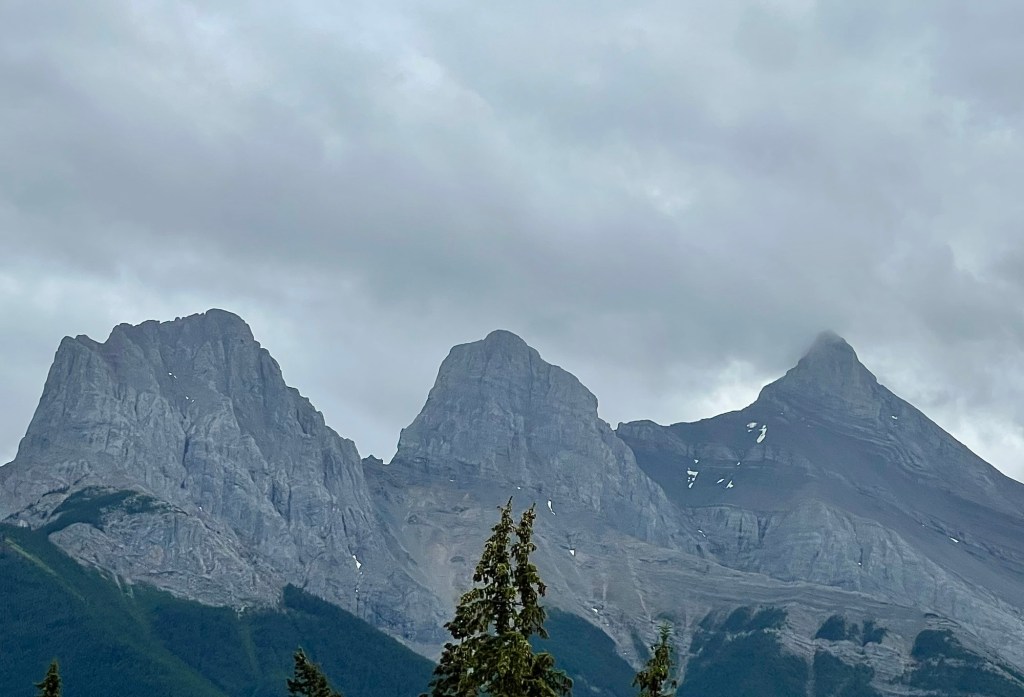
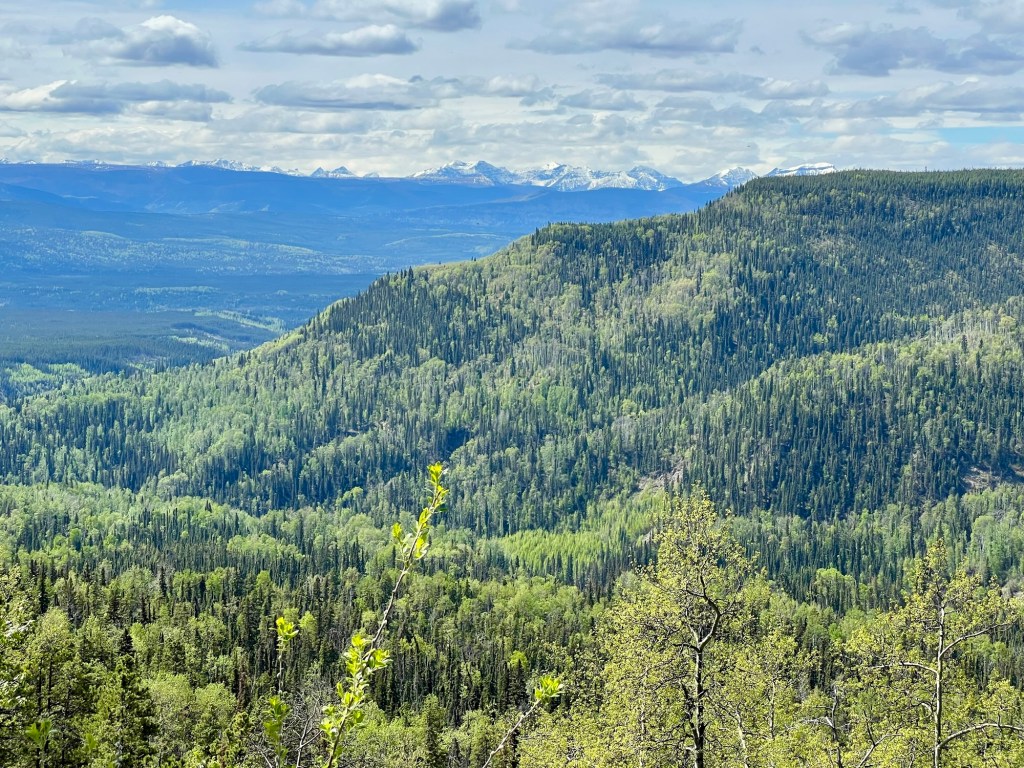
Rocky Mountains in the distance.
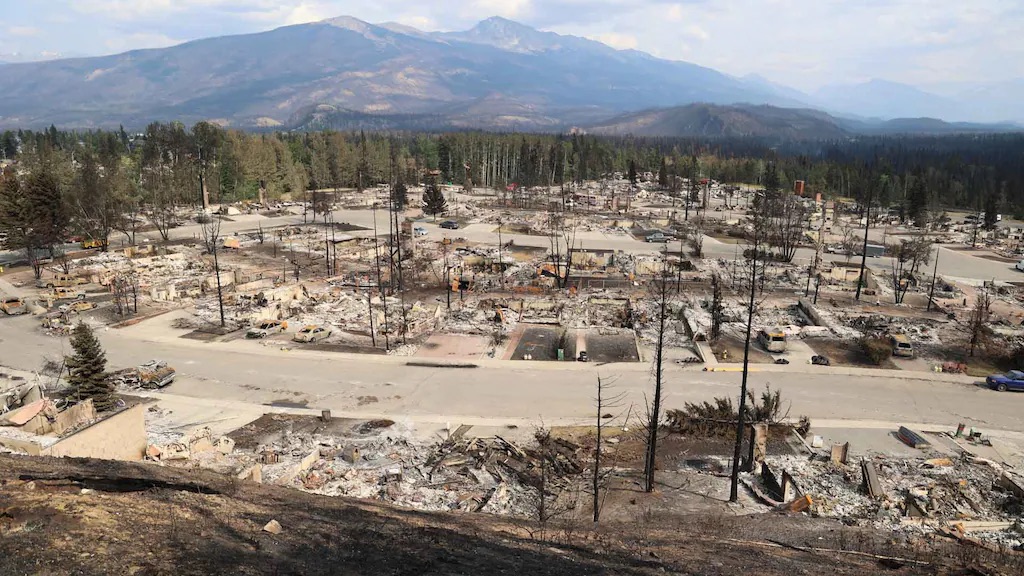
When we recently visited we saw that all heavily damaged buildings or the remains of destroyed buildings, vehicles, and other items have been removed from Jasper townsite and rebuilding and new construction are moving along at an accelerated pace. Other than the lots made vacant by the fire (and that are now being prepped for reconstruction) there is little evidence that a major fire occurred.
Jasper, August 1, 2024. Photo courtesy of Parks Canada
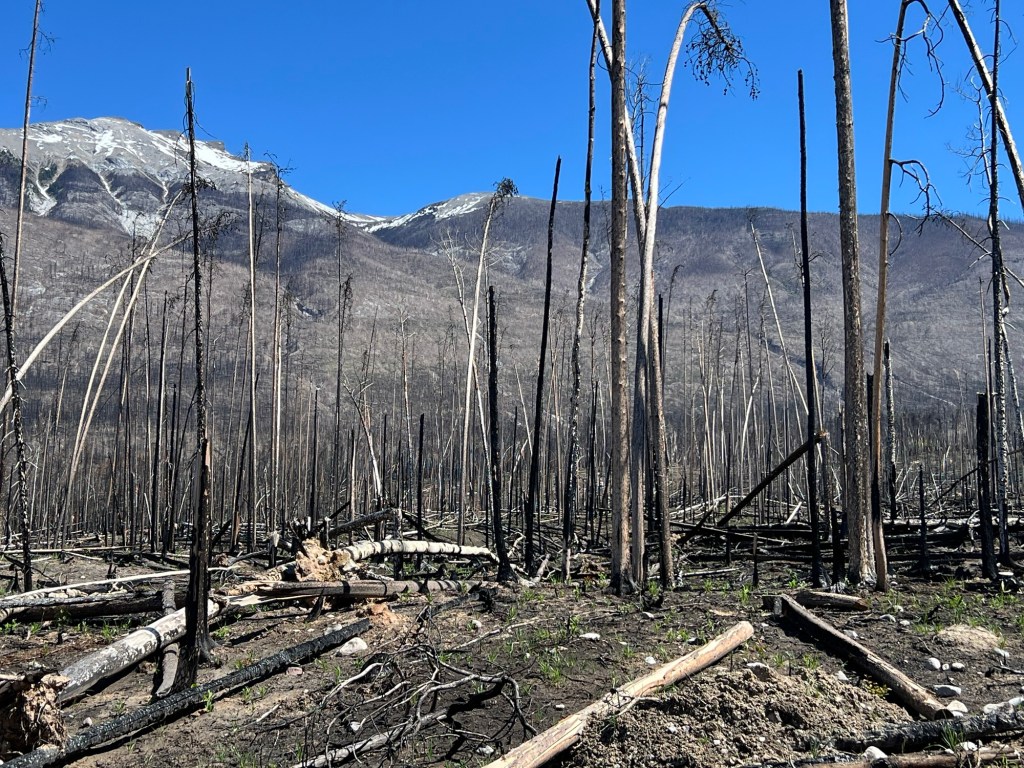
Some parts of the Maligne Lake area of Jasper Park were very significantly damaged with, in some areas, trees completely destroyed right down to the ground.
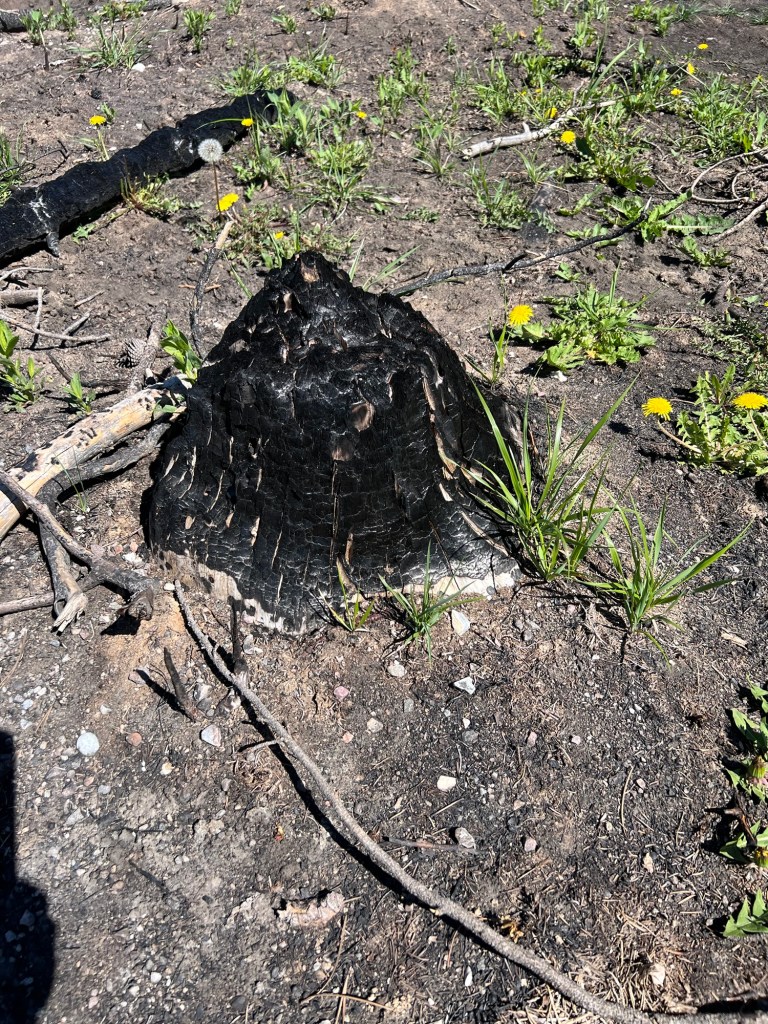
No ash, no burned trees left, only stumps.
The fire was at times so hot that it generated its own weather system, a swirling tornado of flames, gases and heat. Essentially, many of the trees were cooked until nothing was left.
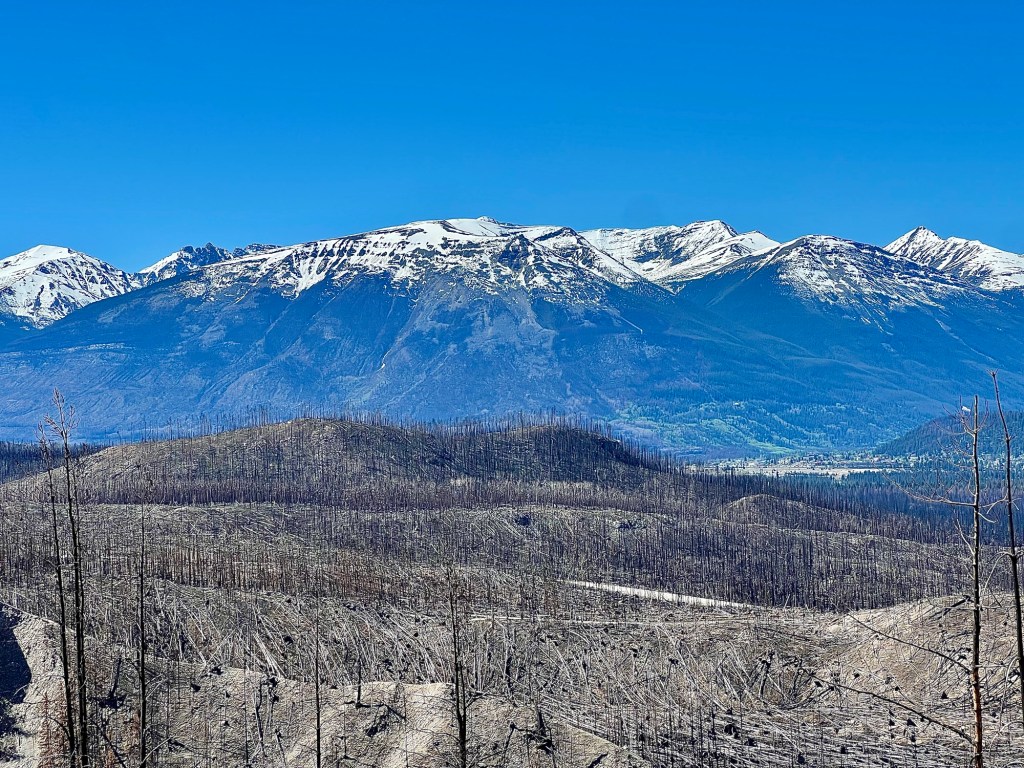
A large area of burned forest.
When we visited in late May/early June, a few of the trails remained closed due to fire damage and unsafe conditions. However, the vast majority of the trails, even through the burned areas, are open. Hiking through the burned areas is also an education about the forces of nature: we saw grasses, wildflowers, weeds, and even very tiny trees growing again; the forest will recover.
This photo gives a sense of how far the fire extended as well as a contrast with the healthy forest in the background.
Many people have thought that they shouldn’t visit Jasper this year, that it’s perhaps too soon. But the people of Jasper townsite and the employees of the park, hotels, restaurants, outfitters and all the others who rely on tourism for their livelihood will welcome you. They have worked very hard to prepare the townsite and to reopen the trails, and of course, the vast majority of the national park escaped the fire. 95% of it is as beautiful and iconic as ever.
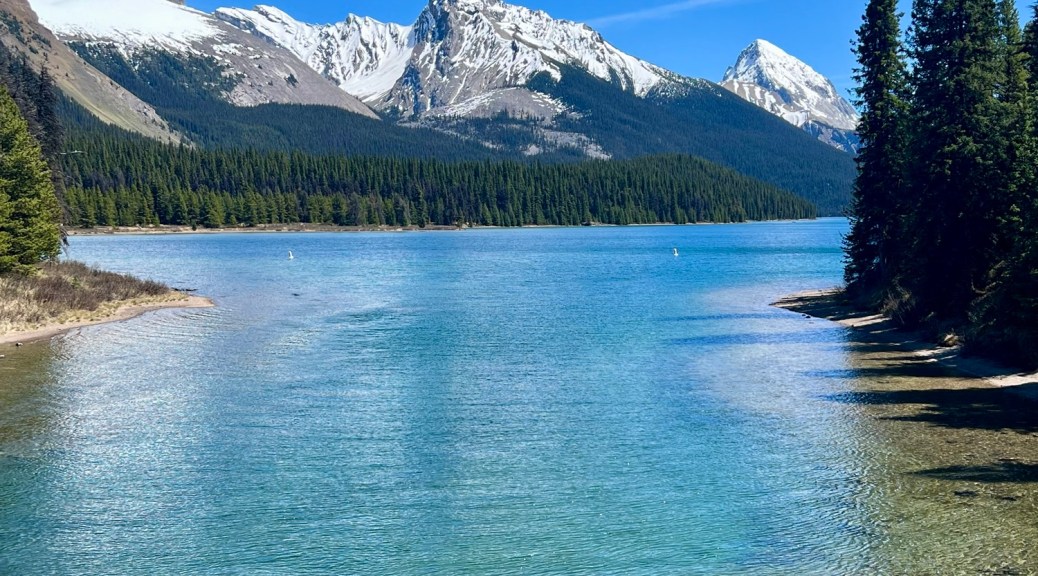
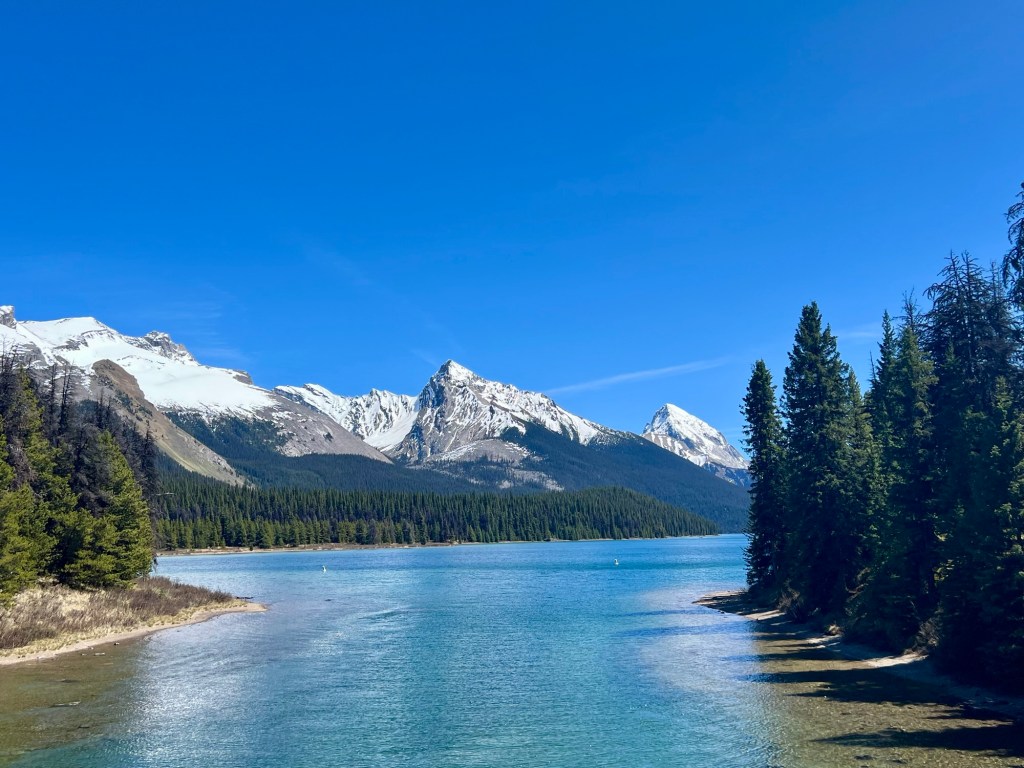
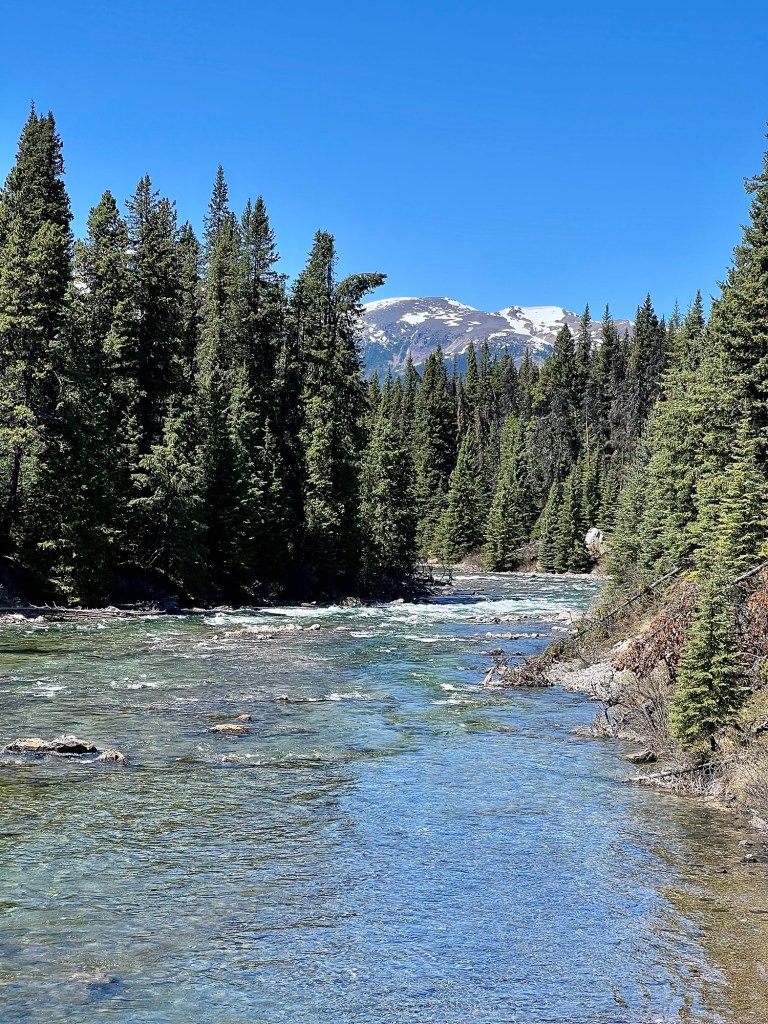
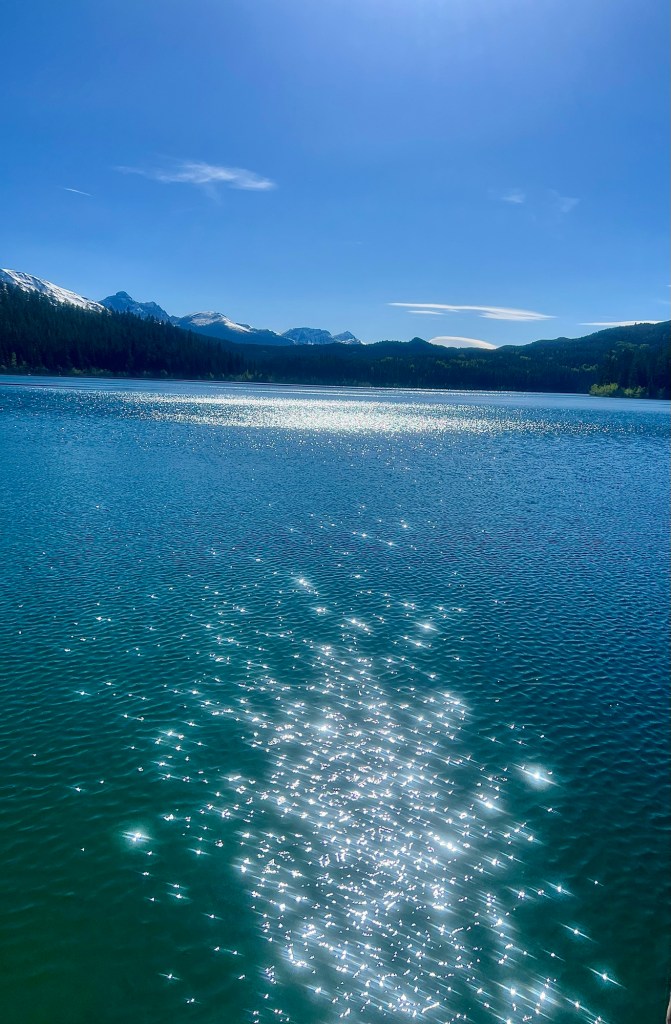
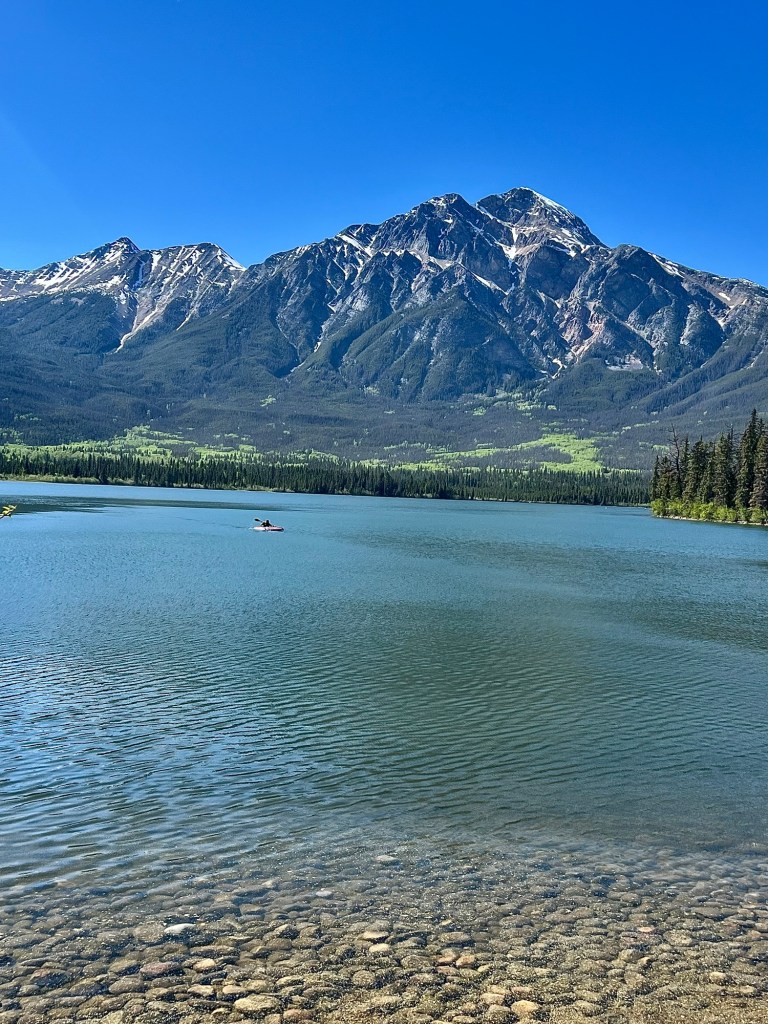
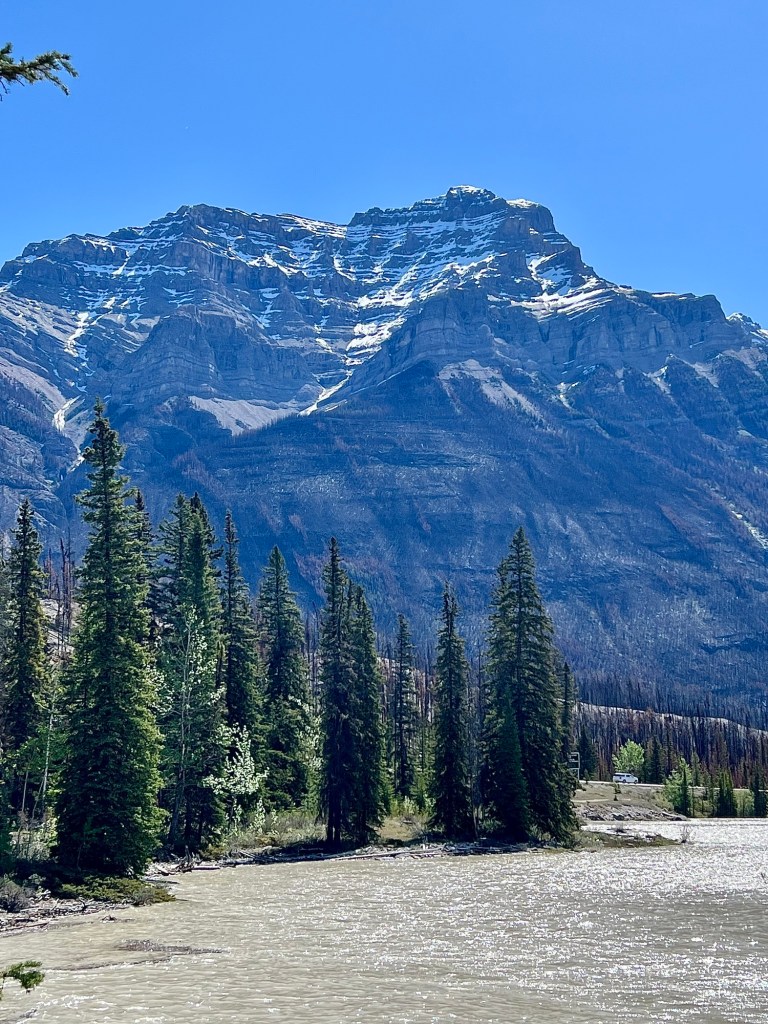
Here are a few of those iconic views.
Maligne Lake Maligne RiverPatricia LakePyramid Lake Athabasca River Athabasca Falls
We very much enjoyed our visit and felt that spending our money there was well worth it so yes, if you’re thinking of going, you should.
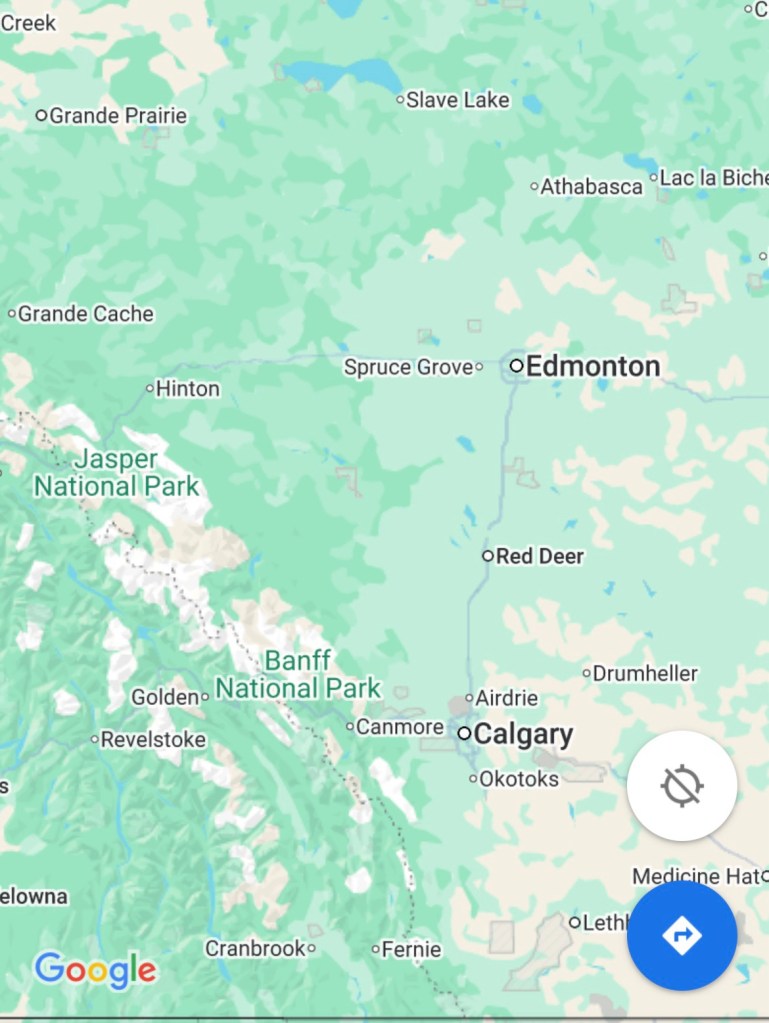
We travelled south on the Ice Fields Parkway – so named because of all the ice fields or glaciers that are visible along the way – through the Rocky Mountains from Jasper National Park to Banff National Park.
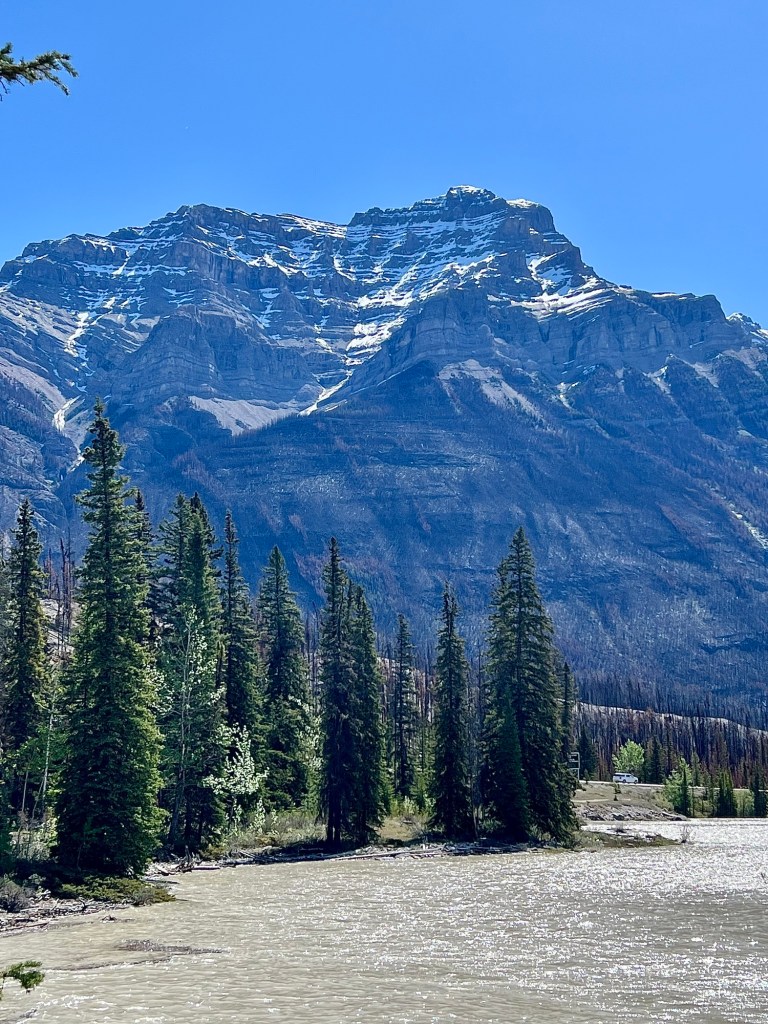
This beautiful route parallels the Athabasca River along the way.
Athabasca River
This river is quite murky because of all the rock particles it contains …
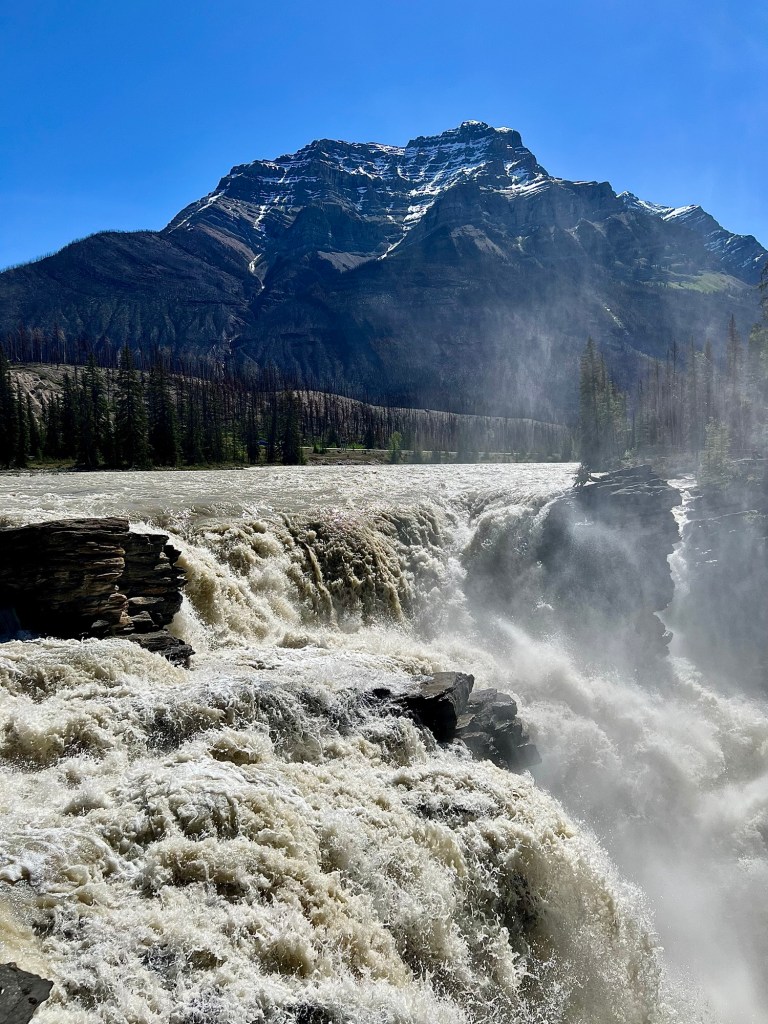
… but its power and beauty are nevertheless undeniable.
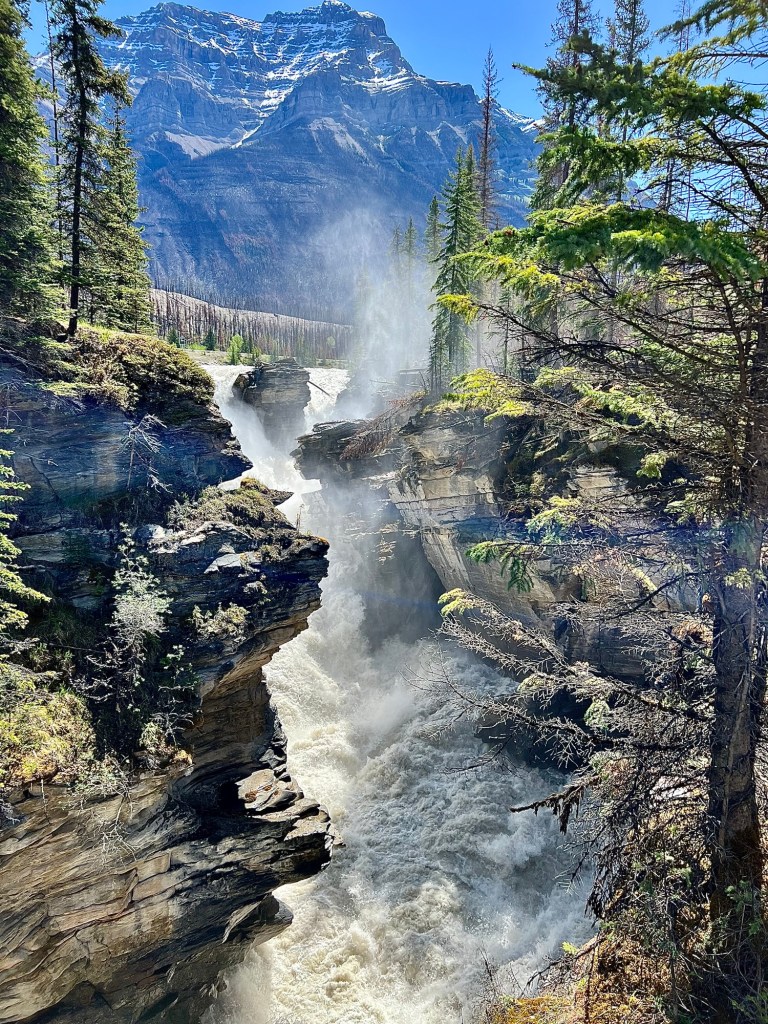
Upper Athabasca FallsMist rising from the pounding water.
Here’s a short video. The falls are squeezed into a tight Venturi-like chute …… accelerating the water’s velocity.













 In the Net! - Pictures and Stories of Life