Tag Archives: History

Reblog: Jo’s Monday walk : Italica

I’ve been so indecisive when it comes to travel this year. So many places I’d love to go, but still quite a lot going on at home. I finally made the …

Jo’s Monday walk : Italica

I hope you enjoy this very interesting travel/history piece from Jo at Still Restlessjo. Please click the link above to enjoy a tour with Jo through the ancient Roman city of Italia.

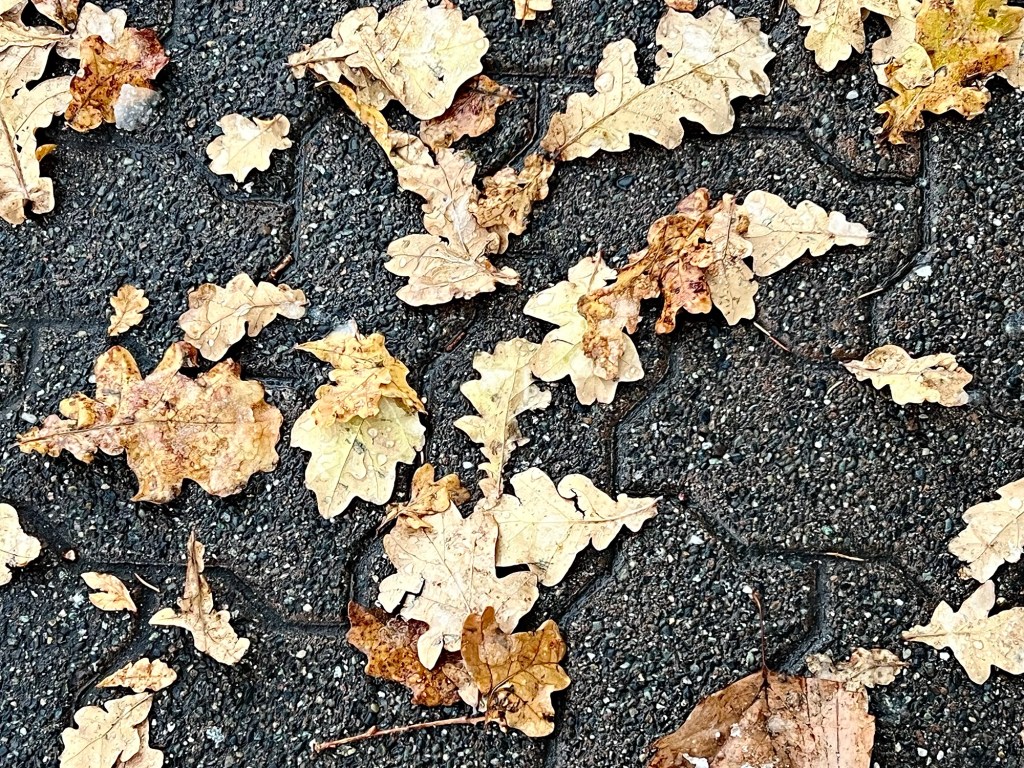
Heritage Oak

This is one of the heritage oaks that have been planted in Penticton’s Memorial Park. There are several others, all of which are about 10 – 30 years older than this one, making them approximately 110-130.

The plaque says “This oak tree was planted on July 1, 1937 to commemorate the coronation of George VI. It was presented to Penticton by the Royal Gardeners London.”

All of the trees in this park are very carefully tended and cared for by the city; they all display vaccination tags, especially the lone elm tree. As you may know, Dutch elm disease has been ravaging these incredibly lovely shade trees.

Elm tree (photo courtesy of P. Altini)

Happy Sunday.

Your Valentine

Today is the feast day of Saint Valentine, an early Christian martyr who was executed on this day (or July 6 or 30, depending on whichever branch of Christianity) in circa 269. Well, we aren’t sure what year, and that’s because there are a number of early Christian martyrs named Valentine who are all recognised as saints by the Roman Catholic Church.

But if there’s one thing historians agree on, it’s that the stories around Valentine are probably apocryphal since there are so many of them, all different. Nevertheless and whatever you believe, one commonality is that Valentine is said to have performed the miracle of restoring sight to the daughter of his Roman jailer and that just before he was executed, he wrote her a letter and signed it “your Valentine.”

Another commonality and the one that more closely lead to him becoming the patron saint of lovers is that before he was imprisoned for his religious beliefs he supposedly married a number of Christian Roman soldiers who otherwise would not have been able to tie the knot.

But as so often happens throughout history, centuries passed and the identity and religious purpose of Saint Valentine’s Day became almost completely obscured. By the 14th century his popularity was revived but only because of the notions of courtly love invented by the English writer Geoffrey Chaucer and a bit further on, also by William Shakespeare. 500 years later he appeared again because the Victorians liked the concept of ideal romantic love and set about establishing many of the traditions – such as the giving of cards – that we are familiar with today.

Whether you celebrate – either from a religious or secular perspective – Saint Valentine’s Day or not, it is a good time to recognise the importance of unselfish love and all it can accomplish. 🩷

Night Sights

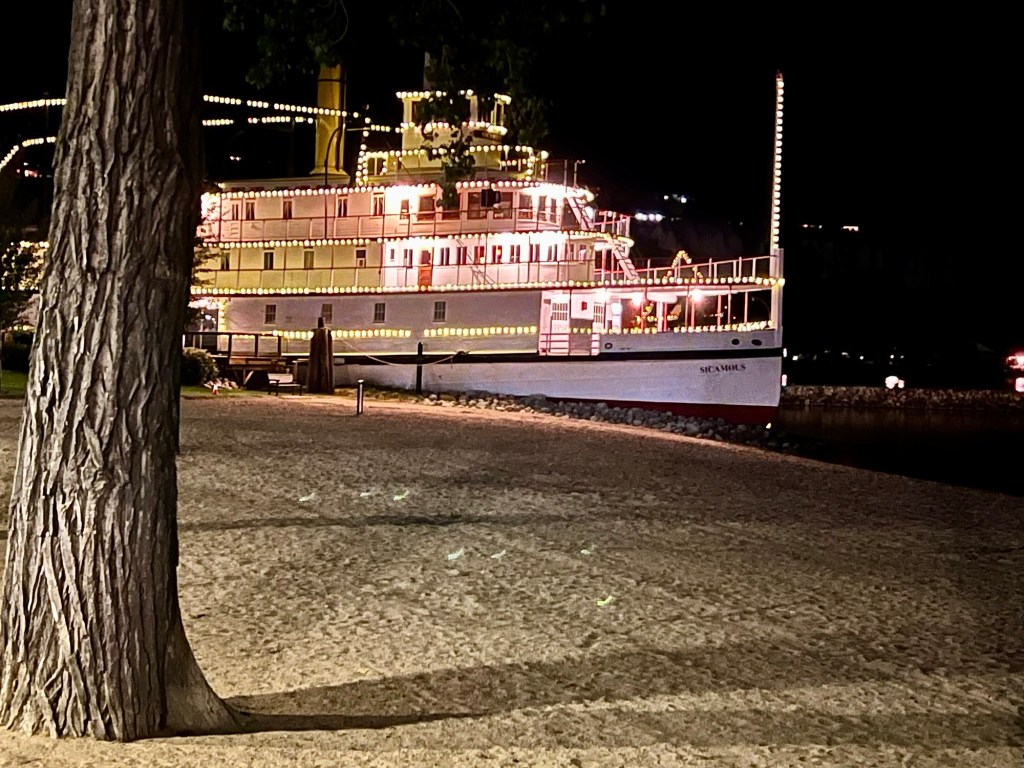
Launched in 1914 just before World War I, the sternwheeler SS Sicamous was a passenger and cargo ship that used to ply the waters of Okanagan Lake.

Steam ship Sicamous

During its heyday, it was a luxurious and elegant mode of transportation; it’s now preserved as a heritage museum and events centre. At night, the old ship is beautifully lit by hundreds of lights and has become a Penticton landmark.

This bridge over the creek just across the street from home is always a pretty night sight. It’s lit by the softer light of the old-style street lamps that convey a sense of tranquility and peace.

Happy Thursday.

Island Hopping

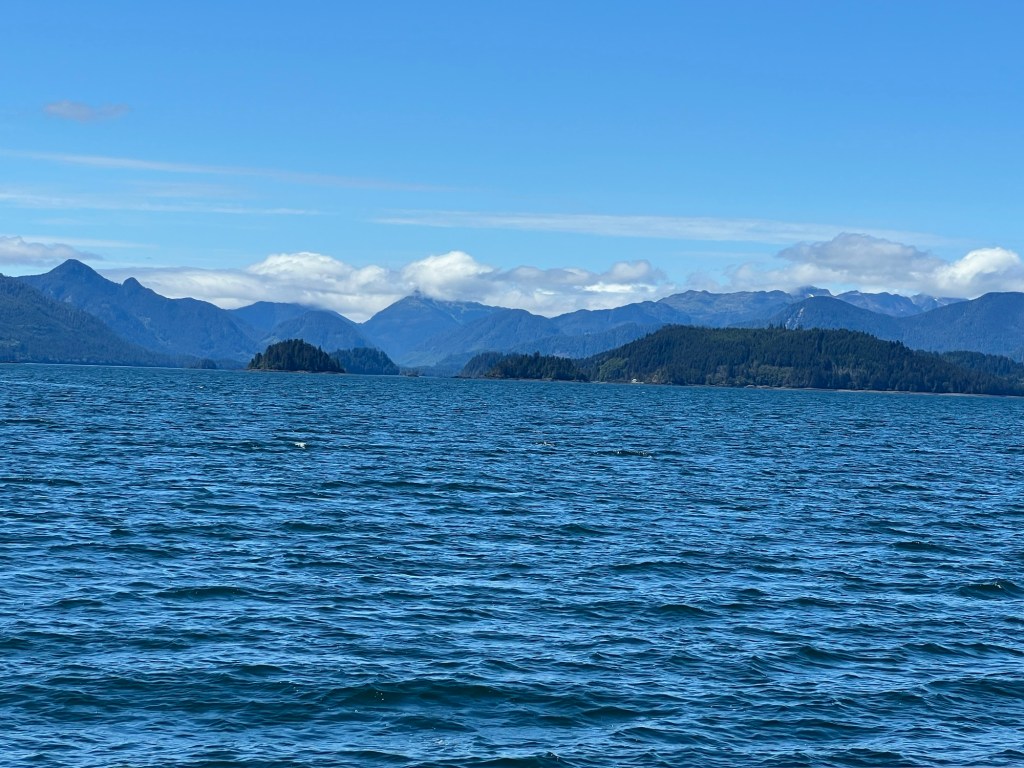
Haida Gwaii is an archipelago of 150 islands, but it’s mainly comprised of two larger islands: Graham Island and Moresby Island.

Graham is the biggest and most populated of the two while Moresby is home to a small population, the airport with scheduled service and also to the Gwaii Haanas [“Islands of Beauty”] National Park Reserve and Haida Heritage Site, a federally protected area that shows evidence of Haida habitation from 13,000 years ago.

A 20 minute ferry ride connects Graham and Moresby Islands and is another chance to see more of Haida Gwaii’s breathtakingly beautiful scenery.

Earlier this year, the British Columbia government, through the Haida Gwaii Reconciliation Act, returned sovereignty of the islands to the Haida First Nation, the first time since 1787 that the Council of the Haida Nation has been functioning officially.

Because of its ecological diversity, Haida Gwaii is said to be the “Galapagos of the North.” It is home to a unique subspecies of bear as well as to the Haida ermine, animals that aren’t found anywhere else.

In the last two centuries, Haida Gwaii has had a very turbulent history as it contended with colonialism, newly introduced diseases, exploitation and racism, to name a few of the worst issues. The Haida Gwaii Reconciliation Act goes a long way to addressing many of these historical wrongs.

In Remembrance of D-Day

This post was first published in 2013; here it is again, 11 years later, in honour of the 80th anniversary of D-Day.

Canadian military during World War II D-Day Landings on Juno Beach (Photo credit: Globe and Mail).

The 69th anniversary of D-Day was on June 6th, last Thursday. Like so many, many others, my dad was one of those involved.  He wound up going all the way to Hamburg, Germany, before “his war” was over and he was permanently sent back to England to my anxious mother, herself a member of the British army.

World War II and my parents’ participation in it shaped their lives; they and their cohort were subsequently referred to as the “Greatest Generation.”

How could it not shape their lives?

It has shaped ours, too; it’s just that we don’t register it much or perhaps give it as much prominence as it should probably have.

We lap up the sacrifice of our parents, grandparents and great-grandparents without understanding where it came from or even being aware that that’s what we are doing.

As my dad became older he often reminisced about his and my mother’s lives during the war. He talked about the time that they raced into an underground station in London seconds ahead of a bomb that tumbled down the steps behind them, following them.

They made it to relative safety before the bomb exploded; others did not.

My dad was also evacuated from Dunkirk.

The Dunkirk evacuation, the D-Day Landings and the Normandie invasion were, however, not something that my dad discussed until he was in his seventies. For him, outrunning a bomb was a story he could tell, but Normandie and Dunkirk? And later on, a concentration camp: the scope was too big; its effects were too broad. Compared to that, his personal experiences of it were tiny.
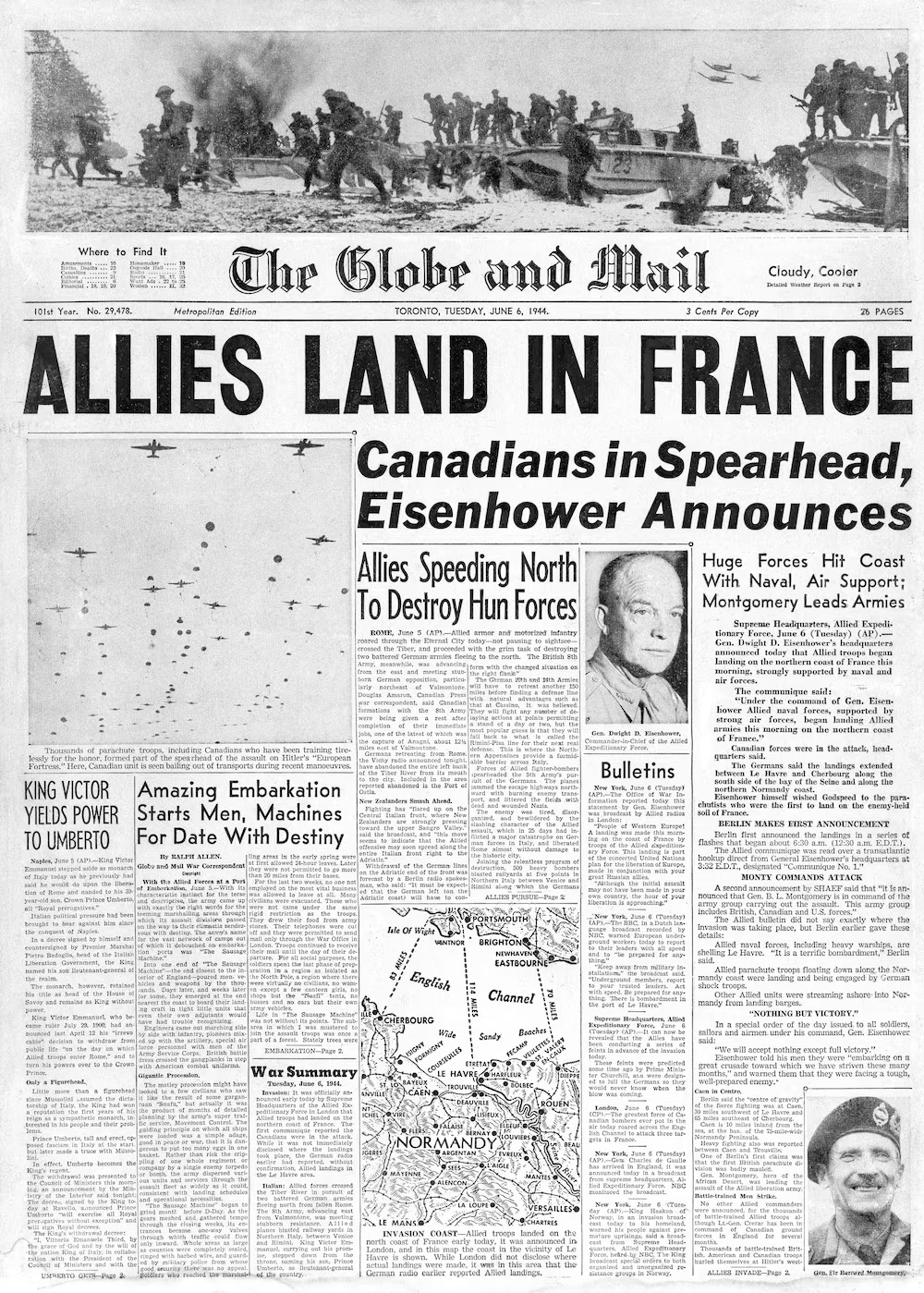
Photo courtesy of the Globe and Mail.

How do you get your mind around it?

The World War II veterans did not talk much about what they had endured. They just wanted to get back to their lives and enjoy the peace. But I also think that they may have had difficulty trying to communicate how massive this all was. The numbers of people, the equipment, the exhaustion, the death, the destruction, the genocidal madness.  For the sake of one’s sanity, it has to move to the personal. This became obvious to me when I realised how difficult it was for my dad to return to England. My mother visited her homeland frequently, but my dad waited 30 years before returning.


Photo courtesy of the Globe and Mail.

No one person could tell it. Better to go home to try to forget.

They had earned the right to either talk about it or not, remember or not.

We children, grandchildren and great-grandchildren don’t have that choice, however. We have an obligation to remember.

We owe them a debt of gratitude that can only be re-paid by protecting and respecting what they won for us – our very selves, our freedoms, our many luxuries.

My dad is long gone now, as are most of the WW II veterans, but we can think about what they did for us.
Istanbul’s Glamorous Palaces

In a city known for its grand mosques, there should be no surprise that it has equally stunning palaces. The Ottoman Empire ousted the Byzantines …

Istanbul’s Glamorous Palaces

I hope you enjoy this interesting and informative post about Istanbul’s palaces from Monkey’s Tale. Please click the link above to read the rest of this great post.