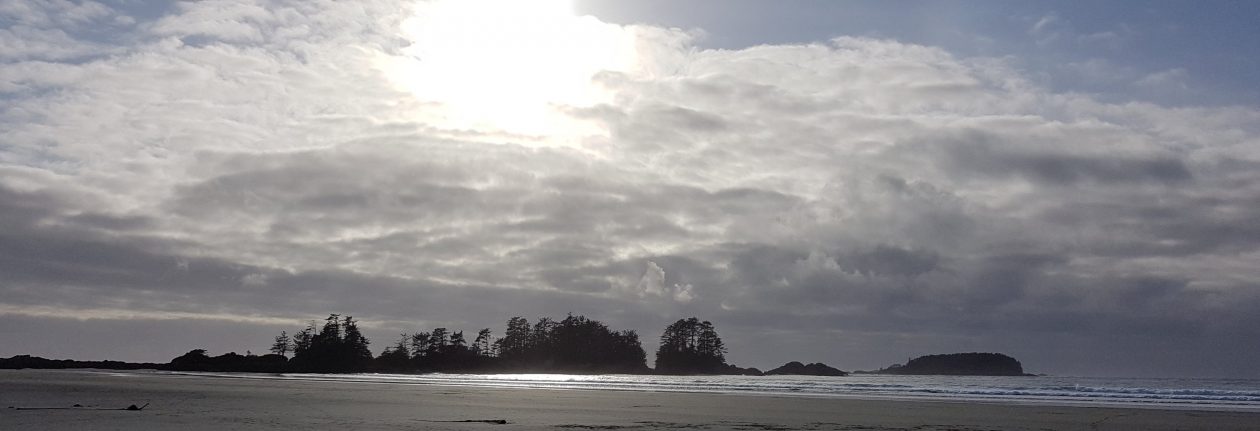

Beautiful garden photos from Jenn at Still Bitchy after 60. Please click the link above to see more of her lovely garden pictures.
Tag Archives: Canada
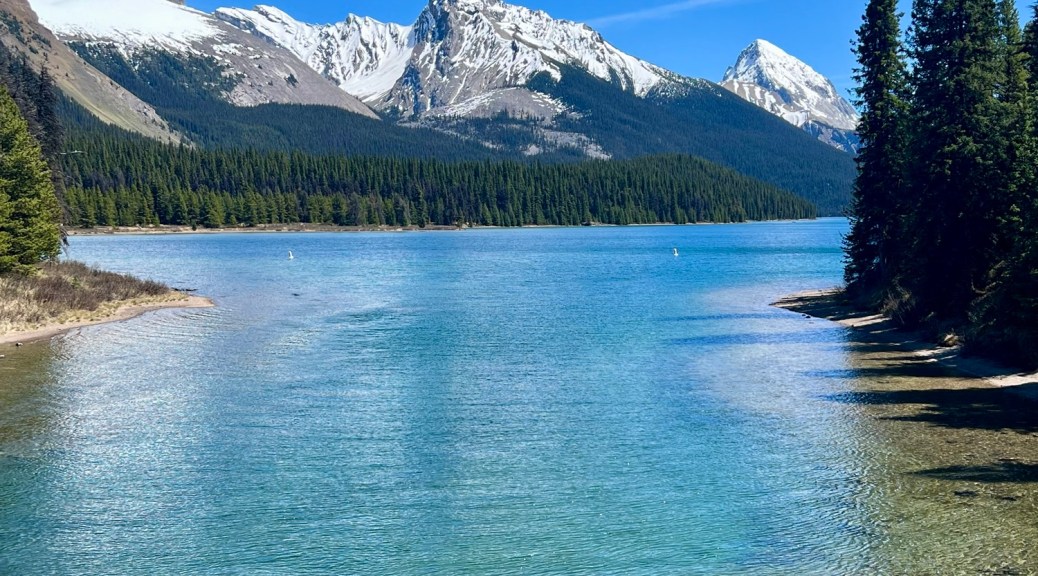
Should I Visit Jasper National Park?
The answer to that question is a resounding yes! Although in the summer of 2024 Jasper National Park suffered a terrible forest fire that resulted in the destruction or serious damage of a third of the townsite and the loss of 325 square kilometres (202 sq miles) of park forest, it is recovering well and appropriately.
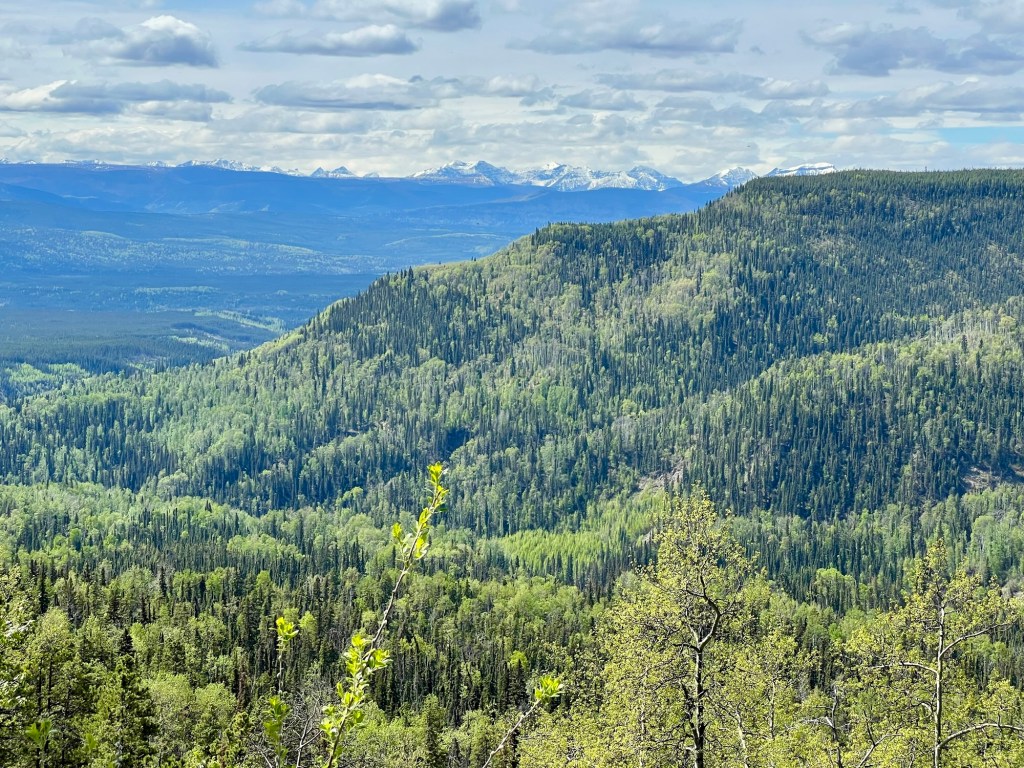
When we recently visited we saw that all heavily damaged buildings or the remains of destroyed buildings, vehicles, and other items have been removed from Jasper townsite and rebuilding and new construction are moving along at an accelerated pace. Other than the lots made vacant by the fire (and that are now being prepped for reconstruction) there is little evidence that a major fire occurred.
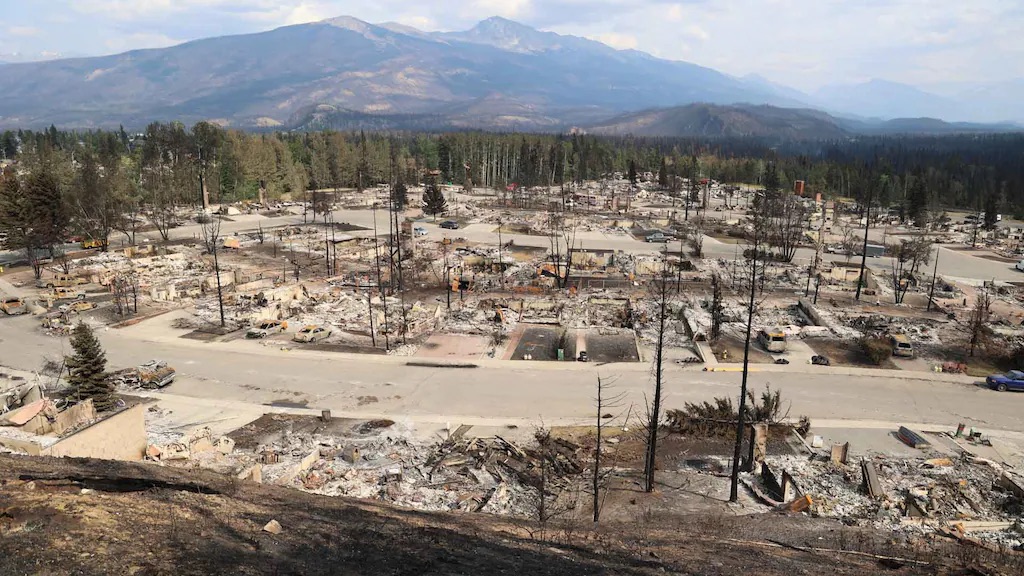
Some parts of the Maligne Lake area of Jasper Park were very significantly damaged with, in some areas, trees completely destroyed right down to the ground.
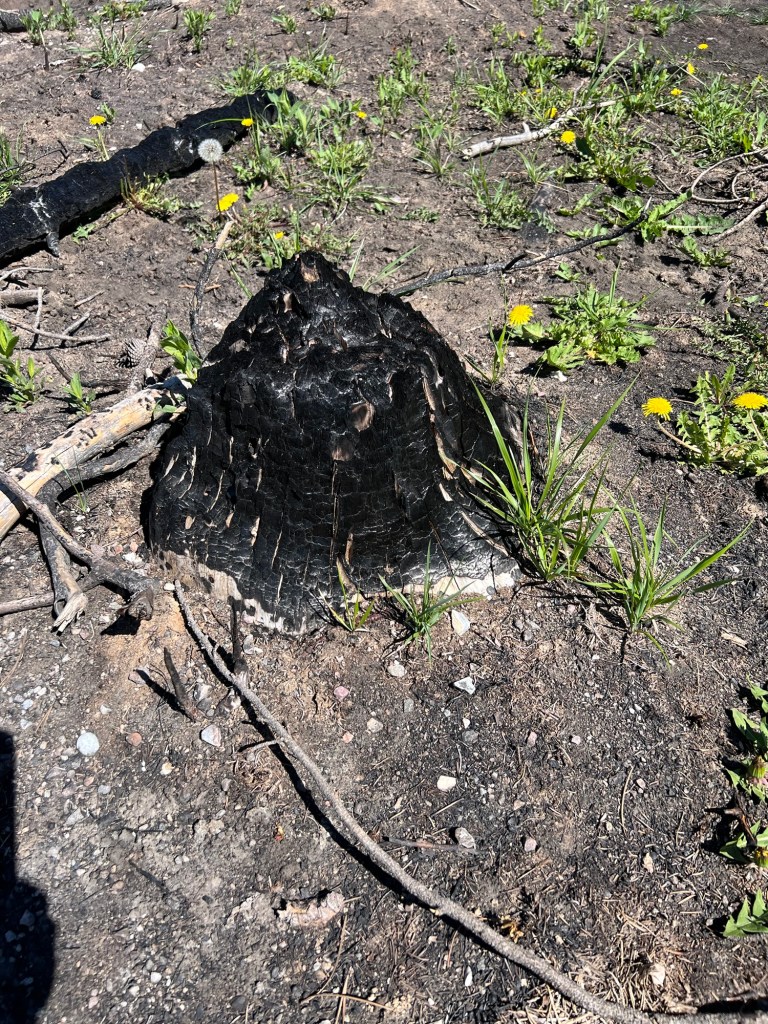
The fire was at times so hot that it generated its own weather system, a swirling tornado of flames, gases and heat. Essentially, many of the trees were cooked until nothing was left.
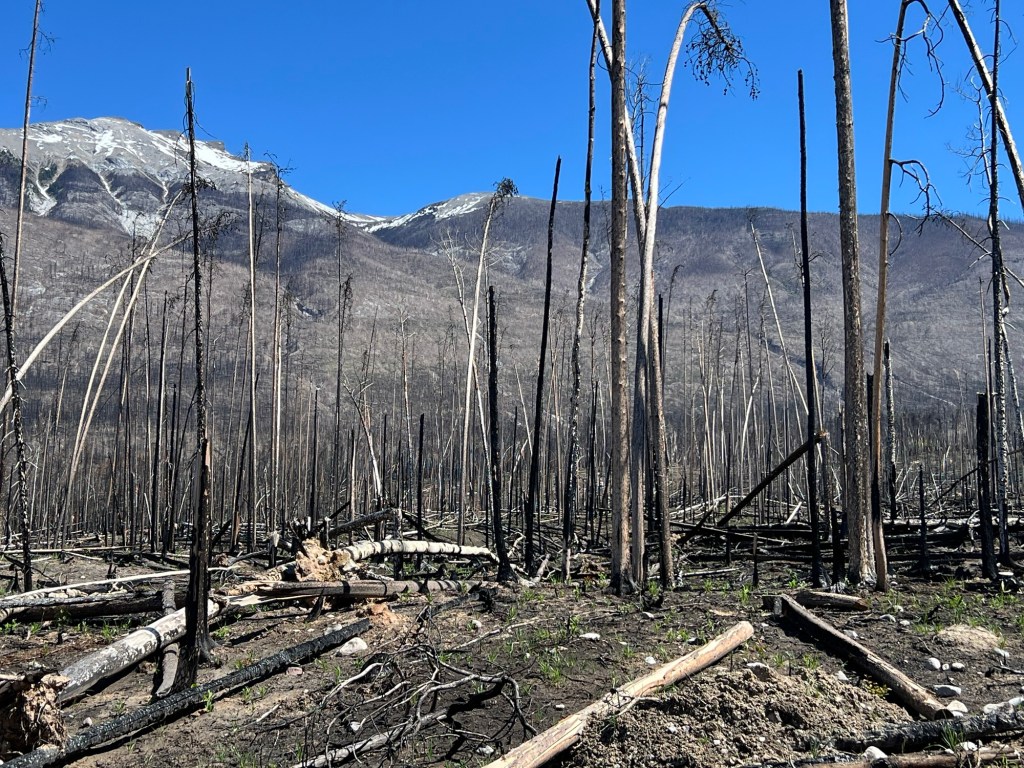
When we visited in late May/early June, a few of the trails remained closed due to fire damage and unsafe conditions. However, the vast majority of the trails, even through the burned areas, are open. Hiking through the burned areas is also an education about the forces of nature: we saw grasses, wildflowers, weeds, and even very tiny trees growing again; the forest will recover.
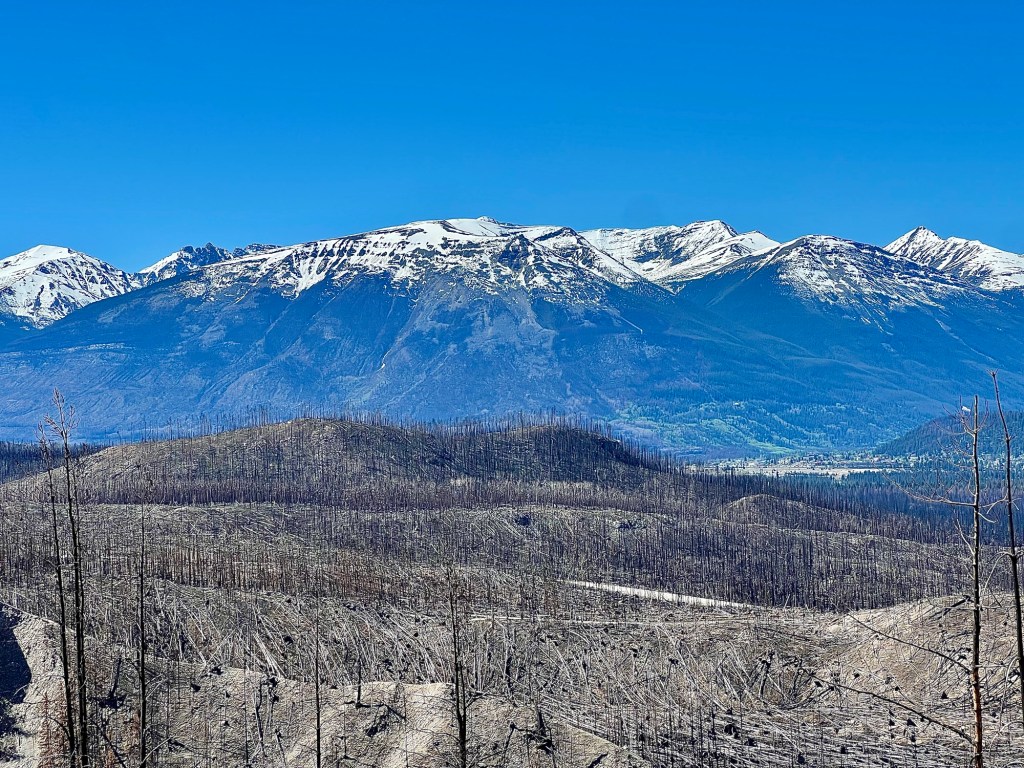
Many people have thought that they shouldn’t visit Jasper this year, that it’s perhaps too soon. But the people of Jasper townsite and the employees of the park, hotels, restaurants, outfitters and all the others who rely on tourism for their livelihood will welcome you. They have worked very hard to prepare the townsite and to reopen the trails, and of course, the vast majority of the national park escaped the fire. 95% of it is as beautiful and iconic as ever.
Here are a few of those iconic views.
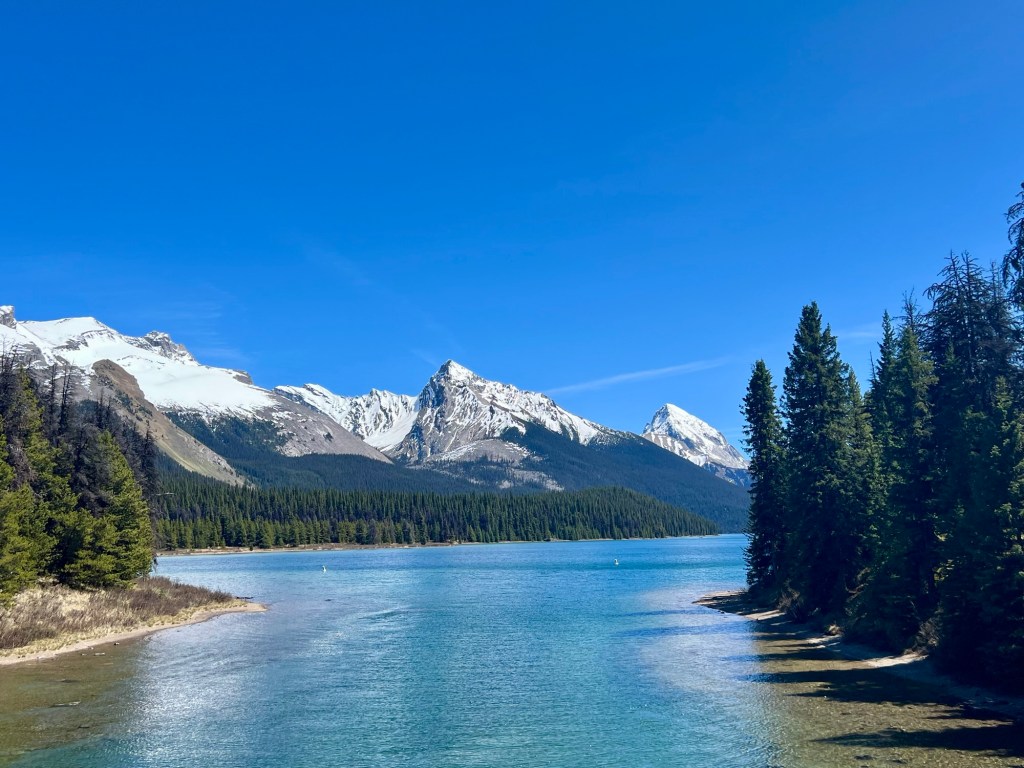
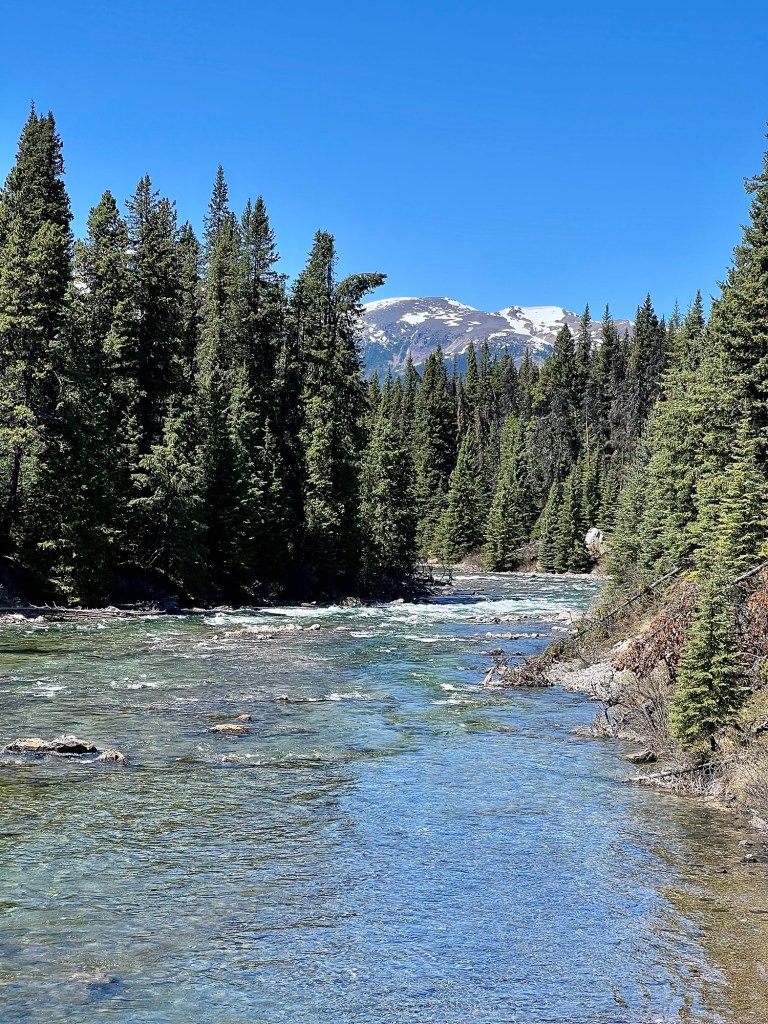
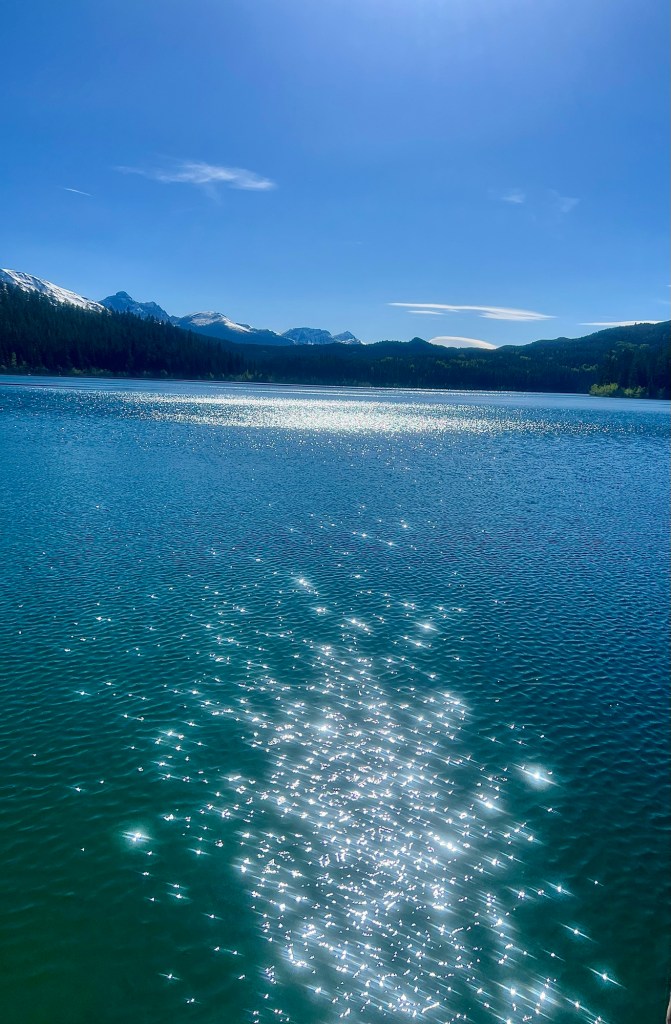
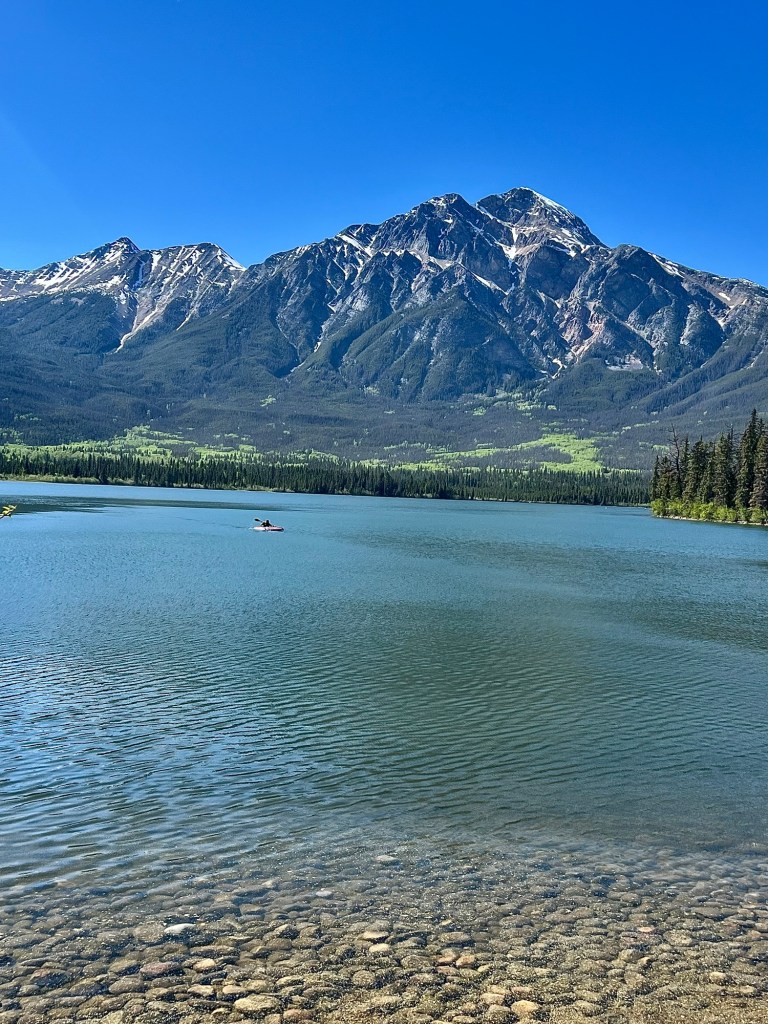
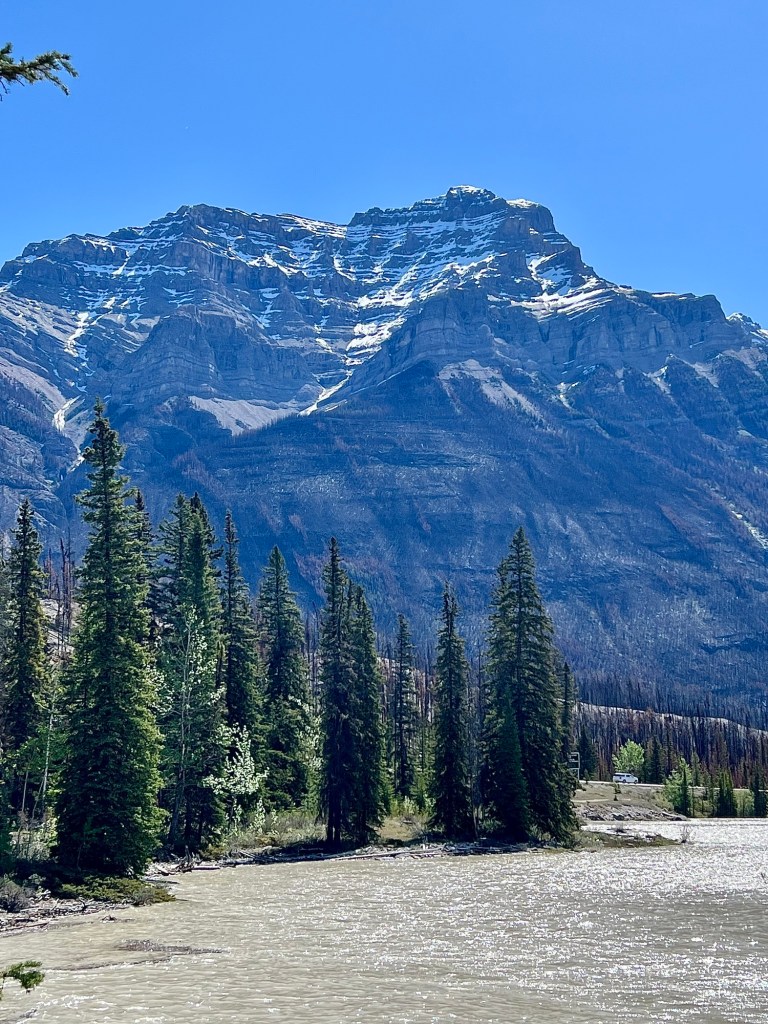
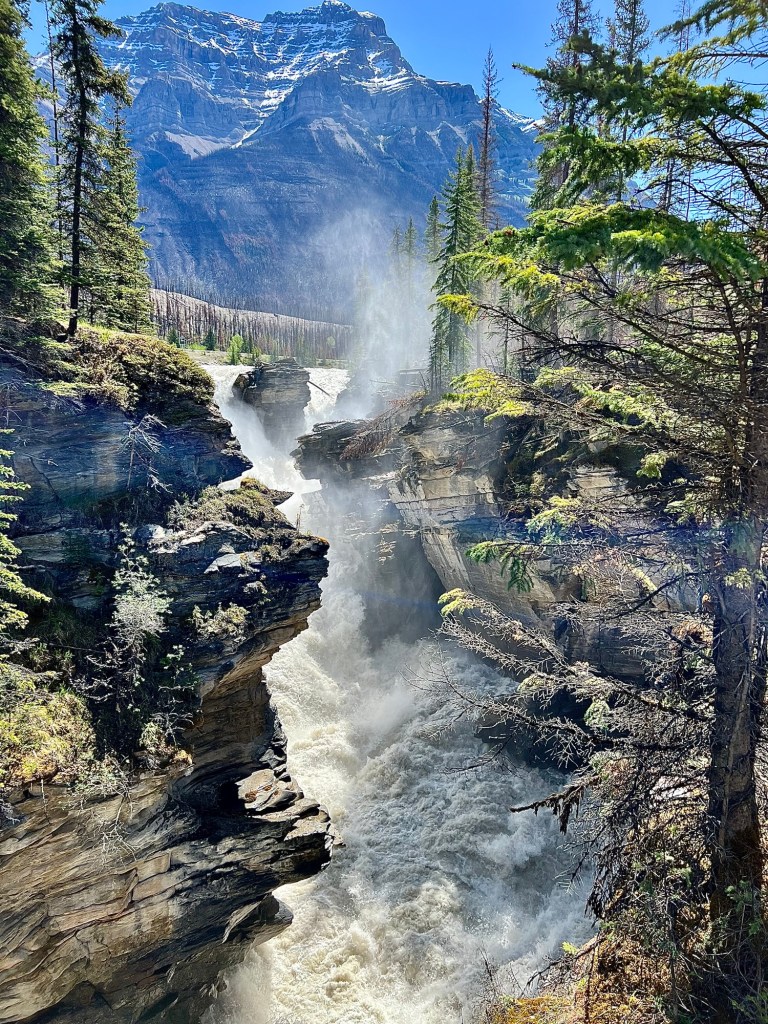
We very much enjoyed our visit and felt that spending our money there was well worth it so yes, if you’re thinking of going, you should.
Happy Thursday.
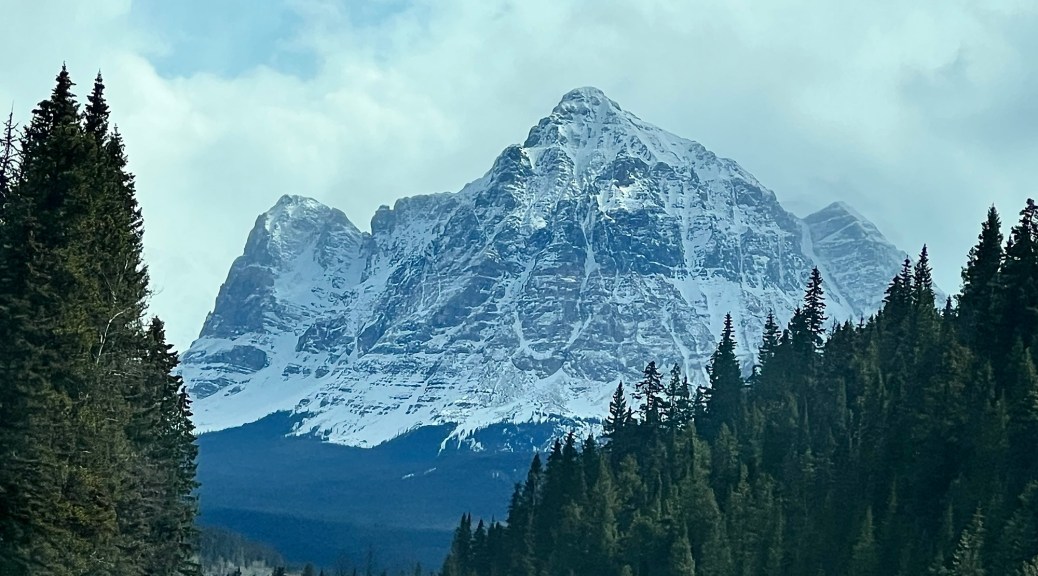
Cassiar Highway
We have finished the 855 km (531 miles) Smithers, B.C. to Watson Lake, Yukon, leg of our trip via the Cassiar Highway (highway 37).
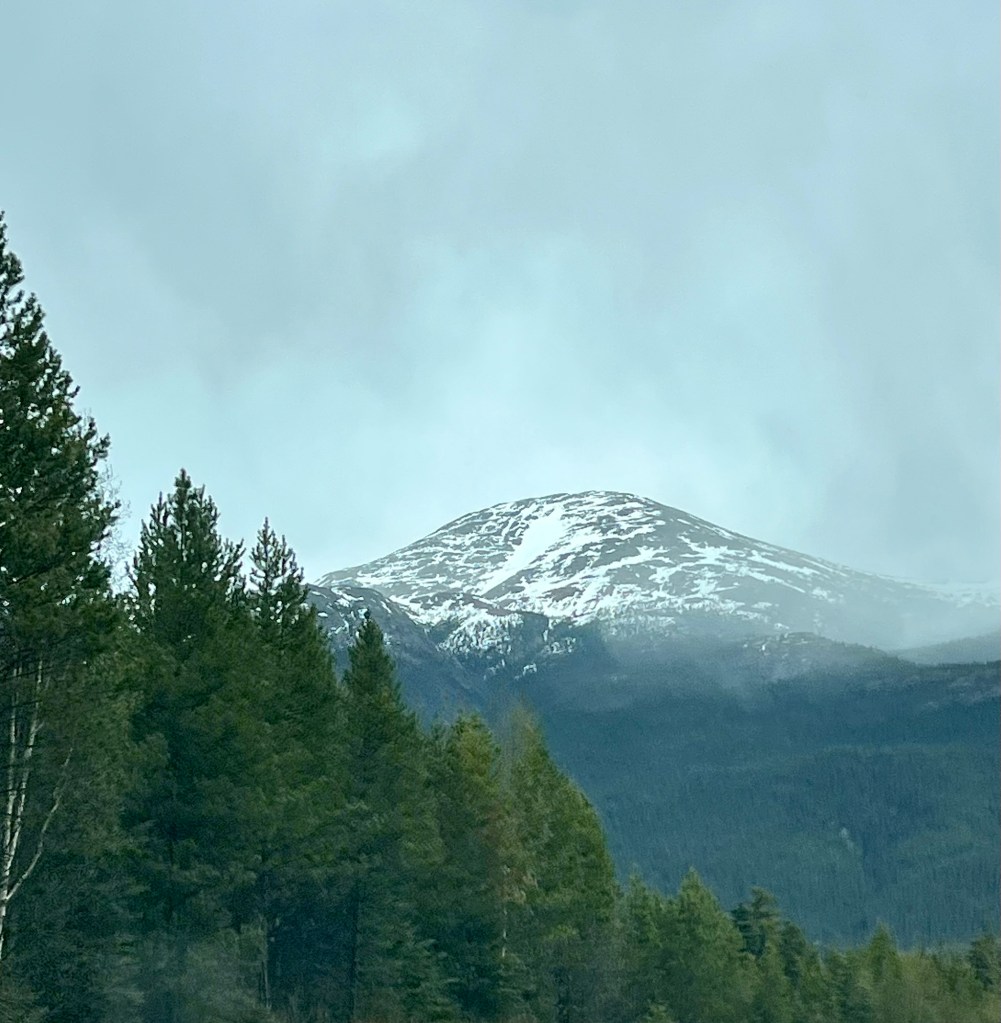
We experienced quite a number of rain showers broken by sunny periods but that didn’t dampen the beauty of this route. It’s one of the most stunning that you will find anywhere. We at first paralleled the Central Mountains but after turning a few more degrees due north, we drove through them for about 600 km. (373 miles).

We didn’t stop to do much hiking or walking through this portion of our trip but there are many opportunities for that and of course, there are lots of places to camp or to stay at a lodge.
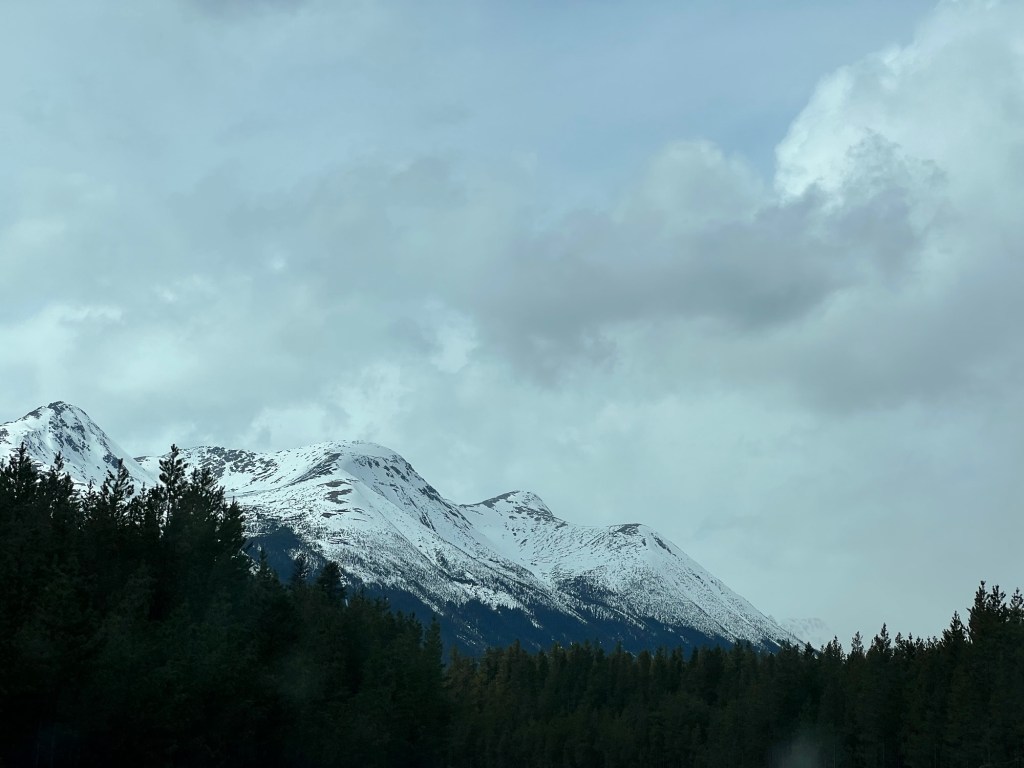
As long as you are aware of and cautious about bears, there are many, many outdoor activities to be enjoyed in this area of the country.
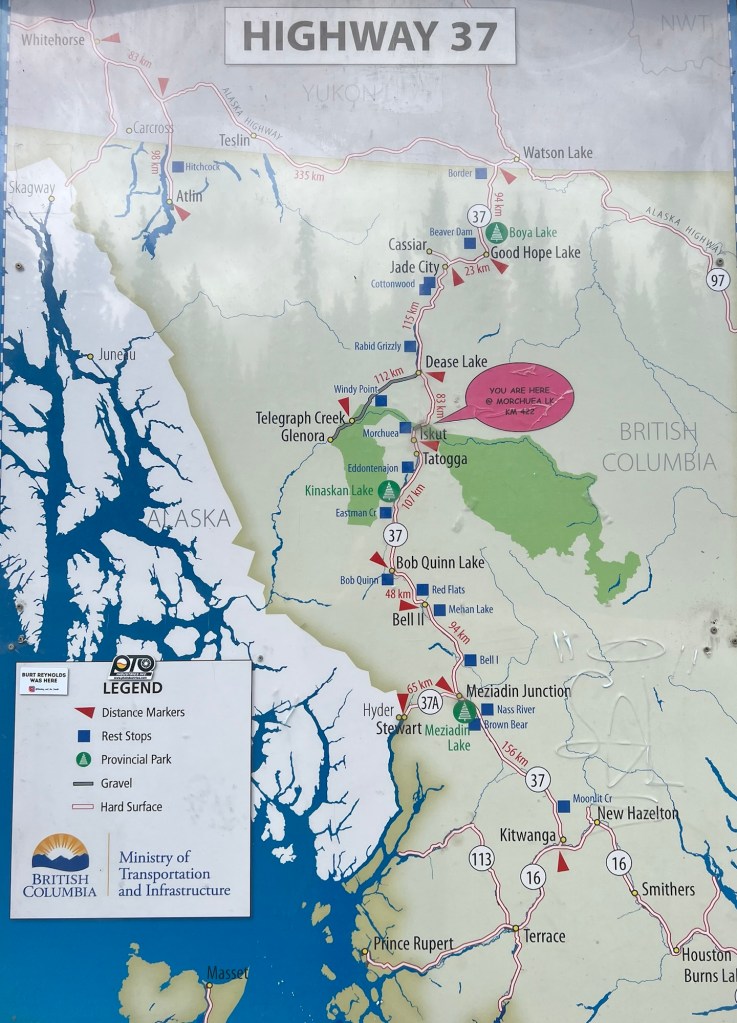
Here’s a rest area sign showing details of the Cassiar.
Happy Saturday.

In Advance

21 April 2025 – Otherwise occupied Friday-Saturday-Sunday, so today is my last chance to vote in the four days of advance polls for our up-coming (28…
In Advance
Penny from Walking Woman reminds us of how great it is to be able to vote. Please click the link above to read the rest of her post.
Vive le Canada. 🇨🇦

Tariff Mindf**kery
Like many others I watched Donald Trump’s so-called “liberation” speech with great interest. Getting through his mind numbing rhetoric and cavalcade of falsehoods was a feat in itself but important to stick through it, nevertheless. Afterward there was of course the usual analysis and reaction, but what absolutely astonished me was the response of the CBC reporter who attended the speech in person. With an ear-to-ear grin, she crowed about how Canada and Mexico had been left off the list of tariffed countries. In other words, we were escaping additional tariffs – this time.

Yikes. Agreed that we dodged a bullet, but we already have the massive tariffs he imposed last month, so it’s essential that we be extremely aware of something that seems to be eluding us here, and that’s the tendency to begin normalising this tariff situation. We absolutely must not; there’s nothing normal about what Trump is doing to us and Mexico and has now forced on many other parts of the world.
There’s a very famous scientific experiment that has repeatedly been proven to be true no matter the species and no matter the time or place. And that’s that if something is introduced very gradually, no matter how awful it is, we will eventually get used to it.
A frog placed in a pot of hot water will immediately jump out, but if you place him in room temperature water and very slowly turn up the heat, he will stay and die.
A much more extreme example is how Hitler gradually reduced the rights of Jews and other identifiable minorities, bit by inexorable bit, until they had lost absolutely everything, including their lives. The tendency of any species to normalise was part of the reason why he was able to get away with this process.

Because of this tendency, we have to be on guard, now more than ever. The will-he-won’t-he, to-ing and fro-ing, maybe-maybe-not, how-bad-will-it-be tariff puppetry has carried on for months now, amping up the fear and worry and creating sleepless nights and high blood pressure all over this country.
And now, all of a sudden, an escape! The tremendous sigh of relief that the tariffs weren’t worse is a prime example of the mindf**kery we have been subject to since last November. But in reality, nothing much has changed. Many people’s jobs, particularly in the auto, aluminum, steel and lumber industries are on the brink. There are 25% tariffs on anything falling outside of CUSMA (in the U.S. it’s known as USMCA). It’s vitally important to remember that the tariffs already being levied are terrible economic hits that will disrupt our economy and potentially devastate many people’s lives.

Was this an attempt at softening us up so that we will be more compliant once a new PM is in place? I believe so, because I don’t think that Trump has at all changed his mind about subsuming us and turning us into a colony to be exploited. We are still where we were.
It’s therefore vital that we keep forging ahead with plans to diversify, to remove interprovincial trade barriers, and above all to separate ourselves from the U.S. The continued boycott of their products, and especially the avoidance of such conglomerates as Amazon (Bezos), X (Musk), Etsy, eBay and others are crucial as we continue to carve our own path. CUSMA is dead, or will be soon. There’s no going back, and the politicians now trying to get our votes need to understand that without fail.
The mindf**king needs to stop.

If You Want Peace …
This opinion piece originally appeared in The Globe and Mail. I believe it’s an incredibly germane article that should be read and considered by all Canadians, especially before we go to the polls on April 28. There are eleven important links throughout the piece; I hope you have the time to go through them.
If You Want Peace, Prepare for War – an Ancient Lesson Canada Must Remember
THOMAS HOMER-DIXON
Special to The Globe and Mail
Published March 21, 2025
Thomas Homer-Dixon is executive director of the Cascade Institute at Royal Roads University and professor emeritus at the University of Waterloo.

Si vis pacem, para bellum.
If you want peace, prepare a for war. This ancient Roman aphorism is starkly relevant to Canada’s situation today, no matter how contrary it seems to our national culture.
U.S. President Donald Trump believes that the treaty that demarcates the Canada-U.S. border is invalid and that the boundary should be moved. Put simply, he wants to take our land. And the risk of that happening is higher if we pretend it doesn’t exist.
There are people who want to believe that Mr. Trump’s annexation talk is just a tactic to get us to make bigger trade concessions. The tariffs aren’t intended to make annexation easier, they say, but are instead part of a strategy to restructure the U.S. economy, reduce the country’s deficit and lower taxes.

Similarly, until a couple of weeks ago, any suggestion that the United States would use military force against Canada was derided as ridiculous. And anyway, commentators argued, Canada can’t be militarily defended, because our population is strung out in a thin line along America’s northern border.
But those perspectives are shifting fast.
Earlier this week, the renowned Yale historian Timothy Snyder (and visiting professor at the University of Toronto) wrote that “war with Canada is what Trump seems to have in mind.” He highlighted Mr. Trump’s “strangely Putinist” fiction that Canada isn’t real – that we’re not economically viable, that most of us want to join the U.S., and that the border is artificial. The assertion that Canada isn’t real is the kind of lie, Dr. Snyder said, that “imperialists tell themselves before beginning doomed wars of aggression.” It’s preparation “not just for trade war but for war itself.”
Other scholars are now seriously addressing the possibility of war. Aisha Ahmad, a Canadian specialist in failed states, recently argued that an invasion of Canada would “trigger a decades-long violent resistance, which would ultimately destroy the United States.” And last week the military historian Elliot Cohen published an assessment of past U.S. attempts to conquer Canada, with a reminder to the Trump administration that they produced “dismal results.”
You’re likely shaking your head by now. This can’t be possible! But Mr. Trump’s modus operandi is to turn craziness into reality. We need to stop shaking our heads at his craziness and see the new reality he’s creating.

Mr. Trump isn’t just “a quasi-fascist,” said Jonathan Leader Maynard of King’s College University in London in a message to me a few days ago, “but an absolute fantasist who treats things as true because he fantasizes about them. Canada as the 51st state, Gaza as a hotel resort, tariffs making the economy boom, splitting Russia off from China – all these ideas are fantasies. But given free rein, he might pursue any or all of them.”
If one observes Mr. Trump carefully, one can see his tell – an unintended hint of his subconscious fantasy about geopolitics. It’s there in the school-room map on a stand beside his desk in the Oval Office, emblazoned with “Gulf of America.” And it’s there again in his comments on March 13, when he talked about the “beautiful formation of Canada and the United States.”
“It would be one of the great states anywhere,” he said. “This would be the most incredible country visually.”
Mr. Trump is playing the board game Risk, and the main players are the U.S., Russia and China. A nation’s power equates to its visible expanse of territory across a cartoon-like world map. All countries are ineluctably locked into a planet-spanning winner-take-all conflict. And to prevail, the United States needs to absorb Canada (and to take over Greenland and the Panama Canal) not just to Make America Great, but to achieve “hemispheric control,” in Steve Bannon’s eager locution.
Mr. Trump’s board-game imaginings may be fantastic, but they’re creating, day by day, a stark, hard reality: The rules-based international order that originated with the 17th century jurist and philosopher Hugo Grotius – and on which the principle of territorial sovereignty is based – is unravelling. Emerging in its place is something akin to Thomas Hobbes’ state of nature – a world governed by brute force and the will of the strongest.

The unravelling process will take time. An assault on Canadian territory won’t happen soon, not this year, nor likely the next. But if we choose to remain weak, here’s how things could go before the end of Mr. Trump’s term, especially if domestic unrest and dysfunction further radicalize his regime, encouraging it to try to distract attention by picking fights with outsiders.
Mr. Trump will steadily escalate his demands on Canada, tying them to progressively broader political and territorial grievances. He’ll also increasingly question our country’s basic legitimacy as a sovereign nation, as he’s already started to do. A flood of lies from his associates, cabinet members, and the MAGA-verse will paint us as, at best, an irresponsible neighbour that’s not protecting America’s northern flank, or, at worst, an outright security threat, because at any moment we can restrict access to the energy, potash, water and other critical resources the United States needs.
Once we’re framed as an enemy, intelligence and military co-operation (for instance, under NORAD) will end. And at that point – with the U.S. military’s senior ranks purged of resistance and Trump loyalists in place – demands for territorial concessions, explicitly backed by the threat of military force, will be a simple next step. They’ll likely start with something small – an adjustment to the border in the Great Lakes, for instance – as a test of our will. But they won’t end there.
What’s the probability of this kind of scenario? Ten per cent, 5 per cent, or 1 per cent? No one can say for sure. But it’s certainly not zero. And given the existential cost to Canada, we’d be stupid not to take it seriously. In game-theory terms, we need to pursue a strategy of “minimax regret” – to minimize, as best we can, the possibility of worst-case outcomes.

This means, first, recognizing that channelling Neville Chamberlain won’t work. Mr. Trump knows what he wants – our territory – and he’s out to get it. There’s no happy middle ground that can be reached through appeasement. He’ll take our concessions and demand more.
And it means, second, that we need to move to a wartime footing in all respects – economically, socially, politically and (perhaps hardest for us to accept) militarily.
The doubters who say Canada can’t be defended are wrong. Canada can indeed prepare effectively to resist U.S. military force. Scandinavian countries have developed elaborate and popular plans for homeland defence against a massive external threat. We can do the same, starting now by standing up a national civil defence corp, a capacity that would also equip us to better deal with all disasters, natural and human caused.
Already, Canadians in every walk of life are discussing privately how they’re prepared to protect our homeland. True, in any violent contest between Canada and the U.S., we can’t possibly win in a conventional sense. But we can ensure in advance that an authoritarian, imperialist U.S. regime knows the cost will be high enough to make it far less likely to attack in the first place.
The stronger we are, the lower the risks. Si vis pacem, para bellum.

Cartoons, Anyone?
Michael de Adder is a Canadian freelance editorial cartoonist who lives in Halifax, Nova Scotia.

His cartoons, while humorous, sarcastic and satirical, also encapsulate in a single drawing the central kernel of any political or social situation.

Over the years he has taken on very controversial topics and everything else in between from local politics to international issues. By turns, he exposes the foolishness, cruelty and stupidity of the central players in the often opportunistically generated predations that they impose on others.

At one point, he was terminated by a media outlet for his anti-Trump cartoons; this particular outlet had connections to U.S. interests that apparently tried to stop the spread of his criticisms.
If you’re interested in more information about him, here’s a link: https://www.deadder.net/home
Reblog: A Real Gem of a Walk

All photos taken on October 18, 2024. We have many fond memories of Emerald Lake near Field B.C. We stayed in Emerald Lake Lodge three times, when …
A Real Gem of a Walk
Beautiful photos of one of our Rocky Mountain treasures, Emerald Lake, courtesy of Allan at Picture This. Please click the link above to see the entire set. Thanks for sharing your pictures of this gorgeous spot with us, Allan.
Goodbye, Mr Trudeau
Yesterday marked Justin Trudeau’s last day as Prime Minister of Canada.

I wasn’t always onboard with him and during the last several years, often found him frustrating and less than helpful as our country’s leader. But over the most recent two months since he announced his resignation, I’ve come to see something in him that I hadn’t particularly noticed before.
And that’s that he does well in a crisis. When he’s backed into a corner, he comes out fighting, he makes good choices and he doesn’t back down. I think that it’s during those times that he has done the best for us.

At other times, particularly in dealing with the more ordinary, mundane work of government – in other words, the times that take most of the time – he always dithered and slithered; he couldn’t seem to focus, couldn’t seem to stay on point. He often seemed to be flummoxed.
Important campaign promises disappeared, ethical questions started appearing more and more frequently, and his responses and answers to these issues were very unsatisfactory, meaningless word salads.
He wound up doing many of the same things for which he had so vociferously criticised his predecessor, Prime Minister Stephen Harper, and his “sunny ways” were displaced by an extremely micromanaged and divisive governing style. Over his nine-year tenure, there was a lot for which he could – and should – be castigated.

Nevertheless, in the last two months he has done a better job for us than he had done for much of his entire tenure. He toiled away for Canada right up to the last moment, working with the premiers and international leaders, dishing it out to Trump and taking it on the chin when necessary. And yesterday he bowed out with grace and aplomb, with his poised and well-spoken sixteen-year-old daughter introducing his farewell speech and talking about how she is going to be happy to have her dad back.
Of course, hindsight is 20/20 and history will have its say as to how well he did, and as it is for most former leaders, I think we will be more able to see – and accept – his strengths and weaknesses.
But now it’s time to send him on his way, with our thanks and good wishes. We hope he finds success in his future endeavours.
Vive le Canada! 🇨🇦
International Women’s Day Tribute
“Until all of us have made it, none of us have made it.”
~ Rosemary Brown, 1930-2003

Rosemary Wedderburn Brown was born in Kingston, Jamaica in 1930. She came to Canada in 1951 to attend McGill University in Montréal.
As a student at McGill, and later as a masters student at the University of British Columbia, she faced pervasive discrimination both because she was a woman and also because she was black.
It was through this adversity that she found her purpose as a leader against racism and sexism. She helped to found the British Columbia Association for the Advancement of Coloured People (BCAACP) in 1956 to help advocate for housing, employment and human rights legislation.
In 1972, she became the first black woman elected to a provincial legislature in Canada, a post she occupied until 1986.
Because of women like Rosemary Brown, both women and men of all backgrounds walk an easier path today.
 In the Net! - Pictures and Stories of Life