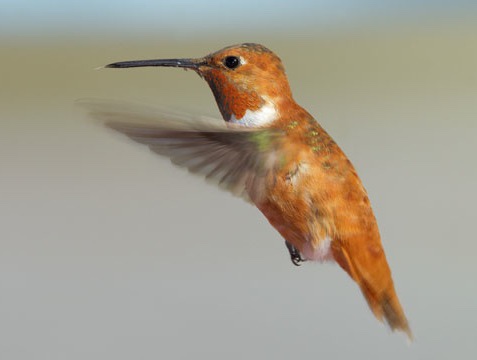
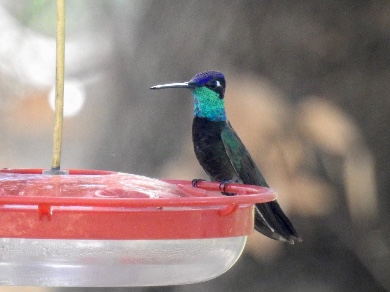
We have had lots of rufous hummingbirds visiting the hanging flowers on our deck.
They are very difficult to capture and moving quickly with the camera is necessary, but sometimes you can get a decent capture.
Unlike the Anna’s hummingbirds that over-winter in British Columbia, the rufous hummingbirds head to Mexico when it gets cooler. It’s amazing that these tiny birds so successfully make the trip, sometimes multiple times according to the band tracking. They are definitely little toughies.
While out for my morning walk I saw this northern flicker busily engaged with his breakfast.
I at first wasn’t sure what he was doing – it looked initially like he was digging a hole – but his attention was completely captured.
He was right next to the sidewalk and eventually flew away because someone came too close.
After he left I could see that he had found an ant colony and was feasting on them and their eggs.
Northern flickers will often eat the bugs that are infesting trees, so they actually help them to stay healthy. They will come to your yard if you put out suet and a water source, and will also proceed to feast on any bugs you have lurking around there.
Northern flickers are protected as their numbers have been in decline, so I was happy to see this little guy.
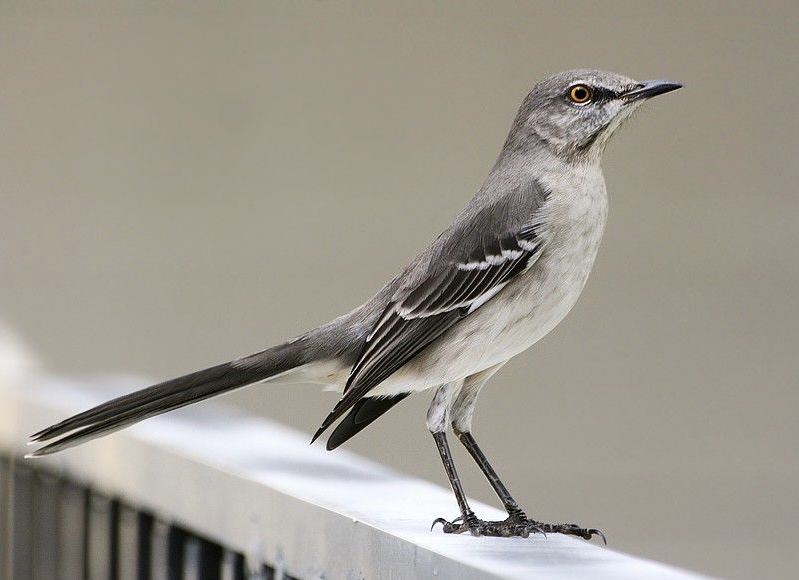
The northern mockingbird is slowly making its way ever further north; in the past its most northerly range was southeastern Canada, but they are becoming very commonly seen in southern British Columbia as well.
They are very plain-looking birds but their vocal range and penchant for mimicry is prodigious. When I lived in Arizona I saw them frequently, so I was delighted to spot one again here in Canada and hear its gorgeous song.
House finches, unlike starlings or sparrows (these birds are considered to be invasive), are native to Canada and can be found all over North America.
Male house finch (I’m reasonably certain that this isn’t a purple finch; despite the name, purple finches are red).
The red colouring comes from the foods they eat: the more carotenoids they ingest from fruit, flowers and seeds, the redder they will become. That’s why there’s so much variation in colour and they get mixed up with other types of red coloured finches such as redpolls and purple finches. Personally, I always think that they look like someone spilled raspberry juice on them!
Finches love peanut butter and nyjer (thistle) seed, and if you also have a water source in your yard, you will attract many of them, sometimes 20 or 30 at a time. They’re busy, non-aggressive little birds who love to chat non-stop with each other and are beautiful to watch.
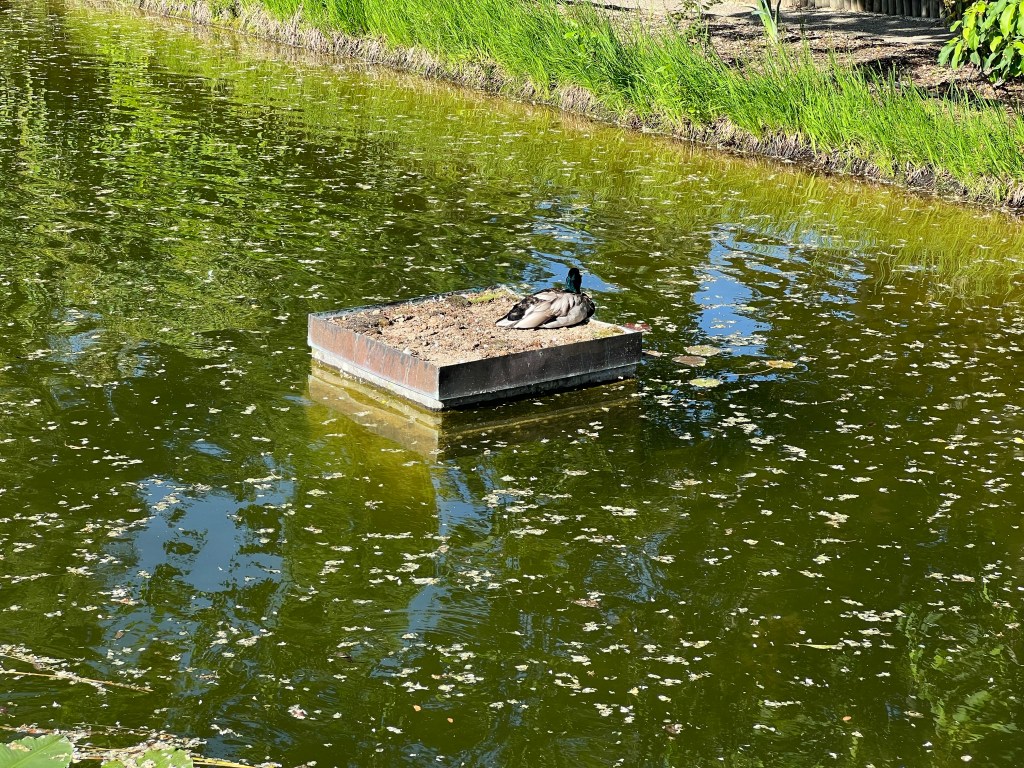
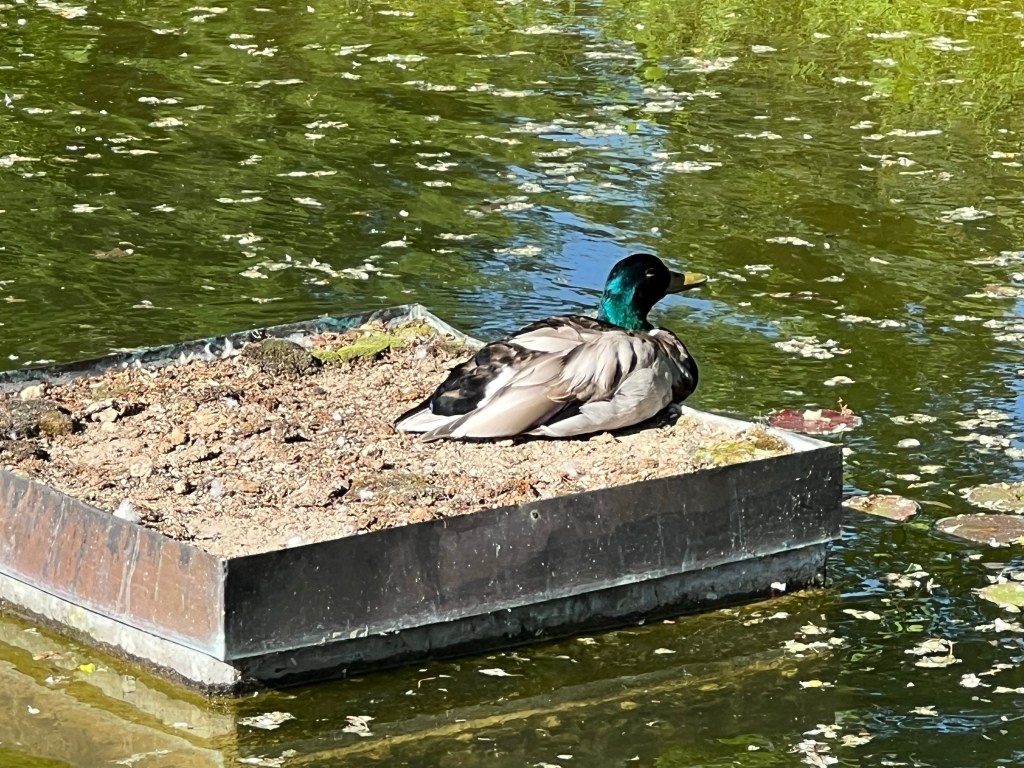
While visiting our nearby Japanese Garden a couple of days ago, I saw a male duck sitting very quietly on one of the platforms set into the garden pond for the placement of a sculpture or plants.
When I got closer, I could see that there was a depression in the platform where the dirt had been pushed away and I realised that daddy duck was incubating his offspring.
Ducks form seasonal pair bonds that last until the males have to leave to find a protected spot to do their molting, usually after the young ones hatch.
The ducks have been in a bit of upheaval because their favourite little creek has been running high (a situation that’s improving for them), but this duck seems to have settled on this spot for his family.








 In the Net! - Pictures and Stories of Life