I found these rain-wet Icelandic azaleas growing in a garden in Reykjavik. I wasn’t expecting to see azaleas there, but in another pleasant Icelandic surprise, there they were!


I hope your Friday is in the pink!
I found these rain-wet Icelandic azaleas growing in a garden in Reykjavik. I wasn’t expecting to see azaleas there, but in another pleasant Icelandic surprise, there they were!
I hope your Friday is in the pink!
This post was first published in 2013; here it is again, 11 years later, in honour of the 80th anniversary of D-Day.

Canadian military during World War II D-Day Landings on Juno Beach (Photo credit: Globe and Mail).
The 69th anniversary of D-Day was on June 6th, last Thursday. Like so many, many others, my dad was one of those involved. He wound up going all the way to Hamburg, Germany, before “his war” was over and he was permanently sent back to England to my anxious mother, herself a member of the British army.
World War II and my parents’ participation in it shaped their lives; they and their cohort were subsequently referred to as the “Greatest Generation.”
How could it not shape their lives?
It has shaped ours, too; it’s just that we don’t register it much or perhaps give it as much prominence as it should probably have.
We lap up the sacrifice of our parents, grandparents and great-grandparents without understanding where it came from or even being aware that that’s what we are doing.
As my dad became older he often reminisced about his and my mother’s lives during the war. He talked about the time that they raced into an underground station in London seconds ahead of a bomb that tumbled down the steps behind them, following them.
They made it to relative safety before the bomb exploded; others did not.
My dad was also evacuated from Dunkirk.
The Dunkirk evacuation, the D-Day Landings and the Normandie invasion were, however, not something that my dad discussed until he was in his seventies. For him, outrunning a bomb was a story he could tell, but Normandie and Dunkirk? And later on, a concentration camp: the scope was too big; its effects were too broad. Compared to that, his personal experiences of it were tiny.
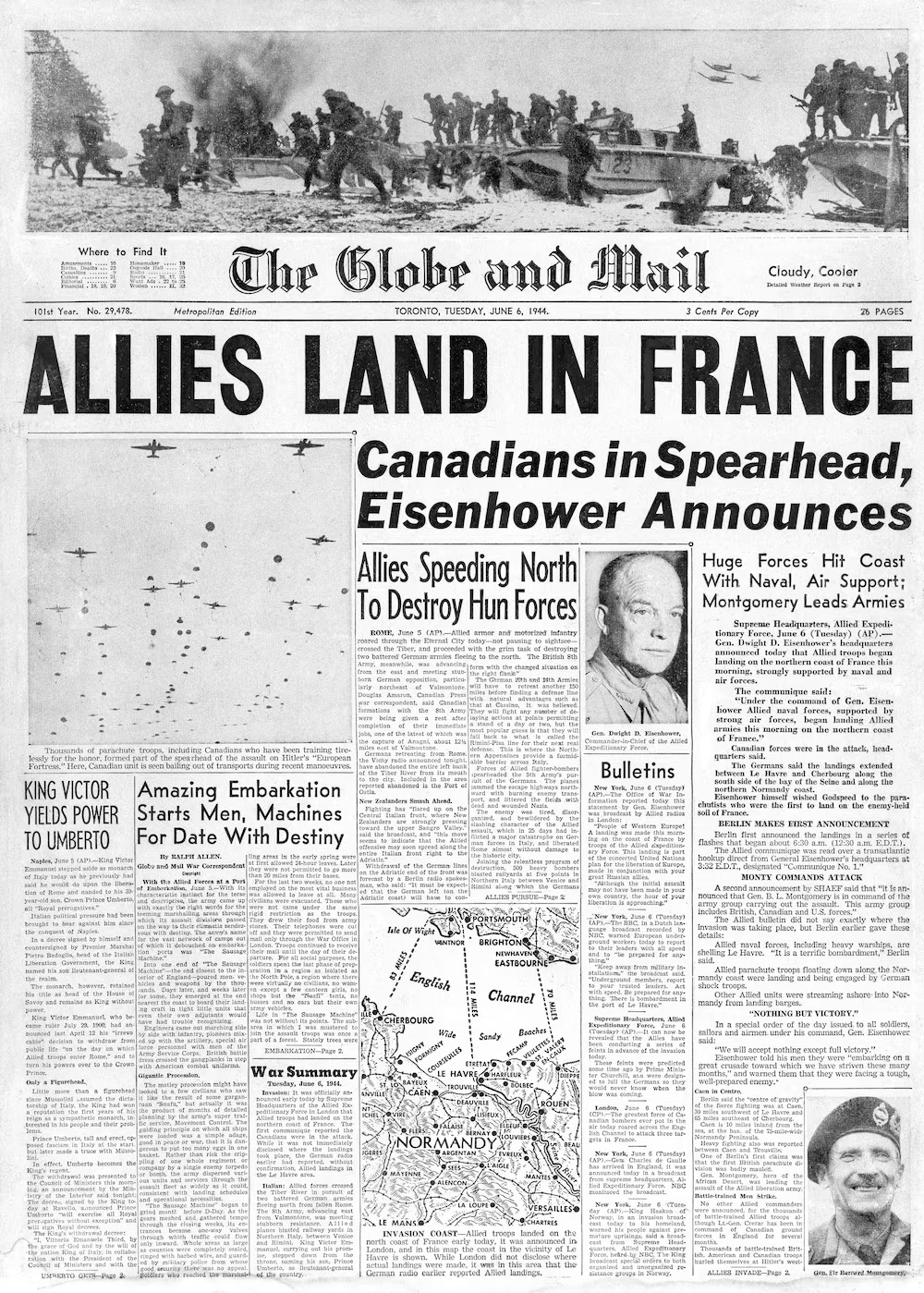
Photo courtesy of the Globe and Mail.
How do you get your mind around it?
The World War II veterans did not talk much about what they had endured. They just wanted to get back to their lives and enjoy the peace. But I also think that they may have had difficulty trying to communicate how massive this all was. The numbers of people, the equipment, the exhaustion, the death, the destruction, the genocidal madness. For the sake of one’s sanity, it has to move to the personal. This became obvious to me when I realised how difficult it was for my dad to return to England. My mother visited her homeland frequently, but my dad waited 30 years before returning.

Photo courtesy of the Globe and Mail.
No one person could tell it. Better to go home to try to forget.
They had earned the right to either talk about it or not, remember or not.
We children, grandchildren and great-grandchildren don’t have that choice, however. We have an obligation to remember.
We owe them a debt of gratitude that can only be re-paid by protecting and respecting what they won for us – our very selves, our freedoms, our many luxuries.
My dad is long gone now, as are most of the WW II veterans, but we can think about what they did for us.
As I have already indicated, Iceland has amazing diversity in its geography, but it is also diverse in many other ways, too.

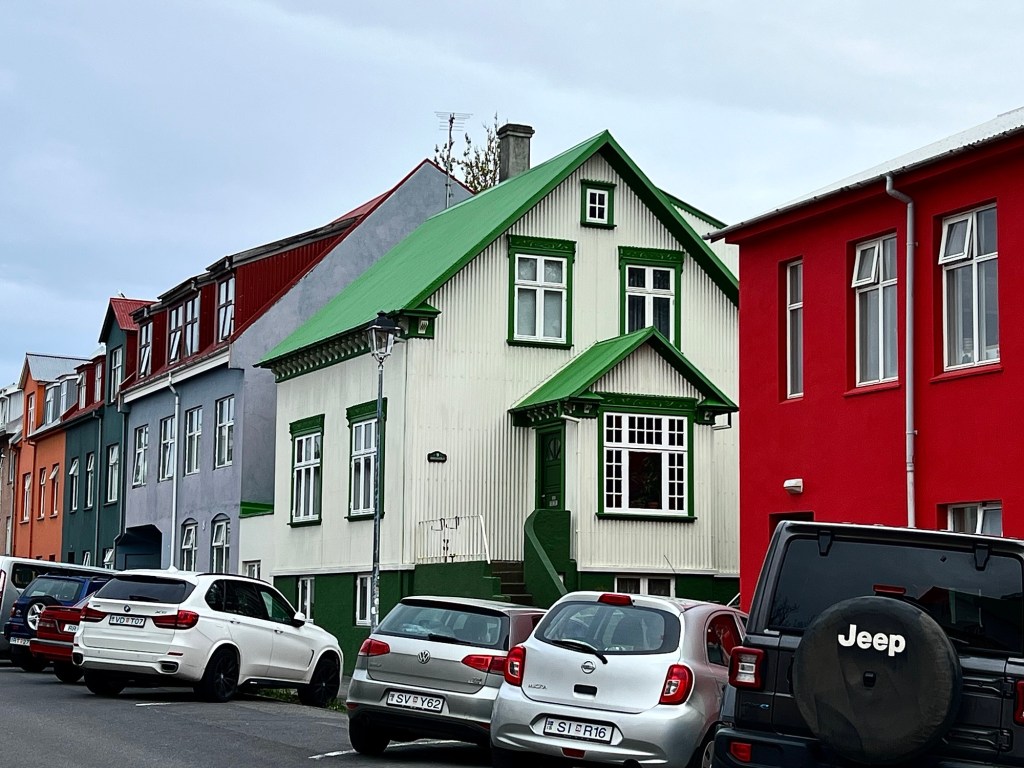

Happy Wednesday.
12:26:

12:35:

12:40:

12:45:

12:50:

12:55:

A world of difference in 31 minutes – that’s the drama and the staggering beauty of Iceland.
Our last day along the southern Icelandic coast began with heavy mist …

… but the sun insisted on pushing through …

… to reveal beautiful blue fjords …

… and 18C (64F). Stunning.

This continuing series of posts depicts our beautiful world, encouraging viewers to share them and help save our unique home from human carelessness …
#ScenicSaturday 1st June 2024:
A stunning moon rising photo from Stuart Aken. Please click the link above to see more of his beautiful photography.
We stopped to brave the cold, rain and extremely windy conditions of Dyrhólaey bird sanctuary and viewpoint on Iceland’s south coast. This sanctuary is on a high cliff overlooking the beaches far below.

This is the North Atlantic ocean and there is nothing between Iceland and the Horn of Africa – more precisely, the Horn’s interference is minor, so there’s not much between Iceland and Antarctica – stopping that wind, so it really gets up to incredible speeds.
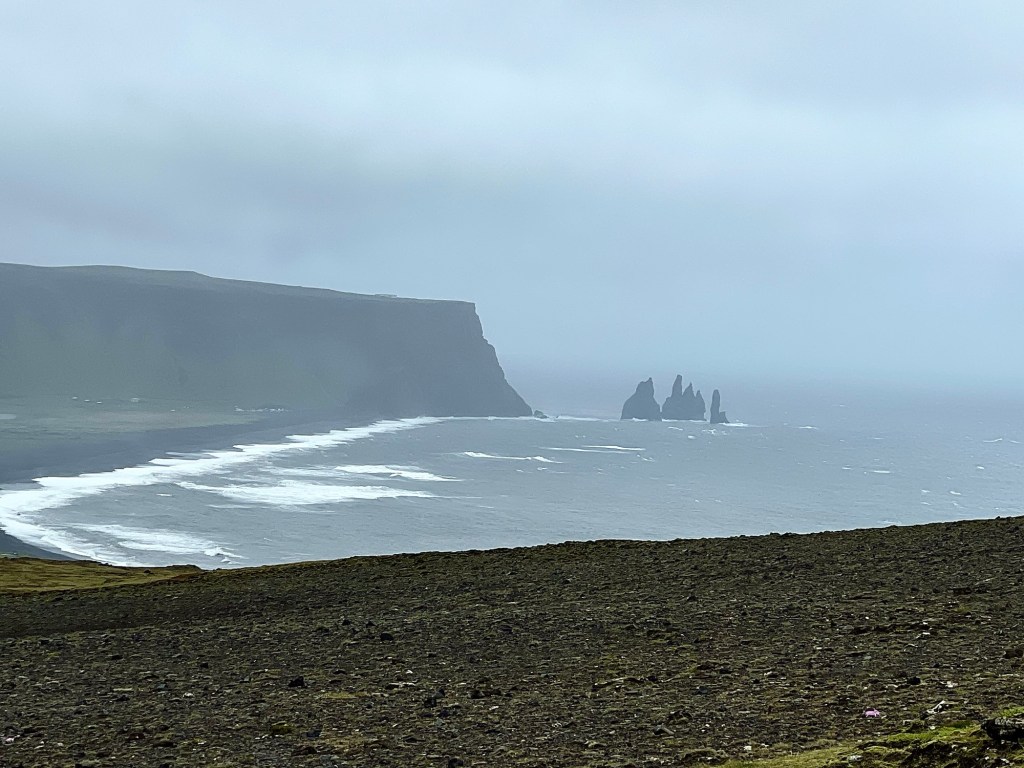
M and I had a hard time keeping our feet, as did others; the wind literally almost sent me flying since it was about 65 kph (40 mph). There were few birds about; most were sheltering in the cliff crevices.

The beach is comprised of black volcanic sand, and we would have loved to take a walk along the trail to the beach, but the wind was just too strong. We opted to get back in the car – literally without breaking the door hinges – to admire the view in dry comfort as we ate our lunch. But what an incredibly picturesque view, even if the weather was terrible!
… is a sight to behold.

Thundering down …

… in its enormous strength…

… not to be trifled with …
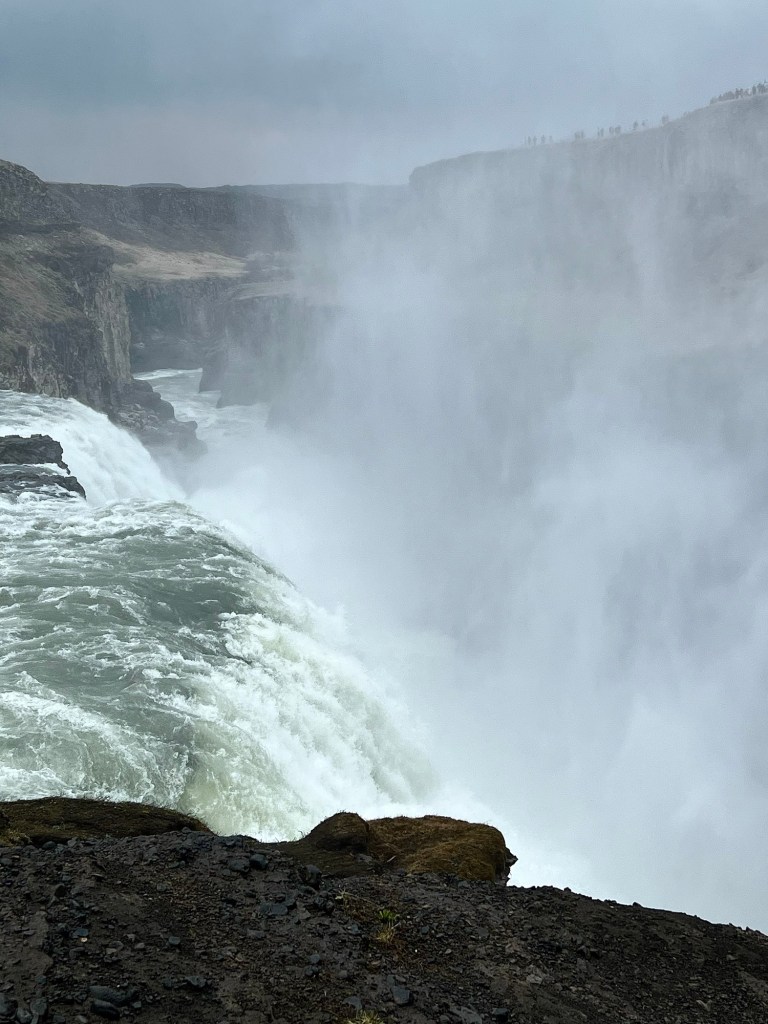
… as it forces its way …
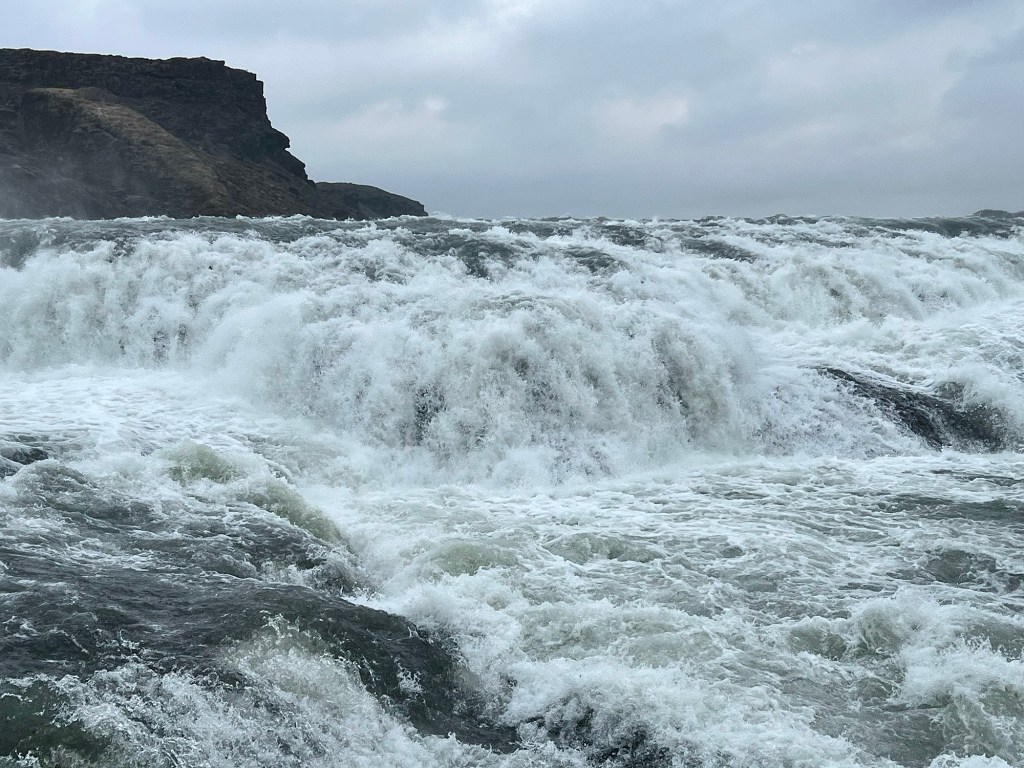
… from glacier to sea …

… relentless and all-consuming in its mission.
Iceland is traditionally described as a place of fire and ice. And that’s definitely true, but there are so many other stunning variations.

We visited Thingvillir National Park to find forests, barren lands, farms, lakes, geysers, and waterfalls.

Stark, foreboding, bucolic, serene, pretty – all these descriptors apply in breathtakingly beautiful diversity.

The barren lands will suddenly open into a healthy forest growing in the lee of an ancient volcanic crater …

… while farms thrive …

… among the beautiful lakes …
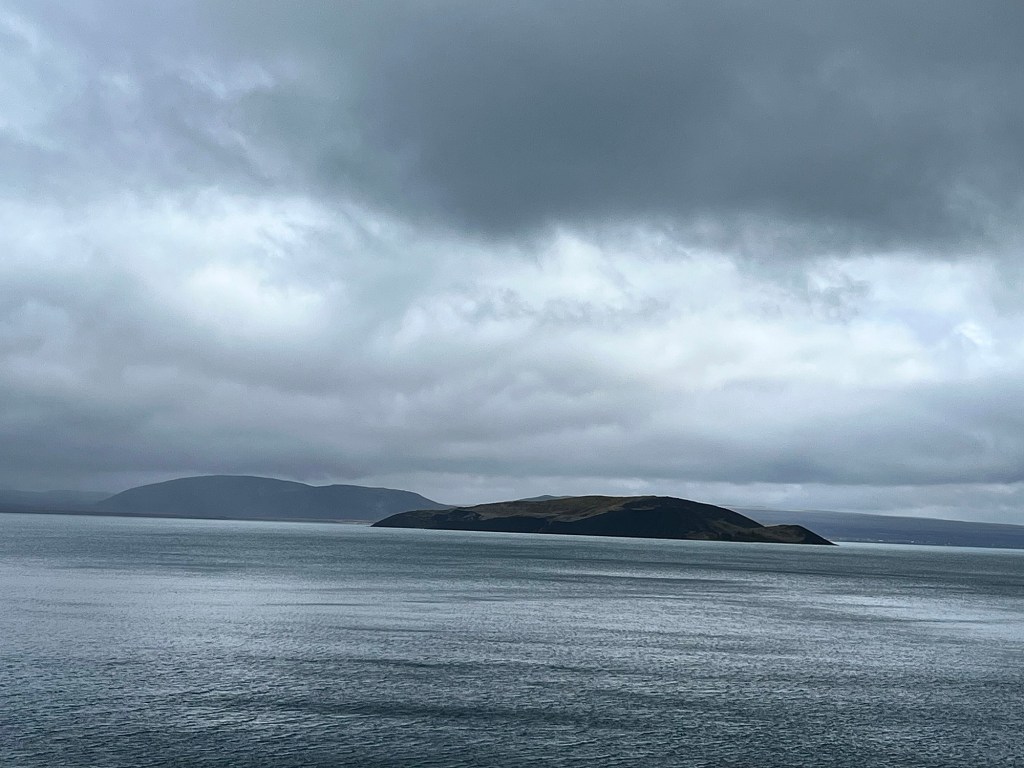
… and hot springs.

More pictures are coming.
Greetings from the land of beautiful diversity.
We arrived at Keflavík airport in Iceland at 8:00 a.m. local (2 a.m. for us) and although very tired did our best to push through it. We decided to do a much-needed walk through Reykjavik to stretch our legs and also so that I could reaquaint myself after a number of years since my last visit. This is M’s first visit and we are very much enjoying it together.

It was overcast with a misty rain but not an unpleasant day. We enjoyed walking around one of the ponds in a nearby park and viewing the colourfully-roofed houses on the opposite shore.

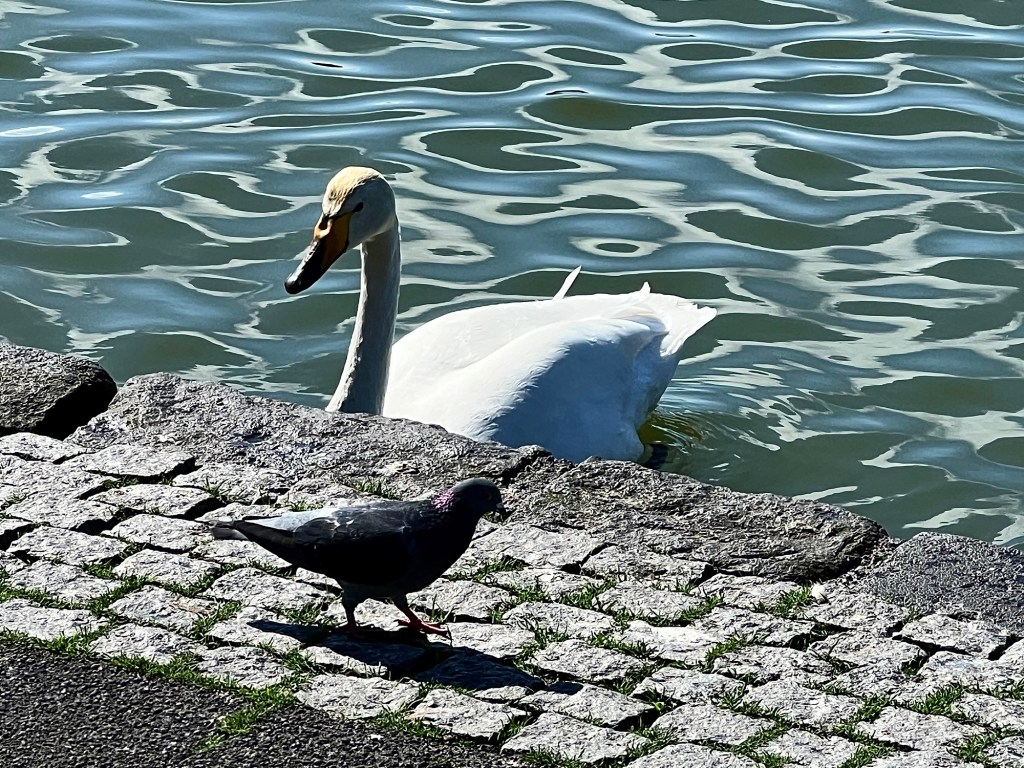
This is a grey lag goose. Quite different from our ubiquitous Canada geese at home, but the behaviour was quite similar.

There were lots of marsh marigolds in bloom; so pretty and bright.

As with many port cities, Reykjavik is built on a hilly area next to the sea. The walking requires lots of up-and-downhill; we felt it was very good for us after our flight. Once we finished a light lunch of an excellent seafood soup, we headed back to our hotel for some much-needed sleep.
 In the Net! - Pictures and Stories of Life