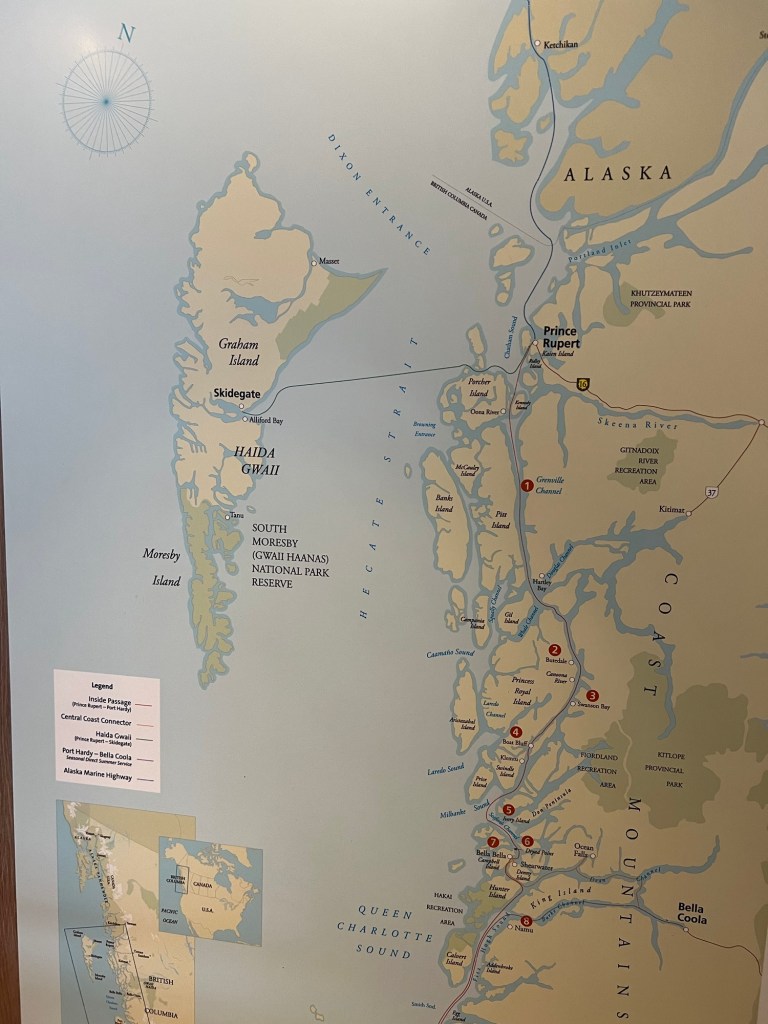
To return home from our visit to Haida Gwaii, we decided to take the 15 hour ferry trip through the Inside Passage from Prince Rupert to Port Stanley.
Our route is marked by red-circled numbers.
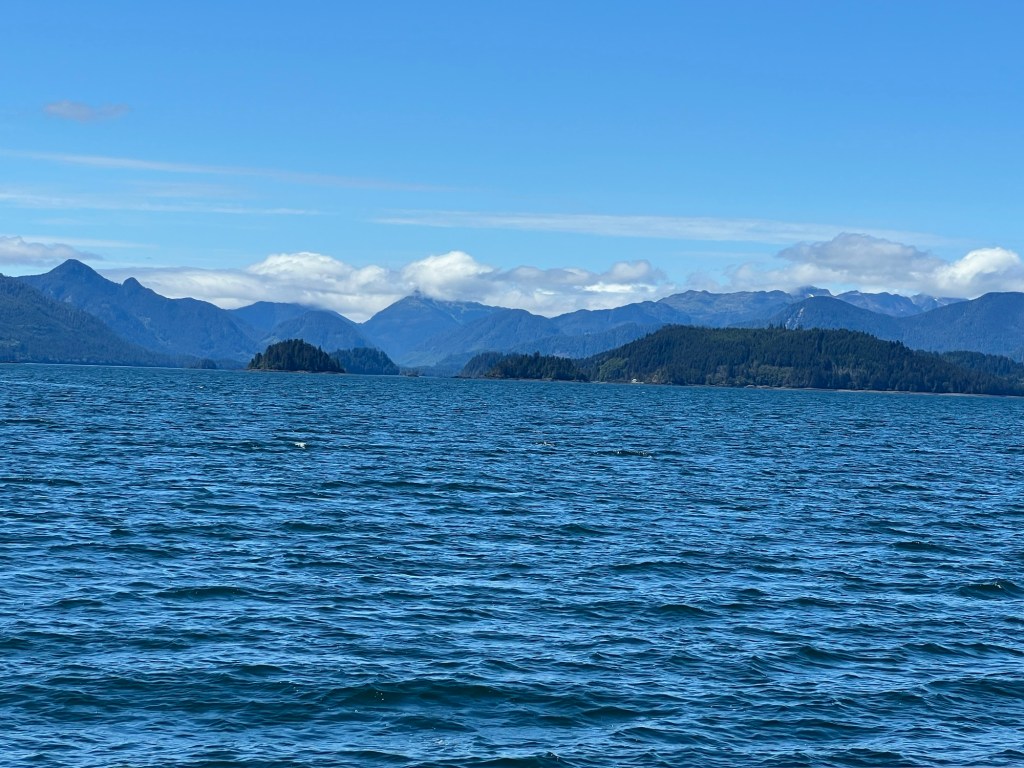
The passage is sparsely inhabited and quite narrow in places so we easily saw lots of bald eagles, hawks, a couple of bears, deer, and several dolphins. I was more interested in watching rather than taking pictures so the few that I did take weren’t great. The scenery was gorgeous, however, so I have lots of those photos!
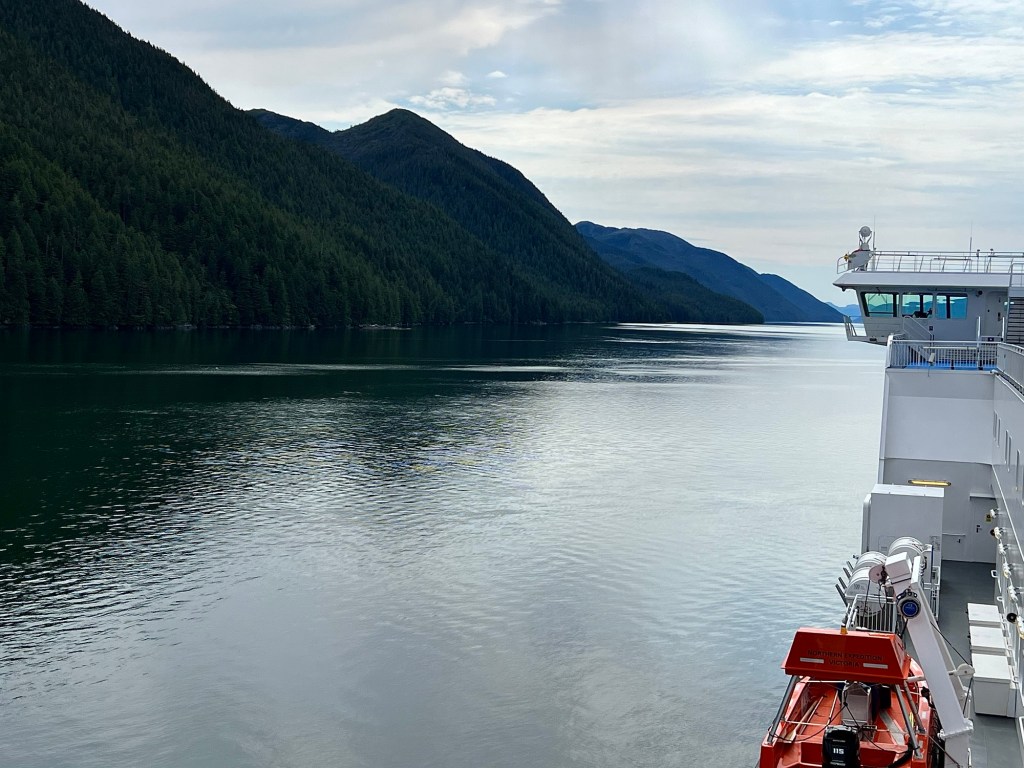
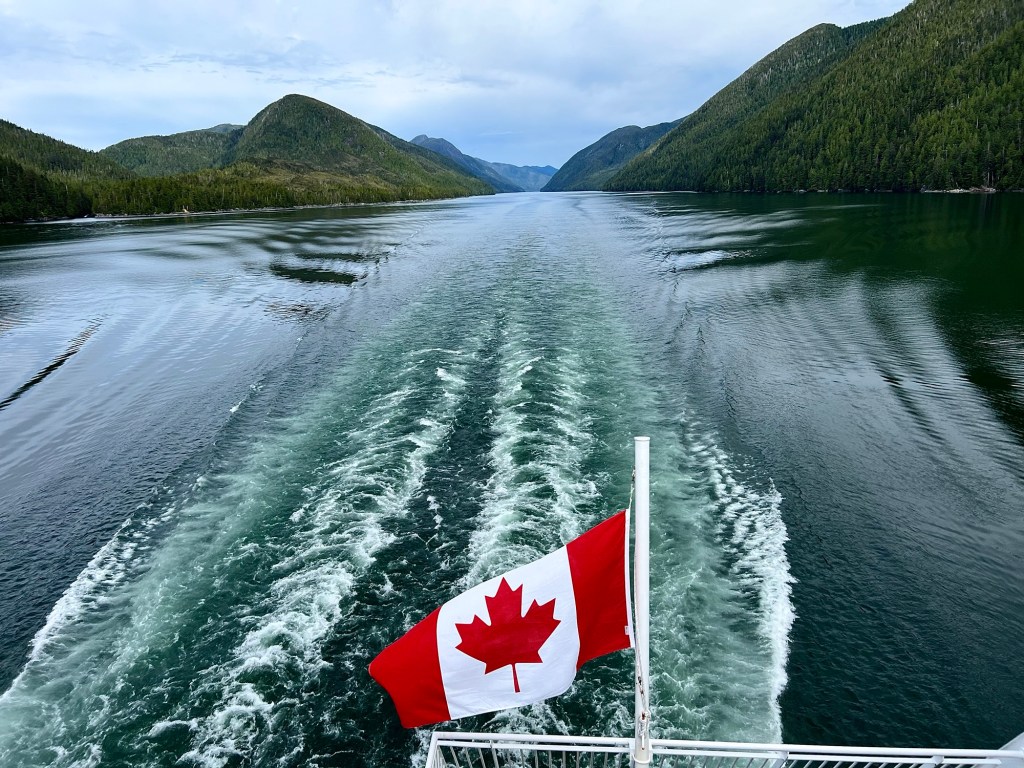
Our seats at the front afforded fantastic views, although I have to admit that the ship movement provided a nice nap! Our ship – the Northern Expedition The water was the most amazing flat calm. It was a wonderful ride. I stood outside for long periods just enjoying these spectacular views. This view also shows the wheelhouse on the right. The Northern Expedition’s stern.
On this trip we took two round-trip ferries and then there was the 15 hour trip from Prince Rupert to Port Hardy (all with B.C. Ferries). We found all the vessels to be clean, comfortable and in good condition. On the other hand, the onboard meals offered were dry, overcooked, overpriced and ran heavily to hamburgers and other fast food, so for our 15 hour trip, we brought along a cooler and had our own snacks and sandwiches, something that seemed to be commonly done. Overall though, we found that B.C. Ferries were really quite good.
Haida Gwaii is an archipelago of 150 islands, but it’s mainly comprised of two larger islands: Graham Island and Moresby Island.
Graham is the biggest and most populated of the two while Moresby is home to a small population, the airport with scheduled service and also to the Gwaii Haanas [“Islands of Beauty”] National Park Reserve and Haida Heritage Site, a federally protected area that shows evidence of Haida habitation from 13,000 years ago.
A 20 minute ferry ride connects Graham and Moresby Islands and is another chance to see more of Haida Gwaii’s breathtakingly beautiful scenery.
Earlier this year, the British Columbia government, through the Haida Gwaii Reconciliation Act, returned sovereignty of the islands to the Haida First Nation, the first time since 1787 that the Council of the Haida Nation has been functioning officially.
Because of its ecological diversity, Haida Gwaii is said to be the “Galapagos of the North.” It is home to a unique subspecies of bear as well as to the Haida ermine, animals that aren’t found anywhere else.
In the last two centuries, Haida Gwaii has had a very turbulent history as it contended with colonialism, newly introduced diseases, exploitation and racism, to name a few of the worst issues. The Haida Gwaii Reconciliation Act goes a long way to addressing many of these historical wrongs.
As I mentioned in that post, we were in for a bit of a surprise. We left Húsavík and while on our way to Akureyri thought that the weather was improving.
We had a booking for whale watching the next day, but during the night, the predicted storm started giving us quite a shellacking.
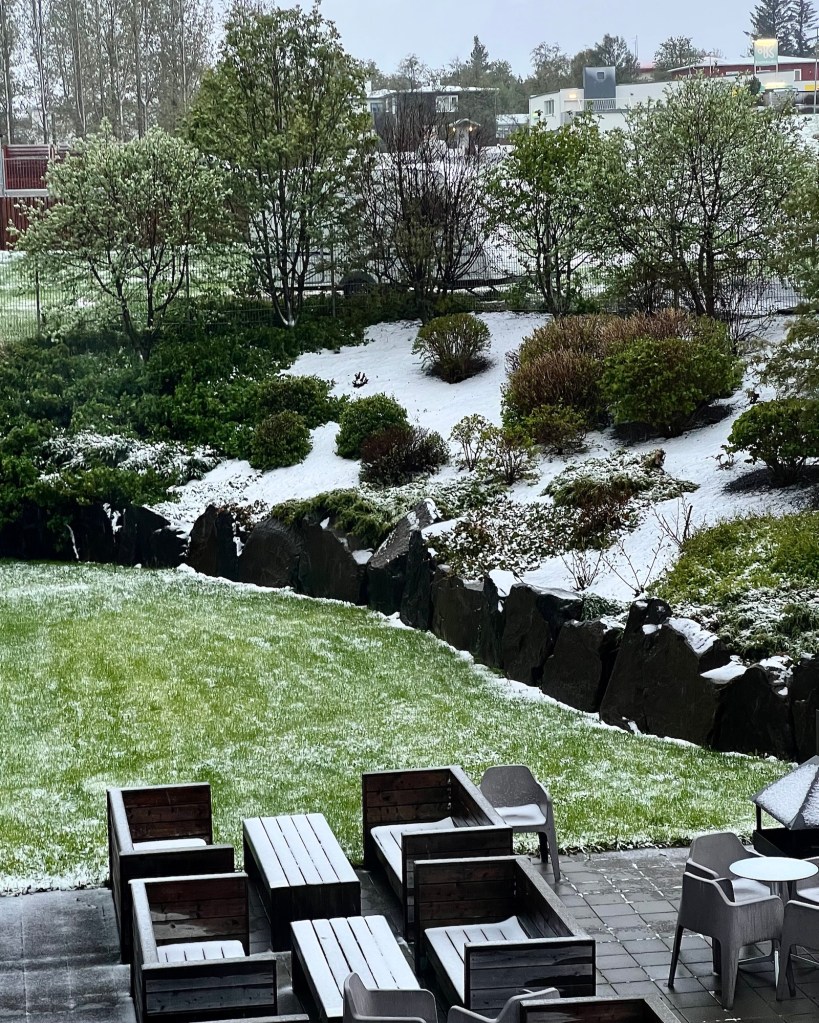
Awakened by the wind at about 3:00 a.m., M looked outside to check on the weather (that far north it was still light out) and saw that the snow was blowing parallel to the ground with gusts of about 80 km (50 miles). Our whale watching was a definite cancel, but we were worried about getting back to Reykjavik for the day after, and anxiously kept track of road conditions for the following 24 hours.
But none of what we were seeing on the Icelandic highway app was reassuring: gusts to 90 km (56 miles), ice pellets, snow, freezing rain, temperatures around +1-2C (33-35 F), completely perfect conditions for dangerously ice covered roads with obscured visibility.
We awoke bright and early the next morning to find that the main route – highway one – to the south was closed in at least two places.
We went to breakfast to drink coffee and to think this one through. There were things on our side. We’re very experienced in winter driving conditions and have literally seen it all, including driving through the Rocky Mountains during a December ice storm. We had rented a four-wheel drive manual which gave us some snow clearance and traction, and lastly, we had the time to drive very slowly.
We decided to take the chance: the road closure was 1.5 hours away, and we thought that clearing and sanding might have occurred by the time we got there, given that this is the main highway. We pulled out of Akureyri with a stockpile of trepidation and all the supplies we would need to wait out the storm in our vehicle if necessary.
At first, it wasn’t too bad, but then we had this:
The snow ruts were ice encrusted and caused pulling to the left or right if we had to move out of them. This is actually a two-lane highway, but with all the snow buildup, you wouldn’t know it.
When we arrived at the first closed section, snow clearing had already occurred and the road was open once more, but then we also started descending from the highlands, and within 30 minutes had much better conditions.
We were delighted to get out of that weather, and the further south we went, the better the weather became.
When we stopped to stretch our legs and pry our tense fingers off the steering wheel, we were even rewarded with a foss, or waterfall.
I have been dealing with a bad case of flu for the last several days but yesterday had enough energy to take myself out for a short walk along Penticton creek, which isn’t far from where I live.
It was a beautifully warm, comfortable day and I was able to take little breaks to enjoy the scenery. It was great to get out and start feeling a bit more like myself again.
There are apparently a couple of particularly nasty flu viruses round and about right now, so make sure you follow your best precautions to try to avoid them. Both M and I have had every symptom in the book, from fevers to severe body aches to nausea, so this one is definitely no picnic.
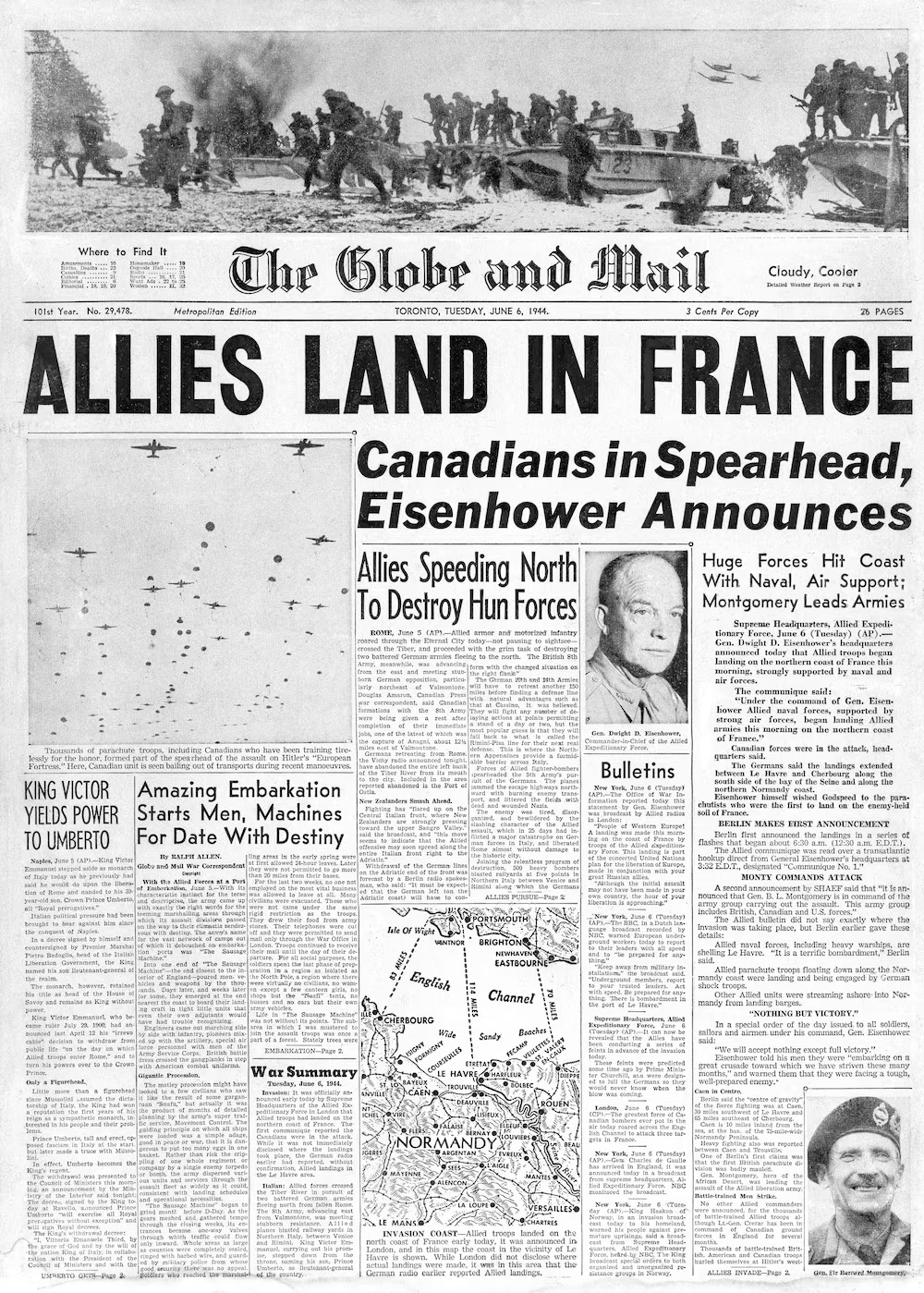
This post was first published in 2013; here it is again, 11 years later, in honour of the 80th anniversary of D-Day.
Canadian military during World War II D-Day Landings on Juno Beach (Photo credit: Globe and Mail).
The 69th anniversary of D-Day was on June 6th, last Thursday. Like so many, many others, my dad was one of those involved. He wound up going all the way to Hamburg, Germany, before “his war” was over and he was permanently sent back to England to my anxious mother, herself a member of the British army.
World War II and my parents’ participation in it shaped their lives; they and their cohort were subsequently referred to as the “Greatest Generation.”
How could it not shape their lives?
It has shaped ours, too; it’s just that we don’t register it much or perhaps give it as much prominence as it should probably have.
We lap up the sacrifice of our parents, grandparents and great-grandparents without understanding where it came from or even being aware that that’s what we are doing.
As my dad became older he often reminisced about his and my mother’s lives during the war. He talked about the time that they raced into an underground station in London seconds ahead of a bomb that tumbled down the steps behind them, following them.
They made it to relative safety before the bomb exploded; others did not.
My dad was also evacuated from Dunkirk.
The Dunkirk evacuation, the D-Day Landings and the Normandie invasion were, however, not something that my dad discussed until he was in his seventies. For him, outrunning a bomb was a story he could tell, but Normandie and Dunkirk? And later on, a concentration camp: the scope was too big; its effects were too broad. Compared to that, his personal experiences of it were tiny.
Photo courtesy of the Globe and Mail.
How do you get your mind around it?
The World War II veterans did not talk much about what they had endured. They just wanted to get back to their lives and enjoy the peace. But I also think that they may have had difficulty trying to communicate how massive this all was. The numbers of people, the equipment, the exhaustion, the death, the destruction, the genocidal madness. For the sake of one’s sanity, it has to move to the personal.This became obvious to me when I realised how difficult it was for my dad to return to England. My mother visited her homeland frequently, but my dad waited 30 years before returning.
Photo courtesy of the Globe and Mail.
No one person could tell it. Better to go home to try to forget.
They had earned the right to either talk about it or not, remember or not.
We children, grandchildren and great-grandchildren don’t have that choice, however. We have an obligation to remember.
We owe them a debt of gratitude that can only be re-paid by protecting and respecting what they won for us – our very selves, our freedoms, our many luxuries.
My dad is long gone now, as are most of the WW II veterans, but we can think about what they did for us.
I think most people know about one of the cornerstones of environmentalism: reduce, reuse and recycle. And, yes, following through on that is a good thing. But one type of reducing that I had not, from an environmental standpoint, seriously considered until recently is meat consumption.
Studies show that the one single thing that all of us could do to help our planet is to reduce how much animal protein we eat. Apparently, this would go a very long way to offsetting all the other ongoing emissions from all other sources, including from vehicles. Here are some links with further information:
Not only would our planet be a lot happier, but we would be much healthier. An overconsumption of animal products is linked to all of the following: heart disease, stroke, obesity, high blood pressure, high cholesterol, type 2 diabetes, and many types of cancers. Of course, all of these health issues are linked to other health issues, and as we get older, these linkages lead to a cascade effect that results in additional, multiple, serious problems.
Five years ago, I was diagnosed with kidney disease. At the time it was not serious but needed to be addressed and had likely been caused by my ongoing issue with high blood pressure. The high blood pressure/kidney disease two-step is something that runs on my dad’s side of the family and given my busy, high stress job, I knew at the time of diagnosis that I should have been more careful about what I was eating and the amount of exercise I was (not) getting.
I found myself in a bit of a trap: I was exercising well and eating more carefully only when on holidays and was cavalierly throwing caution to the winds when working, and especially when under the frequent deadlines and embroiled in the daily and numerous stressors that were a part of my job.
The story I told myself was that I frequently didn’t have time to eat anything other than convenience foods. I did take some action. I avoided foods that aggravated my kidneys (there’s a “don’t list”). I took my bp medication. I walked to and from work every day.
But slowly, slowly, I was gaining weight. My kidney function was also very slowly dropping while at the same time my bp was slowly going up. It was all very glacial. Almost unnoticeable. Until it began to tip.
I was suddenly diagnosed with pre-diabetes and in weighing myself, realised that I needed to lose 10 kg. My kidney numbers were dropping (not good) and my bp numbers were climbing (also not good). I was a heart attack (or stroke) waiting to happen.
There was no way I was going to take more pills, so I decided that I had to change how I was eating and what I was doing. I made the decision to retire. I saw a dietitian, gradually cut out meat, read labels, made more careful nutritional choices and increased my exercise. M was doing most of the cooking from scratch and developed meals that work well.
It has paid off. I exercise more. I refer to myself as a vegetarian although apparently I’m a “flexitarian” because I occasionally eat meat, poultry or fish. I’m 10 kg lighter and looking at losing more. I got rid of the prescription for the diabetes drug metformin because my sugar numbers have returned to normal. My kidneys and bp are much happier and are doing better: kidney numbers are up, bp numbers are down.
I have long enjoyed vegetarian meals and even though they are now the cornerstone of my diet, I still sometimes want to have a little chicken, fish or steak. M and I recently had a steak dinner and I enjoyed every bite. So when I talk about meat reduction, that’s exactly what I mean. I don’t think we need to cut out meat entirely, but our planet, and frankly, our long term health, can’t sustain this level of animal product consumption.
In the course of learning to reverse my declining health, I read a lot about the rise in factory farming practices because of the human demand for more animal protein and additionally, about how reducing our reliance on it will go a long way to not only improving our health levels but also the health levels of our planet. A good documentary about this named “You Are What You Eat” can be found on Netflix. Here’s a clip: https://m.youtube.com/watch?v=oygkWmXyOaM
There are huge numbers of factory farms (both on land and sea) producing massive amounts of pollution, but even if we eat only one or two vegetarian meals a week, or maybe have one “vegetarian day” a week, we will have an enormously positive impact on ourselves and our planet.
We have a large marmot colony living nearby in the rock breakwater next to an area of the lake.
They are awake, active and very healthy looking after their hibernation. They will allow people to observe them but getting too close makes them nervous and they will disappear into their large communal burrow below the rocks. I love how they are constantly greeting each other with great affection and murmurings.
All marmots, including the ones above, are protected in British Columbia, especially the Vancouver Island marmots which have been brought back from the brink of extinction but whose numbers are still critically low.
The Kettle Valley Rail Trail is a 660 km decommissioned passenger train line that used to run through southern British Columbia from Hope to Castlegar between 1910-1964.
Heading toward Penticton.
It continued to be in operation as a freight line until 1989 and after it fell out of use, the tracks were removed and it was re-purposed as a hiking, running, walking and biking trail.
Heading toward Kelowna.
M and I have walked chunks of it in all seasons; it has terrific views with the Columbia Mountains to the east and the Okanagan Mountains to the west.
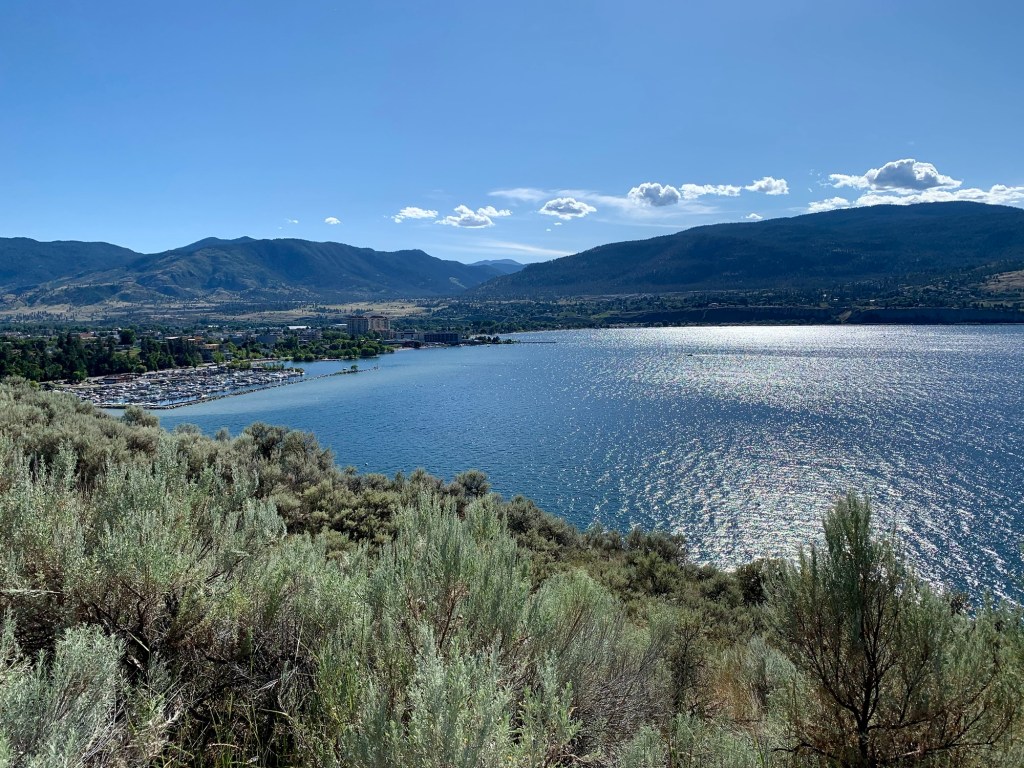
Okanagan Lake from above.
The KVR is also part of the Trans Canada Trail, a cross-country network of trails, waterways and roadways that stretches from the Atlantic to the Arctic and Pacific Oceans.
The sun shines on a still-awakening valley.
The Trans Canada Trail, at 24,000 km, is the longest multi-use trail system in the world.
Grape vines and orchards below; the city of Penticton to the left.
We love having this trail almost at our doorstep and are so happy that 35 years ago, a group of forward-looking people decided to band together to re-purpose an old rail line.
Blue is a favourite colour. Rich, cool, elegant, business-like, cerulean, lapis … no matter how you describe it, blue is rather versatile.
I’ve always found it to be calming and relaxing; when I was tired after a long, difficult stint at work, just looking at the blue sky felt very comforting. The issues were still there, but I felt better.
I vividly recall coming to the Okanagan Valley for a beach holiday three months after the start of Covid. My brain felt drained, and so knew I needed to recoup.
M and I sat comfortably on Skaha Beach, swimming when we got too warm but mostly lounging with our feet up, the cooler nearby, a book in hand.
But reading wasn’t what I wanted to do. I simply sat and observed the blue water and blue sky, mind pretty blank, and began to feel rested. This simple activity was marvellously tranquil and relaxing; it was such a wonderful thing.
I’ve read that blue and green are both comforting colours, and I’ve found that to be true. I think one of the reasons why sunny days and long walks or hikes outside are so good for us isn’t just because of the physical benefits; the act of just being outdoors is so good for the brain and our general well being.















 In the Net! - Pictures and Stories of Life