We have seen some truly fantastic landscapes on this trip through northern British Columbia as we near our ultimate destination: Haida Gwaii.
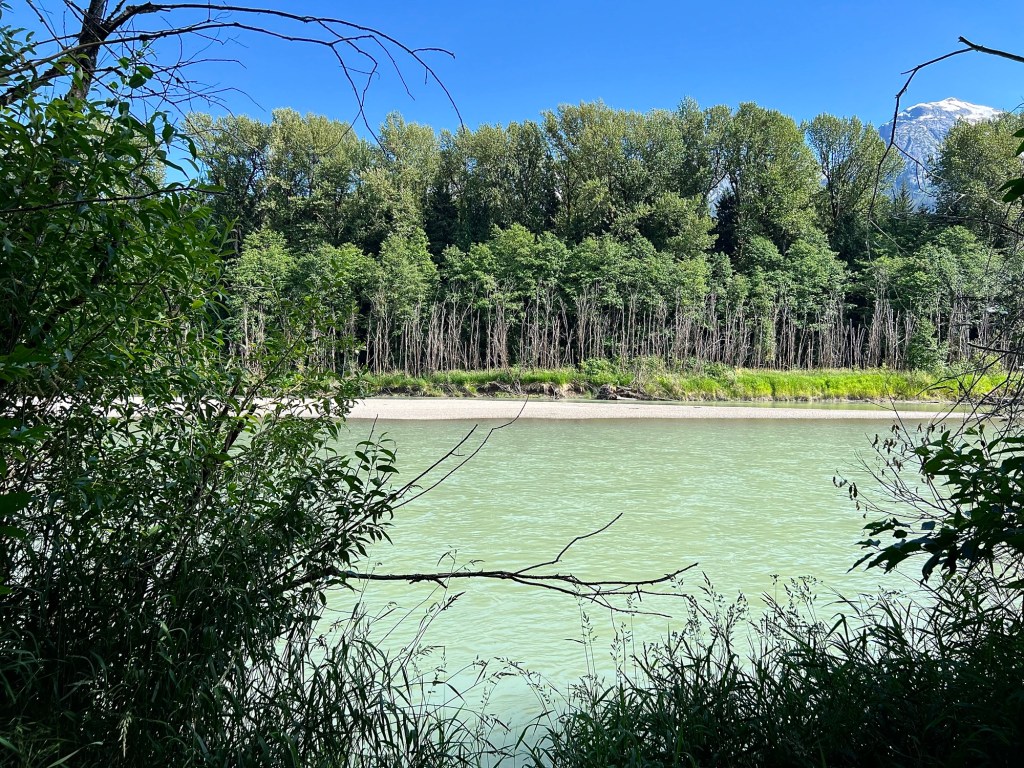
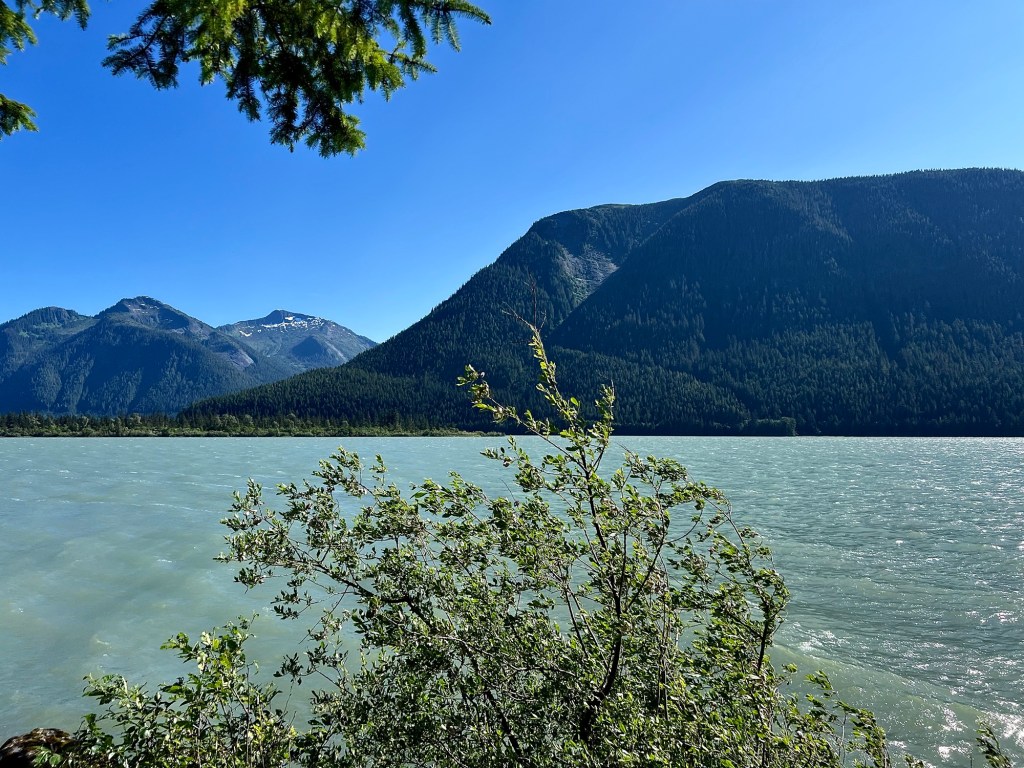
The rivers are magnificent, which leads me to this question: in the photos below, are you seeing a river or is it a lake? Or, is it a river and a lake?
River? Lake?This might be a lake. But maybe not .If you remember my comments about glacier-sourced rivers a couple of posts ago, then you might have a clue.It was a very hot day, but seeing all this water helped to cool us off, at least in our imaginations, and it didn’t matter if it was a lake or a river!
The Bulkley River of northern British Columbia is a major tributary to the much larger Skeena River – I’ll post pictures of the Skeena later; it’s huge.
Bulkley River with the Hazelton Mountains in the background. Rapids on the Bulkley River.
This river is greenish-grey which indicates that it’s fed by glaciers and their forceful runoff. The colour comes from pulverised rock particles that absorb and scatter sunlight; the rivers and lakes near the Rockies are an impressive bluish-green.
We recently left Penticton, British Columbia en route to Haida Gwaii, an archipelago off the northern Pacific coast and the home and ancestral territory of the Haida First Nation. Getting there would take three driving days and one ferry.
Haida Gwaii
After stopping for the first night in Prince George, we continued on to Smithers.
Smithers
Smithers is near the Hazelton Mountains which are a sub-range of the larger Coast Mountains. In winter there’s a lot of good downhill and cross-country skiing and in summer the hiking is fabulous.
Hazelton Mountains
After a decent night’s sleep we drove to one of the peaks and found a good hiking trail.
As we neared the trail head the temperature went down to 24 C (75 F) from 33 C (91 F) in the town of Smithers below. It was a much appreciated break from the heat wave we’ve been experiencing all over British Columbia.
M scoping out the trail.
Being able to enjoy the trail in much cooler temperatures was a real plus.
From Smithers all the way to the coast, the forest is lush, dense and beautiful. This is because even though Smithers is fairly far north, its climate is mitigated by the temperate rainfall from the Pacific Ocean which leads to these lovely, almost-rainforests.
There were a number of powerful glacier-fed waterfalls on our route that we stopped to admire.
All too soon we needed to return to our vehicle to continue our drive to Prince Rupert and the coast. Our ferry booking for the sailing to Haida Gwaii was coming up next.
Most of British Columbia is experiencing a heat wave right now. Temperatures are in the high 30s celsius (about 100F) and people are looking to cool off however they can. As you can imagine, the beaches and lakes are very popular!
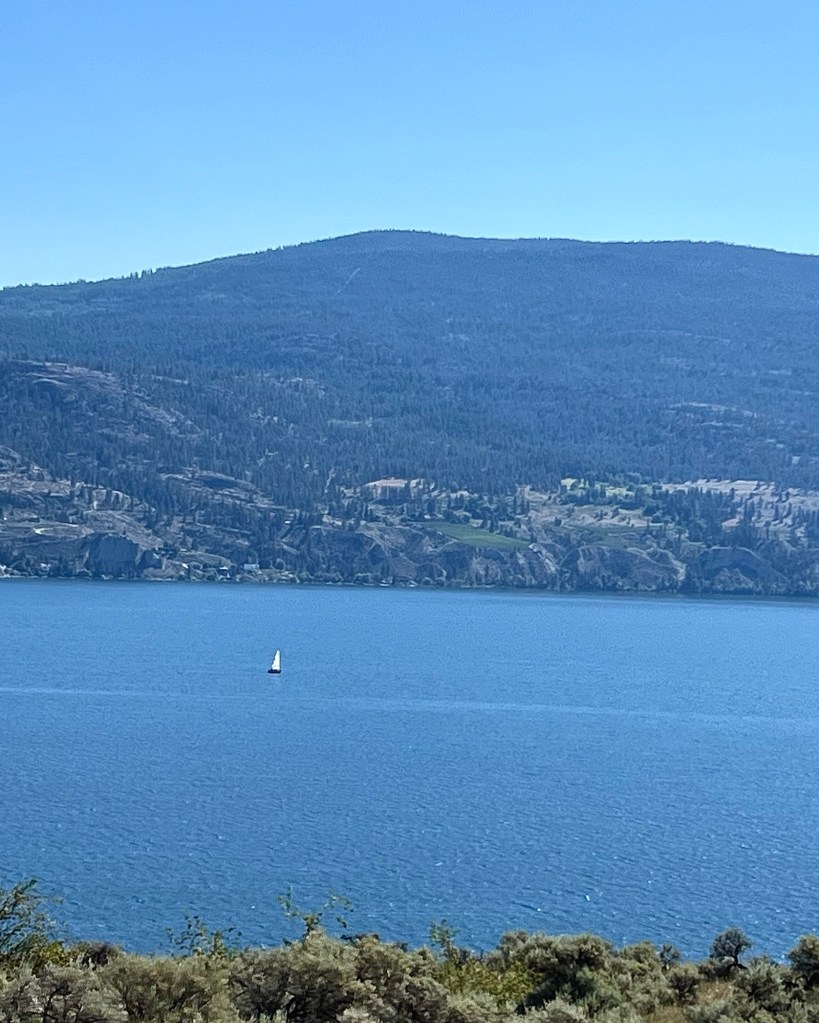
I spotted this sail boat among many on Okanagan Lake and thought how perfectly positioned it was to showcase an iconically sunny day white sail, blue sky and blue lake all around.
I felt cooler just looking at it, but it’s also an incredibly pretty sight.
It wasn’t very windy on the bench, but there was a breeze on the lake, and the sailboat seemed to be moving crisply along.
A lovely photo of the Bronze Age British Camp Hill Fort on the Malvern Hills, United Kingdom, courtesy of Stuart Aken. To see more of Stuart’s beautiful photography, please click the link above.










 In the Net! - Pictures and Stories of Life