
After we enjoyed the hot springs at Liard River, we stopped at Muncho Lake Lodge for the night. We had a great dinner and more fantastic views.
Amazingly crystal clear, Muncho Lake is a feast for the eyes. Can you tell if this photo is upside down or not?

Actually, it’s right side up; you can see some irregularities in the reflection if you look carefully. Nevertheless, that’s a fantastic mirror image of some of the Northern Rocky Mountains, isn’t it?

Muncho Lake, like many of the Rockies’ lakes, is green. Caused by glacial sediment, some lakes can also be various shades of cobalt blue interspersed with green. That green shade isn’t evident in the first picture because of the light’s angle refracting from the lake’s surface.

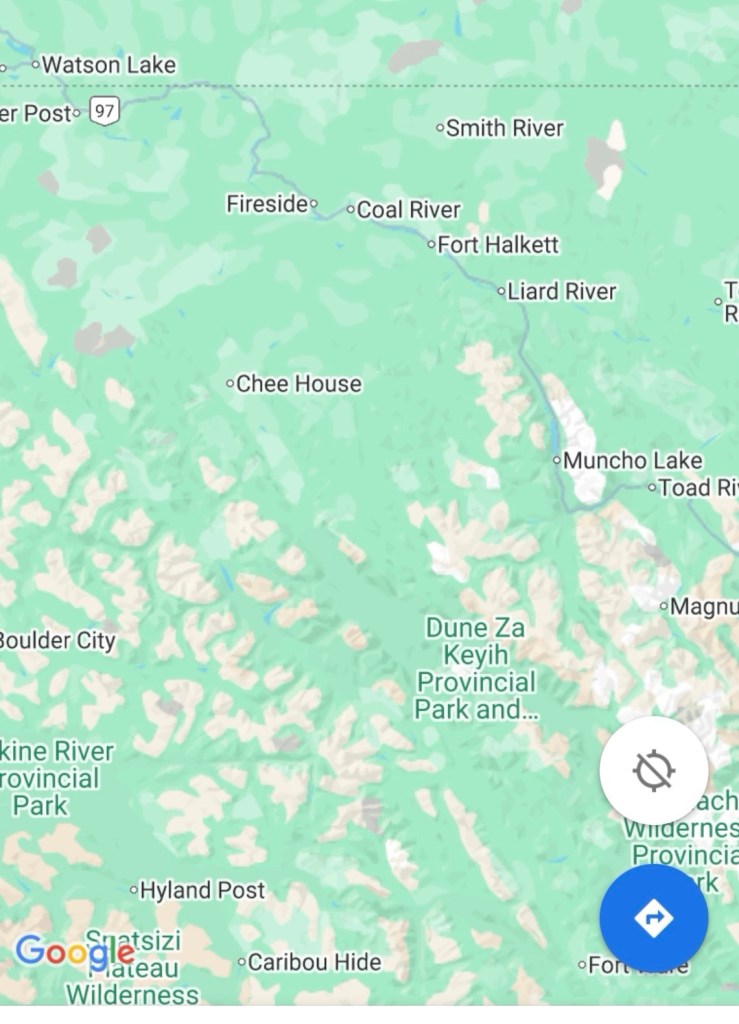
The next day we stopped in Fort St. John, after having travelled much of the stunningly beautiful highway 97 (Alcan or Alaska Highway), so there is another post coming about the fantastic sights we were able to experience during that fantastic drive.
 In the Net! - Pictures and Stories of Life
Great shots Lynette, especially the reflection. You will enjoy them on Patricia Lake. I love the pops of bright green from the spring leaves. Almost as colourful as the autumn leaves. Thanks for sharing. Allan
LikeLiked by 1 person
Thank you very much, Allan. We are at PLB presently and yesterday enjoyed sitting on the dock and dangling our feet in the cold water. Very cold of course but so great after all the walking/hiking we did yesterday. I don’t have any reflective photos yet of PL but a couple of good ones of the sun on the lake. It’s so beautiful here. Just listening to the birds is wonderful all by itself. Agreed, those new green leaves are as colourful as the autumn ones. Thanks once more for bringing PLB to our attention. Cheers.
LikeLiked by 1 person
😁
LikeLiked by 1 person
So beautiful Lynette, the perfect reflection. Im a bit scared to see your Jasper pictures though. We haven’t see our favourite spots since the fire. Maggie
LikeLiked by 1 person
The reflections on Muncho Lake were awesome. We just stood there admiring them for a long time.
There is devastating damage over large swaths of Jasper, Maggie. I almost started crying. But many areas survived and of course visitors are being encouraged to return since the fire, too, can help people to learn about climate change. The forests are also starting to recover. I saw teeny tiny pine and fir trees growing already.
LikeLiked by 1 person
We hiked in the Kootenays, Floe Lake, a couple of years after their big fire and it was very comforting to see all of the regrowth in the forest. Seeing Jasper will not only teach people about climate change, but also, how to better keep forests healthy so they don’t get out of control – at least hopefully they’re learning. Manitoba is having its turn this year. 😪
LikeLiked by 2 people
The pictures of Manitoba’s fires look like the entrance to hell! They’re cataclysmic! And now there are terrible fires in Saskatchewan, too. I know there are plenty of climate change deniers out there but I hope this turns some of them, at least.
LikeLike
I appreciate your maps, Lynette. Keep those comin’!
LikeLiked by 2 people
You’re very welcome, Jacqui. Cheers.
LikeLiked by 2 people
I love the green colour of the lake. Kalamalka Lake is like that. At least, that’s how I remember it.
LikeLiked by 2 people
It’s so pretty. Yes, Kalamalka Lake is glacial and has the crystals of calcium carbonate that cause the green, blue or bluish-green colours. It’s more pronounced in spring and summer on that lake and especially if there has been a lot of mountain run-off.
LikeLiked by 1 person
Good to know it still has that pretty colour.
LikeLiked by 1 person
Yes, it sure is. Cheers.
LikeLiked by 1 person
Another set of gorgeous photos. I agree, the top photo with the mountains reflecting in the Muncho lake is astounding. Beautiful!
LikeLiked by 1 person
Thank you very much, Thomas. I love catching lake reflections and this was a particularly good one.
LikeLiked by 1 person
I agree. Lake reflections are beautiful but this one is especially gorgeous.
LikeLiked by 1 person
It definitely was. I was very happy to see it and also to get a picture of it.
LikeLiked by 1 person
So beautiful!! 😍❤️🇨🇦
LikeLiked by 1 person
Thank you very much, John. 😊
LikeLiked by 1 person
You’re welcome Lynette. 😊
LikeLiked by 1 person
😊
LikeLike
That water is so beautiful xx
LikeLiked by 1 person
It’s definitely a stunner! Cheers.
LikeLiked by 1 person
That emerald green is really something to see! More wonderful landscape photos, Lynette 😊
LikeLiked by 1 person
Thank you very much. 😊 Yes, it’s so spectacular, Belinda. We’ve been really enjoying these natural wonders.
LikeLiked by 1 person
These photos are beautiful thanks for sharing!
LikeLiked by 1 person
Thank you and you are very welcome. 😊
LikeLike
These are stunning!
LikeLiked by 1 person
Thank you very much. 😊
LikeLiked by 1 person
That late looks stunning, especially the green color water. This adventure is wonderful, lynette
LikeLiked by 1 person
Muncho Lake truly is gorgeous in green. Yes, we have been having a wonderful holiday, too. Cheers.
LikeLike
So beautiful. ❤️
LikeLiked by 1 person
Yes, it definitely is. 😊
LikeLiked by 1 person
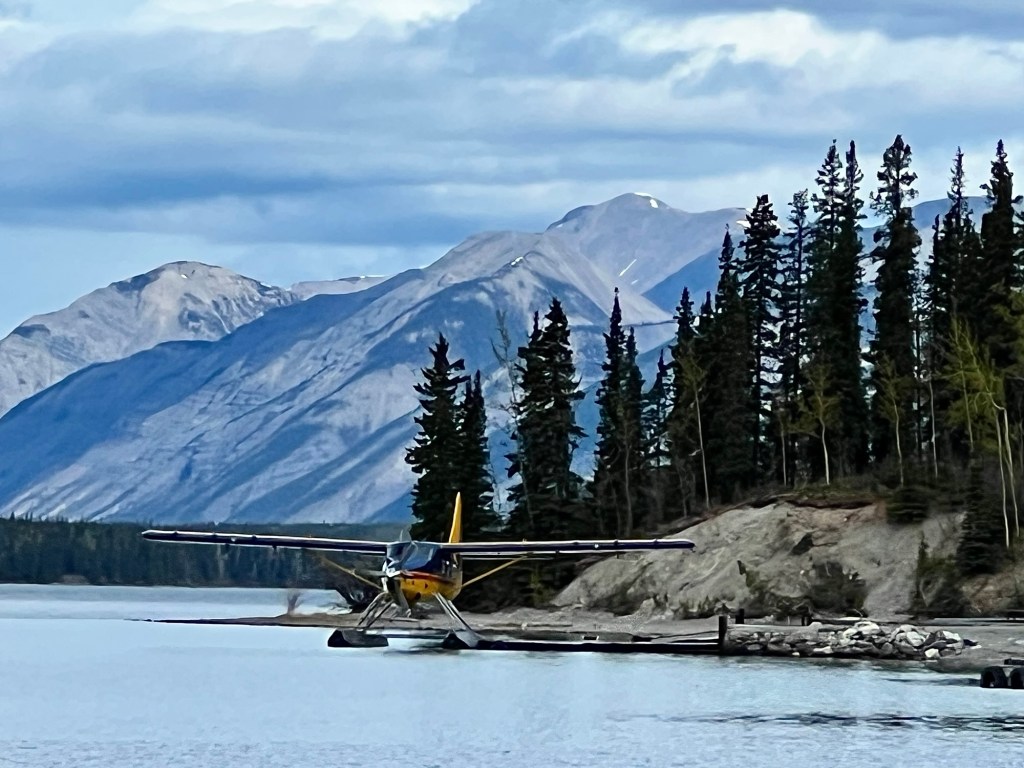
I love the float plane shot, and yes, it is deeply Canadiana. I have my dad’s 1929 B&W snap of a Vickers Vedette, a single-engine biplane (“flying boat”) designed for bush conditions, on the water in northern Saskatchewan. My dad was travelling by canoe — this was the first of two university-student summers he spent doing survey work along the lakes & rivers up there for the Canadian government. I think of that as a cross-over moment in transportation technology: still, as always, canoes; no roads yet or cars; and, in the sky, the very first airplanes. Giving prospectors a whole new, powerful way to probe the land… And the mail to arrive! My dad’s diary notes talked about the excitement of receiving a cache of letters, brought in by plane and collected from the Hudson Bay Co. outpost.
LikeLiked by 1 person
It’s wonderful that you have a record of your dad’s time in the north of 1929, 1930! Nearly a hundred years ago. Agreed – such a turning point in transportation technology and almost all of it occurring within a few years. Of course, WWI helped to push things along, unfortunately.
The Vickers Vedette was designed and built in Canada to meet the demands of bush operations and was a highly successful aircraft. There’s one at the aviation museum in Winnipeg; I saw it last spring. I’ve sent you a copy of the float plane picture. Cheers.
LikeLiked by 1 person
got it! thanks for that
LikeLiked by 1 person
Beautiful vistas, Lynette.
LikeLiked by 1 person
It’s definitely a gorgeous area!
LikeLiked by 1 person
Too beautiful for words!
LikeLiked by 1 person
It’s definitely spectacular! Cheers.
LikeLike
Beautiful. Love the graduating green shades of the water.
LikeLiked by 1 person
That green water is caused by calcium carbonate carried by glacial melt. It can also cause the most amazing shade of cobalt blue, but whatever its origin, it’s beautiful!
LikeLiked by 1 person
Muncho Lake is gorgeous. And it’s massive! We camped here while driving along the Alaska Highway. Beautiful set of shots. Makes me want to go back!
LikeLiked by 1 person
We enjoyed it enormously, too. And yes, it’s a big lake and with the spring run-off giving it that green tint it’s also very arresting.
LikeLiked by 1 person