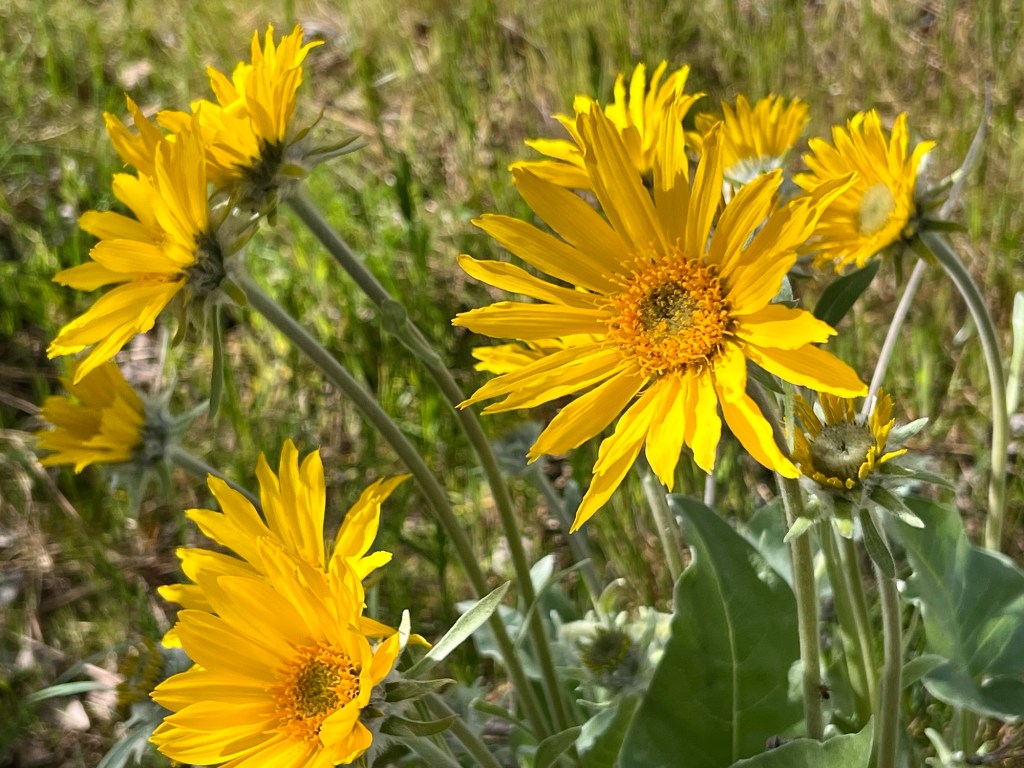
The arrowleaf balsamroot flowers, or as they are locally called, Okanagan sunflowers, are blooming everywhere.
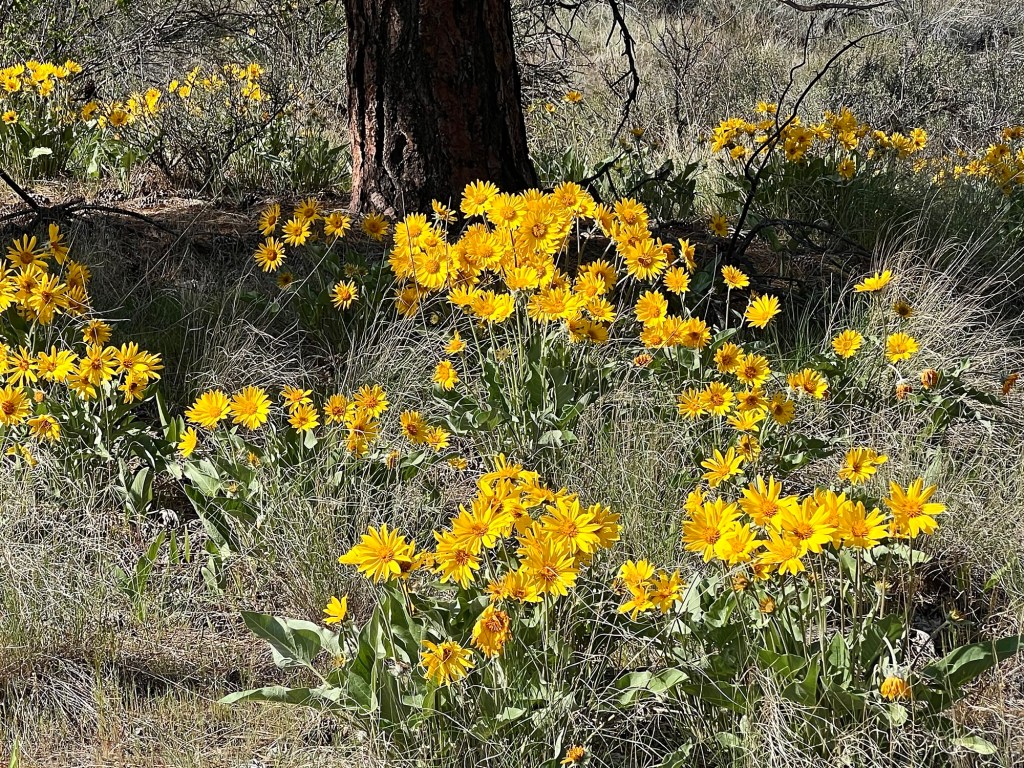
Right now, the bright yellow of their blooms can be found all over hillsides and throughout the pine forests of the Okanagan Valley.
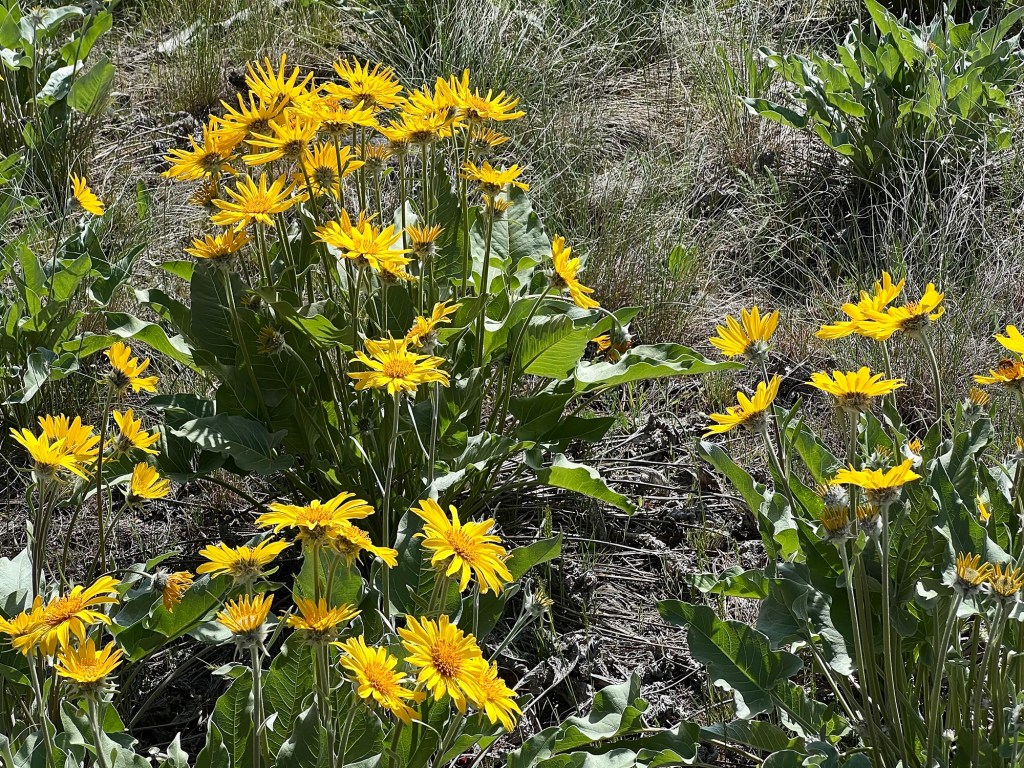
Their profusion is beautiful, but to First Nations, they were an important food source as this plant is completely edible, including its roots. They’re not just a pretty face!
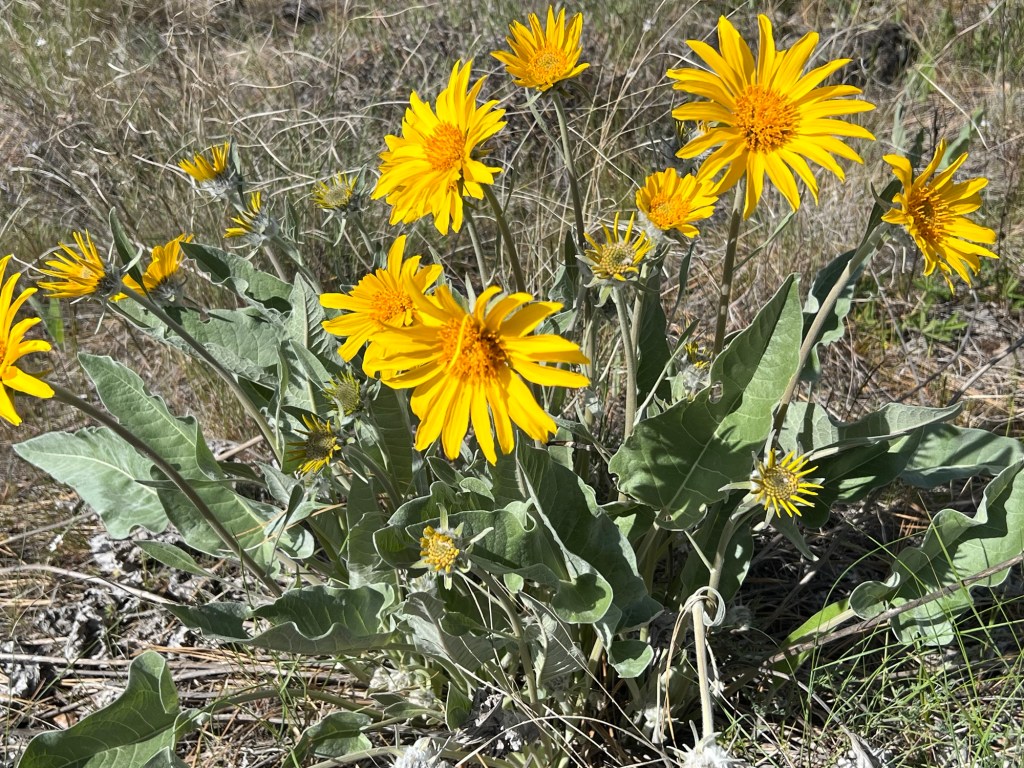
Although they to some extent resemble sunflowers, they look more like yellow daisies and except for the Okanagan Valley of British Columbia and a few other valleys in Washington state, are a relatively rare find, confined as they are in their wild state to certain areas of the west coast of North America.

They won’t last long; in about a week they will start wilting and will disappear until next spring.
Happy Earth Day. 🌎
 In the Net! - Pictures and Stories of Life
They are lovely. Happy Monday!
LikeLiked by 1 person
Thank you very much. 😊
LikeLiked by 1 person
Once the yellow coloured flowers arrive, summer is on the way. Thanks for the info on this pretty flower, Lynette. Not sure we have anything quite like it in Alberta. Happy Earth Day. Allan
LikeLiked by 1 person
Thank you very much, Allan. 🌏 It seems that their range is quite limited to forest clearings (especially pine forests) in BC and Washington. They can apparently be found in Alberta but I’ve never seen them there; maybe there they grow only rarely? Right now they’re growing profusely on hillsides and next to roads. So gorgeous.
LikeLiked by 1 person
They’re so pretty. Happy Monday Lynette!
LikeLiked by 1 person
Thank you very much, Tricia. To you, too. 😊
LikeLiked by 1 person
They are lovely! A happy start to the week 😊
LikeLiked by 1 person
They’re so bright and cheery and an icon of spring in this area. Definitely a happy start to the week. 🌼
LikeLiked by 1 person
There is never anything wrong with sunflowers.
LikeLiked by 1 person
Definitely not, and that bight colour is so cheery.
LikeLiked by 1 person
Aren’t they so lovely?! Happy Earth Day, Lynette!
Christie
LikeLiked by 1 person
Thank you very much, Christie. 🌎 It’s so great to see them.
LikeLiked by 1 person
Gorgeous. Happy Earth Day! 🌎
LikeLiked by 1 person
Thank you very much, Cindy. 🌏 That beautiful yellow is definitely gorgeous!
LikeLike
Lovely, and very interesting. How are they eaten? Have you ever eaten them? I mentioned you to my husband yesterday. I told him I wondered if you could tell us the name of our neighbor’s tree. It borders our yard and I just love it. It’s blooming these light pink yet vibrant petals right now. I’ll have to put up a pic some time for you to take a look.
P.S. We’ve asked our neighbor but he says he doesn’t know what kind of tree it is.
LikeLiked by 1 person
Hi Lori, apparently the leaves can be eaten cooked or fresh (in a salad) and the roots can be used to make flour. I have tasted the leaves which are mildly lemony; not very strong at all. They would probably be quite good with fish. I haven’t tried the flowers – they’re edible, too.
Does your neighbour’s tree have flowers that look like those in this link: https://pixabay.com/images/search/nanking%20cherry/
If so, it’s likely a Nanking cherry or hybrid. They are common in areas where winters can be severe and they are beautiful, especially in spring. The cherries can be quite small and sour but make excellent jellies (you have to pick all those tiny pits out, though!). I had one of these in my garden when I lived in Alberta. It was so gorgeous in spring. Yes, put up a photo. I would love to see it. Cheers.
LikeLiked by 1 person
Yep. I’m pretty sure that’s it, Lynette. How did you know?? I thought those were berries and didn’t think they could be eaten (used for jellies). The tree didn’t grow too tall. It’s the perfect size. We have no trees in our yard and have considered planting one. Thanks!
LikeLiked by 1 person
You’re very welcome. The way you described the blossoms made me think of a cherry tree, but cherries don’t do well even in a minor winter cold snap, so I thought it might be a Nanking. Nankings are extremely hardy and will make it through -40C (-40F). They grow about 2.5-3.5m (8-12ft) and have a sort of round shape.
The one I had was quite old and was about 1.5m (5ft); sometimes they just don’t grow very tall. You can encourage them to spread out by trimming them. Although somewhat short, mine still produced a load of small, bright red cherries which I often left for the birds. They loved them. As I said, you can make jelly with them however which I did maybe 3 or 4 times. Cheers.
LikeLiked by 1 person
I thought the cherries were inedible berries. This tree here is double the size you mentioned you had. The birds are always singing in it. I decided to add pictures of it for my post in the morning (Tuesday). They came out slightly blurry (or maybe I need glasses). Let me know what you think.
LikeLiked by 1 person
Thanks, Lori. The one I had was fairly small and I at the time estimated that it was about 50 years old. If your neighbour’s is double what I had, then that would be about right for most of them. I look forward to seeing your post. 😊 Cheers.
LikeLiked by 1 person
Hi Lynette – that’s so interesting that they are completely edible. Do they also have edible seeds like the big sunflowers?
LikeLiked by 1 person
The seeds are edible but much smaller than real sunflower seeds. They apparently can be used together with the roots to make flour. Cheers.
LikeLike
These are such sunny photos. They would cheer up even the most miserable person.
LikeLiked by 1 person
Very true! Right now they are everywhere, shimmering profusely. So beautiful.
LikeLiked by 1 person
What cheerful flowers! Thanks for sharing these, Lynette.
LikeLiked by 1 person
They sure are, Sue, and so profuse at the moment. Golden hillsides. 🌼
LikeLiked by 1 person
The perfect color to celebrate Earth Day!
LikeLiked by 1 person
Yes, they definitely are! 🌎 🌼
LikeLiked by 1 person