
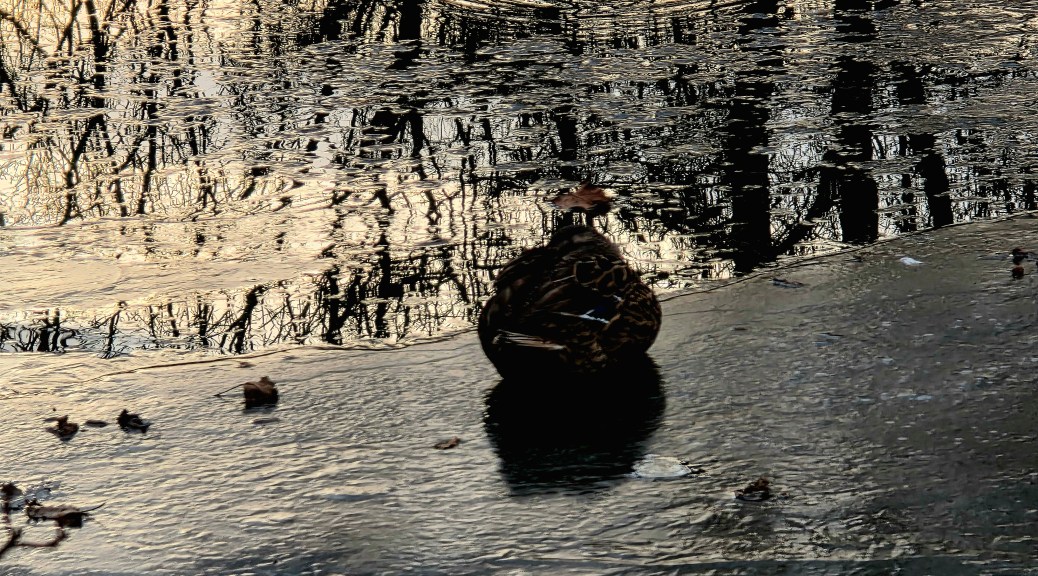
I am always surprised at how well the ducks will tolerate the cold on their feet.
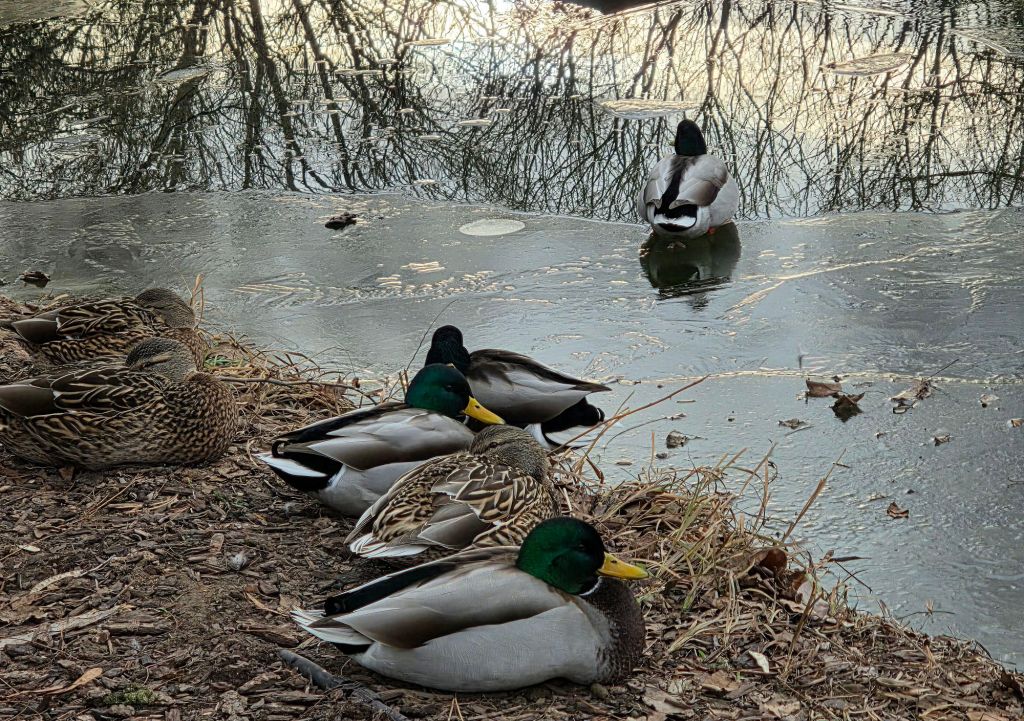
Recently, their favourite little pond partially froze; it had a thin layer of ice in places, but the ducks settled on the icy parts and even napped.
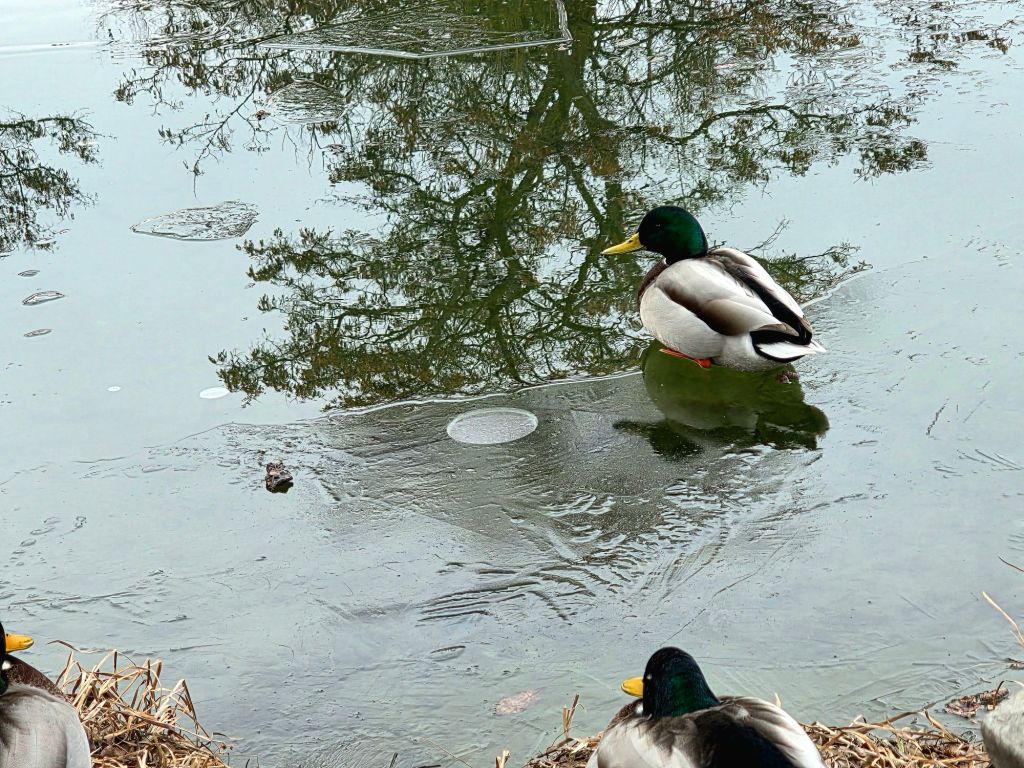
Do they have duckie antifreeze in their feet??
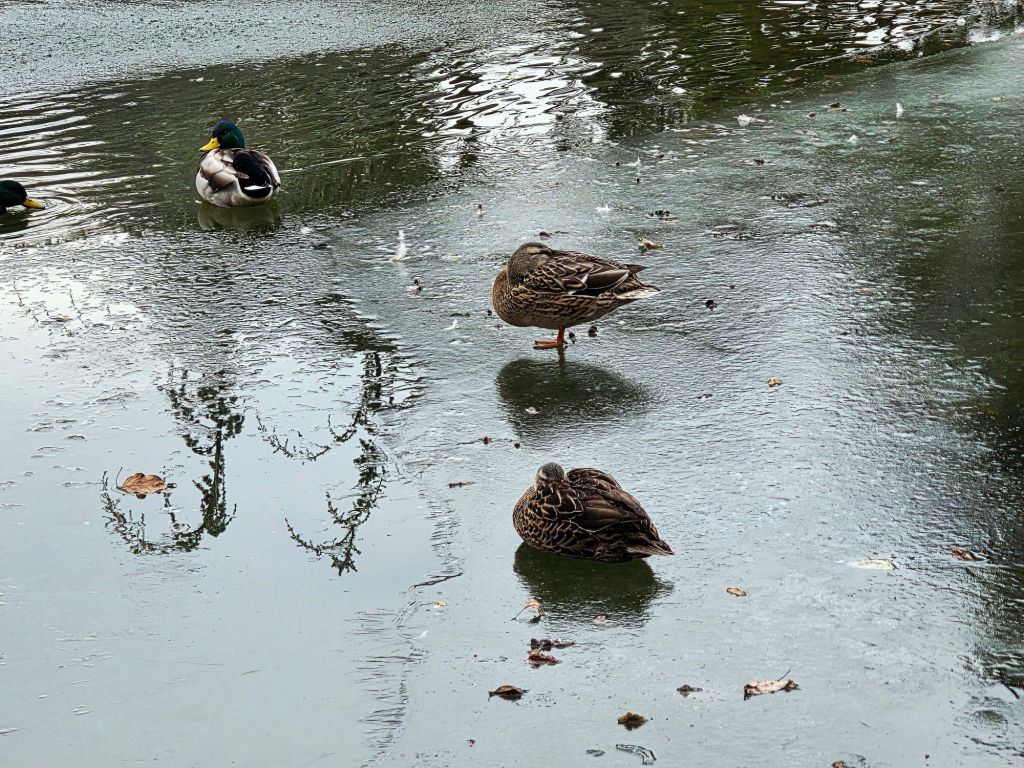
Actually, they sort of do. Through a process called counter-current heat exchange, their bodies literally lower the temperature of the blood headed for their feet and warm it up again as it heads back to their hearts.
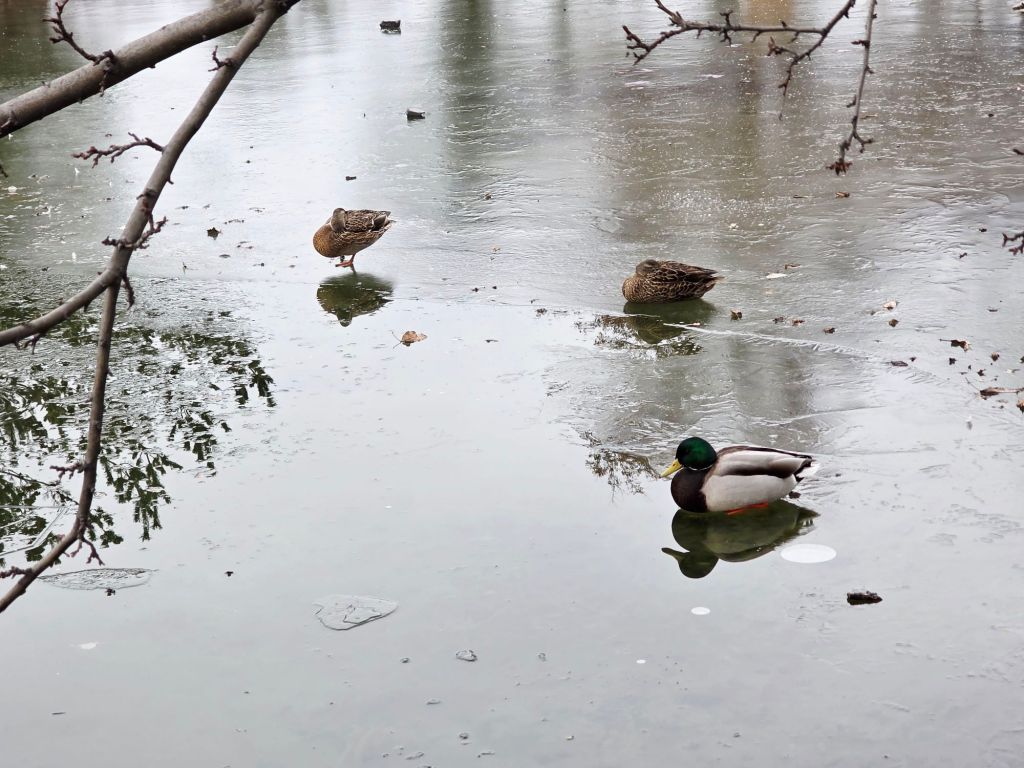
It’s so effective that in winter, mallards only lose five per cent of their total body heat through their feet. That’s a pretty ingenious system.
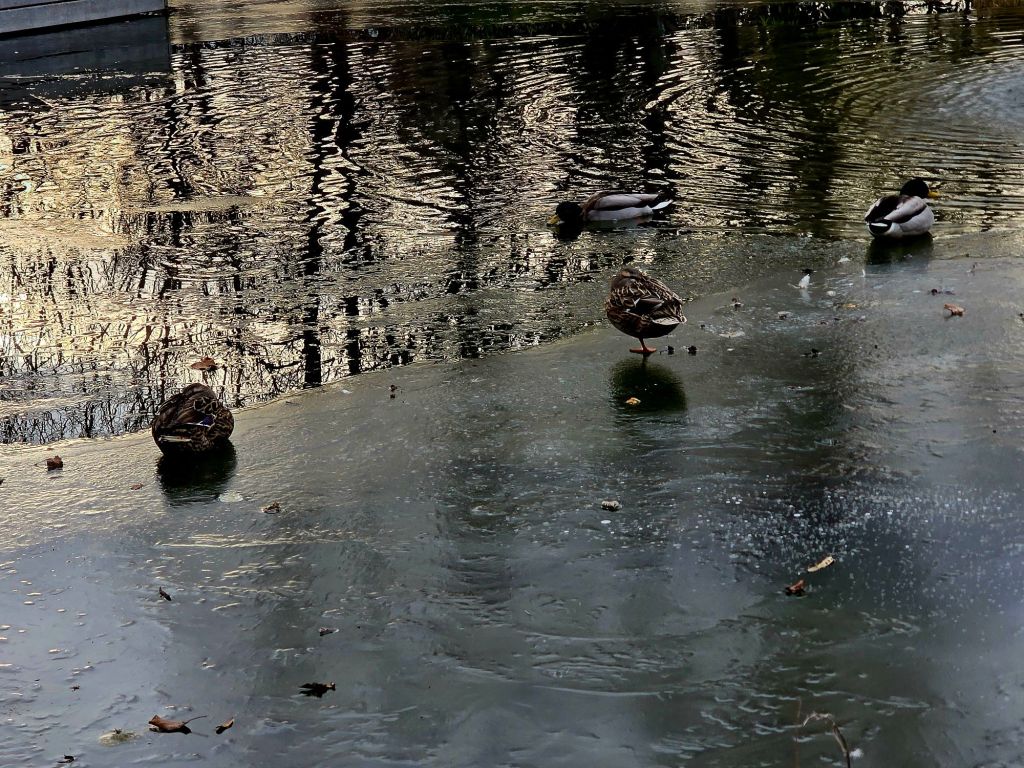
It could be a great system for humans too but I think I prefer socks and footwear instead. 🙂
Happy Wednesday.
 In the Net! - Pictures and Stories of Life
Clever ducks xx
LikeLiked by 1 person
I once watched a pair of mallard ducks arrive at a frozen pond near here. They glided smoothly across the surface until the far bank brought them to a rather undignified halt. No harm done. Shame I didn’t have a camera handy!
LikeLike
Fascinating! I also prefer socks, though. Maggie
LikeLike
Yup, definitely a socks and shoes guy. Nice info on how the ducks don’t freeze their feet. I am always fascinated/entertained watching ducks land and walk on ice they sometimes see as water. Reminds me of Canadians trying to avoid slipping in winter. Happy Wednesday Lynette. Allan
LikeLike
Very interesting that. I always wondered about that when observing ducks in freezing weather.
LikeLike
I love this! Nature really is the ultimate engineer. I knew birds could handle cold, but I had no idea the heat loss through their feet was that minimal. Counter-current heat exchange is such a clever solution—way better than my winter boots on icy mornings.
“Duckie antifreeze” made me laugh 😄
LikeLike
So cute and amazing!!
LikeLike
That truly is amazing, but the, that’s Mother Nature; she’s quite resourceful. I learned something new today; thanks, Lynette!
LikeLike
You captured these in wonderful light! I could do with a bit of that counter-current heat exchange 😊
LikeLike
I’ve often wondered the same thing about whether their feet get cold. Cattle too, when they stand in cold wet fields. Maybe they don’t have a lot of blood flow or nerves in their feet so they don’t feel it as much. Just a guess.
LikeLike