One of the trails we took at Waterton Lakes National Park was from Lower Waterton Lake to Middle Waterton Lake and then through to Upper Waterton Lake.
Much of the trail was through prairie grasslands with increasing forest density as we came closer to the mountains.
In the photo above you can spot the iconic Prince of Wales hotel in the far distance. It is an historic building that was erected in honour of Prince Edward’s – he later became King Edward VIII and then abdicated a few months later – extended visit to Canada in 1927. Unfortunately he never made it to his namesake hotel.
We saw a couple of bears on the other side of the lake above and immediately changed our route. We admired them from afar. They were play fighting and in and out of the water but I wasn’t able to get a picture of them because they strolled among the bushes and shadows and I couldn’t seem to get a good capture.
We sat in the Parks Canada red muskoka chairs to admire the Middle Waterton Lake. Every national park has at least one set of these red chairs placed at advantageous viewpoints.
The photo above shows the little channel – very quaintly called “the Bosphorus” – that connects Middle and Upper Waterton Lakes.
In some of the pictures I’ve posted you can see evidence of a forest fire. The fire was started by lightning in 2017 and destroyed huge swaths of forest in the park. It is recovering well though and there are many small pine, spruce and aspen trees growing among the remains of the previous forest.
A beautiful set of travel photos from Michaela and Phil of the Hungry Travellers. Please click the link above to see more of their fantastic pictures and to browse their blog.
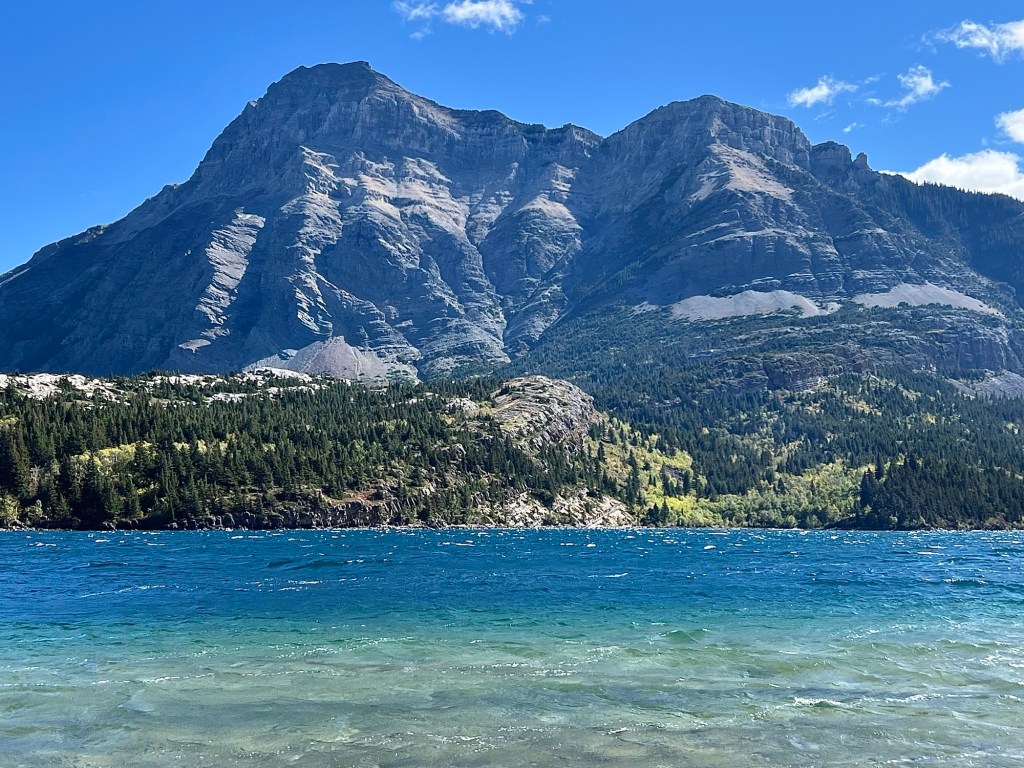
One of the wonderful things about visiting a Rocky Mountain National Park is that you get to see the most crystal clear waters.
We were captivated by the stunningly clean water of Cameron Lake, one the many mountain lakes in Waterton National Park.
It’s a magnificently beautiful lake and on the day we visited, we had blue skies and warm but not hot temperatures.
We hiked a short (3 km/1.9 mi) section of the lake and were surprised to learn that three borders converge at the lake’s southern end: Alberta’s, British Columbia’s and Montana’s.
The chances of seeing a grizzly are fairly high in this area and precautions must always be taken when hiking here; we were keen to stay out of their way!
We were in complete awe of the beauty surrounding us and enjoyed every second we were there.
Waterton National Park is in the southwest corner of Alberta between the Rocky Mountains and the prairies. Named after conservationist Charles Waterton, it borders Glacier National Park in the United States and is part of the Waterton-Glacier International Peace Park, a UNESCO World Heritage Site.
The blue dot marks the park; the grey line just to the south of it delineates the Canada-U.S. border.
Often overshadowed by its more famous sibling parks Banff and Jasper, it contains 505 square kilometres (195 sq. miles) of wilderness and mountains with stunning scenery and fantastic hiking trails among its many mountain lakes.
Upper Waterton Lake
The lakes frequently display the intense blue, green or greenish-blue colours of glacial run-off that is often found in the Rocky Mountains.
We had beautiful weather for our first day of hikes and although it was quite windy at times we didn’t mind.
Nevertheless we’re not used to hiking at 1800 metres (6000 ft) or pushing in windy conditions and by mid-afternoon we were ready to return to our hotel to recuperate before dinner!
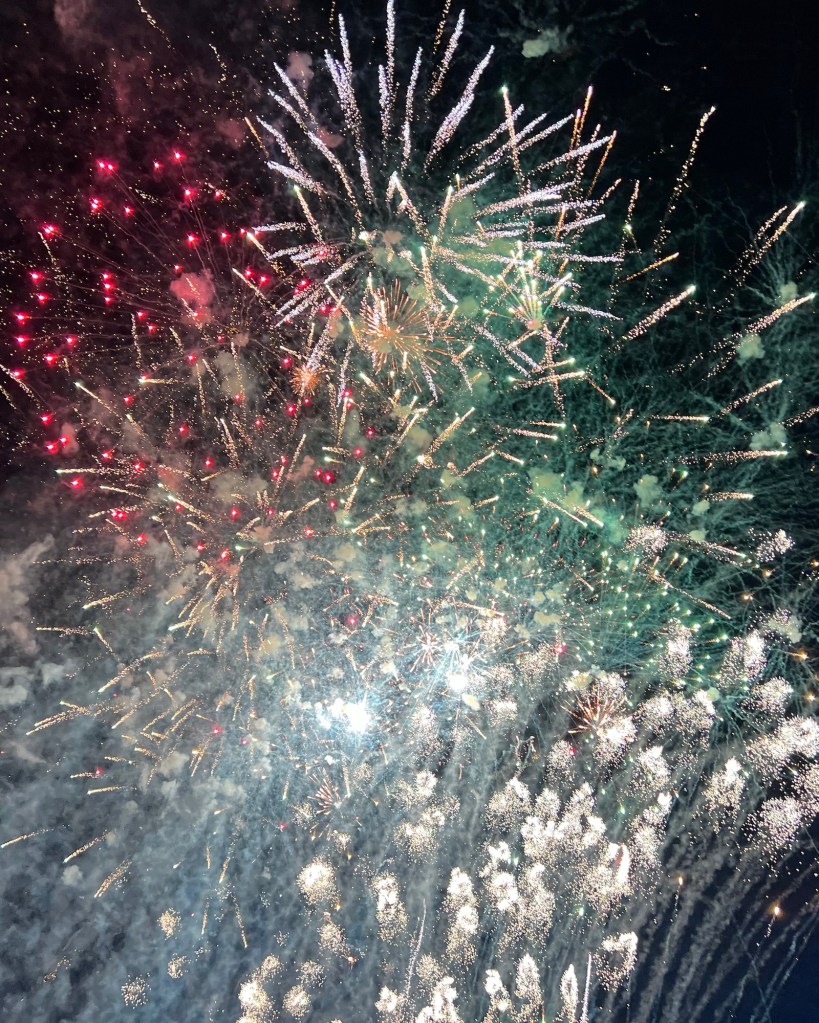
Iceland is a fabulous country to visit and I have been a number of times, including during the turn of the millennium when the whole country put on a brilliant party.
Many people only visit Reykjavik and the nearby countryside for just three or four days but if you are thinking of a longer, more in-depth visit, here are some things to be aware of or to consider.
Although Iceland is not a member of the EU, it is a member of the European Free Trade Association and has non-voting but participatory status in a number of EU agencies and programs, including business, environment, education and research. It therefore can feel quite European although I find that Iceland is very decidedly itself, too.
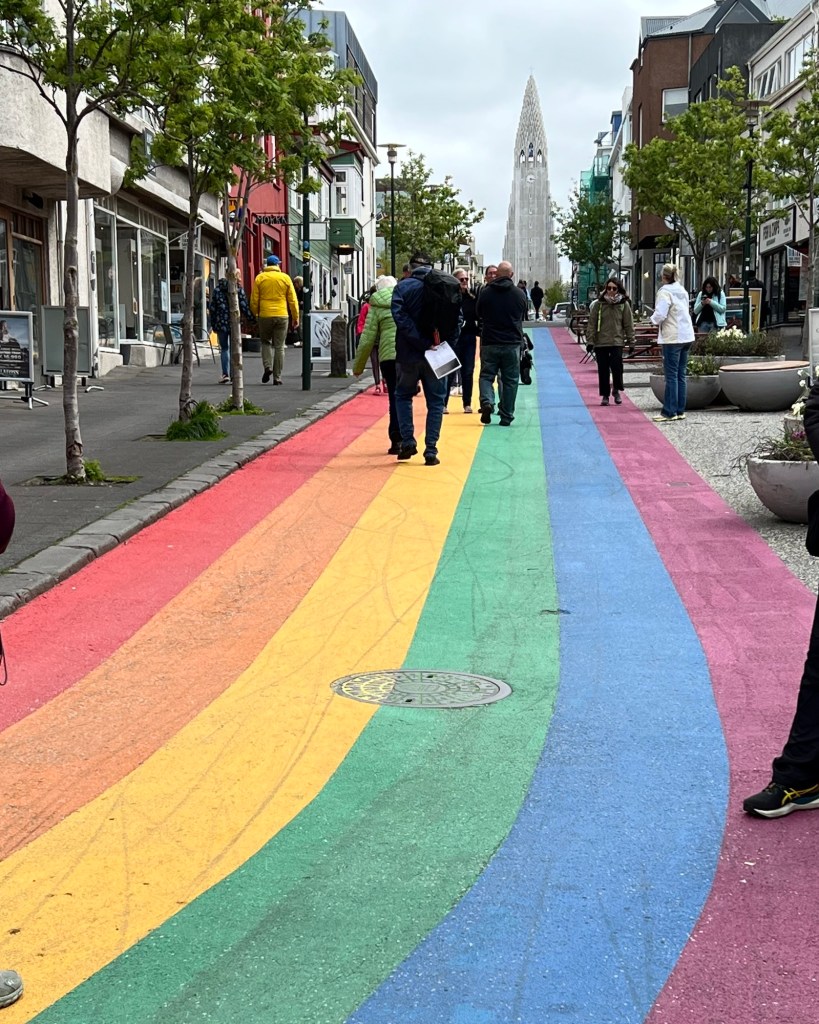
Rainbow Street in the pedestrian zone of downtown Reykjavik.
Everyone speaks amazing English. It is the designated second language and Icelanders are very adept with it and have a high rate of fluency. Icelanders are also very polite and helpful, even though they must at times feel impatient with all the tourists. According to the UN, it is also the safest country in the world; at no time have I ever felt uncomfortable about my security while visiting.
Downtown Reykjavik.
The food is out of this world, especially the fish and seafood in general. We ate in a variety of restaurants from the high-end to the basic, and the food was always stellar. However, you will see horse meat on just about every menu as it’s a very common dish. Ditto lamb, as it’s also very common. On our drives through the countryside we saw many, many sheep but fewer cows; the ones we saw were mainly dairy cattle. Nevertheless, every menu has at least one beef dish.
A bowl of one of the best chowders I’ve ever had.
Icelanders use a lot of eggs in their cooking, too, and in ways with which Canadians or Americans might be unfamiliar. For instance, I was served a sliced chicken breast sandwich that had chunks of hard boiled egg in it. I actually liked the combination, and especially the dipping sauce that came with it, but initially I was quite surprised. The beer is excellent as is the local gin and of course, good akvavit is also available.
Salmon.
The weather, ergo the wind. During our visit in June, many locals told us that their weather was unusually cold and stormy, and since they were headed for 24 hours of daylight or nearly so, their weather seemed unusual to me, too.
Reynisdrangar Sea Stack.
Having experienced the Northwest Territories for six years, I know that the midnight sun can really send the temperature quite high, well into the 20s or even low 30s, but Iceland definitely wasn’t experiencing that! The temperatures during our visit averaged around 12° (54F) or so; we had two days of 18° (64F). Given that geographically, Iceland is near the Arctic Circle – in fact, the Arctic Circle passes through a northern tip – it’s probably best to be prepared for all weathers, good and bad. Remember that in such a northern country spring arrives late and autumn arrives early, so it’s best to dress in lots of layers and to bring along good footwear, rainwear and an umbrella, too.
A very misty, windy day.
The wind can be a serious challenge, especially if you are at a higher elevation. Tourists are warned to watch the doors of their rental cars as the wind can literally take them off their hinges. When we visited a bird sanctuary, the wind was strong enough to send us flying, especially if we lost our footing. So come to think of it, make sure you bring along good windbreakers!
Volcanic sand beach near Dyrhólaey Bird Sanctuary.
Driving is on the same side of the road as North America and Europe. We drove all around Iceland and didn’t see a single speed trap and only one highway patrol-type vehicle.
The Icelanders have employed other means to make people slow down, however. There are many rivers and all of them in the country have single-lane traffic bridges. Additionally, the road shoulders are very narrow and have considerable drop-offs.
One- way bridge.
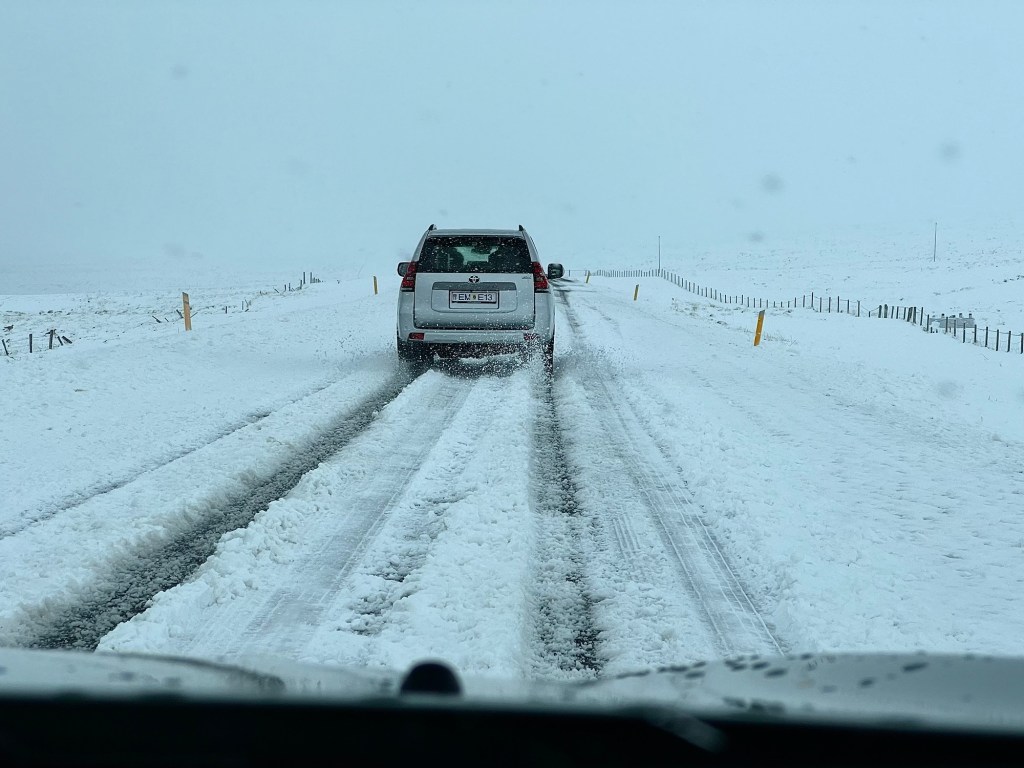
Driving can be challenging, especially if you aren’t used to winter conditions. We drove through a major snowstorm on June 5, and even though we are seasoned winter drivers we found it difficult. The narrow roads dropped to snow-covered single-lanes and there were road closures, as well. The plowing and sanding were efficient, however, and closed roads re-opened quickly. We were glad we chose to rent a 4-wheel drive, though.
One other note: off roading is illegal in Iceland as it damages the environment. Fines for doing so are hefty and jail time can also be imposed. It’s important to remember that Icelanders take this prohibition very seriously. The F-roads are back country dirt roads that people can use only between July and September. A 4×4 is required for these roads but it’s important to remember that they are not to be used as access points for off-roading.
Winter driving in June.
Iceland is expensive. Expect it and save for it. You will pay much more for lodging, meals, rentals and activities such as hot springs visits. One thing that you will not have to do is tip. Tips are already included in your bill as part of the VAT (Value Added Tax, which is anywhere from 11 – 24%). It may feel odd to not leave a tip, particularly in a restaurant, but it is considered somewhat rude to do so as servers might assume that you think they aren’t paid properly.
We avoided the very famous hot springs – the Blue Lagoon is the most famous of all but it was closed due to a nearby volcanic eruption – because they can be extremely expensive. The ones further away from Reykjavik and more off the beaten track are much more reasonable and also excellent.
Reykjavik
The currency is the Icelandic króna. Icelanders use debit and credit cards; we didn’t see cash being used at all. We used a “no foreign transaction fee” card for everything which saved us from having to convert and was extremely practical. That said, the major tourist areas usually accept many different currencies.
I don’t usually do this but I am going to recommend the Berjaya Iceland Hotel chain as a clean, comfortable alternative to many other hotel offerings. This is a local chain with hotels all over the country at relatively reasonable prices (prices vary in Reykjavik) and most have restaurants or are within walking distance to restaurants.
A visit to Iceland is all about exploration of this country’s long seafaring and pioneering history, rugged geographical and geological beauties and stunning waterfalls (excellent food, too!), so be ready to do lots of walking and admiring and most of all, have fun!








 In the Net! - Pictures and Stories of Life