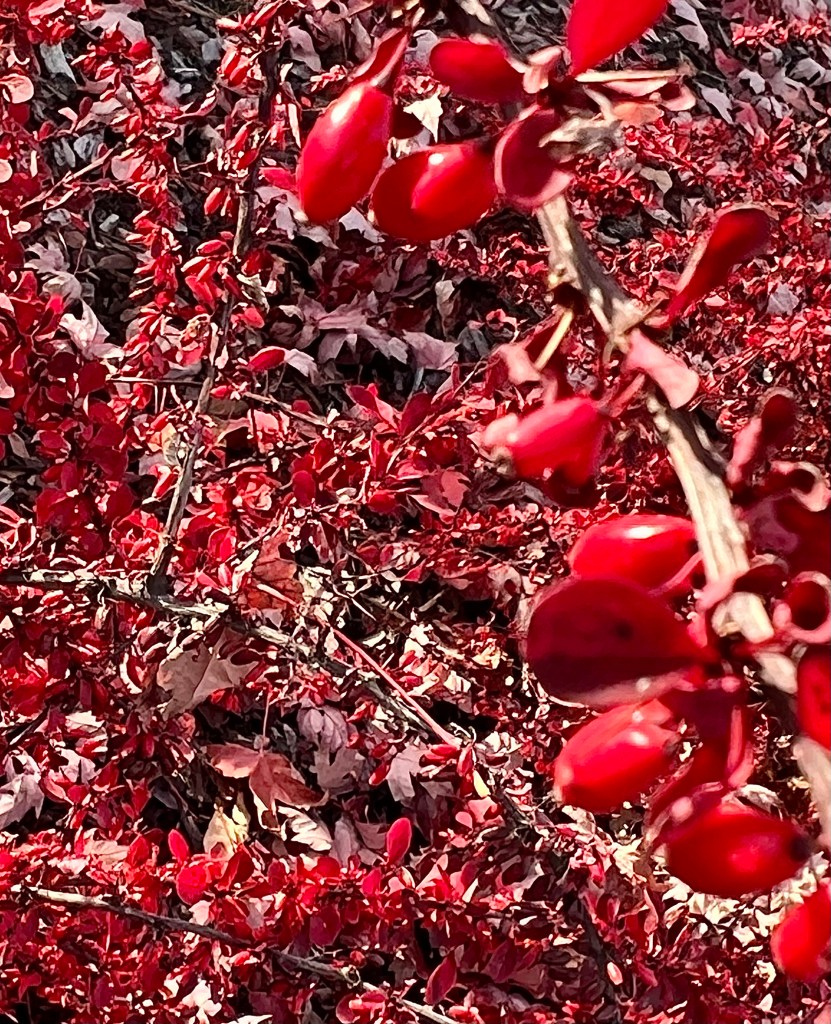
Red barberry is a relatively low-lying and dense shrub that has red edible fruit and green leaves that turn a brilliant crimson in autumn. I have often admired these bushes …
… until I did a little research and learned that they are an invasive species that has caused some rather serious issues.
Because they have a thick, dense thatch, they attract ticks; research indicates that this plant, more than any other, has caused the spread of Lyme disease. These bushes are also responsible for changes in soil nitrogen which in turn leads to a decline in native species.
Although they look beautiful and I love their autumn dress, they are banned in many areas – particularly because of tick infestations – and unfortunately should probably be eliminated wherever they are found.
The honey locust or thorny locust tree is native to North America and in earlier times was an important food source for some indigenous peoples.
Honey locusts lining a path next to Okanagan Lake.
The flat bean pods that this tree produces contain a very sweet pulp and the seeds can be used to make flour.
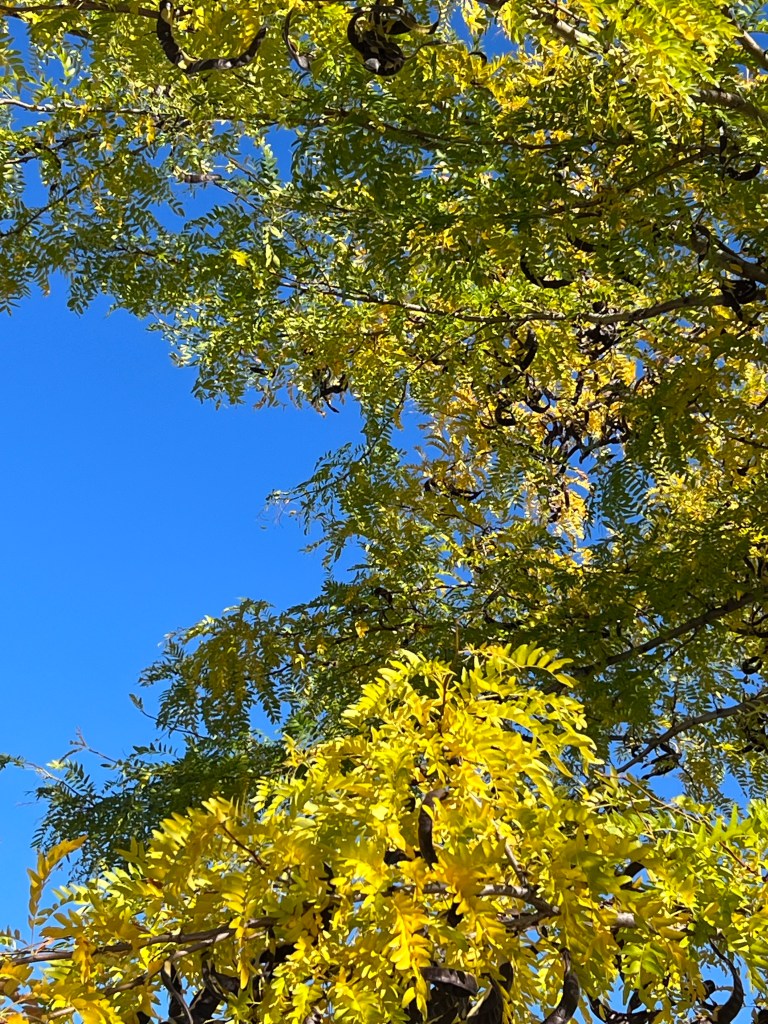
The dark-coloured bean pods are long, flat and curly.
This tree is extremely hardy and will survive droughts, poor soils and even the cold winters of the far north. The wood derived from them is also of good quality and high durability.
A photo from ten days ago shows this tree in transition.
It has a mixed history however, as it’s invasive in Australia and has caused significant problems there as they will take over and choke river and creek beds and the open spaces near them.
A more recent photo shows an almost completely golden honey locust.
Its home is North America where it should stay as it’s a good example of why a species works well in one location but not another. Despite problems associated with this tree, it does put on a very pretty autumn show.






 In the Net! - Pictures and Stories of Life