
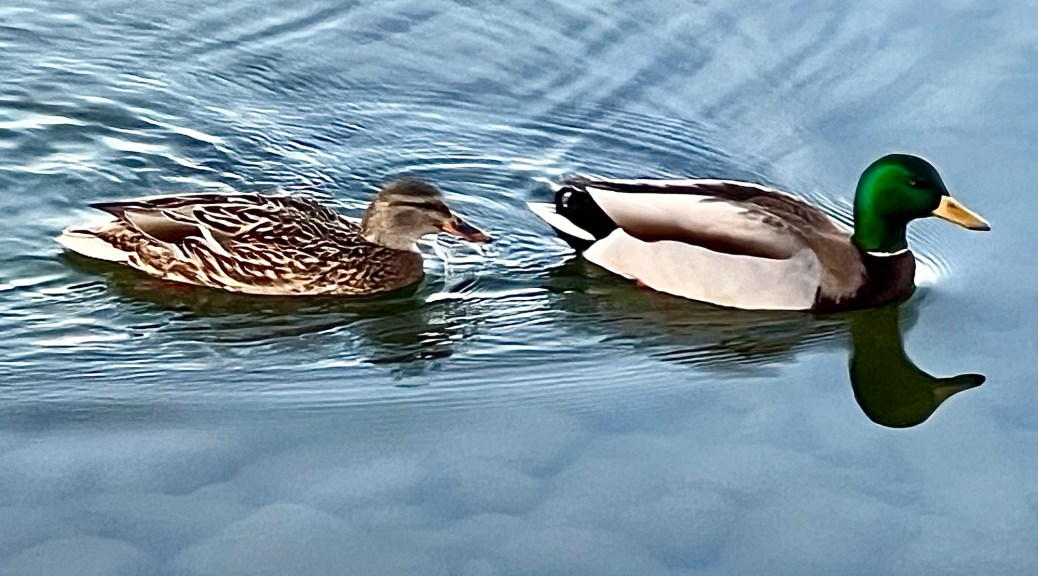
The mallard ducks have all paired off …
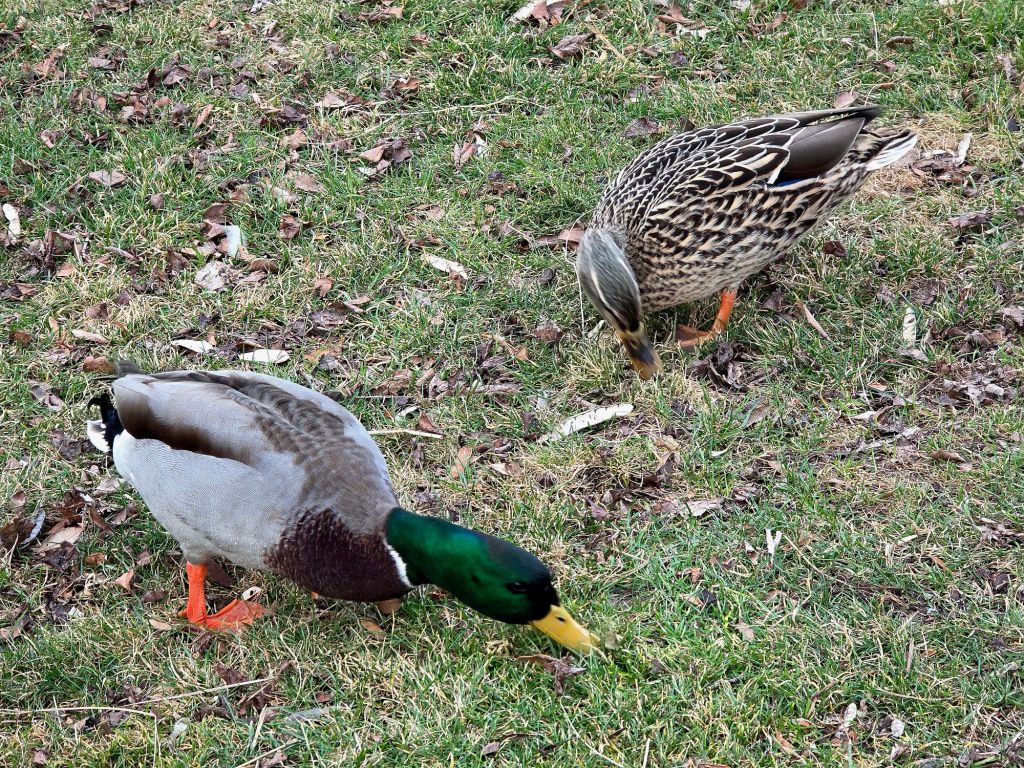
… and are busily eating as much as they can in preparation for the spring arrival of their hatchlings.
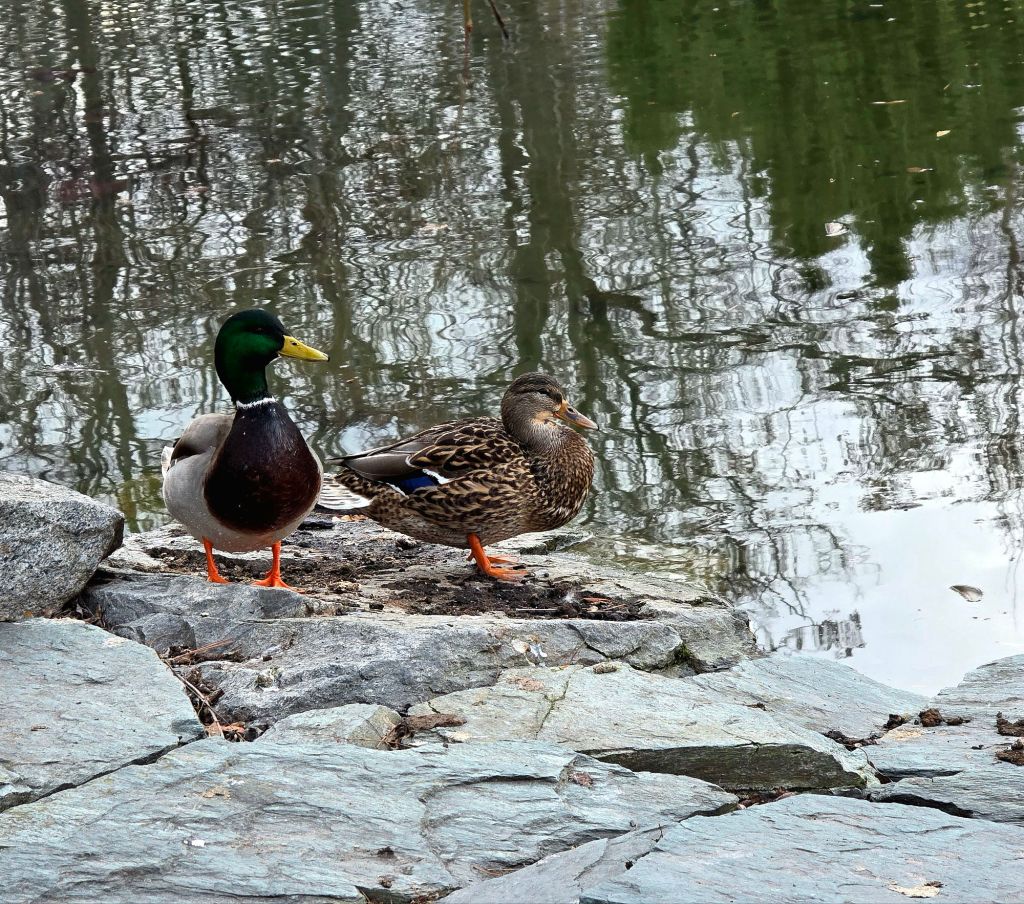
The male mallards help with the nesting but once the young ones arrive, they go off by themselves to suffer through their moulting period. The moulting makes them feel terrible (and look rather terrible, too); I have seen lots of male mallards looking very listless and ill.
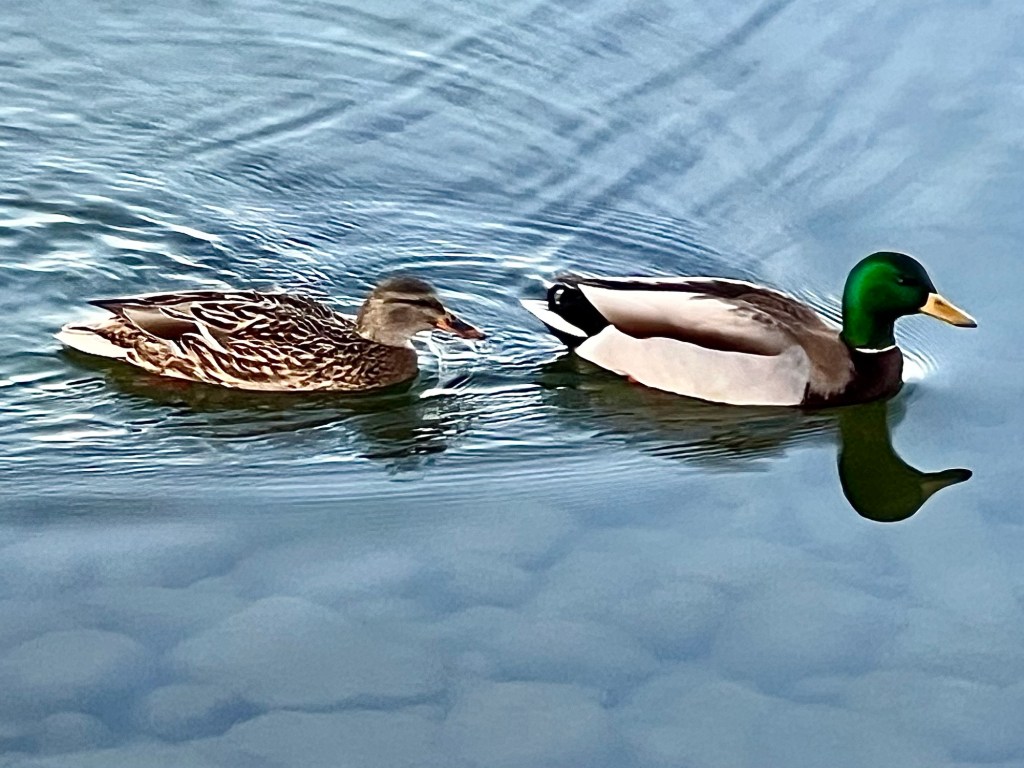
Did you know that mallards are the progenitors of nearly all domesticated duck species except the Muscovy ducks? And did you also know that despite the name, Muscovy ducks are native to the Americas and not at all to Russia?
Happy Wednesday.
 In the Net! - Pictures and Stories of Life
Oh, they are so cute!
LikeLiked by 1 person
They really are! I love the way they continuously “chat” with each other: little murmurings. 😊
LikeLiked by 1 person
What handsome couples they are!
LikeLiked by 1 person
They sure are. I know that mallards are ubiquitous throughout Canada but I do love seeing them. 😊 Cheers.
LikeLiked by 1 person
I did not know those fun facts about the mallards and Muscovy ducks. Looking forward to seeing the cute little hatchlings! I’m ready for spring!
LikeLiked by 1 person
I’m looking forward to them too! They’re so cute. Yes, I bet you are ready for spring and definitely deserve an early one. Fingers crossed for you!
LikeLike
Great to see birds making their spring preparations Lynette. The mallards are always ubiquitous in every pond, even down under. While I have never seen Muscovy ducks in Canada, they seem to be everywhere in new Zealand.
LikeLiked by 1 person
It definitely is, Allan. I agree about the mallards; they are indeed everywhere with the likely exception being Antarctica! Mallards originated in China, domestication started there at roughly 200 BCE and they spread around the world from there. I’ve seen Muscovy ducks in southern Ontario but nowhere else in Canada.
LikeLiked by 1 person
What a fascinating duck. Since you’ve explained it, I think I have seen molting mallards in the past and did think they were sick. Maggie
LikeLiked by 1 person
It’s quite amazing how well they do and in such a broad variety of climates, too. Very hardy. The moulting ducks really do look the worse for wear. I’ve seen them crouched in the shade in late spring or early summer really looking miserable and with their feathers falling off.
LikeLike
Such beautiful birds! I’ve never seen a duck in its moulting state. Lovely photo, Lynette!
LikeLiked by 1 person
Thank you, John. 😊 They tend to hunker down under bushes or other protected areas until they start feeling better. No doubt they’re attractive to predators at this point too as they are really fatigued. Nature is tough.
LikeLiked by 1 person
I see, thanks Lynette. I don’t want to be that vulnerable…
LikeLiked by 1 person
We all experience vulnerable periods in life, unfortunately, but at least not caused by moulting! 😉
LikeLike
Great photos of the colorful, beautiful ducks.
LikeLiked by 1 person
Thank you very much, Mags. 😊 I like them a lot.
LikeLike
Nice👏👏👌
LikeLiked by 2 people
Thank you. 😊
LikeLike
Among my favourite ducks 😊. The photo with the tree reflections is lovely! Interesting to learn that most domesticated ducks originated with mallards.
LikeLiked by 1 person
Thank you, Belinda. 😊 Mine too! I see them almost every day but always have to stop to admire them. Apparently domestication started in China around 200 BCE and they spread around the world from there. Cheers.
LikeLike
I would as well, they’re wonderful ducks 😊
LikeLike
Interesting facts about ducks, Lynette; wonderful photos too.
LikeLiked by 1 person
Thank you very much, Tricia. 😊 Cheers.
LikeLiked by 1 person