

Many of us have been enjoying the seasonal lighting that’s prevalent at this time of year, but nature has been providing some too if very much limited right now.
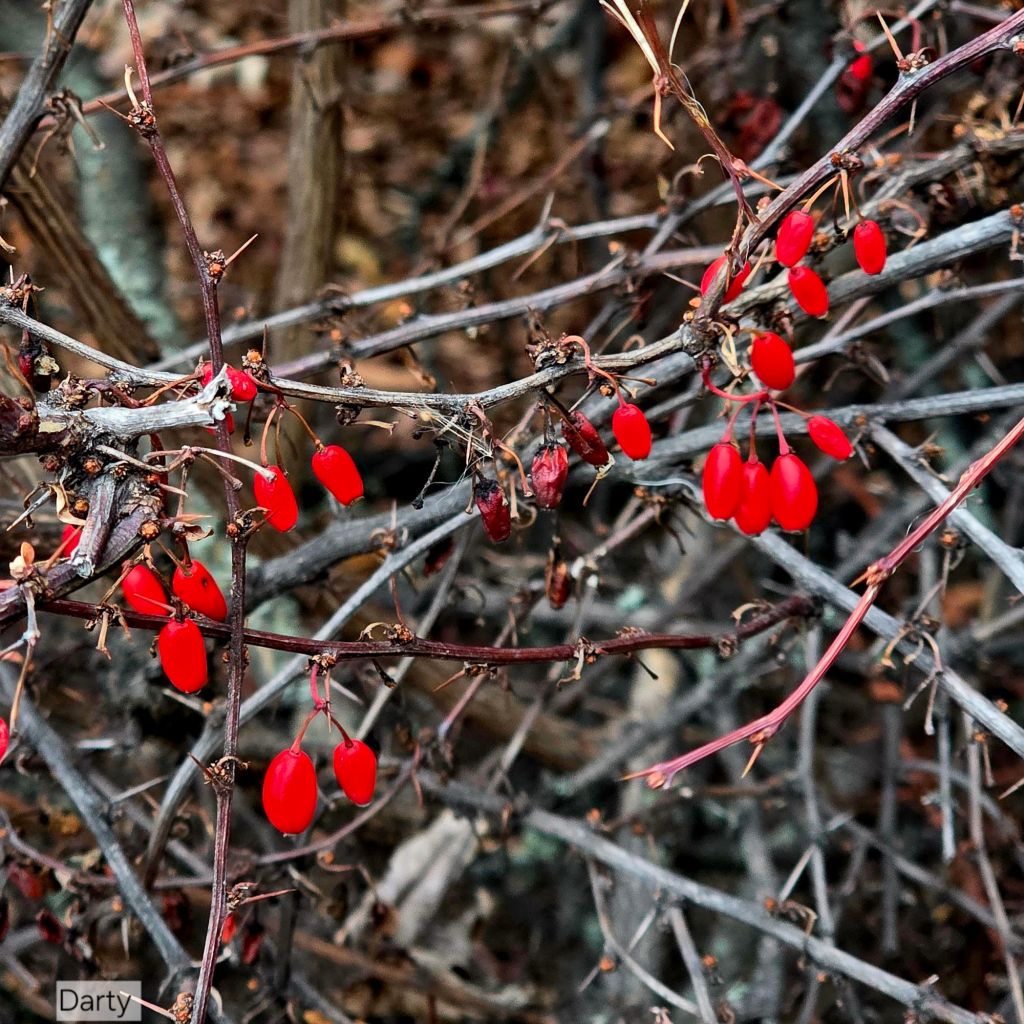
These bright red barberries are lovely to see but will be all gone by the time March rolls around. Birds will eat them but only as a last resort when all other choices have been consumed. Apparently they don’t taste too great but they do resemble fairy lights, don’t they?
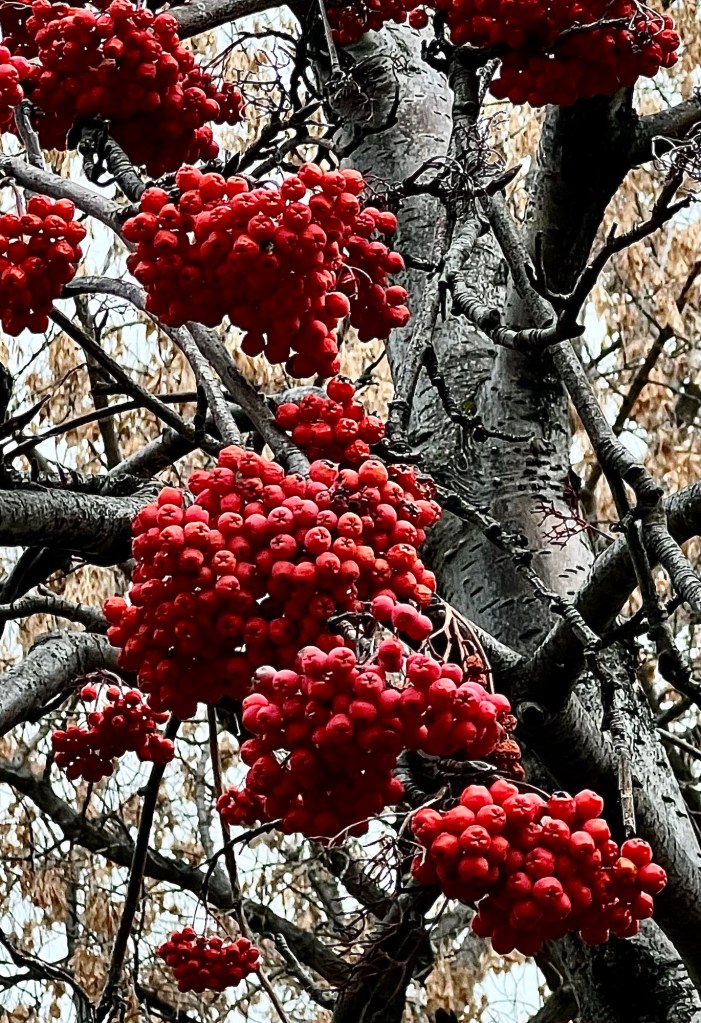
Now that January has arrived, I don’t expect these mountain ash berries to last long as they’re favoured by both birds and squirrels. In the meantime though, they are a lovely source of January colour, especially as the seasonal lights will soon be packed away again.
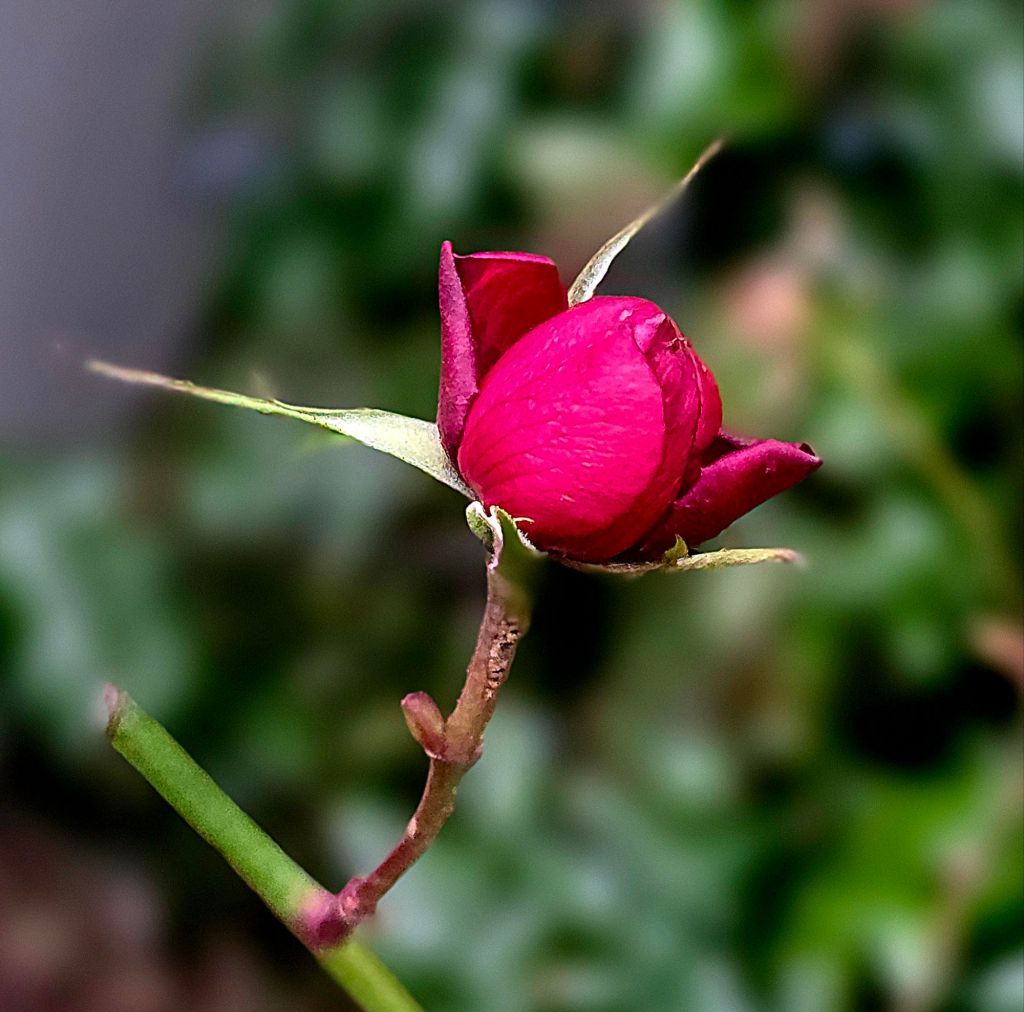
I spotted this pretty little rose growing in a beautifully protected spot; several others were also growing nearby. Winter roses – what a treat!
Happy Saturday.
 In the Net! - Pictures and Stories of Life
Lovely rich colours. The rose was a surprise for me though. First time seeing a rose this time of the year.
LikeLiked by 1 person
The rose – there actually were several – was a lovely find in a little niche between two buildings, so it’s a rather weather protected spot that’s likely a bit warmer, too. Cheers.
LikeLiked by 1 person
Nature ‘s red berries are a treat in winter.
LikeLiked by 1 person
Yes, they definitely are. So pretty with their flashes of colour. 🙂
LikeLiked by 1 person
Looking at the size of the bunches of mountain ash berries, that speaks to a long hard winter, but the little rare rose offers hope. How brave to stand up to winter. Happy Saturday Lynette. Allan
LikeLiked by 1 person
Thanks, Allan. Yes, that’s exactly what older people used to say when I was a child. So far our winter has been quite normal but one never knows what could be coming. It was such a gift to find that little rose. Cheers.
LikeLiked by 1 person
Wish I could post the red leaves from here. Love the pictures, they are stunning. 🖤
LikeLiked by 1 person
Thank you very much for your lovely comment. 🙂 Would be wonderful to see your leaves.
LikeLike
It’s a good thing those berries are still hanging onto the trees and shrubs at this time of the year. Some of those birds, especially the robins, get pretty desperate right around now, when the snow has hit the higher levels.
LikeLiked by 1 person
We’re snowless here in the valley and looking around I’m seeing lots available for them to eat. But yes, at the higher elevations it would be much more difficult.
LikeLiked by 1 person
That’s the time the robins show up here (closer to sea level) in the winter – when the snow covers their food sources at the higher elevations. That’s when the mountain ash berries, holly berries, and cotoneaster berries become a big part of their diet.
LikeLiked by 1 person
I’ve seen quite a few robins here in the valley already – I don’t think I’ve seen so many before – and have definitely heard them in their little covey shelters that they build, one in particular that I frequently walk past. In that case, I’ve noticed that the nearby cotoneasters and mountain ash berries are declining in number. I’ve been wondering if lots of these robins just stay here in the valley rather than moving into the mountains when it warms up.
LikeLiked by 1 person
I think they move to where the food is, whenever/ and wherever it happens.
LikeLiked by 1 person
Yes, that’s more likely.
LikeLike
Beautiful photos! The first photo looks like tiny alien eggs. 😊
LikeLiked by 1 person
Thank you very much, John. 🙂 Yes, those berries do look like eggs! Cheers.
LikeLiked by 1 person
Beautiful photos.
LikeLiked by 1 person
Thank you very much, Mags. 🙂
LikeLiked by 1 person
Lovely splashes of red, Lynette. It’s surprising to see so much plant life this time of year.
LikeLiked by 1 person
Yes, so great to see some natural reds right now esas that means lots of good for the birds and squirrels. I agree, it is surprising but I find myself looking more closely this year. Cheers.
LikeLiked by 1 person
A lovely set but that rose is really outstanding 😊
LikeLiked by 1 person
Thanks, Belinda. I was so happy to see it – and several others – in a lovely little weather protected niche. 😊 Cheers.
LikeLiked by 1 person
Yes that is beautiful. I have to admit I’ve never heard of barberries before. I used google translate to translate to Swedish but it failed. It probably does not exist in Sweden (or Texas).
LikeLiked by 1 person
It has a number of different names; here’s the Wikipedia entry for it. https://en.wikipedia.org/wiki/Berberis I wasn’t able to find a Swedish translation either; the closest I got was Norwegian which is “berberis.”
It’s very high in vitamin C and also has major anti-inflammatory properties. It’s being studied to see what part it could play in managing various health issues. Here’s an article. https://www.healthline.com/nutrition/barberries
Cheers.
LikeLiked by 1 person
Thank you for the interesting information Lynette
LikeLiked by 1 person
very beautifull 💯
LikeLiked by 1 person
Thank you. 🙂
LikeLike
I used to have a giant mountain ash (or rowan) in my garden at a previous property. One of my favourite types of tree, has something to offer all year round.
LikeLiked by 2 people
I used to have a property with a big mountain ash also! I agree; such lovely trees all year round but they turn the most beautiful shades of red and orange in autumn.
LikeLiked by 1 person
Beautiful captures of the red barberries and rose. It’s nice to see some colour, especially when it’s so bold and beautiful, this time of year.
LikeLiked by 1 person
Thank you very much, Linda. The rose was a particularly nice find; agreed, so pretty to see right now with almost everything else in winter hibernation.
LikeLiked by 1 person