
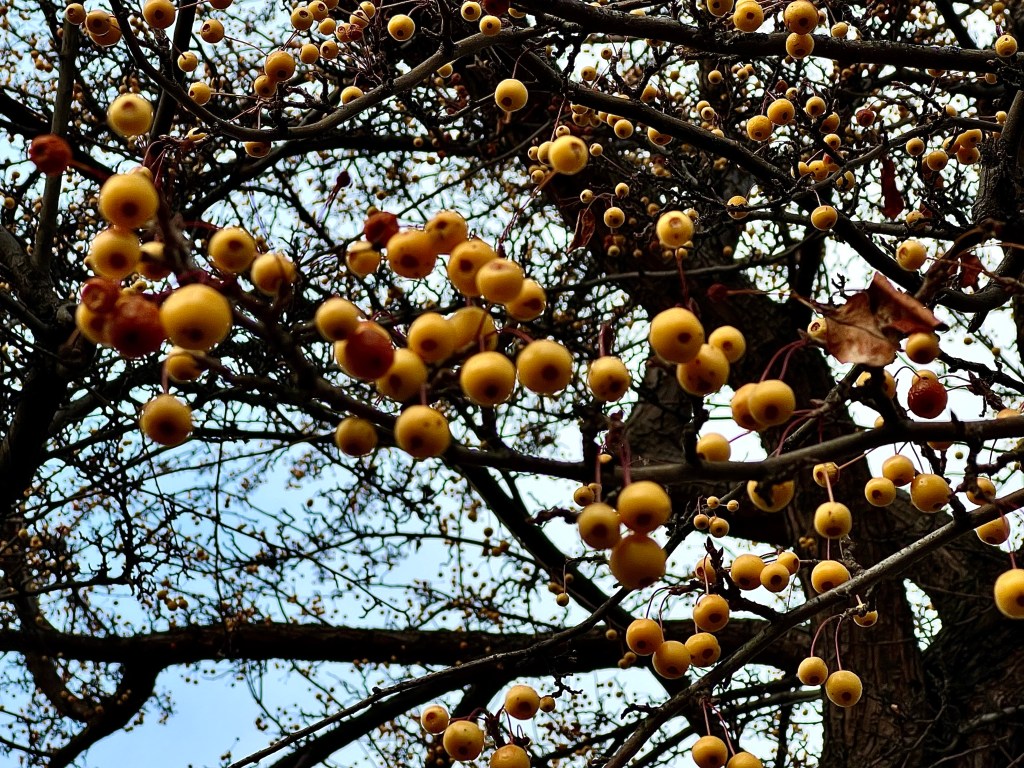
The fruit of this chinaberry tree is very pretty to see during this cloudy, rainy December period.
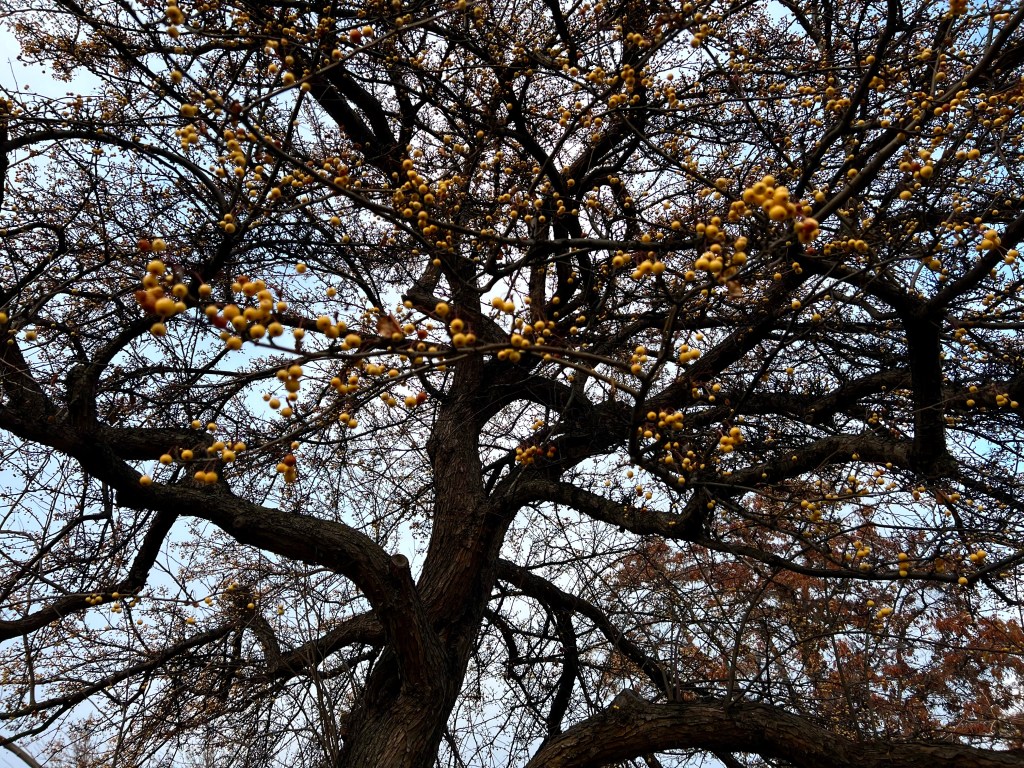
Their lovely yellow are definitely very welcome bright spots in the overcast.

Despite their loveliness, the berries are actually poisonous to birds, animals and humans. They can be medically processed and used in the treatment of some viruses, but are otherwise of little immediate practical use.
I find this tree beautiful and have often sat under it in the summer while admiring some of the adjacent rose garden. Here’s a picture from mid-September.

The overhang at the top of the above photo is from the chinaberry tree that’s shown in the first three pictures.
Happy Wednesday.
 In the Net! - Pictures and Stories of Life
Nice post ✉️
LikeLiked by 1 person
Thank you very much. 🙂
LikeLiked by 1 person
Welcome 🙏 freinds please visit my website
LikeLiked by 1 person
I’ve never heard of chinaberry before
LikeLiked by 1 person
I’ve enjoyed sitting under this tree every time I’ve visited the rose garden and kept wondering what type it is, so I finally did a little digging. It’s also known as a bead tree, Cape lilac or Indian lilac and is in the mahogany family. It makes a beautifully shaped shade tree. Cheers.
LikeLiked by 1 person
Thanks for this post on a new berry to me, Lynette. I will make sure to stay away from eating wild orange berries. The berries make the bare winter branches look very festive. Have a great day. Allan
LikeLiked by 1 person
Thanks, Allan.
I finally took the time to find out what kind of tree it is after always commenting on it every time I visit the rose garden! I was surprised as well. It’s also known a bead tree, Cape lilac or Indian lilac and is part of the mahogany family. I love the shape of it though and how it makes such an excellent shade tree. Cheers.
LikeLiked by 1 person
It certainly is attractive. It must be nice to sit in its shade in summer and enjoy the garden 😊
LikeLiked by 1 person
It really is such a great shade tree, especially when it’s 35C! The leaves are closely intwined and the lower branches have an almost flat spread. Lovely to sit there!
LikeLiked by 1 person
I’ll be sure not to eat these. Ironic that they are called chinaberries.
LikeLiked by 1 person
The name makes them sound appealing and yes, edible, but they sure aren’t. Pretty to look at only.
LikeLiked by 1 person
Thanks for the information. I hope I can see one sometime.
LikeLiked by 1 person
You’re very welcome, Allan. The yellow berries are quite distinctive (and the birds don’t bother with them) so now is a good time to spot one. Cheers.
LikeLiked by 1 person
Beautiful!
LikeLiked by 1 person
They’re quite distinctive, aren’t they? Cheers.
LikeLiked by 1 person
It’s nice to see a spot of colour this time of the year. It’s too bad that they are poisonous though. Makes you wonder why they were planted here.
LikeLiked by 1 person
I think this tree is probably quite old – could be 100 years or more – so I think it was planted simply to provide shade without thought given to the poisonous berries. It is a huge tree that provides beautiful shade, and apart from the colour there’s something about the quality of these berries that make them look inedible. They only come out in late autumn. Cheers.
LikeLiked by 1 person