
If you’re in Europe, Happy Saint Nicholas Day! Saint Nick – or as he is known in The Netherlands, Sinterklass – was also referred to as Nicholas the Wonderworker. He was an early Christian bishop from Turkey who practiced from about 300-340 CE and died on December 6, hence his feast day.

He was revered for his generosity and particularly for his custom of secretly providing desperately needed food or money to the poor or struggling. He also gave small gifts to children.
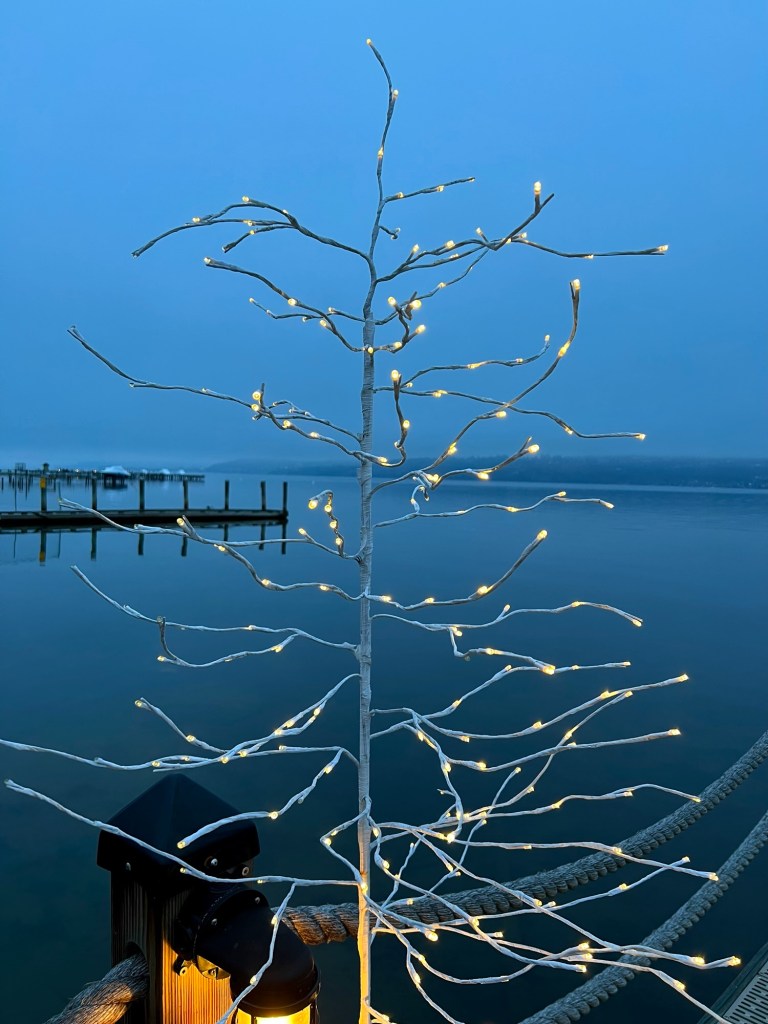
When Dutch colonists arrived in New Amsterdam, today’s New York state, they brought with them the tradition of Saint Nicholas or Sinterklass, which was translated into English as Santa Claus. However, Henry VIII – the much married 16th century king of England who also tended to behead his spouses if they upset him – had already decided to move any celebration around Saint Nicholas (known as Father Christmas in the U.K.) to December 25.

For countless centuries prior to the rise of Christianity this particular day had been celebrated as – among many others – the Feast of Saturnalia or the Celebration of Yule, a time to honour the return of the sun through light displays, gift-giving and banqueting. Over time, the traditions of the two sets of “New World” colonists, U.K. and Dutch, became combined into a December 25 celebration of a fly-around-the-world-in-one-night, North Pole-domiciled entity known as Santa Claus.

I think it’s important to remember that the tradition of Saint Nicholas or Sinterklass or Father Christmas or Santa Claus was based around the idea of giving – in secret – to the less fortunate, something that seems to have become terribly lost in our intensely spendy world.
Food for thought.
 In the Net! - Pictures and Stories of Life
Thanks for sharing these info, thoughts and photos. Have a nice day!
LikeLiked by 2 people
Thank you and you’re welcome. 😊
LikeLiked by 3 people
Good history lesson, Lynette! That Henry VIII was an awkward cuss, wasn’t he? Like many another, I tend to forget about poor old Saint Nick’s Day. We’ll be out walking this morning and I’ll remind everyone.
LikeLiked by 2 people
Thank you very much, Jo. Henry was quite a guy, and not in a good way! I used to live in Germany and became more acquainted with Saint Nick. I preferred the presents in the shoes on Dec 6 rather than the Dec 25 overload that occurs here. Spread out nicely, I thought! I hope you enjoyed your walk. Cheers.
LikeLike
Yes, we had an excellent day, thanks!
LikeLiked by 1 person
Good to hear! 😊
LikeLiked by 1 person
We visited St Nicholas’ home town, of sorts, when we were in Turkey last year. They have fun with it too. Even though they are Muslim, there are several Santa Clauses and Christmas decorations in the shops. Happy St. Nicholas Day. Maggie
LikeLiked by 2 people
Thank you, Maggie. 😊 I visited Myra or Demre 20 years ago and at that time the St Nicholas church was being used nominally as a mosque. Good to hear there’s a bit of fun attached. I’ve also seen his shrine in Bari, Italy. He definitely got around! Cheers.
LikeLiked by 1 person
I am more than happy to celebrate the return of the light. And simple pleasures are the best. I blame the Victorians for upping the ante around Christmas and today’s socials really don’t help.
LikeLiked by 2 people
Yes, me too! It has been so dim with all the overcast and yes, we prefer the simple pleasures, as well. Agreed; the Victorians really established many of the traditions still in existence including the overwhelming emphasis on buying presents. I find the constant hammering on spending exhausting. Here there’s a guideline that businesses shouldn’t advertise Christmas until after Remembrance Day although that’s not always consistently followed.
LikeLike
My husband’s cousin lives in Amsterdam and that’s how we learned about their various traditions including celebrating St Nicholas’ Eve and Day in the Netherlands. I think it’s a fantastic way to mark the day especially as celebrations include family gatherings, exchanging presents and treats, and festive songs dedicated to the saint. I love how children leave out clogs or shoes, hoping for Sinterklaas to fill them with presents. Thanks for sharing, and have a good day 🙂 Aiva xx
LikeLiked by 2 people
Thank you very much, Aiva. 😊 I used to live in Germany and became acquainted with their traditions which seem to be quite similar to those in the Netherlands. I enjoyed the emphasis on Saint Nicholas day family gatherings and gift exchanges; I find what we do here in Canada to be an overwhelming frenzy of spending with only a superficial acknowledgment of the need for family time.
LikeLiked by 1 person
There are so many wonderful things about the holiday season but often along with all of that wonderfulness comes holiday overwhelm and decision fatigue. Christmas is supposed to be a time to relax and spend time with loved ones but unfortunately for many, mounting emotional and financial pressure takes a heavy toll. xx
LikeLiked by 1 person
Yes, that’s very true. Our response has been to curtail it a lot. Some socialising with family and friends but we no longer do gifts unless they’re homemade or charitable in nature. It’s up to the individual to establish some boundaries around this time of year, I think.
LikeLiked by 1 person
That’s such a good idea regarding gifts 🥰
LikeLiked by 1 person
Thanks. 😊
LikeLiked by 1 person
My mother used to go out in the snow or get some other adult to do that, and she’d run around the house jingling a bell and then tell us that Nikolaus had been there. We had little goodies in a stocking then.
LikeLiked by 2 people
That sounds like a lovely family tradition. You must have enjoyed that so much! I love the Saint Nicholas tradition which I appreciated and enjoyed when I lived in Germany. It’s much lower key and relaxed. For years now I have found the relentless emphasis on spending for December 25 to be exhausting.
LikeLiked by 1 person
We’ve really cut back on it. We have dinners with friends a few times in December. We don’t do Christmas gifts except for an exchange of special food items (like jams or homemade things, and baking) and we just do a Christmas dinner of something we like. It need not be a turkey that we will be stuck eating for a week afterwards. It’s the pressure to shop and entertain that used to wear us down. Now we just do what we feel we want to do.
LikeLiked by 1 person
So have we, Anneli. We enjoy activities similar to yours and also avoid buying gifts. This year we are having salmon. I am not at all fond of turkey and really happy that I don’t need to cook one again! I’ve always preferred duck or goose but yes, we can have anything we would like! Agreed, the pressure to shop was one that always got to me. I much prefer a quieter celebration. Cheers.
LikeLiked by 1 person
Life around Christmas time has improved considerably since we cut out the commercialized part of it. Good to hear you are doing the same.
LikeLiked by 1 person
I agree, Anneli. We feel that way, too. Far too many people allow themselves to be unduly influenced by corporate interests.
LikeLiked by 1 person
We are on the same page.
LikeLiked by 1 person
Definitely. 😊
LikeLike
The tradition of giving is what I like best about Christmas. The anonymity of Sinterklass was the truest type of giving. Nowadays, we all want recognition for anything we give and that was never the point. Happy Saint Nicholas Day Lynette. Allan
LikeLiked by 2 people
Thank you very much, Allan. I agree. Even when I was very little, I was required to do age-appropriate community service, especially in winter but also year-round. I find the constant emphasis on Christmas spending with the advertising often starting so early to be a bit of a grind, however.
LikeLiked by 1 person
Interesting to learn about the history of these traditions, Lynette! Nice set of photos, too. I really like the one of the “Charlie Brown” Christmas Tree 😊
LikeLiked by 3 people
Thank you very much. That tree is so cute; it seems to be especially appealing to children. 😊 You’re very welcome, Belinda. Cheers.
LikeLiked by 1 person
This is very interesting history, thanks, Lynette. I like the tree on the dock, so cool! I feel sad that the true meaning of Christmas has been lost to commercialism. It’s called Christ-mas for a reason.
LikeLiked by 2 people
You’re welcome, John. That little tree – it’s on one of the walking paths – is quite an attraction, especially for children. I agree; this time of year is such a target for commercial exploitation.
LikeLiked by 1 person
I thought the tree was at the end of a dock, oops. 😬
LikeLiked by 1 person
It’s understandable that you would think that. It’s on a wooden sidewalk – which is part of the path – next to the lake. 😊 Cheers.
LikeLiked by 1 person
Thanks, Lynette, for sharing this interesting history. You’re correct, this is a lesson many have forgotten.
LikeLiked by 2 people
You’re very welcome, Tricia. 😊 I enjoy digging through the geneses of these dominant celebrations. Cheers.
LikeLiked by 1 person
My family is Dutch and we celebrated Sinterklass yesterday. We mainly just do a small gift exchange. Baby M got a new lift-the-flap board book and a pair of Christmas pjs.
LikeLiked by 2 people
It’s lovely to hear that it’s being celebrated in Canada. I very much enjoyed the German version of Saint Nicholas day when I lived there. It sounds like you had a lovely family time. Cheers.
LikeLiked by 1 person
Interesting. I wonder what made society/cultures decide to coincide St. Nicholas and Sinterklass celebrations around the same time they decided to celebrate Christ’s birth. Yeshua, Jesus’s real name, wasn’t really born on Dec. 25th either. Since it’s not documented anywhere. If I’m not mistaken, Dec. 25th was originally a Pagan holiday centered around the winter solstice. It’s a shame the way they change history on us so we don’t know the truth of many stories.
LikeLiked by 2 people
Hi Lori, the deliberate co-location of Saint Nicholas and Christmas was started by Henry VIII and then really pushed by the Victorians. Queen Victoria’s husband popularised many of the traditions that are familiar to us today. This co-location only seems to have occurred in former British colonies though; in most of Europe Saint Nicholas Day is separate from Christmas.
Christmas was changed to December 25 in order to encourage people to convert to Christianity. People wouldn’t let go of their old traditions and the early church leaders thought that changing the date of Jesus’s birth would encourage them to do so. Many of our Christmas traditions actually predate Christianity; the Christmas tree, for instance, goes back to ancient solstice celebrations.
Yes, there have been lots of attempts to change our perceptions or the backgrounds of certain events, either for practical or other, shadier, reasons.
LikeLiked by 1 person
Yes, I knew they placed Christ’s birth at the Pagan holiday to get converts. Years ago, I did a lot of research on Christianity. Wanted to know the truth about Yeshua. I remember feeling slightly angry because we don’t even use His real name (since I was raised Catholic). So how were we supposed to believe everything else, when we were lied to about something as simple as a name? And yes, I know the history of how and why it was changed, but that doesn’t make it right. For a long time now, I haven’t trusted much about what we were told about history or even by today’s media. I find some sources I trust, but they are not well-known by the mainstream, and they are very few.
LikeLiked by 1 person
I was raised Catholic as well, so I think I understand. My position is that the powers that be – religious, political, commercial, media – can prevaricate, exaggerate or dramatise so that people can be manipulated into buying more or believing whatever for whatever reason. Unfortunately it has happened as a matter of course down through history. The human obsession with power, control and money affects everyone, most of us just because we’re subjected to it, no matter where we’re from or what our culture is. All we can do is employ our critical thinking skills and work through it. It can be extremely frustrating, I agree.
LikeLiked by 1 person
You get it, Lynette. There are some of us that can’t be fooled. And as you might’ve read on my blog in the past, I’m a question-asker. Since I was a child, I’ve always wanted to learn answers to mysteries. Thanks for chatting about this. 💗
LikeLiked by 1 person
You’re very welcome, Lori. 💛 You definitely are. I hope you have a good weekend. We don’t have snow but the wind has become very cold. 🥶 Cheers.
LikeLiked by 1 person
A good reflection of where the idea of gift giving originated from. Sadly this had been skewed these days.
LikeLiked by 2 people
Thank you very much. 😊 Yes, it has sure become that way.
LikeLiked by 1 person
When we lived in Germany, my children learned the story of St. Nicholas. They were thrilled to find the shoes outside their doors filled with fruit, candy and small toys. We continued the custom upon returning each Fulbright year to the US. Thank you for the lovely post. Enjoy the weekend. “”___””
LikeLiked by 2 people
You’re very welcome and thanks for your weekend wishes. I used to live in Germany also and came to appreciate Saint Nicholas day, as did my children. It’s much lower key and more accessible, I think. Cheers.
LikeLiked by 1 person
During my three years of study in Heidelberg, I fell in love with the university where I got two of my degrees. Several trips later as well. I was a Fulbright Exchange Teacher twice. First year was spent in Neresheim. Second year I taught in Berlin. Lots of memories and stories too. My book and blog cover the memories. Best.
LikeLiked by 1 person
Heidelberg and area are beautiful. I’m not familiar with the Fulbright program but the name speaks for itself. I appreciated the German school system and my children enjoyed attending school there (their dad is German and they speak German well). It sounds like you very much liked teaching there. Cheers.
LikeLiked by 1 person
Lynette, I have a soft spot for Germany. Our two children went to schools and became fluent in the language. We have fond memories. “”___””
LikeLiked by 1 person
Yes, I do, too. Happy Sunday. 😊
LikeLike
Enjoy your week. oxox
LikeLiked by 1 person
Thank you. 😊
LikeLiked by 1 person
Welcome. ox
LikeLiked by 1 person
😊
LikeLiked by 1 person
Yep, we’ve been to both Demre and Bari too…claims on Father Christmas all over the place!
LikeLiked by 2 people
It seems that Saint Nicholas was a rather mobile fellow, especially for the time!
LikeLiked by 1 person
In grade 2 helping out. The conversation went like this
“If you don’t believe in God, you can’t celebrate Christmas. And Santa is dead because he was a saint. So you better believe in God”. I kid you not, his voice was so adamant and then gleeful when he said Santa was dead. Most 7 year olds haven’t had the history lesson yet about St. Nick, Sinterklass. It was definitely eye-opening and surprising.
LikeLiked by 3 people
He’s definitely a self-assured child who’s being raised to recognise the difference between the real Saint Nicholas and corporate entities that are just constructs! 😉 I have a couple of Muslim friends who always put up a Christmas tree just because they like it. I wonder what your young friend would think of that? 😉
LikeLiked by 1 person
The young man, who I had never met before that class event, would be most puzzled with Muslim friends and their Christmas tree. I wonder how he would explain the Christmas tree itself? I don’t recall any trees, just a stable and a manger.
LikeLiked by 2 people
Yes, good question! There definitely weren’t any trees with lights and baubles or trees at all. And then again, Muslims believe in God, so there’s that, too. 😉
LikeLiked by 1 person